Military expansion on Guam sucks up housing resources as Indigenous residents struggle
About 5,000 Marines are expected to move onto the unincorporated U.S. territory in the coming years, which experts and advocates say is driving up the cost of housing
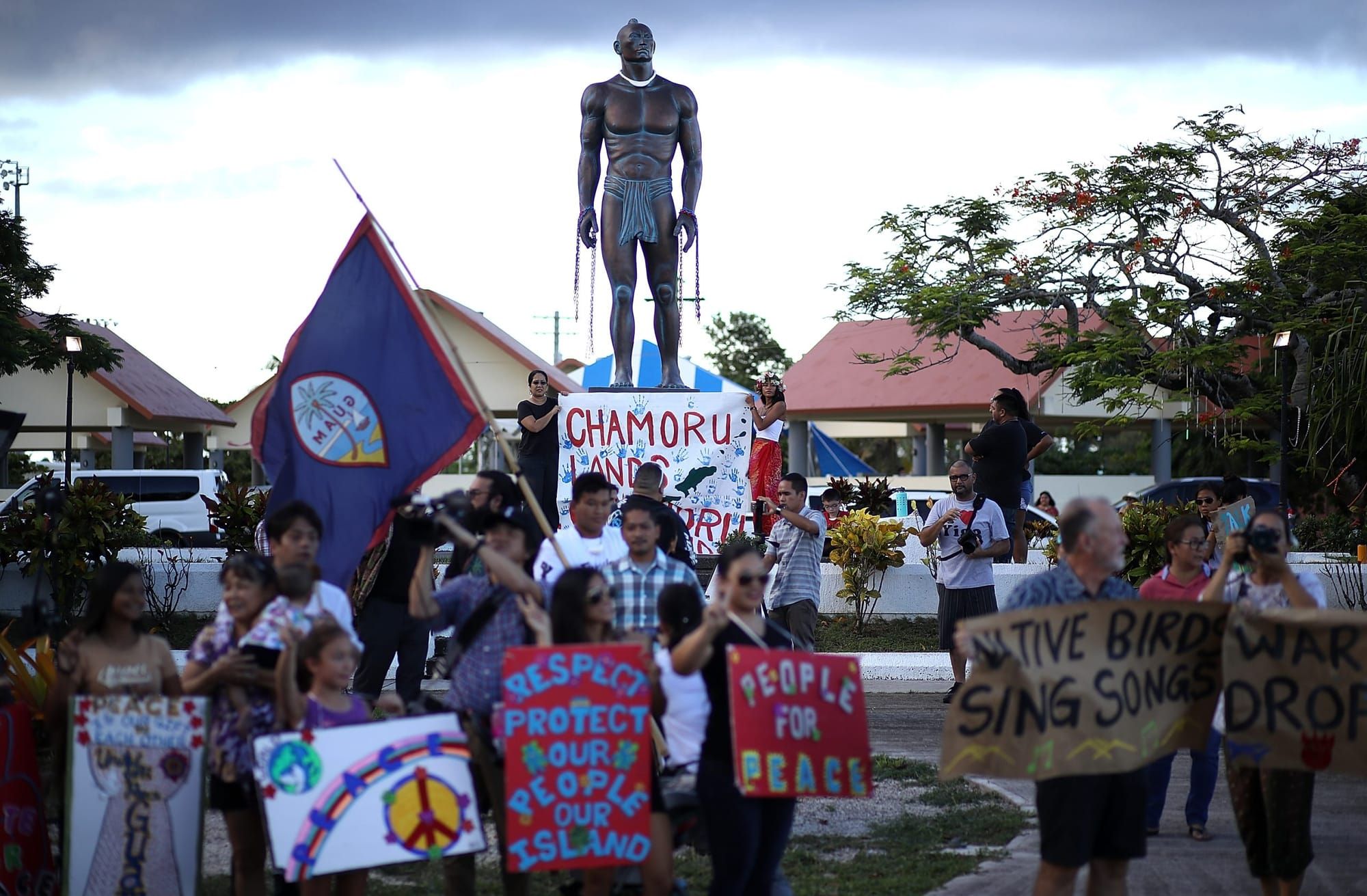
Every month, AnMari Sablan hands over most of her paycheck to keep a roof over her family’s head in a cramped two-bedroom, one-bathroom house on Guam that she rents from relatives for $1,300 per month. She would prefer to purchase a bigger home, but all she can afford in the current market are fixer-uppers. As a CHamoru mother raising three growing boys, Sablan is one of a growing number of island families struggling to afford even the most basic housing.
“Most proper homes are out of our price range,” Sablan said.
Even while renting, living a comfortable life has proven challenging, with the cost of eggs, groceries, and other living expenses rising. Sablan told Prism that an affordable mortgage and being able to put food on the table are important factors for her family, but the cost of housing is “rising far faster than our family income.”
Owning a home is the dream of many Guam residents, but rising housing costs keep them from achieving it. The median price for a single-family home is about $425,000, nearly double the $213,000 cost in 2014.
A significant factor behind the spike is the heavy military buildup on the Micronesian island, which was declared a U.S. territory in 1898 and has been used as a military outpost ever since. About 5,000 U.S. Marines and 1,300 of their family members are expected to move to Guam over the next several years as part of a relocation of troops from Okinawa, Japan, to Marine Corps Base Camp Blaz, a newer military base in Dededo, Guam, that “officially activated” in 2020.
The influx, which began last year, is pushing housing and construction costs up on the tiny, 30-mile-long island, about a third of which is owned by the U.S. military.
“With the military buildup and the arrival and support staff for the base, we are looking at a housing shortage. We can also blame the cost of construction,” said Angela Duenas, a realtor with Century 21 Commonwealth in Tamuning. “I see owning a home becoming out of reach for most families.”
Melvin Won Pat-Borja, the executive director of Guam’s Commission on Decolonization, said, “Present and future buildup activities are and will continue to rely on Guam’s local housing market, which has created a more competitive environment that is putting our local population at a disadvantage.”
Won Pat-Borja said the increasing military presence has driven up the demand for housing, while construction and the maintenance of military installations are using up a significant amount of the island’s capacity of construction and H-2B workers.
Housing prices have climbed so much that even renting is difficult for many residents. A studio apartment can start from $900 per month, and a one- and two-bedroom apartment can go from $1,200 to $1,500. Additionally, the Guam Chamber of Commerce estimated that the average cost of living for a two-person household is about $900 per month, excluding rent. According to the U.S. Bureau of Labor Statistics, the average Guam resident earns about $20.29 an hour. For someone working full-time, that would come out to $3,246.40 a month pre-tax, leaving few, if any, savings after tax, rent, and other living expenses such as gas, food, and utilities. At that rate, trying to gather enough for a down payment and being able to afford mortgage payments becomes an even greater challenge.
While locals struggle to find affordable housing, military personnel who live off-base benefit from the Department of Defense’s Overseas Housing Allowances, which covers rent, utilities, and move-in costs.
Won Pat-Borja said the government of Guam is addressing the current housing crisis, but referred to the efforts as “a mitigative measure to address the impacts of the military buildup and its subsequent activities.”
One way Guam is attempting to reduce the adverse effects of the military is by refocusing on efforts to change the island’s political status. Guam is an unincorporated territory of the U.S., a designation signed into law by President Harry S. Truman in 1950, leaving the island “separate but unequal.” While Guam residents are U.S. citizens, they cannot vote in presidential elections and don’t have a voting representative in Congress. Congress can also overturn laws passed by Guam’s legislature and decide which parts of the Constitution apply to the territory.
“Our relationship is based on consultation, not consent in regard to present and proposed military activities and installations on our island,” Won Pat-Borja said.
The U.S. government and Department of Defense do not need Guam’s consent to increase the presence of military personnel on the island, but must notify the Guam government of their activities. To change this, Guam must change its political status. By Guam law, the Commission on Decolonization was created to help drive this effort by aiming to inform residents of what options exist in preparation for an eventual vote. Guam could seek to become a state, like Hawai’i; achieve free association and become an independent nation with close ties to the U.S., like the Federated States of Micronesia; or become a fully independent and sovereign nation.
In the meantime, programs through the Guam Housing and Urban Renewal Authority aim to support those who can’t afford housing on their own due to low to moderate income. But the housing available is limited.
“We are looking for more programs to help the people for affordable housing,” Guam Sen. Tony Ada told Prism. “It’s unfortunate that this is happening. It could have been avoided about five years before the military buildup began.”
Editorial Team:
Sahar Fatima, Lead Editor
Carolyn Copeland, Top Editor
Rashmee Kumar, Copy Editor
Author
Phillip V. Cruz, Jr. is a CHamoru writer and poet from Talo’fo’fo, Guam. As a military family member and advocate, his work highlights themes of resilience, identity, and the lived experiences of vete
Sign up for Prism newsletters.
Stay up to date with curated collection of our top stories.