After partnering with Israel, Google Cloud supports AI ambitions of UAE, accused of complicity in Sudan genocide
Google announced a cybersecurity partnership with the United Arab Emirates, which has been accused of arming the paramilitary group denounced for committing genocide in Darfur

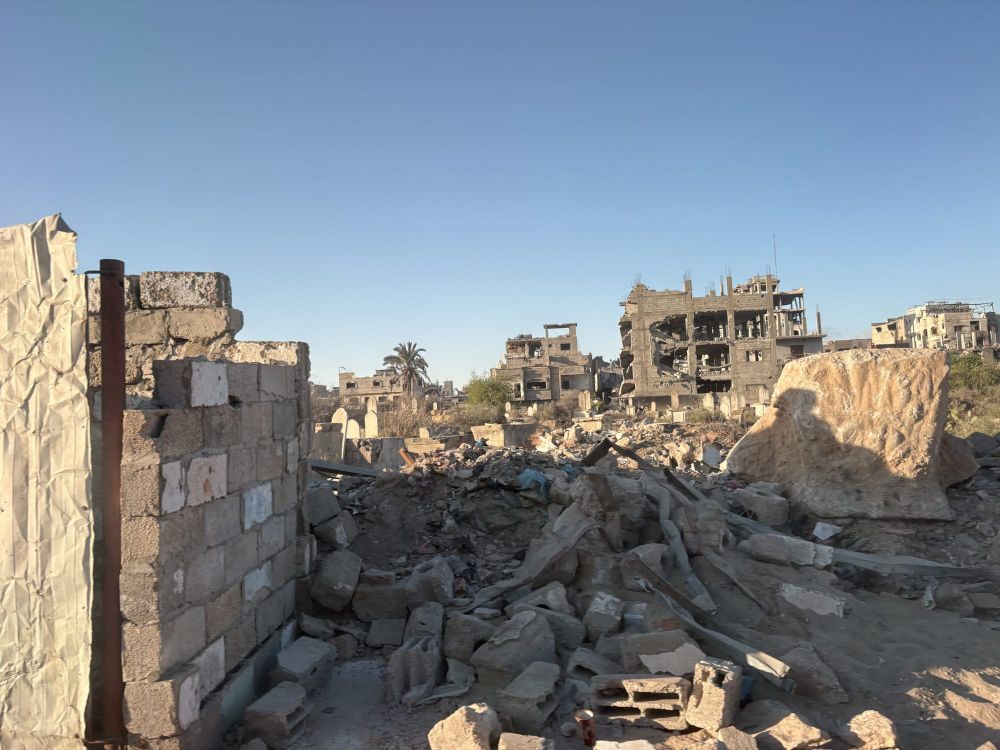
Google has cracked down on employees protesting its AI-powered cloud services being used by the Israeli military to carry out a genocide in Gaza. Now, the company is also bolstering the United Arab Emirates’ ambitions to build a cybersecurity center and the world’s largest AI campus outside of the U.S. in Abu Dhabi. Google is joining the project despite widespread accusations that the Emirati government is heavily involved in a genocidal campaign that has killed over 150,000 people in Sudan.
In April, Google Cloud announced “significant investments in advanced cloud capabilities in the UAE,” even though the country has repeatedly been implicated in supplying weapons and technology to the paramilitary group Rapid Support Forces (RSF). In January, the U.S. State Department, during the Biden administration, determined that the RSF was committing genocide in Darfur, Sudan, and sanctioned its leader, Mohamed Hamdan, as well as seven UAE companies sponsoring the violence.
Google Cloud’s deal with the UAE echoes Project Nimbus, a joint Google and Amazon $1.2 billion contract to provide advanced cloud infrastructure, AI, and related technology services to the Israeli government, including the military. Effective since 2021, the contract prevents Google from denying service to any Israeli agency or from restricting the information they may migrate to the platforms, according to some of the tech companies’ workers.
“Project Nimbus was really the first of its kind. We’ve seen this type of contract replicated around the world,” said Gabi, an organizer with No Tech for Apartheid, a worker-led campaign to stop Project Nimbus. These contracts include the U.S. and British military forces, as well as the partnership with the UAE, said Gabi, who requested that Prism use only their first name to avoid retaliation. “That allows tech companies to sell very powerful technologies to militaries and governments while avoiding responsibility for the impact that those technologies are having.”
Google did not respond to requests for comment.
Google Cloud’s partnership with the UAE could likely involve more than cybersecurity. In May, the UAE national security adviser and Abu Dhabi royal family member Tahnoun bin Zayed Al Nahyan met with Ruth Porat, president and chief investment officer of Alphabet, Google’s parent company, to explore “prospects of artificial intelligence and its advanced applications” and address “compute infrastructure needs.” That same month, Google extended a partnership to continue the “AI Campus accelerator program in the UAE through 2025” in order to foster local startups in this field.
Weeks before the announcement, in March, Sudan had formally charged the UAE before the International Court of Justice (ICJ) of being complicit in acts of genocide against the Masalit community in West Darfur. After the UAE reportedly lobbied the Trump administration to influence the court, the ICJ dropped the case, claiming that it lacked the authority to continue proceedings. In May, Sudan cut diplomatic ties with the UAE for violating Sudanese sovereignty.
“Google Cloud doesn’t seem to have any qualms about providing AI technology in service of human rights violations and in service of war and genocide,” Alia El-Assar, director of media organizing at the Palestinian-led advocacy organization Adalah Justice Project, told Prism. As it did with Project Nimbus, she said, Google is willfully ignoring all warnings about the potential use of its services to murder innocent civilians.
Civil war erupted in Sudan in April 2023; the violence has killed more than 150,000 people—an estimate from 2024, already considered a vast undercount—and displaced more than 13 million Sudanese. Many more have suffered sexual violence, looting, and the destruction of homes, health facilities, markets, and other infrastructure. As of June, the conflict was only intensifying, concluded the United Nations Independent International Fact-Finding Mission for Sudan.
It’s not a paradox that amid the violence, Sudan’s gold production reached a record high in 2024. Gold is the lifeblood of the war, and nearly all of it ends up being traded in the UAE, according to the international coalition Genocide Watch.
“At a time when the UAE government is backing the ongoing genocide in Sudan,” El-Assar said, “Google Cloud is entering into a partnership with this government.”
Genocide capitalism
Google Cloud—along with numerous Silicon Valley companies—seems eager to partner with the UAE, which plans to develop the world’s largest AI infrastructure project, surpassing those led by OpenAI or Elon Musk. In May, the UAE committed to a $1.4 trillion, 10-year investment framework with the U.S., in which AI was at the forefront. Human rights concerns were not mentioned in the White House announcement.
Days after President Donald Trump took office, Google eliminated its AI principles that pledged not to pursue technologies that “cause overall harm,” including weapons and surveillance, or “technologies whose purpose contravenes widely accepted principles of international law and human rights.”
Even before Trump returned to office, Project Nimbus demonstrated that Google did not take its own principles seriously, said Gabi. However, by eliminating these restrictions, the company sends a signal “to the world’s militaries that they’re open for business,” they said. It shows that Google, whose original motto was “Don’t be evil,” is turning to the weapons business.
In March, Google Cloud announced a deal to integrate its advanced generative AI into Lockheed Martin’s AI Factory. Lockheed Martin is one of the leading providers of weapons to Israel and the UAE.
Along with Saudi Arabia, the UAE is “harnessing AI technology to guard against cyberattacks and misinformation, bolster their air and coastal defenses, and assist in the development of semi-autonomous loitering munitions and drone swarms,” according to a piece by current and former Carnegie Endowment for International Peace analysts. The adoption of AI into their militaries, they wrote, “could embolden them toward greater adventurism abroad.”
So far, the Emiratis have reportedly provided weapons and “advanced drones,” as well as technology and logistical support to the RSF, while its military is quickly integrating AI. “We see AI playing a critical role in the advancement of the defense sector and beyond,” said Saeed Al Mansoori, CEO of Halcon, part of the Emirati corporation Edge Group, that produces a “suicide drone” swarm system that autonomously attaches to its targets.
The UAE has denied accusations of assisting in a genocide or that it meddles in Sudan’s affairs. However, several members of Congress have requested that the Trump administration restrict arms sales to the UAE until it is certified that the country is not supporting the RSF. For now, that seems unlikely; Senate Republicans last month blocked an effort by Democrats to temporarily block arms sales to Qatar and the UAE.
As Google Cloud invests in the lucrative UAE AI market, the U.N. special rapporteur on the situation of human rights in the Palestinian territories, Francesca Albanese, issued a report exposing some of the corporations profiting from “the Israeli economy of illegal occupation, apartheid and now genocide.” Due to Project Nimbus, Alphabet is on the list. The company, like many others, has participated in “a joint criminal enterprise,” Albanese wrote, in which there has been “zero accountability.”
The partnership between tech companies and militaries threatens to expand across the globe, to other regions where people of color, minorities, and immigrants are being oppressed, said El-Assar. “If there’s not an intervention as we’re moving forward with the weaponization of AI, we’re going to be in a dystopian society where this technology is used against the population,” she said, “as it’s already happening to Palestinians.”
Editorial Team:
Sahar Fatima, Lead Editor
Lara Witt, Top Editor
Rashmee Kumar, Copy Editor
Author

Maurizio Guerrero is a journalist based in New York City who covers immigration, social justice issues, Latin America, and the United Nations. Follow him on Bluesky at @mauriziogro.bsky.social and on
Sign up for Prism newsletters.
Stay up to date with curated collection of our top stories.