Trump administration exports anti-abortion and anti-trans policies through expanded ‘global gag rule’
The new rules dramatically expand an existing policy to bar organizations receiving U.S. foreign aid from providing or even discussing abortions, gender identity, or DEI
Real journalists wrote and edited this (not AI)—independent, community-driven journalism survives because you back it. Donate to sustain Prism’s mission and the humans behind it.
The Trump administration’s sweeping expansion of the so-called global gag rule for non-military U.S. foreign aid recipients threatens humanitarian aid delivery and undermines reproductive rights, transgender health care, and diversity initiatives worldwide, according to public health experts and human rights advocates.
The policy framework, announced Jan. 23 and set to take effect in 30 days, dramatically broadens the Mexico City Policy, commonly known as the “global gag rule.” The policy has historically barred organizations receiving U.S. funds from providing or even discussing abortion services, even when legal and supported with non-U.S. funding.
Under the new rules, the restrictions extend far beyond abortion care to include gender-affirming care, work with transgender and nonbinary people, and diversity, equity, and inclusion (DEI) initiatives, while also applying, for the first time, to humanitarian aid organizations delivering food, water, and medical assistance during conflicts and natural disasters.
According to the Associated Press, the rules would also cut U.S. funding to any domestic or foreign organizations that provide gender-affirming care, recognize transgender people, or participate in DEI initiatives.
“We’re going to start blocking every international NGO that performs or promotes abortion abroad from receiving $1 of U.S. money,” Vice President JD Vance said at the annual March for Life rally in Washington, D.C, on Jan. 23. “Now we’re expanding this policy to protect life, to combat DEI and the radical gender ideologies that prey on our children.”
“This isn’t about saving lives—it’s a stunning abdication of basic human decency,” said Rachana Desai Martin, chief U.S. program officer at the Center for Reproductive Rights, in a press release. “President Trump and his anti-abortion administration would rather let people starve to death in the wake of famine and war than let anyone in the world get an abortion—or even receive information about it.”
For the first time, humanitarian aid is on the line
The expected changes would mark the most expansive version of the global gag rule since it was first introduced by the Reagan administration in 1984. While Democratic presidents have routinely rescinded the policy and Republican presidents have reinstated it, its reach has historically been limited to family planning and global health programs.
President Donald Trump reinstated the rule shortly after taking office last year. During his first term, the policy was expanded to cover broader global health funding, but never humanitarian aid.
“The global gag rule used to apply only to family planning money,” said Alicia Ely Yamin, a Harvard Law School lecturer and co-chair of the Sexual and Reproductive Health, Rights, and Justice Committee at Defend Public Health, a network of public health researchers, advocates, and health care workers. “The Trump administration is expanding it to all foreign assistance. He’s also expanding it in ways that reach more than abortion, and to other providers. It was never applied previously in humanitarian settings.”
Yamin said the evidence shows the policy does not reduce abortions, but instead makes them more dangerous.
“It also undermines health systems, because it doesn’t allow providers to talk to patients about the risks that they’re facing,” Yamin told Prism.
A study published in The Lancet Global Health in October estimated that the global gag rule, combined with reductions in contraception access, could result in 12 million to 16 million additional unsafe abortions across 51 countries between 2025 and 2030. Separately, the Trump administration’s defunding of USAID last year has been projected to contribute to more than 14 million additional deaths worldwide by 2030.
An impossible choice
Legal and health advocates say the expansion would force organizations into an impossible choice.
“When in effect, organizations must either comply with the policy and stop offering necessary—sometimes life-saving—services or continue their work without U.S. funding,” the Center for Reproductive Rights said in a statement. “Either option risks leaving communities with little or no alternatives for necessary reproductive health care.”
Under the expected rules, humanitarian organizations responding to crises could lose funding not only for providing abortion-related information, but also for acknowledging transgender people or prioritizing equity in service delivery.
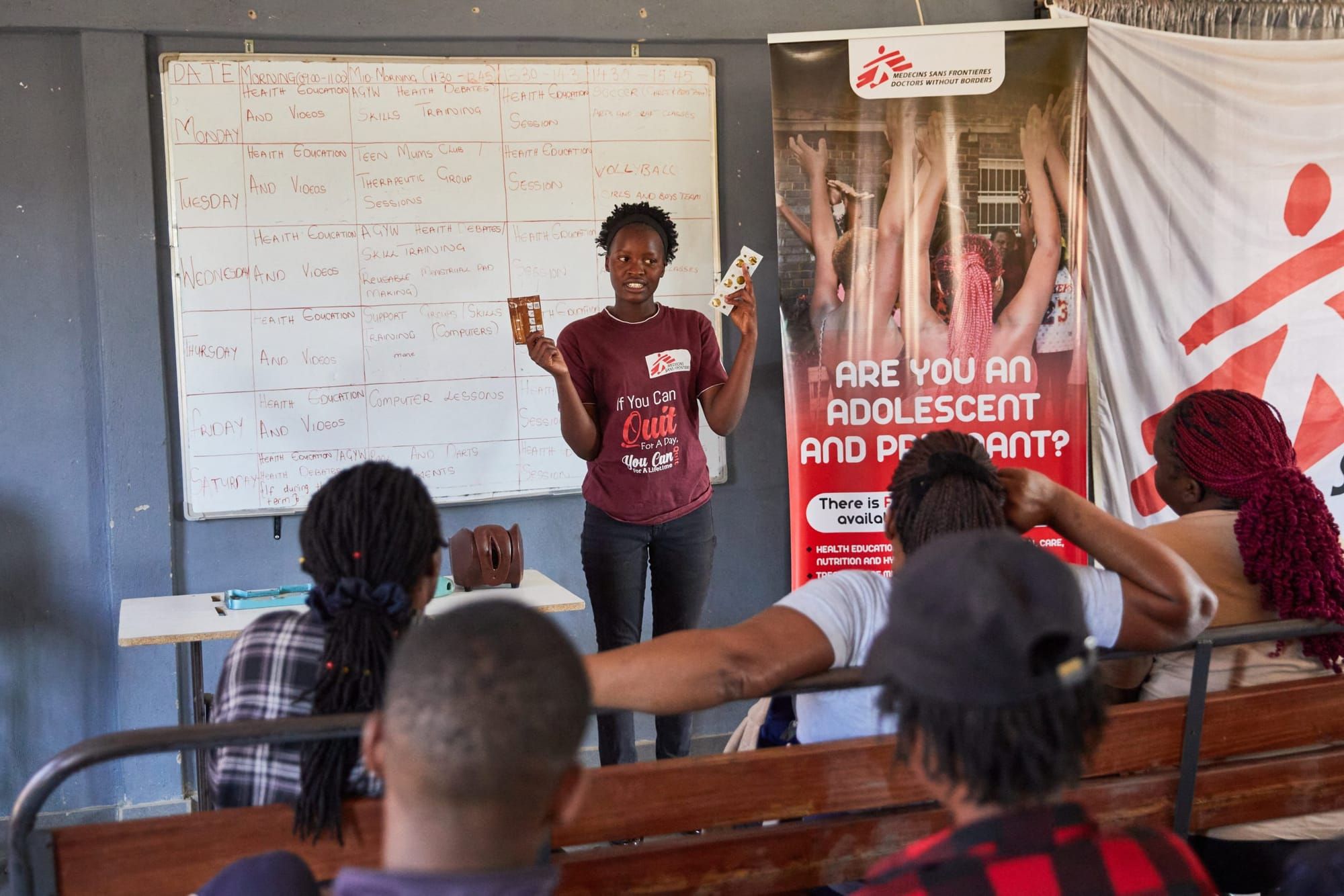
Yamin warned that the consequences would be most severe for already marginalized populations, including adolescents, rural communities, sex workers, LGBTQIA+ people, people who are already lacking information about sexual and reproductive health, and people living in extreme poverty.
“It has a particularly devastating effect on the most vulnerable people who depend on us for foreign assistance,” Yamin said.
Beyond abortion care, advocates say the gag rule functions as a broad speech restriction, limiting medical counseling, public health education, advocacy, and research.
Under the policy, providers are barred from referring patients elsewhere for abortion care or even discussing it as a medical option, including in cases of rape, ectopic pregnancy, or life-threatening complications. According to Yamin, the restrictions also choke off data collection, leaving governments unable to accurately track maternal deaths or unsafe abortions.
“It has a whole cascade of effects,” Yamin said.
The new rules would also activate recent executive orders attacking “gender ideology” and DEI initiatives, extending funding restrictions to organizations that provide gender-affirming care or work explicitly with transgender and nonbinary populations.
Advocates warn that the policy could place governments and nongovernmental organizations in direct conflict with domestic laws in countries where abortion is legal under certain circumstances or where courts have recognized gender identity rights.
In India, for example, the Supreme Court has affirmed a constitutional right to gender identity. In South Africa, abortion is legal during the first trimester. Enforcing U.S. funding restrictions in those contexts could trigger legal challenges against the governments themselves.
“The administration’s anti-gender positions fly in the face of international legal standards that have been built over 30 years,” Yamin said, pointing to global agreements reaffirmed by the United Nations and the World Health Organization.
Both health and legal advocates described the expansion as an effort to weaponize foreign assistance to export the politics of the U.S. culture war globally.
“They are using foreign aid to bully countries into doing so,” Yamin said. “The United States is now forcing other countries to do its discriminatory dirty work for it.”
The Center for Reproductive Rights has called on Congress to permanently repeal the global gag rule and reject the use of foreign aid as a mechanism for censorship and discrimination. The organization has also relaunched its Global Gag Rule Pro Bono Clearinghouse to provide legal support to NGOs affected by the policy.
“I’ve been working on global health and maternal mortality for 30 years. I’ve seen women bleed out from unsafe abortions. I’ve seen the aftereffects of women who have died in dingy basements from sepsis, the children who are left behind. I’ve seen sex workers die of HIV because they can’t access medications,” said Yamin. “All the grandstanding … is just repugnant when you actually know what is happening on the ground and how much people are suffering.”
Editorial Team:
Sahar Fatima, Lead Editor
Carolyn Copeland, Top Editor
Rashmee Kumar, Copy Editor
Author

Alexandra is a Cuban-American writer based in Miami, with an interest in immigration, the economy, gender justice, and the environment. Her work has appeared in CNN, Vice, and Catapult Magazine, among
Sign up for Prism newsletters.
Stay up to date with curated collection of our top stories.