Gentrifying beyond borders: How Americans displace locals abroad
Americans are incentivized to gentrify places like Mexico and the Dominican Republic, leaving local residents displaced and more vulnerable
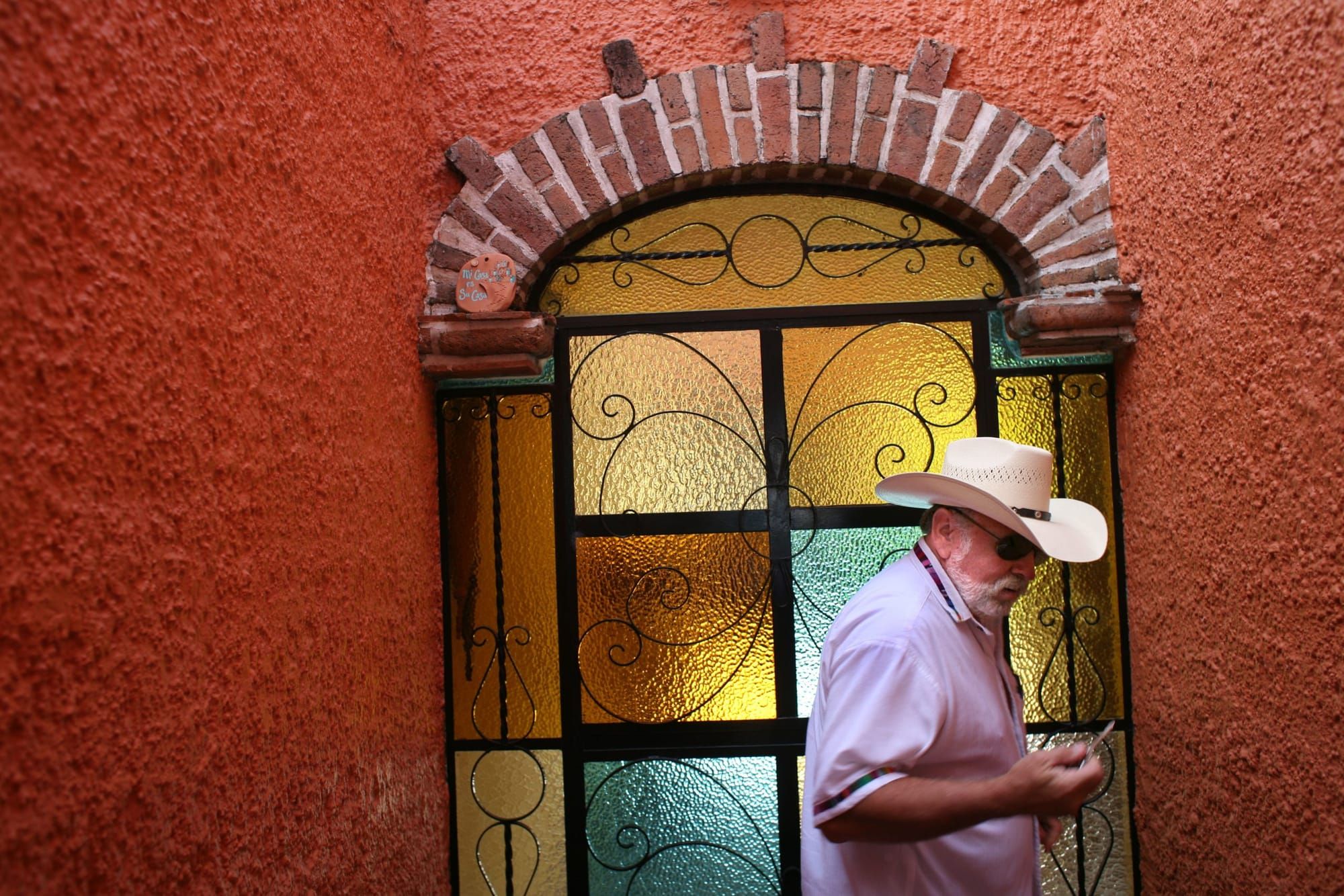
As election news exasperates U.S. voters, online discourse led by TikTok, respected media outlets, and even social media influencers continues to float the idea that Americans can simply leave the country and work remotely. After all, major U.S. cities full of employment opportunities have become far too expensive, and even small towns that double as tourist hotspots are seeing rent increases that dwarf local wages.
People who embrace this kind of emigration tend to call themselves “digital nomads” or “expats.” Because of their privilege as U.S. citizens, they are able to enter multiple countries without a visa and even stay longer than what is normally allowed via digital nomad visas that confer a legal status to work remotely.
Meanwhile, the Biden-Harris administration recently announced an executive action barring requests for asylum at the Southern border when the number of people apprehended outside of ports of entry surpasses a daily average. And, more broadly, migrants—including children—are forced to trek through the Darién Gap in hopes of getting to countries that can provide them refuge. According to the Panamanian government, more than 520,000 immigrants entered Panama via the Darién Gap last year. Most were from Venezuela, but others came from Sri Lanka, Nigeria, Brazil, India, China, Vietnam, and Ghana—all countries that have experienced political, economic, and climate-related strife.
Having a U.S. passport still confers privilege and allows visa-free entry to many countries. U.S. citizens can trust that their American dollars will go far and this benefit helps them live comfortably abroad. But how does their ability to roam free throughout the world affect the denizens of the countries they now inhabit, and what does their continued presence mean long-term for the locals they displace?
What does it mean to be ‘illegal?’
The idea of moving abroad where the American dollar will go further isn’t new or just for the young and adventurous. Senior citizens are often bombarded with news about where to retire and live more comfortably with their Social Security, or other benefits. The U.S. government even guides retirees on how to continue receiving their benefits if they move abroad.
But social media is also full of examples of Americans making the most of the privileges afforded by their U.S. citizenship. Influencers like Amelia and JP Abroad and Traveling With Kristin have popular channels about their travels, providing tutorials on how to move abroad. Some have even written books like The 4-Hour Workweek that encourages U.S. citizens to leave the country to save money and live lavishly elsewhere.
For the most part, this kind of content is broadly accepted and even results in lucrative businesses. Influencers who travel abroad, whether temporarily or to live longer-term, have frequently enjoyed success. This is even true when expats provide tips for gaming the system, including suggestions for how to do a “visa run” by leaving a country, returning as a tourist, and then renewing a visa without ever going through a country’s immigration system.
Similar content made by migrants to the U.S. only sparks outrage. Take, for example, the “migrant influencer,” whose TikTok was the subject of nationwide reporting because of his tips to other newly arrived immigrants about making the most of U.S. laws. But the tide is also turning on Americans abroad. During a July over-tourism demonstration in Barcelona, Spain, residents squirted dining tourists with water guns.
Faisal Al-Juburi is the chief external affairs officer at the Refugee and Immigrant Center for Education and Legal Services (RAICES), a Texas-based organization that provides legal and social resources for immigrants. As a first-generation Iraqi American whose broader work has celebrated global citizens, Al-Juburi noted that even the language used to describe Americans abroad is worth interrogating.
“We’re talking about immigrants coming to the U.S., but it’s part of American exceptionalism that we’re ‘expats’ when we go abroad,” he said.
Film critic and writer Carlos Aguilar grew up in Mexico City’s Gustavo A. Madero delegation, far from the upscale attractions that now lure tourists to CDMX. He moved to the U.S. at 14 and eventually obtained Deferred Action for Childhood Arrivals (DACA), which means he can only travel outside of the U.S. under specific circumstances—and only with permission from the government.
Aguilar lives in Los Angeles, California, and hasn’t returned to Mexico City for 20 years. A lot has changed since he left. Locals are now battling against gentrification in Mexico City, where so-called digital nomads have drastically driven up the cost of rent and other living expenses.
“My closest family members are still living [in Mexico City], and this issue doesn’t feel removed from me,” Aguilar said. Like Al-Juburi, the writer said terms like “expat” and “immigrant” have deeply loaded meanings.
“Those words to refer to the concept of leaving one country to live in another are very much coded in class,” he explained. “[For immigrants,] there’s a coded illegal component to your existence. Your presence is unwanted. A lot of people in the far right or Republicans use the term ‘illegal’ to devalue a person’s humanity. On the opposite spectrum are the expats, who don’t want to call themselves refugees, illegals, or undocumented—even though a lot of them live in Mexico and other parts of Latin America without the proper documents.”
There’s also the reality that expats can generally leave if and when conditions become unfavorable. Digital nomads can also seamlessly go from country to country—a privilege only bestowed upon citizens from certain countries that allows them to skip interacting with immigration officials altogether.
It’s not just the privileges enjoyed by Americans abroad that frustrate artist Lizett Carmona; it’s also the popular narratives that surround them.
Carmona is a DACA recipient based in Chicago, Illinois, whose colorful work explores migration, imperialism, and confinement, while also delving into the impacts of family separation caused by borders. The artist told Prism that the language used to describe Americans abroad and immigrants in the U.S. also denote their values.
“Expats can find protection and resources,” she explained. “They find people who already speak their language. They have the benefit of being able to travel. That’s a huge indicator of your position globally. … When migrants come into this country, we’re ‘taking’ things away from someone. Expats are bringing [things] in and spending the U.S. dollar.”
Who are open borders for?
Nicki Post is a vlogger who grew up outside of Boulder, Colorado. She now does travel consulting, which has allowed her to create an income stream based on her travel experiences. Post has lived around the world, including stints in Italy, South Korea, and Argentina. Her region of Colorado was lacking in diversity and at first, she said, her travels were about “excitement and adventure.”
“I didn’t want a traditional life,” Post said. “I just wanted to have new experiences.”
But after a while, Post lived outside of the U.S. for so long that it simply became her way of life. While the social media about living abroad might seem glamorous to those who’ve never lived outside of the U.S., Post says it’s not nearly as fun as some influencers make it look.
“The biggest challenge for me is community. Being an expat, there’s so much loneliness,” Post said.
Indeed, residents in countries experiencing high levels of American gentrification have also noticed that U.S citizens aren’t particularly community-oriented when they move abroad—and they say it has larger ramifications for the region.
Zahira Cabrera is an artist, critic, and educator of Dominican descent. Her work has been critical in creating more visible Afro-Latinx spaces online. Cabrera grew up in the U.S., but she moved back to the Dominican Republic in 2019, where she now lives with her daughter and mother.
The Dominican Republic’s gentrification has unfolded over many years, with some returning Dominicans describing it as worse than the displacement happening across New York City. Making matters worse, the country’s “urban revitalization project” intended to improve residents’ quality of life only worsened the conditions experienced by the Dominican Republic’s most vulnerable populations.
According to Cabrera, tourism and expats are having the biggest impact on the ability of local Dominicans to find places to live. Cabrera said that most properties for sale are even listed in dollars instead of the Dominican peso, making it clear who the homes are being marketed toward—if the $175,000 price tag for apartments didn’t make that clear enough.
“People here make $300 a month if they’re lucky,” she said. “So, who are these apartments for?”
Cabrera’s theory is that many of the Americans moving to the Dominican Republic didn’t have a community to start with, which is why they have no problem leaving their lives in the U.S. behind.
“[T]hey don’t integrate. Expats isolate themselves. They don’t contribute to the local economy,” Cabrera said, noting that many expats have items shipped from the U.S. rather than buying locally. In some areas of the Dominican Republic, locals often view expats from more privileged countries with suspicion, she said.
“It’s not uncommon for expats to live as sex tourists forever, especially in Sosúa, Puerto Plata,” said Cabrera, explaining that Sosúa is a neighborhood known for sex work because there are so few employment opportunities for locals.
While some expats to places like the Dominican Republic may never stop to consider the entitlement they feel to live abroad, Post acknowledges her privileges as a white, educated American and said she’s been treated well by the residents of the countries where she has lived. She also concedes that any negative feedback Americans abroad receive is “more individual,” and not at all the same as the systemic xenophobia and racism experienced by migrants in the U.S.
Living abroad is often cited as a life-changing experience by Americans who’ve enjoyed the privilege, and according to the DACA recipients who spoke to Prism, those with the means to travel should. But they should be cognizant of their privileges, mindful of their impact, and make sincere efforts to build community.
Al-Juburi also issued an important reminder: While the U.S. fails to meet its international and legal obligations around asylum, it must be acknowledged that “open borders already exist for the wealthy and the privileged.”
Author

Ingrid Cruz is a freelance writer and journalist covering health, social justice issues, and pop culture. She enjoys coffee and cats.
Sign up for Prism newsletters.
Stay up to date with curated collection of our top stories.