Gaza still sings, draws, and dreams
Young creatives in Gaza are holding tight to the things that make them feel human amid the horrors of the genocide
Real journalists wrote and edited this (not AI)—independent, community-driven journalism survives because you back it. Donate to sustain Prism’s mission and the humans behind it.
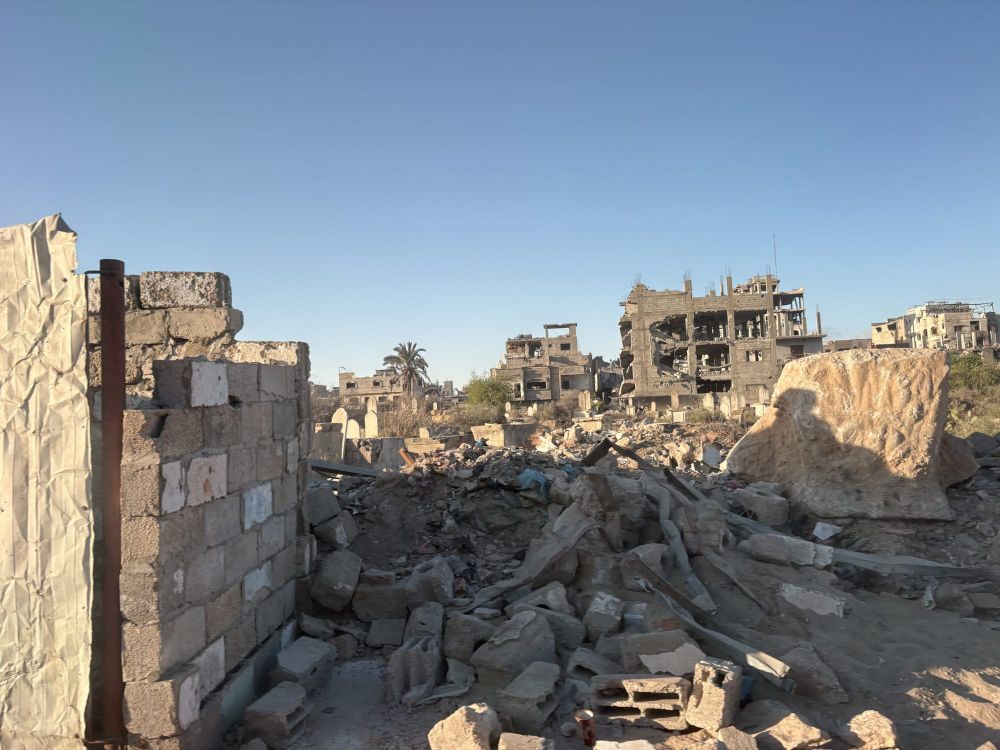
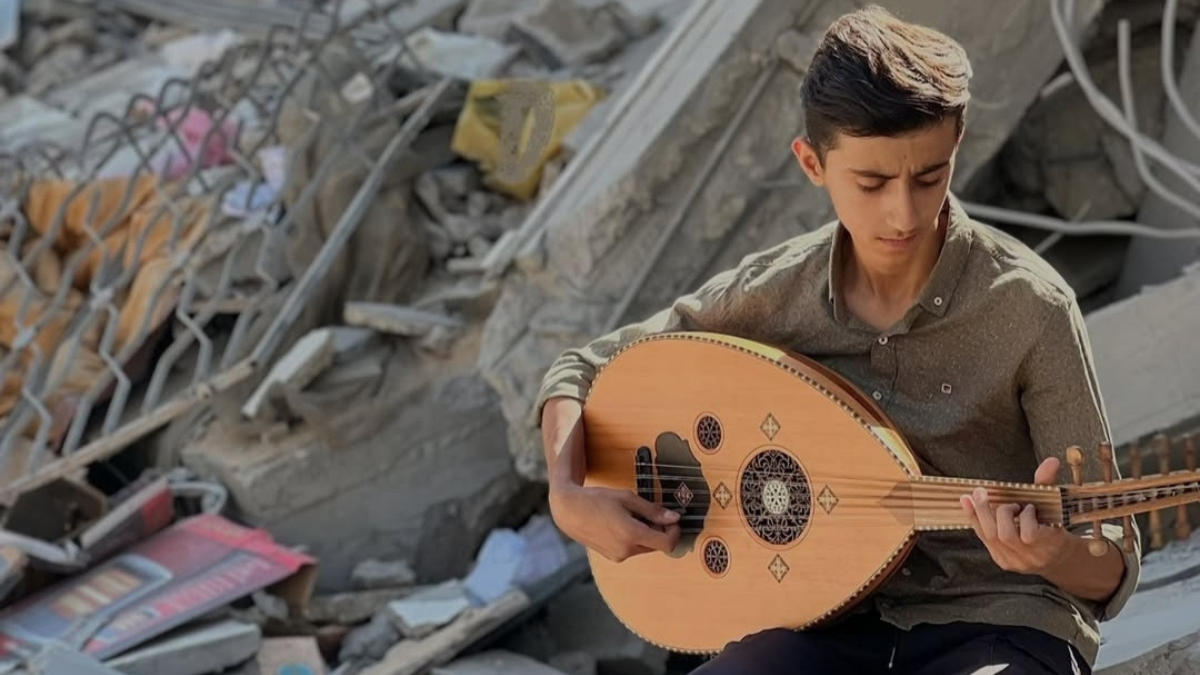
Samih Al-Madhoun sits atop the rubble of his destroyed home in northern Gaza, playing his oud and singing:
Yummah, they destroyed our home,
My brother’s home and our neighbor’s too,
Don’t be upset, mother,
Our stones have only increased,
We are Palestinians, not terrorists,
We are the people of this land, mother, and we will rebuild our home.
Al-Madhoun, 18, captured the attention of viewers across Instagram as he posted videos of himself singing and playing the oud during the genocide. His videos received thousands of reactions and messages of encouragement from followers around the world.
“My talent has helped me cope with the pain of the war. It created a small space of comfort for me and for those around me,” Al-Madhoun told Prism.
Amid the war, the rubble, and the harsh life imposed on the Gaza Strip, young people like Al-Madhoun have turned to the things that remind them of their humanity, and that they were made to be creative, not to die. Some use their artistic talents to soften the darkness of reality, some use them to portray that reality, and others try to reclaim the passion that the genocide has stolen from them.
When Al-Madhoun returned to check on his house after the Israeli withdrawal from northern Gaza, he found it completely reduced to rubble. While digging through the debris, hoping to find a memory from the past, he discovered one of his musical sheets. It was still intact despite the bombing, as if sending him a message to keep going and never give up.
“Music and singing are my hope in life. I dream of continuing my artistic journey and meeting my audience while performing on the biggest stages,” Al-Madhoun said.
The songs he sings vary in topics such as war, love, freedom, hope, and childhood. He also joined a group of young musicians who formed a band called The Oud Ensemble, who played national melodies by the great composer Marcel Khalife. The group even performed “I Chose You, My Homeland” atop bombed houses and neighborhoods wiped out by Israel.
But the struggles of living through a genocide do affect Al-Madhoun.
“The hardest thing is displacement: being left without a home, living in a tent inside a crowded camp with no privacy at all,” he said. “Everyone here is exhausted, emotionally and financially. They need anything that can ease the weight these days, so whenever I play or sing, people gather around me with so much encouragement.”
Earlier this year, after two years of war, Al-Madhoun and others from his generation were finally able to sit for high school exams. Despite living in a tent, the lack of internet, and continuous power cuts, he succeeded and scored 81%.
“No matter how great the pain is, hope is greater,” Al-Madhoun said. “Like a beam of light cutting through the darkness, something inside me keeps whispering that there is still hope in tomorrow.”
He ended our conversation by singing Julia Boutros’ song, “I Breathe Freedom.”
On another side of Gaza, a young girl named Taleen Mhanna shared a reel on Instagram showing her standing in the middle of her destroyed room. She holds up one of her paintings with a defiant smile. The artwork depicts a peaceful landscape, a clear sky, green fields, and tall mountains. “The peace I wait for…” she captioned the post.
“I always wished I could live in the calm place I painted,” she told Prism. “It felt like a pocket of peace in the chaos of war, and that’s why I love it so much.”
Art is her only escape from the genocide, Mhanna said. “When I start drawing, I feel like I’m entering my magical world where there is no destruction, no hunger, no displacement.”
Her younger brother, Kareem, shares her same talent, yet expresses it differently.
“Kareem draws everything that affects him, everything he carries inside but doesn’t express with words,” Mhanna said. “He faces reality through his drawings, while I escape from it through mine. I don’t like drawing the war because it hurts me.”
Mhanna said that even without the war, she would still paint natural landscapes.
“But my feelings would be different. I would draw out of joy and passion, not out of escape or survival,” she said. “And Kareem too. Without the war, he wouldn’t draw rockets and bombs. His drawings would turn into innocent, joyful pictures filled with hope and life.”
Mhanna proudly shared a small victory she achieved despite the war: She managed to save and carry her paintings with her through every displacement.
“The war took many things from us: our home, my father’s job,” she said. “But it couldn’t take away my ability to love life or to create beauty from deep within hope.”
Ismail Marzouq, a 16-year-old English student of mine, is exploring his creativity in yet another way. With a passion for programming and web design, Marzouq was still self-learning through YouTube at the beginning of the war. But when the invasion of Gaza City intensified, everything stopped.
His family refused to evacuate to the south, choosing to remain in their home along with a few neighbors. They sought shelter in the most fortified room in the house when they heard a tank approaching their street. A bulldozer first uprooted the sidewalk so the tank could pass, piling rubble right at Marzouq’s front door.
“We couldn’t get out at all. They trapped us for 22 days. By the end, we ran out of food and drinking water and were forced to drink salty water,” he recounted.
These painful memories deeply affected his mental health and his ability to continue learning. There was no internet, no electricity, and no access to basic necessities—all amid a devastating famine.
In 2023, Marzouq was accepted into the programming track of a major Malaysian-funded initiative called The Engineering Village, which trains young people in Gaza in technology. Then the events of Oct. 7, 2023, unfolded, and the organizers announced that the project was suspended until further notice, Marzouq said. It has never reopened.
“If there were no war, I would have continued the program and traveled abroad to participate in international competitions,” Marzouq said. “I wish someone could support me with courses so I can start again, so I can get another chance after the first one the occupation took from me.”
Marzouq, Mhanna, and Al-Madhoun chased very different creative passions amid the genocide, but they all share one thing: hope for tomorrow.
For young people with big dreams, one of the best resources for support can be social media, where those outside Gaza can provide them opportunities to show the world who they truly are: not just survivors, but inspirations, creators, and the future of Palestine.
To support the young creatives featured in this article, find them on Instagram: Samih Al-Madhoun, Taleen Mhanna, and Ismail Marzouq.
Editorial Team:
Sahar Fatima, Lead Editor
Carolyn Copeland, Top Editor
Stephanie Harris, Copy Editor
Author
Ghada Abu Muaileq is a freelance writer and a graduate of English literature from the Islamic University in Gaza. She writes articles and stories about life under war in Gaza, documenting the experien
Sign up for Prism newsletters.
Stay up to date with curated collection of our top stories.