In Gaza, I feel Sudanese pain as my own
I watched the RSF’s brutal takeover of el-Fasher after just barely surviving a genocide myself. It’s time for the world to speak up
Real journalists wrote and edited this (not AI)—independent, community-driven journalism survives because you back it. Donate to sustain Prism’s mission and the humans behind it.
While scrolling through Instagram, I came across a video of a Sudanese child holding an empty pot, his bones clearly visible. At that moment, I saw Gaza again—different land, same pain.
On April 15, 2023, almost six months before the genocide in Gaza began, war in Sudan erupted between the paramilitary Rapid Support Forces (RSF) and the Sudanese Armed Forces, after a long period of intensifying tension between both sides. The conflict quickly spread from the capital Khartoum across the country, killing more than 150,000 people and displacing more than 12 million people.
We Gazans constantly followed Sudan’s war on TV and felt deep sorrow for the people there. No normal person enjoys seeing innocents being killed. My youngest brother, Yousef, always asked us, “Where are the Western countries in all this?” He was young and naive, unaware that those countries often turn a blind eye and stand with arms crossed, as long as their own interests are protected.
Since the outbreak of the Israeli war on Gaza, following the news became our priority and our act of survival. However, one thing I noticed was how the world’s eyes turned to Gaza while Sudan’s tragedy began to disappear from the headlines.
During the genocide in Gaza, I didn’t follow what was happening in Sudan. Not because I didn’t care, but because I was living my own suffering. During those harsh months under bombs and blockade, I could barely keep up with my own city’s pain.
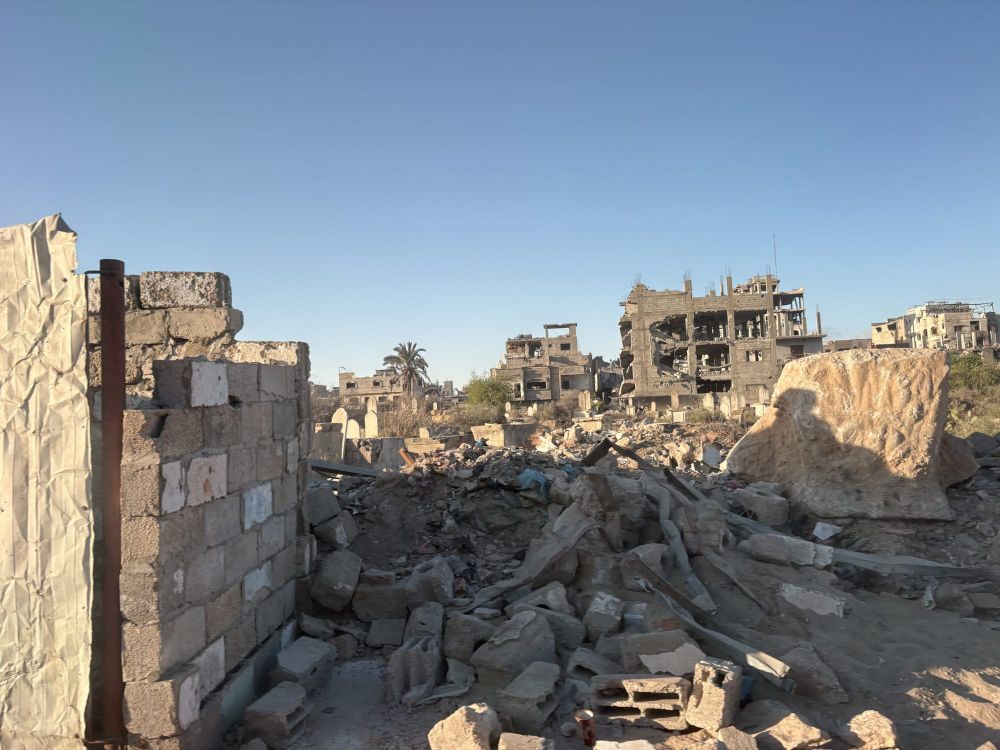
But now, as Gaza lies in ruins after a precarious ceasefire deal, and el-Fasher in western Darfur endures a massacre by the RSF, I can no longer separate these two places. They are bound not only by pain but by the world’s silence—the silence that makes suffering invisible.
Atrocities in el-Fasher
While I watched videos about the massacres taking place in el-Fasher after the RSF moved into the Sudanese army’s last stronghold in Darfur, everything we endured in Gaza painfully came to my mind. I came to notice how Gaza and el-Fasher are bound, sharing the same heartbreaking fate; both have been starved, besieged, and abandoned by a world that turns away from crimes committed by both Israel and the RSF, which is heavily backed by the United Arab Emirates.
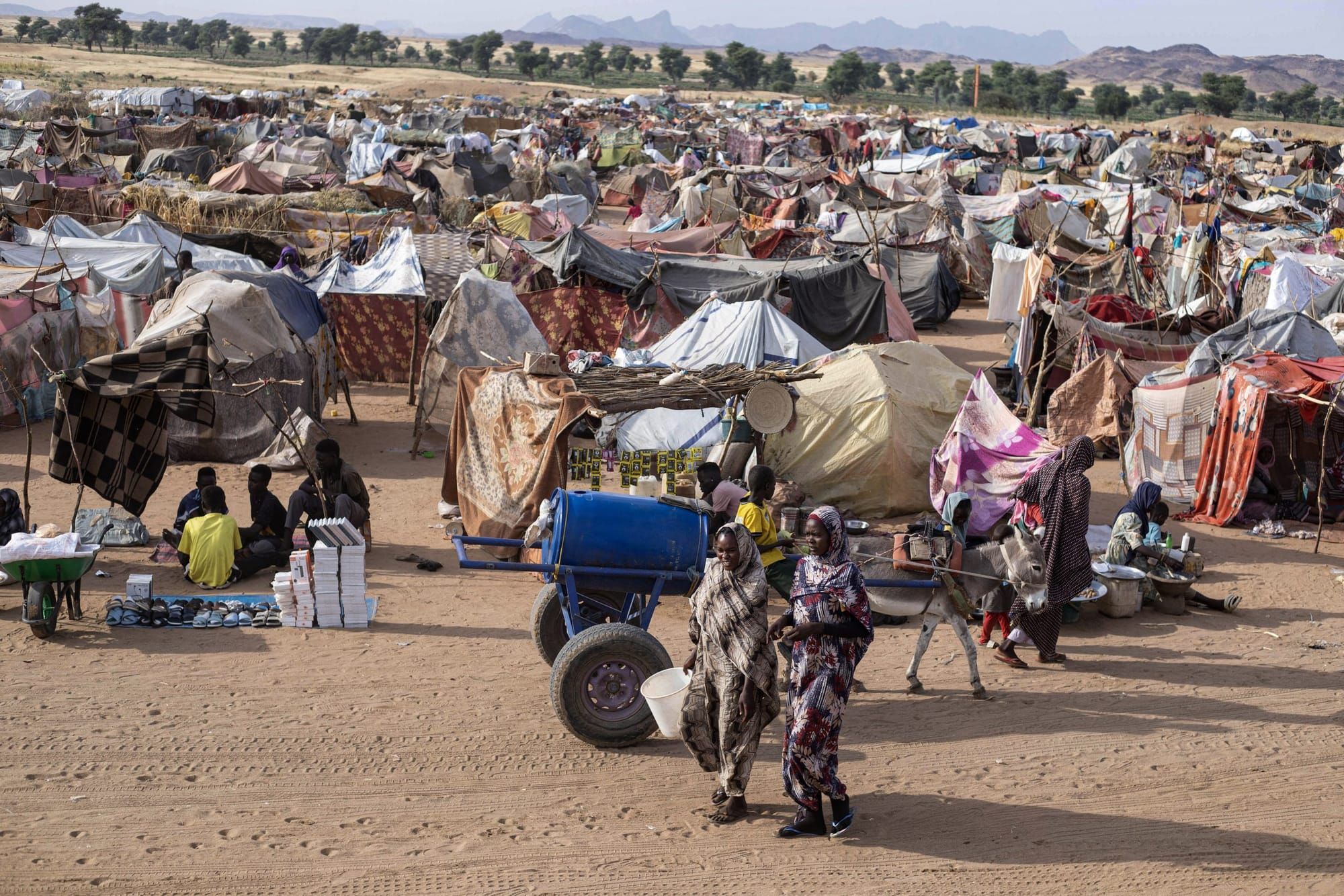
El-Fasher, capital of North Darfur State in western Sudan, once thrived as a hub for agriculture, trading in cereals and fruits. Today, its residents long for even a handful of food.
Since May 2024, the RSF has besieged el-Fasher and this year began surrounding it with walls of sand, blocking all humanitarian convoys—no food and no medical supplies. Anyone who tried to enter or leave the city was tortured, sometimes to death.
On Oct. 27, Sudan’s army chief Abdel Fattah al-Burhan announced the withdrawal of his forces from el-Fasher, a day after the RSF seized control of the main Sudanese army base there and declared victory. Prior to the takeover, el-Fasher had a population of about 260,000. Since then, about 82,000 people fled to other towns, most of them on foot, including walking more than 70 kilometers west toward Tawila, a town already sheltering more than 652,000 displaced people, according to the International Organization for Migration. The United Nations and other humanitarian groups shared evidence showing that the city’s residents suffered horrifying atrocities, including mass killings, gang rapes, and continued starvation.
Every new video from el-Fasher reopens my wounds from northern Gaza. I remember November 2023, when Israel imposed the Netzarim corridor, splitting Gaza in half. Since then, northern Gaza has been cut off completely, besieged for over a year. No food, no aid, and no return for those who were forced to leave.
We experienced a severe famine, not even being able to find basic food items. At first, we could only have one meal a day, but then even this option disappeared. We started to grind animal feed into flour. The taste was awful, but hunger was even worse.
In el-Fasher, the same scenes play out. People have been forced to eat animal food and tree leaves. Now, even that is gone, and they are dying from hunger. About 177,000 people are still trapped under RSF rule, prevented from leaving. The RSF keeps posting videos of its crimes on social media.
They are proud of their crimes—the world must be ashamed of its silence.
Foreign powers unleashing violence
The war in Sudan is not a civil war, as many people believe. A war is considered civil when people from the same country, holding the same nationality, fight each other. But in Sudan, this is not the case. The conflict there is actually driven by the competing interests of regional and international powers.
The RSF doesn’t only include fighters from Sudan, but also mercenaries from countries such as Colombia and others. Similarly, scores of foreign fighters join the Israeli military to enact violence on Palestinians in their homeland.
The RSF is also weaponized and funded by foreign states, especially the UAE, Russia, China, and Saudi Arabia. These same nations that pretend to call for peace are also the ones seeking Sudan’s resources buried beneath its soil.
Sudan lies at a strategic crossroads, and it is rich in valuable resources, especially gold, which accounts for a significant portion of Sudan’s economy. And just as global powers use Sudan’s war for profit, others have done the same with Gaza, pouring money and weapons into Israel’s war machine with the aim of occupying Gaza for its strategic location and stealing the natural gas reserves beneath its shores.
This greed has no borders.
Sudan’s internal conflicts did not begin in 2023. Its history has long been marked by tensions—between tribes, governments, and militias—and punctuated by many political coups aimed at toppling dictatorial leaders. What all these conflicts have in common is that they were all reinforced by external interests.
And this is not unique to Sudan. Across the Arab world, division has been turned into a weapon. Even in Gaza, betrayal has existed; collaborators from Gaza itself chose to sell out their people, sometimes costing the lives of friends and neighbors, only for money and power.
The oppressors always exploit our divisions. And as long as we remain divided, we become easier to destroy.
Shared pain
Gaza and el-Fasher are not social media trends. They are not distant headlines or passing tragedies. They are wounds in our shared humanity. Both cities are starving under siege, both are punished for existing, and both are ignored by a world that measures suffering by political convenience.
Gaza and el-Fasher are not social media trends. They are not distant headlines or passing tragedies. They are wounds in our shared humanity.
As someone who has lived through genocide, I can feel the Sudanese pain as if it were my own. And I am ashamed that I did not speak sooner.
But silence helps no one. So I write—not because writing will end the war, but because it is the only weapon left to those stripped of everything else. A post, a word, or a share can make a change.
To you, reader: Do not turn away. Don’t be silent. Don’t forget your humanity. Don’t wait until it happens to you.
Because one day, you may be the one trapped behind a wall of silence, praying that someone—somewhere—still cares enough to speak your name.
Editorial Team:
Sahar Fatima, Lead Editor
Carolyn Copeland, Top Editor
Stephanie Harris, Copy Editor
Author
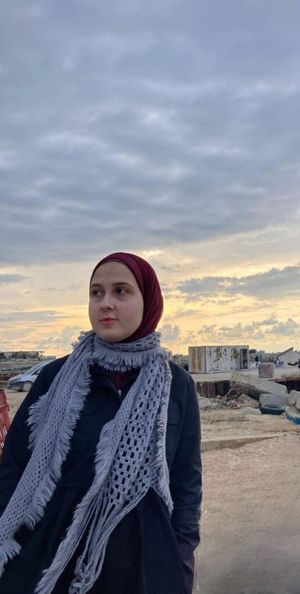
Mariam Mushtaha is a second-year student at the Islamic University of Gaza, majoring in English translation. Despite the hardships of war, she discovered a deep passion for writing, using it as a mean
Sign up for Prism newsletters.
Stay up to date with curated collection of our top stories.