Deadly storm creates yet another bitter struggle in Gaza
More than a dozen people were killed after Storm Byron swept through, flooding tents and collapsing walls of homes already damaged by Israeli bombs
Real journalists wrote and edited this (not AI)—independent, community-driven journalism survives because you back it. Donate to sustain Prism’s mission and the humans behind it.
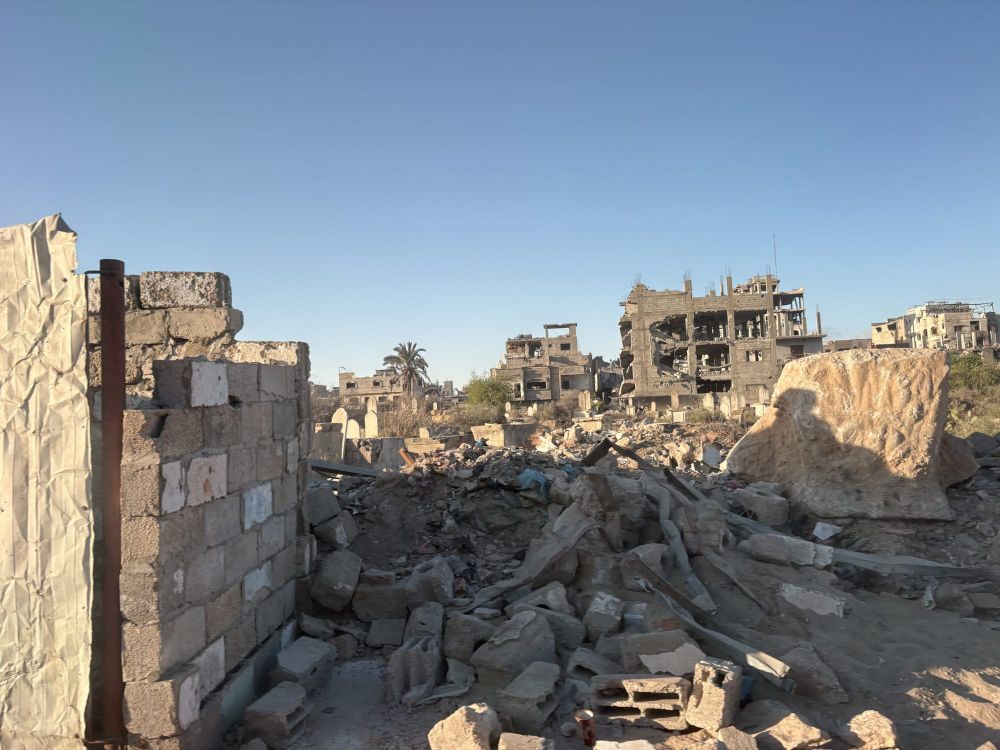
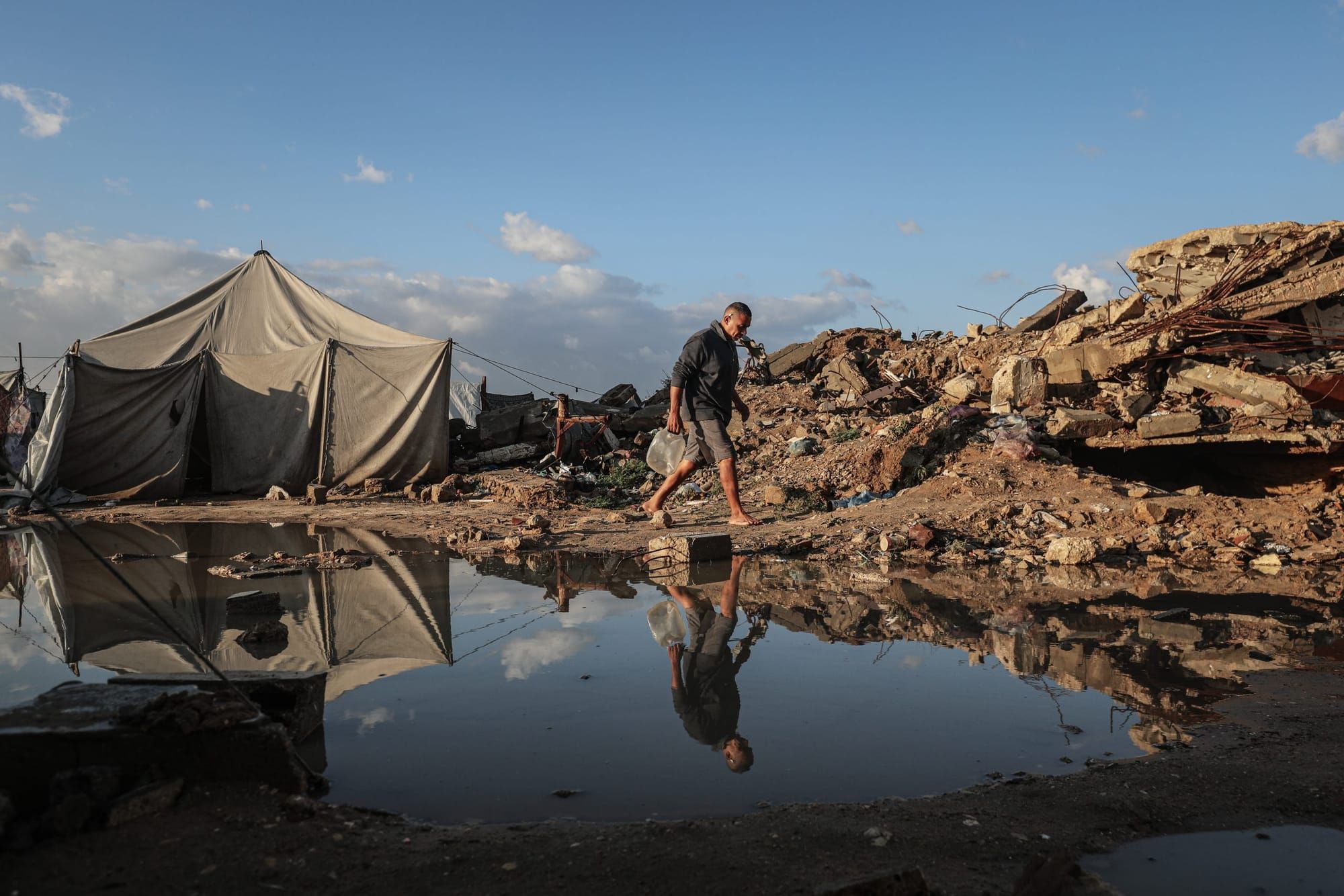
Bitter cold, strong winds, and heavy rains hit Gaza last week, killing more than a dozen people after tents flooded and walls collapsed over already damaged homes that some residents had returned to. The sound of explosions came not from shelling or rockets, but from thunder as Storm Byron swept through the region.
Many residents of Gaza City are living in tents set up on open land and along the streets, while others are steadfastly remaining in their homes that were bombed and destroyed by the Israeli occupation.
A house belonging to the Nassar family collapsed in the Sheikh Radwan neighborhood during the low-pressure system, killing two children named Ghazi and Lina, according to their uncle, Dr. Alaa Nassar.
“I’m not in Gaza, but from what they told me, the front part of the house suddenly collapsed,” Nassar said. “The boy and the girl were there, setting the fire to prepare lunch. The mother and the other daughter were in the back part of the house, while the father and the youngest child were outside.”
Like many others, the family had been living in their home after it was bombed at the beginning of the war. They were forced to live in the storage rooms on the ground floor of the building because the upper floors had been completely destroyed, Nassar said.
“Lina had passed her high school exams shortly before her martyrdom. Her family rejoiced for her, and she was about to enroll in university, but death betrayed her,” Nassar said. “As for Ghazi, who was named after his grandfather who fell ill and died during the war, little Ghazi found no safe shelter, just as his grandfather found no hospital bed while he was in a coma.”
At least 14 people were killed across the Gaza Strip as a result of homes collapsing on their residents and due to the severe cold, which led to the death of the infant Taim Al-Khawaja and the child Hadeel Al-Masri. They died from the cold in the Shati refugee camp and inside a center sheltering displaced people west of Gaza City, respectively.
The situation of people living in tents is beyond heartbreaking. Heavy rain flooded them, their tents were blown away, and their mattresses and blankets became soaked. Children woke up in the middle of the night, drenched and shivering, and all their belongings were damaged by the rain. Cardboard storage boxes dissolved in the flooding, ruining food and soaking clothing.
“We were asleep when it started raining heavily. At midnight, we woke up to my mother telling my sister, ‘Wake up, your mattress is filled with water,’” Nada Adas, 19, said, describing the night the family’s tent was flooded.
Adas said that a stream of water flowed outside their tent, causing chaos and confusion. Once the rain eased slightly, people emerged to check on each other and fix their tents.
“One of our neighbors had a tent different from ours, made of plastic covers. He said he couldn’t sleep at all, constantly pushing the water away from the tarp,” Adas said. “When he finally tried to sleep, the rain suddenly intensified, the tarp burst, and water poured over him and his children, flooding the entire tent.”
The rainwater reached nearly half the height of the tents. Many people could not find their tents because they were blown away by the wind, and many others had their tents torn apart. Sewage water and dirt mixed with the rainwater, creating a major obstacle for everyone. Due to the destruction of the city’s infrastructure, mud has severely hindered people’s movement.
For example, I live in an area with schools, but the streets have been completely bulldozed and the infrastructure destroyed. Students pass through every day and face extreme difficulty walking, and younger students may slip and fall into the mud.
Even the bodies of the war’s martyrs were not spared from the rain and the storm. Cemeteries were flooded, graves were exposed, and bodies emerged and floated on the ground. This is not the first time this has happened: Throughout the war and during the low-pressure systems that passed over the city, buried bodies have resurfaced.
A man who buried his relatives in a cemetery in the city said, “Because there are no stones to build the graves, we cover them with plastic. When it rains, the bodies of our loved ones emerge from the graves.”
Another man said, “I come here every day to check on my son’s grave, because I fear that the body might be flooded and float to the surface. There are many cases in the cemeteries where graves are flooded, and dogs and cats feed on what remains of the bodies.”
The suffering and genocide in Gaza continue despite the October ceasefire. Missiles and rockets continue to rain down. Many who survived the height of the bombardment did not survive the rain. At least 13 houses collapsed in different areas of the Strip, and more than 27,000 tents have been swept away since the weather depression began, according to the Government Media Office. Meanwhile, thousands of residents remain homeless, caught between their destroyed houses and their worn-out tents, as the occupation continues to block the entry of shelter materials and aid, leaving the people of the Strip to endure the harsh cold.
Editorial Team:
Sahar Fatima, Lead Editor
Carolyn Copeland, Top Editor
Rashmee Kumar, Copy Editor
Author
Nadera Mushtha is a writer and a poet from Gaza.
Sign up for Prism newsletters.
Stay up to date with curated collection of our top stories.