How hunger is used to control the masses
Israel’s starvation of Gaza builds on lessons learned throughout history: Keep people hungry and they’ll demand bread, not freedom

In our lives as human beings, certain experiences tend to echo one another—or perhaps it’s just that my mind makes sense of the present by reaching into the past. One such experience, deeply rooted in the dynamic between the state and its people, stands out as one of the most defining periods in American history: the 1950s.
Known as the “Golden Age,” this period unfolding in the aftermath of World War II marked an unprecedented wave of economic prosperity that touched both individuals and society at large. But it was also a time that capitalists would later regard with alarm due to a simple truth: A thriving economy gave birth to a rising collective consciousness in the U.S.—one that began to demand not just bread, but freedom.
The labor and civil rights movements that emerged in the U.S. once taught oppressive regimes that hunger could be more effective than brute force in silencing dissent. Today, that lesson echoes grimly in Gaza, where the Israeli occupation has turned deprivation into strategy—shifting people’s struggle from liberation to mere survival.
America’s Golden Age
The U.S. was booming post-World War II. Working conditions improved, fair labor contracts emerged, and systems such as unemployment benefits, health insurance, and Social Security took hold. Home ownership, car ownership, and access to household appliances became widespread. At the same time, the U.S. stood as an industrial superpower, a position that helped ignite the modern technological revolution. But this prosperity wasn’t entirely innocent—it unfolded within the broader context of the global struggle between Western capitalism and the rising tide of communism from the East.
Despite the tangible achievements this prosperity brought to the U.S., the Soviet Union continued to hold the upper hand in one crucial area: equality. While Black Americans needed the “Green Book” to find places to eat, sleep, or travel safely without facing violence or discrimination from white people, Moscow was proudly hosting the Peoples’ Friendship University of Russia, a campus that welcomed students from all races and nationalities, offering them free education and living support.
Racial discrimination in America didn’t go unchallenged. It sparked waves of resistance, most famously when Rosa Parks refused to give up her seat to a white man on a bus in Montgomery, Alabama. That act of defiance ignited a yearlong bus boycott led by members of the growing middle class during the so-called Golden Age, from the 1950s to the 1970s. The boycott eventually ended with a Supreme Court ruling that declared segregation on public transportation unconstitutional.
Prosperity meant awareness, and awareness bred demands: for civil rights, for better representation in Congress, for cleaner politics, for dignity and fairness.
This moment marked a turning point. A deeper realization began to dawn within the American establishment. Feeding the people wasn’t just about avoiding unrest—it risked empowering them. Prosperity meant awareness, and awareness bred demands: for civil rights, for better representation in Congress, for cleaner politics, for dignity and fairness.
A sizable middle class had emerged, one that no longer worried about basic survival. And that, in itself, became a threat. This class had time to think, the luxury to question, and the clarity to seek something better. In the eyes of the capitalist system, economic prosperity had become a double-edged sword: It could stabilize a society—or awaken it.
And awaken it did. What looked like stability on the surface soon gave way to unrest: the Civil Rights Movement, mass refusal to fight in Vietnam, and a growing awareness of internal political corruption. Prosperity didn’t bring passive contentment—it brought conscious dissent. It led to organized protest, deeper questioning, and a bold demand for something more.
America’s post-WWII prosperity became a cautionary tale for authoritarian regimes: Economic growth could be either a source of stability or a spark for transformation, especially when a strong middle class begins to find its voice. But how does that play out in the Arab world, a region deeply scarred by decades of colonialism?
Authoritarian regimes in the Eastern countries re-colonized their own peoples after independence, hiding behind the mask of reform. They somehow realized that a middle class deprived of its space to grow within its homeland had become thirsty for change, and change, in its deeper meaning, meant a shift in power and opposition to the ruling authority. This became evident in the Arab Spring uprisings, which ignited in the early 2010s. The regimes understood that crushing dissent was easier than confronting the awareness of people’s rights.
Hunger as a tool of oppression
As I reflected on our own reality as Palestinians, I saw how populations across the Middle East have been pushed into a permanent state of need—not because of a lack of resources or potential, but because they were deliberately trapped between two impossible choices: freedom or bread. This isn’t a conspiracy theory. It’s a deliberate, well-structured policy. A playbook of authoritarianism, backed by global imperial interests, which have always found new ways to repackage colonialism.
Hunger is manufactured as a tool of control. People are driven into poverty so that they’re too busy feeding their bodies to think about their dignity, too overwhelmed by pain to notice injustice, too caught up in daily survival to imagine anything greater.
These regimes understand that a hungry people won’t spark change. Keep them chasing scraps, and they’ll have no energy left for protest or organizing. Bread becomes the only priority—and with that, every bigger question is postponed. Even if someone dares to think critically, the price is steep: losing a paycheck, getting cut off from aid, watching your children starve.
Authoritarian states know this. They’re stuck between integrating a critical middle class or preserving their tight circles of privilege. Often, they choose a middle path: engineering a weak, fragile, hesitant middle class. A class that is exhausted, fearful, and incapable of pushing for radical change.
Authoritarians have mastered the art of distraction, creating a system designed to keep people on the bare minimum of existence, where their choices are limited, their demands silenced, and their will easily bent.
The Palestine case
What authoritarian governments do to their people through veiled policies, Israel does so outright in its occupation of Palestine. It is the naked face of modern capitalism, an extension of colonial imperialism. In Palestine, every attempt to establish a real state or secure genuine independence that grants us the right to choose and elect freely has failed. Even our efforts to build an economy independent of the occupation have gone nowhere.
Economic growth in Palestine can’t be compared to that of any sovereign state. Every breath of water, every inch of land, is controlled and regulated by an occupying force. Yet we, too, lived a version of the story I’ve been tracing. After settlers left Gaza in 2005, we were placed under a suffocating siege by land, sea, and air. This blockade didn’t just cripple trade and the economy; it choked off any chance of building a future. It came as collective punishment and, more importantly, as a preemptive strike against what comfort might bring: greater awareness, growing demands, and an inevitable push for rights.
The siege, and the economic paralysis that came with it, is what impoverished us—not because we are inherently poor, but because poverty was imposed. The blockade became the mechanism of control, not just over borders and goods, but also over the very idea of autonomy. It didn’t follow a wave of dangerous growth or radical change; it followed simple aspirations, like building an airport. As if the moment we are allowed an airport, we’ll start asking for more treaties, more negotiations as tools to reclaim our rights.
But that’s not what negotiations are today. They’ve become a mechanism of suppression.
This blockade goes far beyond limiting goods or closing crossings. It reaches into the tiniest details of daily life. Scientific equipment is denied entry to university labs. Certain books are banned from libraries in Gaza. Every form of potential—academic, intellectual, economic—is targeted.
All of this forces us to reread the Gazan reality more carefully. How do these pieces fit together? How has the blockade, along with broader systems of oppression, contributed to the erasure of memory, to the deliberate detachment of a people from their rights?
Before the 2023 Gaza massacre, Palestinian society in the Strip had a strikingly high rate of education and a visible, resilient middle class. Many households relied on dual incomes, from both working mothers and fathers. But when this middle class entered the job market, it was met with frustration: chronic unemployment, unequal opportunities, jobs with no future, or positions that didn’t match people’s qualifications.
This created a storm of discontent. Discontent with the suffocating blockade, with the corruption of Gaza’s governing authority, with the far-right Israeli government that imposed siege after siege and launched assaults at regular intervals. There was also despair over the absence of meaningful cultural, political, and educational spaces. A full, dignified life remained out of reach.
As a result, many young people left. They jumped ship, seeking another shore. Because when an educated middle class finds no space to nurture its dreams, it either rebels—or escapes. And what both the Palestinian and Israeli governments feared most was precisely this: the consciousness, resilience, and collective repair that Gazan society embodied before the genocide.
The final blow
Then came Oct. 7, 2023, a turning point that made the cruelty of this system even more blatant. Immediately, Israel declared that it would cut off water and electricity, imposing a renewed, brutal siege as collective punishment. After two years of escalating bombardments and mass reprisals, this phase marked a final blow, a vile policy of starvation.
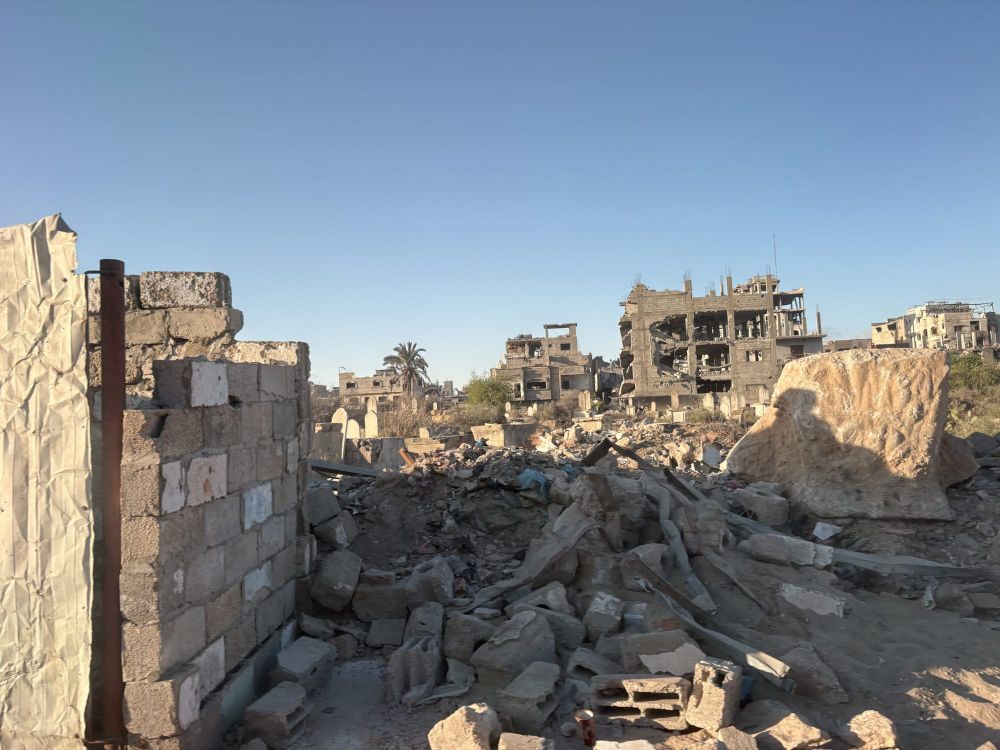
This wasn’t random. It was targeted. The aim was to demolish the foundations of popular consciousness by eliminating scientists, scholars, and cultural leaders. The plan was clear: deprive the entire Strip of water and electricity; destroy between 80% and 96% of agricultural lands; drive GDP down to one-sixth its previous level. Unemployment soared to nearly 80%. Purchasing power collapsed. Prices spiked in panic. All of this unfolded against the backdrop of a health care system in ruins, a society stripped of normal life, and a shattered social fabric.
It was inevitable that this catastrophe would have social consequences far beyond mere statistics. The societal condition born from starvation and siege—often invisible in the news—is one in which a people’s identity is distorted, their memory erased, and individuals no longer think beyond securing their daily bread and water. Gradually, awareness of their fate and political dreams has been emptied out. Today, we see an entire generation of children without schools, unemployed youth, and families without providers.
Our conversations have shrunk to discussions about the price of rice and flour. Our questions have been stripped of ambition, and our dreams have been crushed under the weight of reality revolving around a bag of flour.
Our conversations have shrunk to discussions about the price of rice and flour. Our questions have been stripped of ambition, and our dreams have been crushed under the weight of reality revolving around a bag of flour. Our communal culture has vanished amid this neglect, turning our land into a thieves’ den, a garbage dump, and a cemetery. Here, no one has the luxury to demand accountability from the fools who led us to this dire state.
Starvation strips people of their aspirations for change. It produces the unscrupulous, the thief, and the killer. Social solidarity fades, replaced by suspicion and competition over the bare necessities. We have forgotten the great existential questions in the endless cycle of survival. We have forgotten both our rights and our duties. And this is exactly what oppressive regimes understand well: A hungry person cannot spark change. A hungry prisoner wants bread—not keys.
This is also reflected in how negotiations have shifted: from reclaiming what was taken and securing rights, to begging for a truckload of food aid.
Therefore, the first step to reclaiming awareness is recognizing this very methodology. We must understand the policy imposed on us—a policy that traps us in a struggle for mere survival, stripping away our humanity. Think for a moment: When was the last time you spoke about rights without being interrupted by hunger? When did you demand dignity without anxiety over your next meal?
They want us exhausted, distracted, and breathless. We’ve started to forget that we deserve a homeland—not just aid. We forget that our cause is a human rights struggle, not crisis management or conditional food delivery.
The real battle isn’t just for bread; it’s for the awareness that comes with it. The fight isn’t against hunger itself, but against what they want us to forget when we grow hungry. The closer people get to awareness, the tighter regimes squeeze them because they know people don’t revolt simply because they’re starving. They revolt because they realize they deserve more.
Editorial Team:
Sahar Fatima, Lead Editor
Lara Witt, Top Editor
Rashmee Kumar, Copy Editor
Author

Palestinian woman, English Literature student who sees writing as freedom, art as refuge, and criticism as a tool for change
Sign up for Prism newsletters.
Stay up to date with curated collection of our top stories.