Israel cracks down on Palestinians entering the sea, stealing the last place for refuge in Gaza
As an oppressive heat settled over Gaza, Israel told people to stay away from the Mediterranean Sea, a source of food and small joys during the genocide

Once upon a time, the sea was Gaza’s sanctuary of joy, a favorite destination for families escaping the relentless summer heat under the suffocating siege long before the current genocide. Its waves offered relief, its horizon promised hope, and its sunsets reflected a golden light that felt eternal.
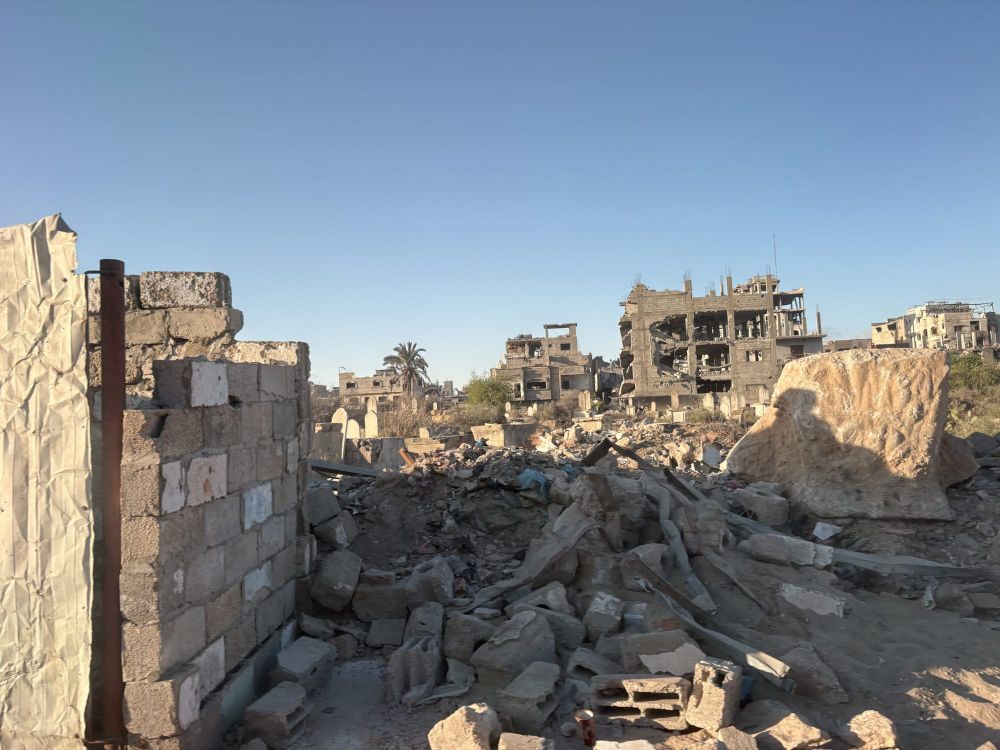
But in these unprecedented and harrowing times, it has become even more vital. This part of the Mediterranean Sea has transformed into the only refuge for thousands of displaced families, serving as a lifeline for countless aspects of daily survival. They no longer gather there for picnics or play; they go to seek safety after their homes are reduced to rubble. Along its beaches, tents and makeshift shelters now stand where laughter once echoed.
These families have grown accustomed to this place, not because they chose to, but because they were forced to adapt under the weight of international betrayal and silence.
The sea gives us water to wash our clothes, clean air to breathe, and a small feeling of security.
Maha Al Shrafi, 35, in Gaza
“This beach was once where we celebrated birthdays and holidays. Now, it’s where my children cry themselves to sleep under torn plastic sheets,” said Maha Al Shrafi, 35, a mother of three. “Yet the sea gives us water to wash our clothes, clean air to breathe, and a small feeling of security.” Al Shrafi lives in a tent with her husband after their home was destroyed in Jabalia.
But now, even this fragile escape has been stripped away. The Israeli occupation has decided that Palestinians have no right to exist, even on the shoreline.
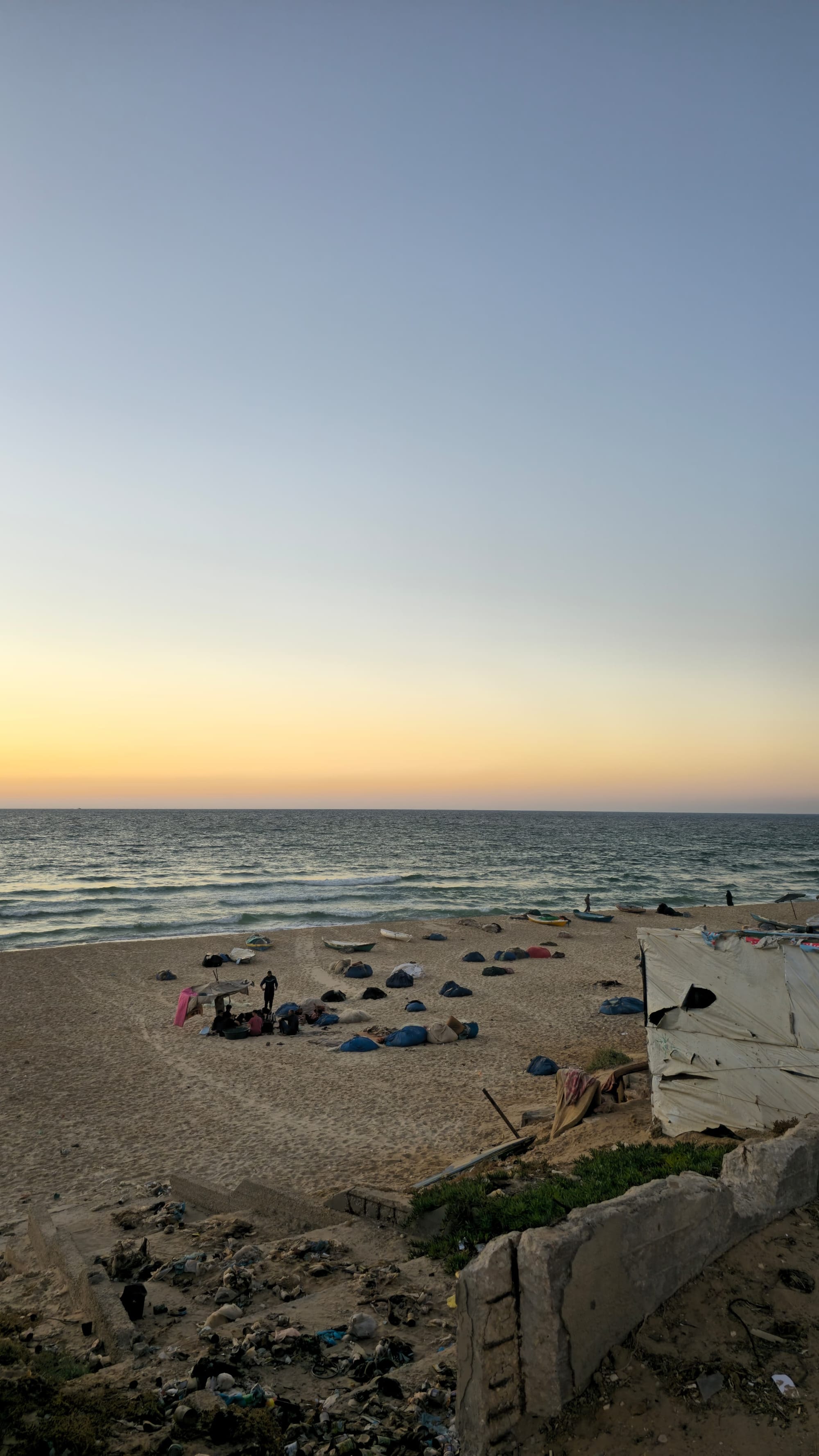
“We remind you that strict security restrictions have been imposed in the maritime area adjacent to the Strip, where entry to the sea is prohibited,” the Israeli military’s Arabic-language spokesperson Avichay Adraee declared in an X post earlier this month. “The IDF will deal with any violation of these restrictions. We call on fishermen, swimmers, and divers to refrain from entering the sea. Entering the beach and waters along the entire Gaza Strip endangers your lives.”
Israel has technically held the ban on Palestinians entering the sea since Oct. 7, 2023, but it was rarely enforced. The latest announcement, signaling intent to enforce the ban, had Palestinians in Gaza wondering: Why does the Israeli occupation have the power to deprive us of everything whenever it pleases?
“If they could deprive us of the air we breathe, they would probably do it,” said Yasser Al Hour, 19. Al Hour, who lost his brother and sister when an Israeli airstrike hit the house across from theirs in Nuseirat on Oct. 13, 2023, is currently displaced in a tent in another part of the area.
The decree reflects the absolute control the Israeli occupation exerts over every aspect of life in Gaza. Israel can restrict food, block medical aid, and even cut off access to water—turning basic human needs into tools of punishment.
Life in tents
Living in a tent is almost no different from living in the streets. I endured this reality for four months, beginning in January 2024. There are no walls or ceilings to shield you from Gaza’s brutal summer. The suffocating heat, oppressive humidity, and swarms of mosquitoes turn every day into a nightmare, causing severe infections among children.
“We’re suffering from two kinds of buzzing: the drones that torture our minds and the mosquitoes that torture our bodies,” said Mohammad Al-Tabaan, a 35-year-old father of two who is currently displaced to a tent in Al Zawaida after he lost his home in the Al Bureij camp. “There isn’t even enough food to give our bodies the strength to fight these battles. Feeling full has become a luxury we can’t afford. While the rest of the world sees food as a source of joy, we eat only to keep ourselves from dying of hunger.”
Life in Gaza has become hell, especially with the absence of everything that might soften the impact of the weather—no electricity to power a fan, no stable source of water for even the simplest daily needs.
Nearly the entire population of Gaza, standing at 2.2 million before the genocide, has been displaced, often multiple times. Many families have been forced to relocate their tents near Gaza’s beach, hoping to find some sense of relief and dignity amid the relentless suffering. The sea has become their only sanctuary—a place to wash their clothes, bathe their children, and cool their bodies, sparing them long treks for scarce water.
However, the Israeli occupation has decided that Palestinians don’t deserve even a place that could barely ease a small part of their suffering. This isn’t only enforced through the ban, but also through the systematic destruction of Gaza’s beach facilities.
The latest example came on June 30, 2025, when an Israeli warplane dropped a 500-pound, U.S.-made MK-82 bomb on the seaside Al-Baqa Cafe in Gaza City. The explosion killed more than 30 innocent people and injured dozens more.
These were people simply searching for a brief escape from the collapsing world outside—yet even this fragile refuge was turned to rubble around them. This attack served as a brutal reminder that in Gaza, even moments of stillness are a target. The sea, once a place of life and community, has become a graveyard echoing with loss.
The sea is life
For many in Gaza, the sea is not a luxury; it is life itself. It has also long been a vital source of income for thousands of fishermen, both before and during the war.
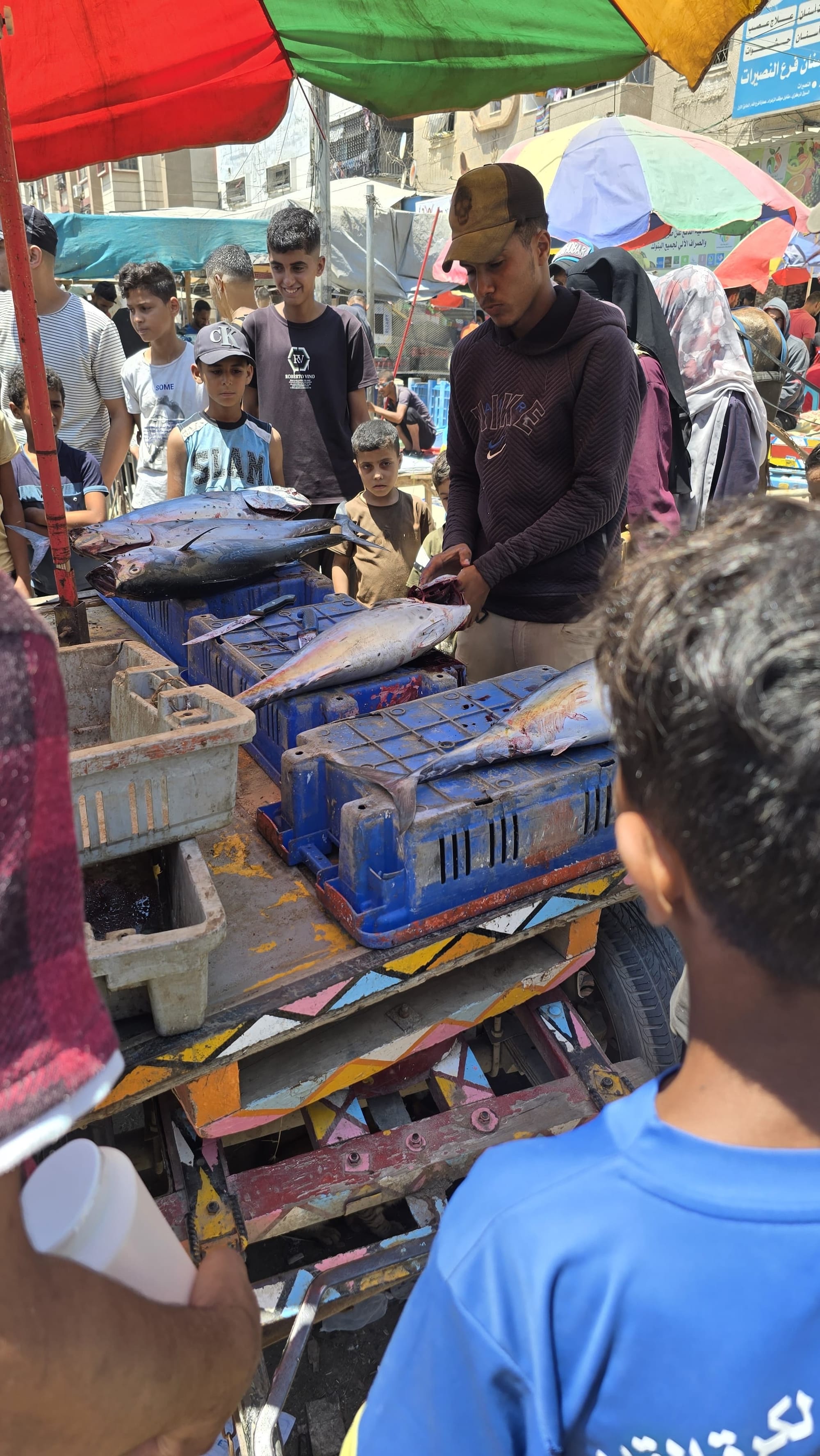
“Parents often come to me, begging for fish to feed their children,” said Mohammad Abu Saman, a Palestinian fisherman in Gaza. “The little food that remains lacks even the basic nutrition needed for a healthy person. So imagine the situation for the injured and sick—people who desperately need extra nourishment just to recover.”
Israel’s blockade of Gaza, which began in 2007, already limited how far out Palestinian fishermen could venture. But enforcing the ban on accessing the sea has deepened the blockade on food aid and worsened the famine gripping Gaza.
“They’ve taken everything from us,” Abu Saman said. “The sea isn’t just our only source of income, it’s a way of life; a place we call home.”
Once a symbol of life, freedom, and survival, Gaza’s sea has been turned into another prison. In yet another cruel twist to the genocide, a nation is stripped not only of its homes and food, but also of its last horizon, its last breath of relief.
Editorial Team:
Sahar Fatima, Lead Editor
Lara Witt, Top Editor
Rashmee Kumar, Copy Editor
Author
Ahmad Abushawish is a writer and an activist based in Gaza. His dream is to study and get a scholarship in a prestigious university abroad.
Sign up for Prism newsletters.
Stay up to date with curated collection of our top stories.