For a third year in a row, no new school year for Gaza’s college students
As colleges across the U.S. prepare to welcome students back to campus, Israel continues to destroy Gaza’s universities and slaughter students and professors

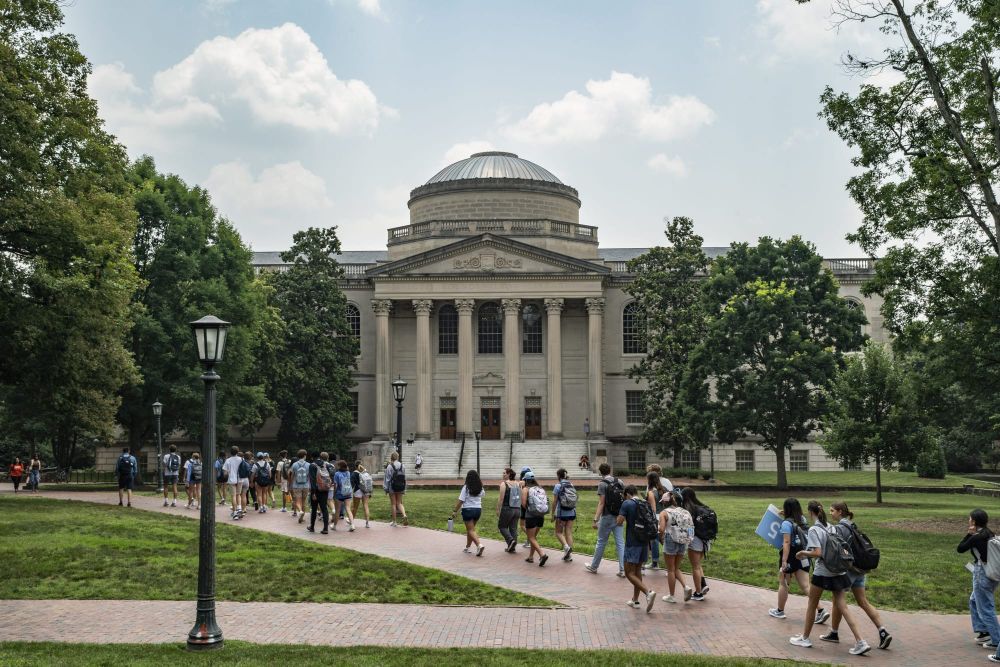
College students across the globe are preparing to start a new academic year with great passion. Some are freshmen who have just finished high school and are enthusiastic to immerse themselves in college life. Others are graduates who spent years on campus and are now gearing up for a new life after graduation.
Meanwhile, in Gaza, students are losing the right to pursue their education for the third consecutive year. Israel is destroying universities and slaughtering students and professors in Gaza amid the U.S.-backed genocide, leaving a precarious future for thousands of young people across the strip.
According to Gaza’s Ministry of Education and Higher Education in February, Israel’s onslaught has caused 85% of schools to stop operating and has interrupted education for two consecutive years.
The Government Media Office reported that Israel has bombed at least 1,166 educational facilities, including 927 schools, universities, kindergartens, and academic centers that were destroyed. The bombing has also killed 12,800 students and 800 teachers and administrators.
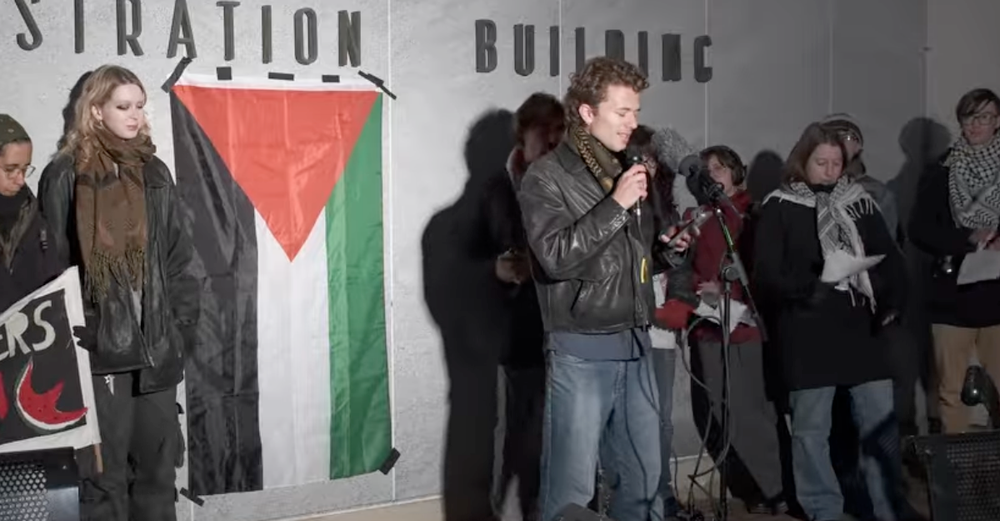
The difference between the state of higher education in Gaza and in the U.S. stands even more stark, considering the violence with which U.S. colleges cracked down on students protesting against their ties to Israel’s genocidal regime.
Mariam Mushtah, a 20-year-old student from Gaza, graduated from high school in 2023 with a GPA of 99.4. She told Prism that she was delighted that her hard work paid off so that she could attend college and study her dream major, English translation. The first few weeks on campus at the Islamic University of Gaza started strong, she said, and she was diligent and ambitious about her studies.
However, after her house and then her university were destroyed during the genocide, Mushtah’s dreams of becoming a prominent translator started to vanish. Her concerns about her studies were replaced by new ones filled with greater responsibilities. Instead of spending her year in classrooms, she spent it in queues for food and water as Israel cut off access. Her life became a series of displacements and hardships, yet she insisted on completing her studies online.
“The journey wasn’t easy, but I had to take the step,” Mushtah told Prism. “If not now, then when? I don’t want to lose more years anymore.”
Some of Gaza’s universities tried to resume teaching online in the second half of 2024. However, this step has been fraught with immense challenges. The lack of electricity across the entire Gaza Strip since Oct. 7, 2023, makes it nearly impossible for professors to conduct live lectures or for students to attend them. In this case, universities asked their students to rely on self-directed study using YouTube and soft materials that are available on the internet. Yet, the unstable or nonexistent internet connections make it tougher for students to download their lectures. This situation has forced many to use cafes or workspaces even though they might be dangerous or have been bombed.
To continue her education online, Mushtah first walked over a mile every day under the scorching sun just to connect to the internet. Cafes and workspaces are always overcrowded and distracting to anyone who needs to study or take an exam. They are not safe places either: “The sound of bombardment, the smell of gunpowder, and the quiver of fear were a constant companion with me along my journey,” Mushtah said.
In spite of the obstacles she faced, Mushtah passed her first academic year with a high cumulative GPA—proving that Gaza’s students have massive capabilities, but the conditions they are forced to live through are making every step harder. These students did not just study from books; they studied life lessons after experiencing genocide for almost two years.
Before Oct. 7, Gaza’s education sector was a powerful source of hope despite years of blockade and resource scarcity. In 2022, the literacy rate reached 98%, and 94% of children were enrolled in secondary education, while around 12,500 students pursued higher education. The Strip was home to a vibrant network of schools, vocational institutes, and at least 12 universities and colleges, offering a wide range of academic and professional programs.
Education at the primary and secondary levels was free and supported by both the Ministry of Education and the United Nations Relief and Works Agency for Palestine Refugees, ensuring that even low-income families had access to textbooks, school supplies, and extracurricular programs. University students could benefit from merit-based scholarships, and academic life thrived with competitions, cultural events, and research initiatives. This strong educational foundation made Gaza one of the most educated communities in the region, until years of siege an, ultimately, the genocide shattered what had been built over decades.
True education is not just about lecture halls or final grades—it is about how students can shape their thoughts and create a future worth living for.
Esraa Abo Qamar
My brother Hassan Abo Qamar, who is 19 years old, is supposed to be a sophomore majoring in industrial engineering at a well-known college outside Gaza, as he once dreamed. From a very young age, he strived to become a competent engineer and entrepreneur. His great aspirations led him to launch an online store when he was only 17 years old, all while studying hard for his final year of high school. Devastatingly, Hassan neither finished high school nor continued his business. The genocide has deprived him of completing his education and stole years from him without allowing him to finish high school, join a university, or even travel to search for his future. While all his peers abroad are preparing to start their second year at college, Hassan is longing for the day when he can finally take the Tawjihi exam and receive the secondary education certificate required to move on to higher education. Thousands of students in Gaza are similarly stuck in limbo as unsafe conditions keep delaying the exam’s administration.
True education is not just about lecture halls or final grades—it is about how students can shape their thoughts and create a future worth living for. In Gaza, that future is now being bombed into dust. Gaza’s students are not only robbed of classrooms; they are robbed of safety, stability, and the most important years that could define their lives.
While students abroad fill their calendars with workshops, club dates, and graduation rehearsals, Gaza’s students fill theirs with survival plans. They learn how to have an exam under bombardment, where to find the internet to download a few lectures, and how to live to witness another semester. Their pursuit of education is not a privilege; it is an act of defiance in the face of this destruction.
If Gaza’s most determined students cannot study, what kind of future is left for an entire generation?
Editorial Team:
Sahar Fatima, Lead Editor
Carolyn Copeland, Top Editor
Rashmee Kumar, Copy Editor
Author
Esraa Abo Qamar is a writer and English Literature student from Gaza.
Sign up for Prism newsletters.
Stay up to date with curated collection of our top stories.