‘We never stopped looking’: Gazans search for answers months after their loved ones disappeared
More than 13,000 people are trapped beneath rubble, buried in mass graves, or held in undisclosed detention centers, according to a recent report
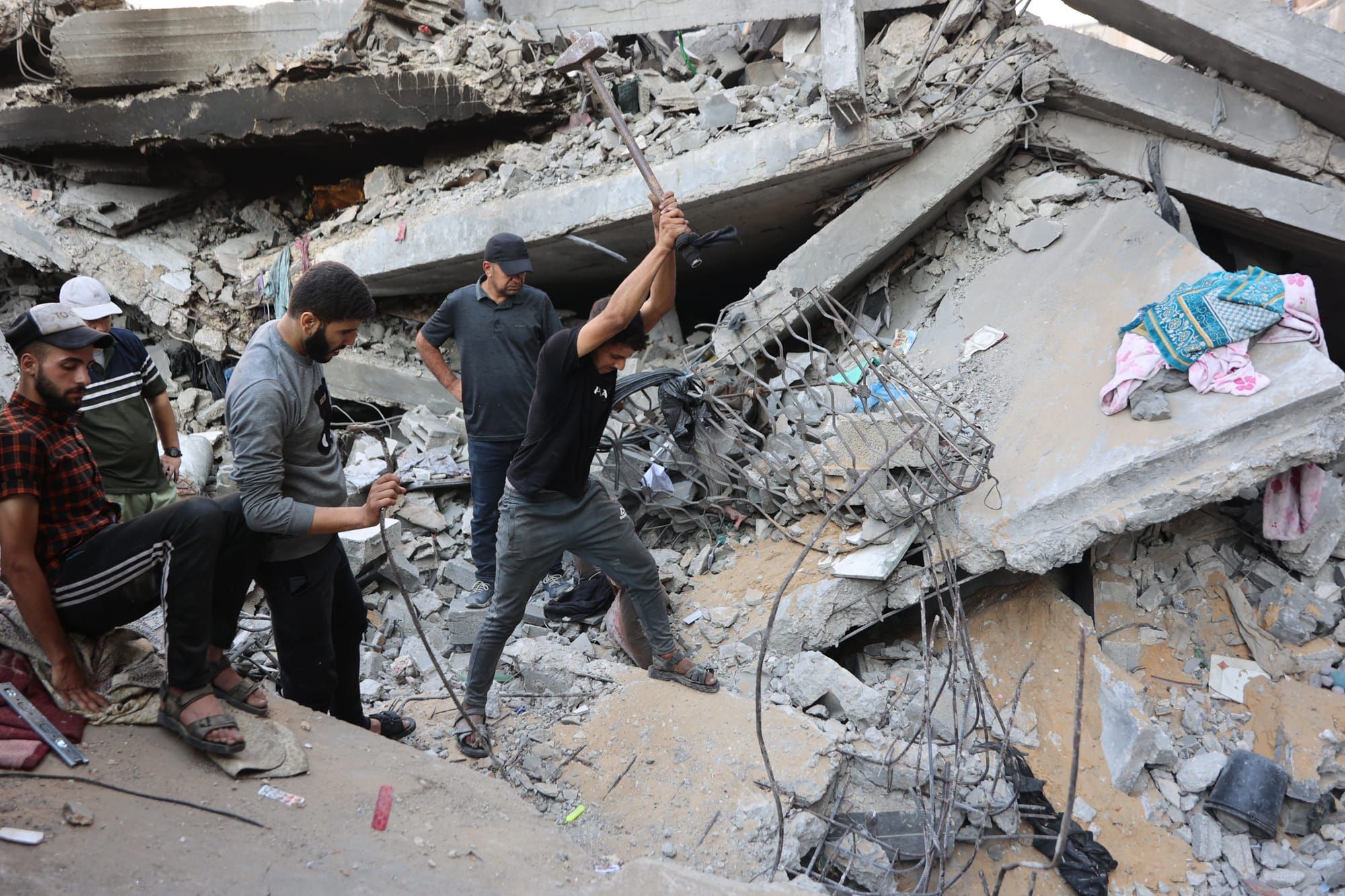
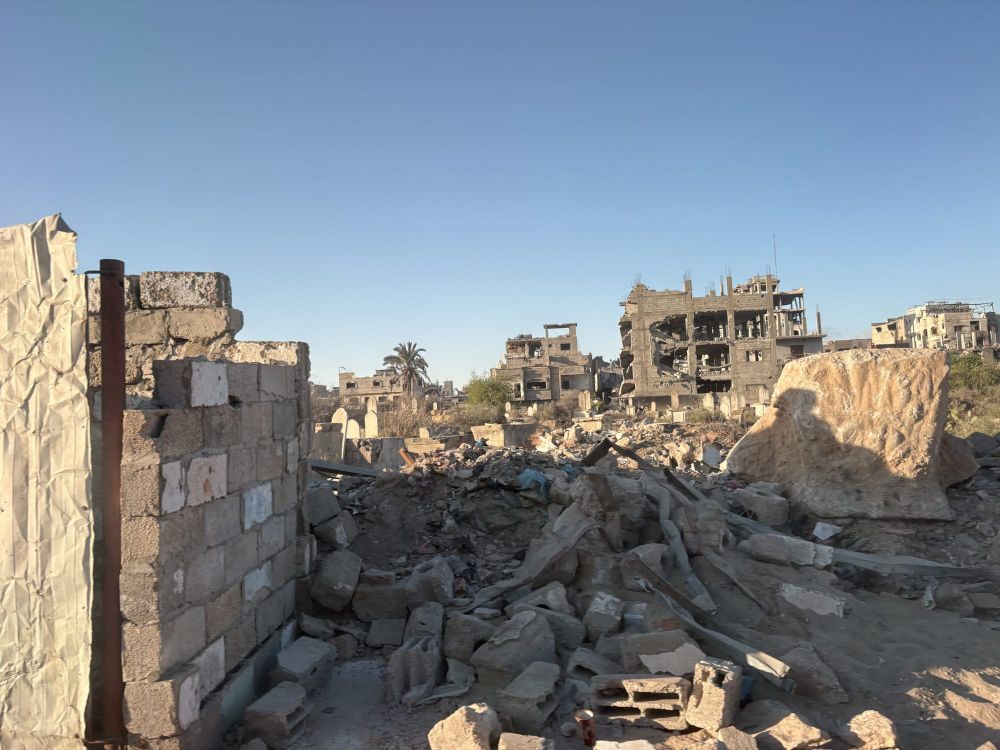
When Israeli warplanes bombed the Jabalia refugee camp in northern Gaza on Oct. 31, 2023, they used heavy aerial munitions—including U.S.‑supplied GBU‑31 bunker busters—to flatten entire residential blocks, killing hundreds of civilians in one of Israel’s deadliest attacks. The scale of destruction made any recovery effort almost impossible. Civil defense teams were overwhelmed as neighborhoods turned to rubble.
Almost two years later, many victims remain trapped beneath collapsed buildings, their bodies unidentified or never recovered. There are thousands of unresolved disappearances in Gaza, some stories the world did not know—until now.
Abdullah Abu Al-Qumsan and his wife, Raweia, were trapped in the rubble with their son, Fouad, who was almost 2 at the time. Al-Qumsan and Raweia survived and were rescued. However, Al-Qumsan’s parents, who lived in the same building, were killed instantly. Their bodies were later recovered, while an injured Fouad was separated from his parents and has since disappeared.
Al-Qumsan remembered holding Fouad, who was still conscious, while paramedics worked to treat his injuries, he told United Nations News. The child was taken for additional care, but in the chaos, Al-Qumsan was never told which hospital the boy was brought to. Later, Al-Qumsan found a record of an unidentified child matching Fouad’s description who was admitted to Al-Shifa Hospital with minor injuries, but there is still no sign of his son.
In July 2024, the U.N. highlighted Fouad’s case as emblematic of the war’s devastating toll on children and families. The child’s photo is still widely circulated on flyers posted throughout Gaza in refugee tents, makeshift shelters, and public streets, as his family continues their desperate search.
“From the beginning of the war, we never stopped looking,” said Raweia in a recent interview over WhatsApp. “We printed posters and hung them everywhere, in Rafah, the north, Deir al-Balah, and Al-Zawaida.”
Despite their own injuries and displacement, the family searched hospitals, morgues, schools, and shelters for Fouad, sharing their contact information widely and speaking with journalists.
“Even though I was injured, I went to Al-Shifa one or two days after the bombing. We searched, but it was all in vain,” Raweia said.
To this day, no official authority has contacted the parents about their missing son, and no leads have emerged, Raweia said.
It is impossible to know exactly how many Palestinians remain missing in the Gaza Strip. According to an April 2025 report by Euro-Med Human Rights Monitor, around 13,000 people are estimated to be trapped beneath rubble, buried in mass graves, or held in undisclosed detention centers. Documenting the specifics of these cases is extremely difficult due to ongoing airstrikes, a suffocating blockade, and constant threats to rescue and reporting efforts.
Each number marks a life—not a statistic, but a person with a name, memories, dreams, and people who love them. Their absence fractures entire families, leaving them with the maddening questions: Where are they, and what happened to them?
Despite their tireless efforts to find missing loved ones, most families are only met with silence. Meanwhile, the disappearance leaves them forever suspended between hope and grief, searching and mourning. Many have come to realize they may never get answers, especially in light of worsening conditions. Israel is intensifying its bombing as part of its plan to take over Gaza City and forcibly displace Palestinians south, sowing more chaos for families looking for their loved ones.
“I lost everything”
Disappearance is not confined to bombings. People also vanish while carrying out everyday tasks: buying food, collecting aid, or simply moving through the streets. One such case is that of 42-year-old engineer and father of four, Ahmed Mohammed Abu Ward, who on Dec. 7, 2023, left the building where his family had taken refuge to search for baby formula.
He never came back.
Amani, his wife and a former public school teacher, had given birth prematurely months before the war escalated. Their 5-month-old daughter refused to breastfeed and depended entirely on formula.
“That’s when the suffering began, and I lost my husband because of it,” Amani said over WhatsApp.
During a temporary ceasefire in November 2023 that lasted nearly a week, Abu Ward managed to buy a few cans of formula. But as the supplies dwindled in December, Amani begged him not to risk going out to look for more.
“Ahmad couldn’t bear to see her hungry,” she explained. “He said he would go get more formula.”
He left around midday, carrying only his identification card and some cash. He didn’t take his phone.
“He never liked carrying it,” Amani said.
By 5 p.m., there was still no sign of him.
“I told my family something terrible has happened,” Amani said. “I collapsed in tears.”
The family searched hospitals and contacted the Red Cross, legal aid groups, and human rights organizations. Abu Ward’s photo circulated online, but there was no news.
Days turned into weeks. Then came another blow: The family’s apartment building was bombed.
Nothing can replace the presence of a husband and father. I carry the burden alone. I try to give the children everything they need. … But inside, I am breaking.”
Amani Abu Ward, Palestinian in Gaza whose husband is missing
“That’s when I realized I lost everything: safety, warmth, home, and my partner,” Amani told Prism. Now she is raising their four children while her family helps with child care, and Abu Ward’s family tries to offer financial support.
“But nothing can replace the presence of a husband and father,” she said. “I carry the burden alone. I try to give the children everything they need. I try to smile for them. But inside, I am breaking.”
“We lost all hope”
Like Amani Abu Ward, many other family members are left to piece together fragments of testimony, chasing rumors and uncertain leads. Displacement and Israeli evacuation orders have only deepened the uncertainty, scattering relatives across different parts of Gaza and making searches even harder.
Among them is the family of 28-year-old Seif Al Harazeen, who did not evacuate with his relatives to southern Gaza on Oct. 19, 2023, after Israel ordered civilians to move south. He stayed behind and planned to join them later. But in early November 2023, Israeli military operations split Gaza into two isolated zones. Movement from south to north was prohibited, and heading south could be deadly, with threats of arrest or sniper fire. Harazeen remained in the north, first in the Shuja’iyya neighborhood of Gaza City, then at his aunt’s house in western Gaza.
On March 18, 2024, Israeli forces launched a large assault on Al Shifa Hospital, near where Harazeen was sheltering. The operation involved heavy bombardment, mass detentions, and house raids. Male residents were stripped, interrogated, and expelled without warning or the ability to take their belongings.
Harazeen’s sister, Ayat, relayed accounts over audio messages to Prism that she heard from eyewitnesses.
“They said soldiers ordered the men to strip, tied their hands, and forced them to lie face down. They smashed glass on the stairs and made them walk barefoot. The women were told to leave first, with a tank behind them. They were only allowed to walk straight south,” Ayat said.
Israeli soldiers interrogated Harazeen and his cousin before releasing them, Ayat told Prism. The pair was then given permission to return home for warm clothes since temperatures had dropped. However, as they neared their destination, shots rang out. They panicked and fled toward Al Rashid Street, the only route south that Israel allowed.
Before continuing farther, Harazeen’s cousin decided that he could not leave without his family, so he returned to the direction of his home to search for them. Harazeen, however, pressed on alone, determined to reunite with his own family in the south after months apart.
His cousin returned safely to his family and stayed in northern Gaza. Meanwhile, Harazeen’s family waited for his arrival, hoping to break their fast together at iftar—the evening meal that ends each day of Ramadan—after being told that Harazeen was on his way.
“We saw many missed calls from an unknown number,” Ayat recalled. “When we called back, a stranger said, ‘Your son wanted to tell you he’s on his way south.’”
But Harazeen never arrived.
“Our relatives searched after the operation ended,” Ayat said. “But nothing. His name wasn’t on any evacuation list, not in any hospital, not among bodies on Al Rashid Street. We lost all hope.”
Harazeen’s fate remains unknown. The family has contacted every organization working on cases of Palestinians who have been detained. “We kept asking again and again,” Ayat said, explaining that the Israeli military often obfuscates or refuses to release information on men who are detained.
Months later, all the family can do is search through photos of unidentified bodies shared on social media, hoping that Harazeen is not one of them.
Across Gaza, cases like Fouad’s, Abu Ward’s, and Harazeen’s are not isolated incidents. They reveal an intentional pattern, a sustained effort by Israel that erases homes and lives, and robs families of answers and the chance to properly grieve. They are left only with uncertainty, unable to bury their dead or properly articulate their pain because they do not know what has become of their loved ones. Are the missing dead? Or imprisoned, forcing loved ones to wait indefinitely? No one seems to know.
Remembering those who are lost and continuing to search for the disappeared is a way for Palestinians to refuse the silence imposed on their loved ones’ absence. It is an assertion that losing the body does not mean losing the person, nor surrendering the truth of their existence.
“I don’t know what people can gain from hearing my story,” Amani Abu Ward told Prism. “I just know I can’t bring him back.”
Editorial Team:
Tina Vasquez, Lead Editor
Carolyn Copeland, Top Editor
Rashmee Kumar, Copy Editor
Author
Malak Hijazi is a Palestinian writer from Gaza. Her work centers on memory, disappearance, and the destruction of place under colonial violence. She has published journalistic and nonfiction pieces on
Sign up for Prism newsletters.
Stay up to date with curated collection of our top stories.