U.S.-based doctors performing life-saving surgeries in Gaza allowed to leave after Israeli blockade
The medical team told Prism how they treated dozens of severely injured Palestinians and bore witness to hospitals destroyed by Israel
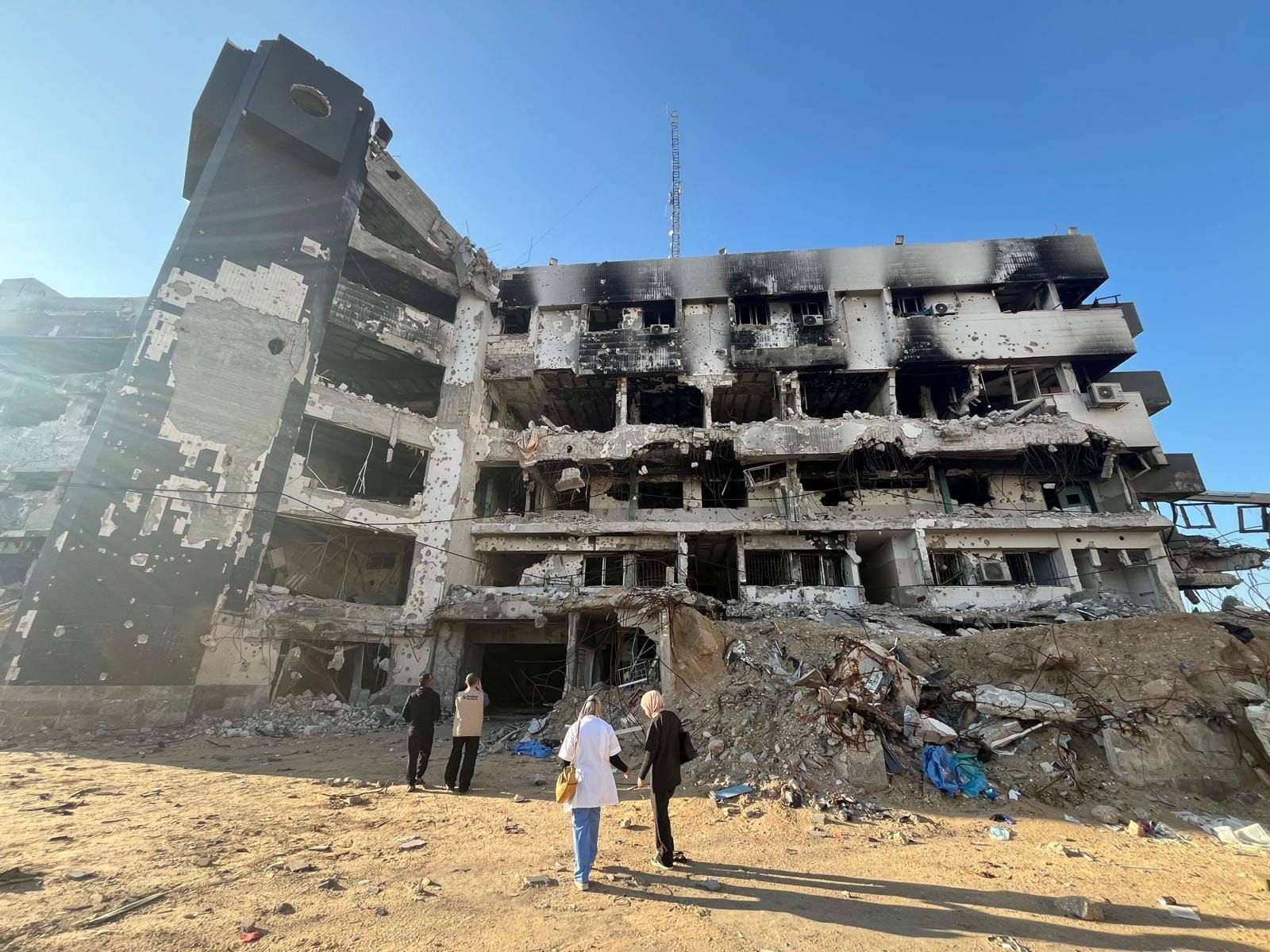
Israeli authorities told 11 U.S.-based physicians and nurses on a medical mission in Gaza that they may leave the Gaza Strip on Jan. 28, after initially preventing them from leaving last week, the medical workers told Prism. On Monday, they began making their way from northern Gaza to the south.
The team, whose medical workers are from California, Texas, Ohio, Florida, Colorado, and Arizona, served in Gaza from Jan. 9 to 23 through the international humanitarian organization Rahma Worldwide. They spent most of their time in the heavily besieged northern Gaza Strip. On Jan. 21, they attempted to cross into the south to leave the Strip through Jordan, but were blocked by Israeli authorities with little explanation.
It has been a little over a week since the ceasefire deal went into effect in Gaza, but until Monday, humanitarian aid, emergency medical evacuations of Palestinians, and medical missions were still denied entry and exit through the Netzarim corridor, a militarized area set up by Israel over the last 15 months that separates the north and the south.
Now, tens of thousands of displaced Palestinians are also returning home to the north for the first time since Israel’s most recent genocidal campaign began on Oct. 7, 2023.
“ We got to hear the good news of us going today and also got to see people coming back and meeting their families here in the north,” Dr. Omar Malas, Ohio-based anesthesiologist and team lead, said Monday morning as he and his team boarded a bus to southern Gaza. “It’s been really beautiful, really magical. There’s singing in the streets and people hugging each other and crying as they see family members they haven’t seen in over a year.”
Multiple U.S. civil rights organizations and advocates, including the Council on American-Islamic Relations (CAIR), CAIR’s Greater Los Angeles-area office (CAIR-LA), and Doctors Against Genocide, called on the U.S. government and humanitarian groups to demand the team’s return. No official statements by U.S. officials were made.
President Donald Trump’s only commentary regarding Gaza over the weekend was to call Gaza a “demolition site” and to suggest that Jordan and Egypt take in Palestinians, which both countries, along with Hamas and the Palestinian Authority, rejected.
Prior to leaving, Malas and three of the other U.S.-based physicians spoke with Prism from multiple hospitals in the north to share their thoughts as well as the scale of patients they treated.
“It was daily, multiple mass casualty events after bombings, and [I’d] have patients who would come in with some pretty horrifying blast injuries,” Malas said from al-Ahli Arab Hospital. “About half of the patients I have taken care of in the [operating room] are children.”
One of Malas’ last surgeries before leaving was treating an 8-month-old with shrapnel injuries to her trachea and esophagus.
Dr. Khawaja Nimr Ikram, a Texas-based orthopedic surgeon on his second medical mission to Gaza, said the night the ceasefire was announced was one of the worst nights of bombardment and injuries he had ever seen.
“ The bombs were close to the hospital, the windows were shattering. It was pretty much nonstop,” Ikram said, adding that the noises were different from the typical bombing they had grown accustomed to. “We were like, ‘Are we going to make it through the night or not?’”
Malas said the team began to see fewer injuries requiring emergency-level care after the ceasefire between Israel and Hamas went into effect on Jan. 19. However, there are still hundreds of patients who have residual injuries from the last 15 months with very few supplies and equipment around to treat them.
Palestinian doctors and nurses here are dedicated to doing a good job taking care of patients, to serving them. … They come up with all these kinds of creative solutions for any sorts of problems they have.
Dr. Omar Malas, Ohio-based Doctor on a medical mission in Gaza
“The resources here, even to say bare-bones is an exaggeration,” Malas said. “The incredible thing about it, though, is that Palestinian doctors and nurses here are dedicated to doing a good job taking care of patients, to serving them, that they come up with all these kinds of creative solutions for any sorts of problems they have.”
For example, Malas said, they used a large electric tea kettle to heat fluids required to be warm for anesthesia.
“We have coined a term: ‘Gaza engineering,’” Malas said.
When the U.S. medical team attempted to cross into South Gaza to leave the strip, they were told the checkpoint was closed due to a “security incident.” Rahma Worldwide’s next medical mission was also prevented from entering Gaza, as Israel closed all checkpoints. The Israeli Embassy in Washington, D.C. did not respond to Prism when asked whether this had to do with the hostage deal between Hamas and Israel.
“[Israeli authorities] said, ‘Try again tomorrow,’ and we were denied again with no clear explanation as to why,” Texas-based ophthalmologist Dr. Shehzad Batliwala said Saturday. “I had 40 surgeries scheduled for next week, and a lot of the other surgeons here have responsibilities back home. But beyond that, we’re safe here.”
Batliwala expressed concern about humanitarian and medical aid also being blocked from coming in. “There are months and months and months of backlog in terms of patients that need help,” Batliwala said. “Just because there’s a ceasefire and we’re not having mass casualty events doesn’t mean that there aren’t patients here that still need care.”
Batliwala said he came to Gaza because he saw the need for specialists in ocular trauma as the medical infrastructure collapsed due to Israel’s bombardment. Notably, all of the hospitals that the team worked in are only partially functional.
“Cataract surgery, for example, in the United States is an electric procedure, and it’s kind of a luxury that is very minimally invasive with ultrasound technology,” Batliwala said from the Public Aid Hospital in North Gaza. “None of that exists here, and the cataracts itself are blinding [patients].”
Batliwala said people with decreased vision could get by in a familiar space such as their own home, but the Israeli bombardment has destroyed most homes and displaced people into tents. “That poses a significant risk because if you trip and hit your head and have an injury, access to health care is very limited,” Batliwala said.
When he and other physicians on his team realized their departure would be delayed, Batliwala said they felt an obligation to continue their work until everything was sorted out.
Ikram emphasized the level of devastation and physical destruction in Gaza.
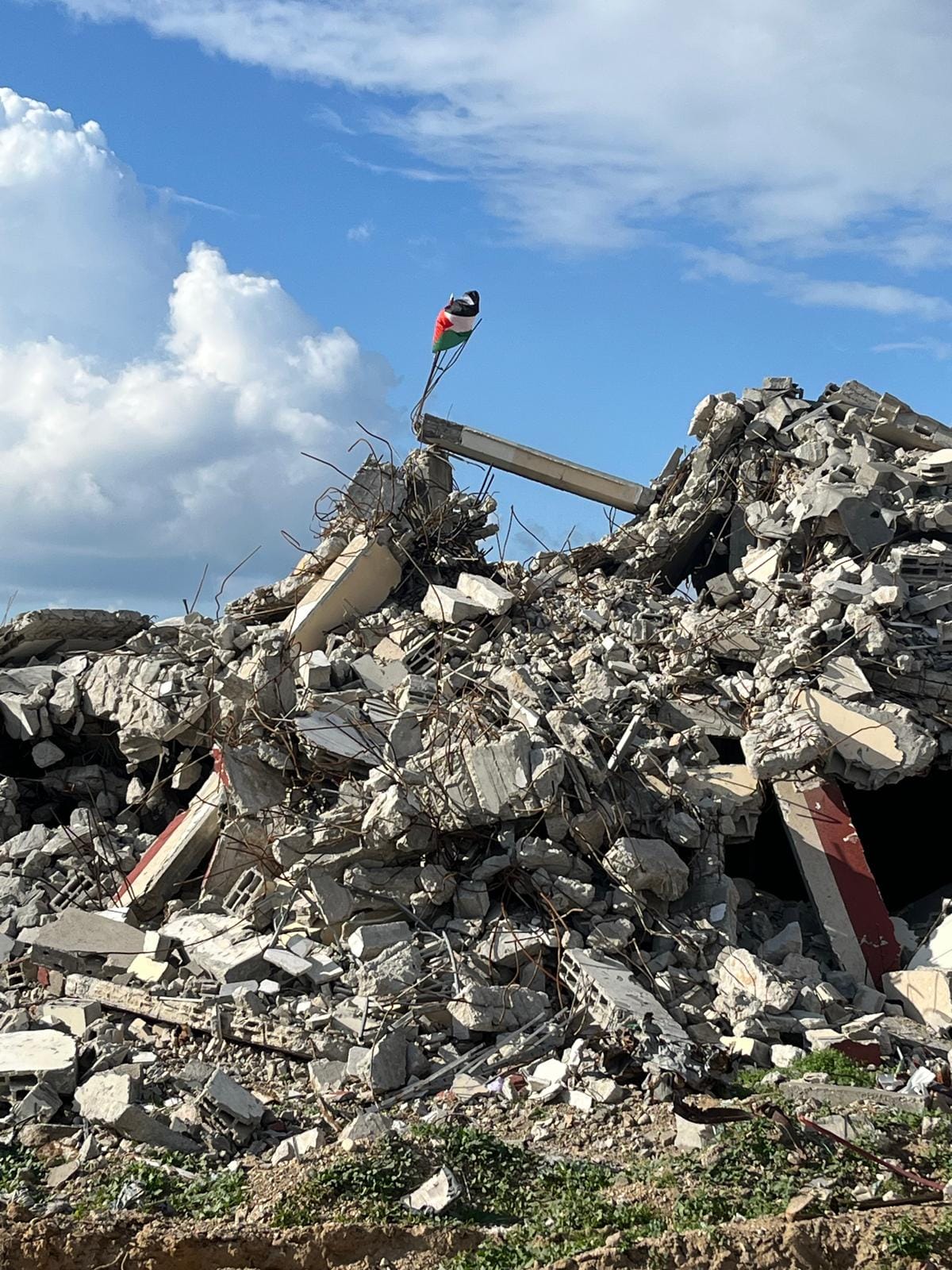
“Two days ago, we went to Kamal Adwan Hospital, where [Palestinian] Dr. [Hussam] Abu Safiya was taken away from [by Israeli authorities], and al-Shifa Hospital, and just seeing them was unbelievable,” Ikram said. “Al-Shifa Hospital was a 900-bed hospital, it was every person’s hospital, and these hospitals were not just emptied—they were trashed so much to where it seems like they will never be functional again.”
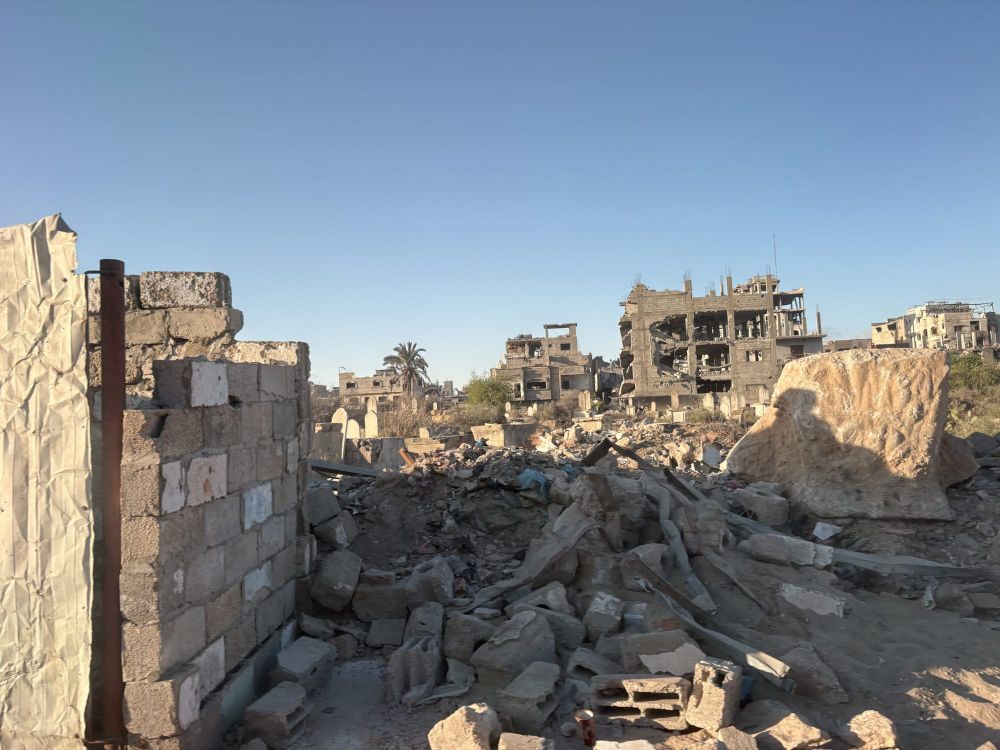
About 436,000 homes, or 92%, have been destroyed or damaged across the Gaza Strip, according to the United Nations, and 70 percent of Gaza’s farmlands have been destroyed. While Israel has done the most damage to Gaza City, Khan Younis has also been so severely bombed that the Palestine-Egypt border can reportedly be seen from the city.
Maisa Morrar, a physician’s assistant in the U.S. who is also a part of Healthcare Workers for Palestine, said this restriction of movement, supplies, and targeting of hospitals is very intentional.
“Early on when [medical workers] were going into Gaza, they were allowed to bring in as many bags as they wanted, filled with medication, filled with medical tools, and slowly Israel was prohibiting those things from entering,” Morrar said. “Each week, it would be like a new list of things that were not allowed.”
Morrar said medical workers may only bring one bag of their own belongings and added that the aid trucks finally entering this past week were still not bringing in necessary medical supplies. “So, Israel is still holding that power and that restriction of amenities that can come in. This is evidence of obvious genocide, of obvious erasure, and trying to dry everything out so that people feel suffocated and either eventually leave or die,” Morrar said.
Malas and Ikram both expressed mixed feelings about returning to the U.S.
“We have made some lifelong friends, and we kind of have survivor’s guilt because we are able to leave, but a lot of people here aren’t,” Ikram said. “[Palestinians] still do not have freedom but, God-willingly, this becomes a better situation, and we are able to come back and help again.”
Author
Neha Madhira is an award-winning gender, health and politics reporter with a focus in South Asia and the Middle East. Previously, she was a breaking news reporter in Austin, Texas, where she broke the
Sign up for Prism newsletters.
Stay up to date with curated collection of our top stories.