‘Camera for bread’: Gaza journalists sell their equipment in the hunger market
In a time when photography has shifted from a means of revealing the truth to a lifeline for survival, Gaza’s journalists stand at the fragile boundary between their profession and staying alive

“If the price is saving my children from death, then I’m at peace with my decision.”
With these words, Palestinian journalist Basheer Abu Al-Sha’er summed up the most difficult choice of his life: trading his camera—the one he carried into the most dangerous places to document years of war and what he calls his “third eye” and “companion through every path of coverage and documentation”—for a sack of flour. It was not an easy decision, but in a time of genocide, it became a necessary one for survival.
“The decision was difficult and painful, but it came as a result of a tragic reality I’ve never experienced before,” said Al-Sha’er, a 42-year-old father of seven children.
Al-Sha’er affirmed that Israeli-imposed starvation has stripped everyone of their dignity and choices.
“There used to be a saying: ‘No one dies of hunger.’ But that proverb collapsed at Gaza’s borders. Everything that once pulsed with life has died of hunger here. Those who remain alive are battling death just to survive,” he said, with deep sorrow.
Al-Sha’er noted that the markets are nearly empty of food supplies. “The famine is growing more brutal by the day, claiming the lives of those already worn down by pain and hunger. It spares no one. Siege, starvation, displacement, and killing—all are tools the occupation uses against us,” he said. His children haven’t eaten bread in days.
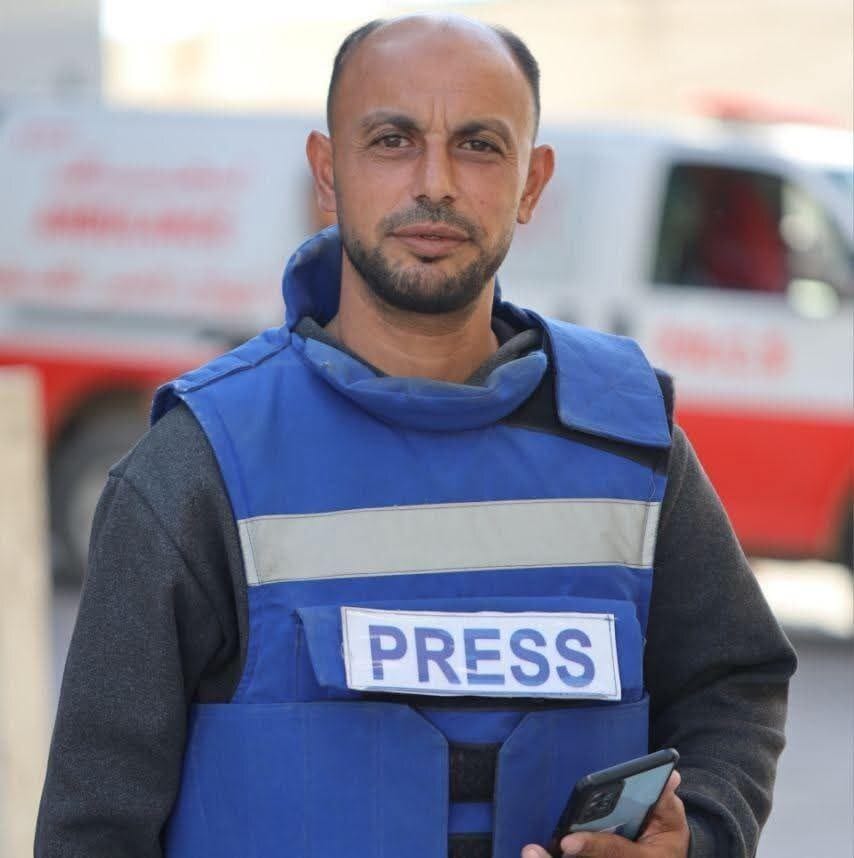
“They cry out from hunger, and I’m powerless to help. We’re watching our children die before our eyes while the world does nothing,” he said.
Despite these harsh conditions, journalists in Gaza continue to document what’s happening around them. “Every day, we step out on shaky legs from hunger to capture the suffering of others, even though we’re living the same pain,” Al-Sha’er said. For more than a year and eight months, he has not stopped covering massacres, displacement, and tragedies—despite being injured twice and his home getting bombed.
“I am a Palestinian journalist who has survived death multiple times, suffered injuries, and had my home bombed, but I am not alone. My fellow journalists are also starving, and nearly two million people in Gaza are dying of hunger. Save us before it’s too late,” concluded Al-Sha’er in his plea to the world.
The Gaza Government Media Office announced that the severity and spread of famine are worsening across all governorates following the Israeli occupation’s complete closure of crossings for over 145 days and the blockade on the entry of infant formula and humanitarian aid.
The office stated in a press release that Gaza requires at least half a million bags of flour weekly to prevent a total humanitarian collapse. It emphasized that the continued siege and the blockade of food and medical supplies will accelerate the impending disaster.
In the latest statistics available at the time of publication, the Gaza Ministry of Health announced that famine-related deaths have risen to 154 cases, the majority being children and the elderly, amid a complete absence of any politically binding or serious international response.
Those who go to fetch a sack of flour sometimes return as body parts inside that very sack.
Ahmed Abdel Aziz, Palestinian Journalist
Journalist Ahmed Abdel Aziz is no better off. “The situation in Gaza is unbelievable. People are collapsing in the streets from hunger,” he said. “There’s no cash liquidity, and even if there is, prices in the markets are astronomical and unaffordable.”
Aziz described the U.S.- and Israeli-run aid distribution points as “death traps.”
“Those who go to fetch a sack of flour sometimes return as body parts inside that very sack,” he said.
Like Al-Sha’er, Aziz also had to make the difficult decision to sell his equipment for food.
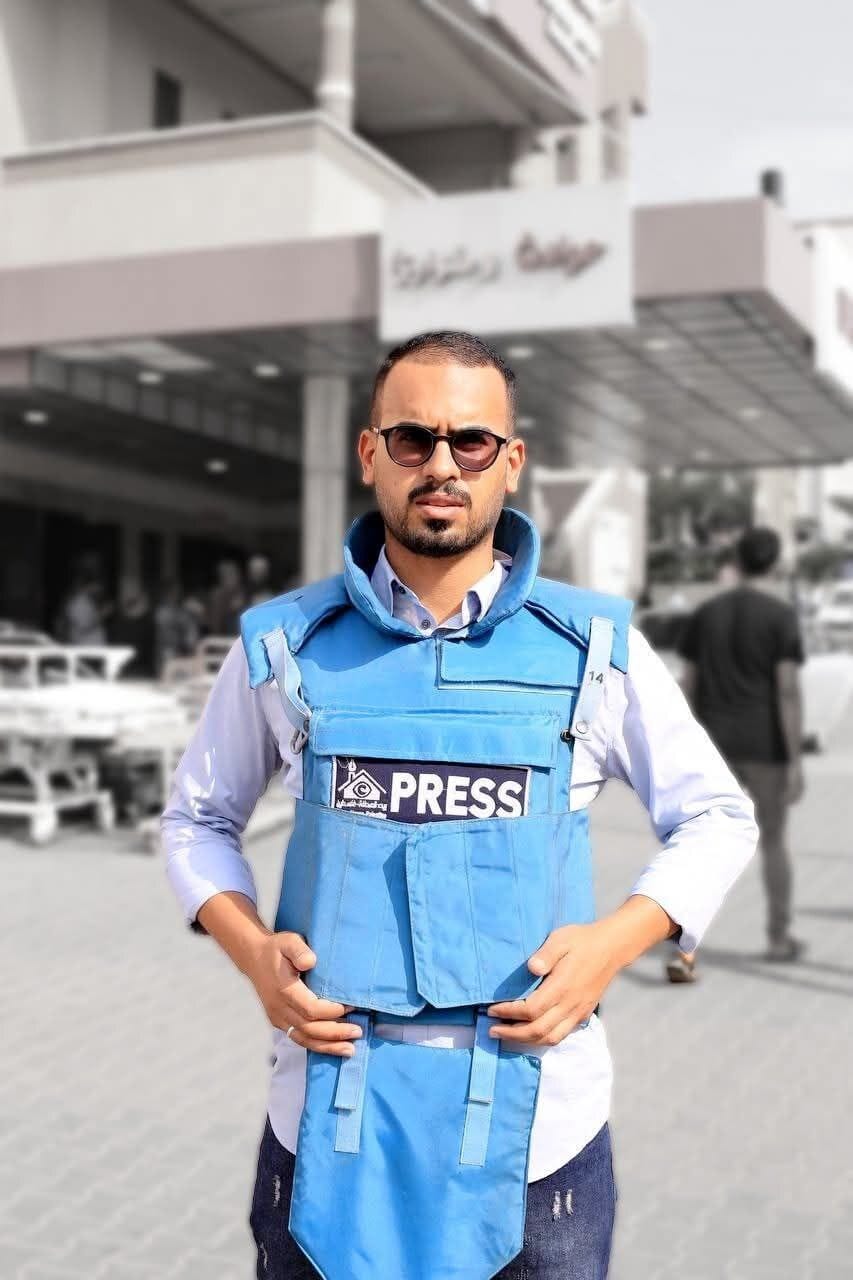
“I sold one of the microphones I used to document the war since its start, but the money only lasted me two days. Now, with great pain, I say I will have to sell my professional camera,” Aziz said. “Before the war, a sack of flour cost 15 U.S. dollars; today, one kilogram costs $30. A loaf of bread is $3, and each person needs at least two loaves per meal. We are talking about prices that no one can afford.”
Fadi Thabet, a photojournalist who has spent over 20 years documenting life in Gaza through his lens—from rare moments of joy to daily tragedies—now finds himself forced to part with his entire archive to feed his children. This archive spans decades and contains thousands of images and videos that capture Palestinians’ suffering and resilience.
“We carry cameras to convey the truth. Then we return home empty-handed … except for the world’s abandonment. How do we film death and then live it?” Thabet said. He had apologized for initially postponing his interview due to exhaustion from severe hunger.
“We are not only enduring hunger in our stomachs, but also the oppression of dignity and the stripping of humanity. There is a systematic policy to starve the Palestinian people in Gaza amid this genocidal war to break their will,” he said.
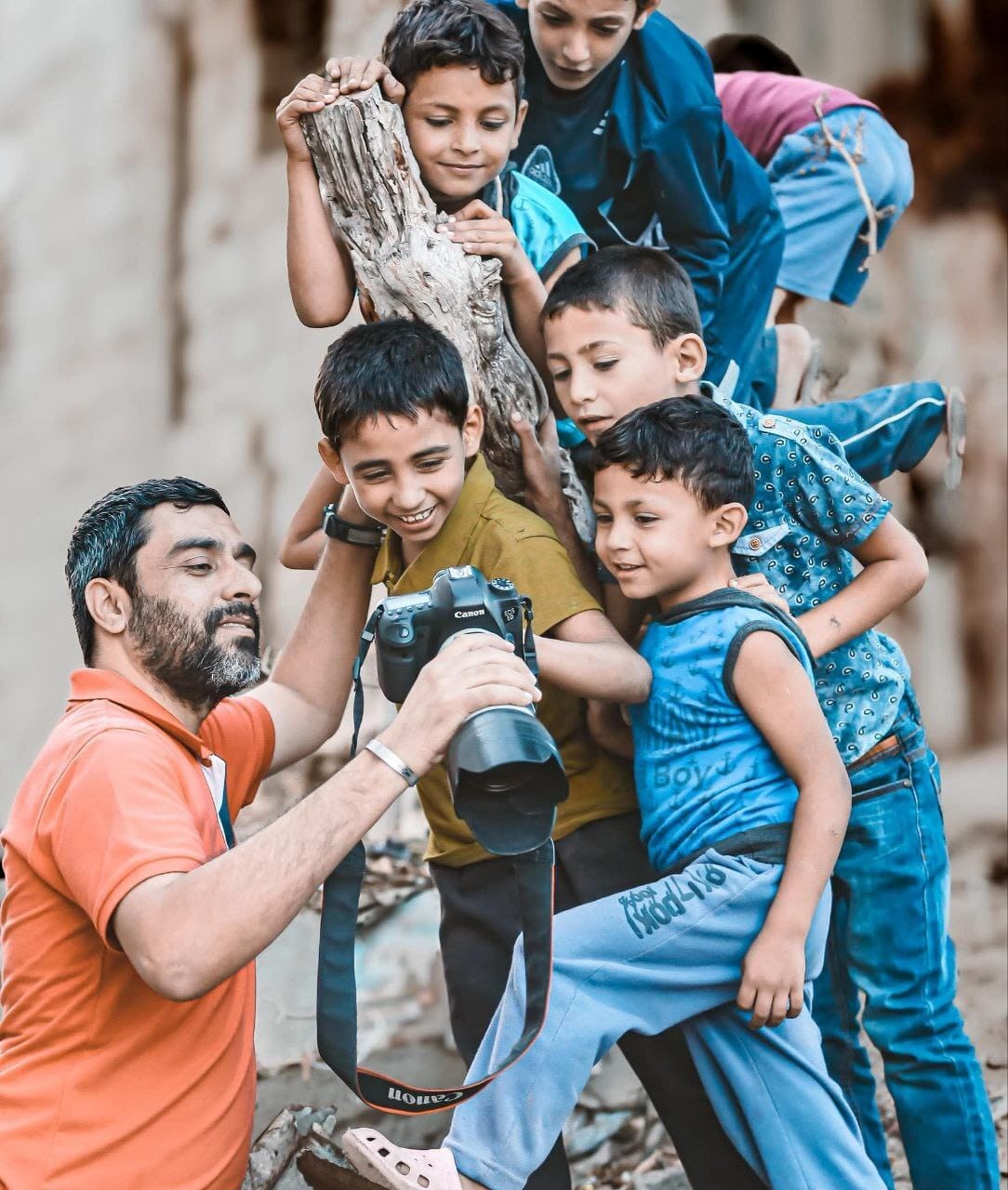
Thabet described the dire circumstances that forced him to sell years of visual memory for a single sack of flour. “We are now in the fifth stage of famine. People’s faces are pale, their eyes hollow, seeing nothing but fear and hunger,” he said. “There is no longer such a thing as hope. The world wears a cloak of shame before images of mothers and children dying of hunger.”
Thabet concluded that the battle in Gaza is now no longer just against extermination, but also against a hunger that “devours humanity.”
“Families who survived rockets and bombings now find themselves fighting for a piece of bread. And the scarce aid, if it arrives, turns into a threat to life or an unattainable dream,” he said.
With every sale of equipment and photo archive for survival, the world loses another set of eyes that bear witness to the truth in Gaza. Amid these testimonies of starvation, the cries of Gaza’s journalists coalesce into a single message: “Save us before the voice is buried along with the image.”
Editorial Team:
Lara Witt, Lead Editor
Sahar Fatima, Top Editor
Rikki Li, Copy Editor
Author
Shaimaa Eid is a Palestinian journalist from the Gaza Strip. She specializes in covering news and field reports, with a particular focus on human-interest stories that reflect the suffering of people
Sign up for Prism newsletters.
Stay up to date with curated collection of our top stories.