Gaza’s destroyed infrastructure makes daily life a struggle
Rubble, open sewage, damaged wells, and lack of electricity pose dangers, as Israel blocks equipment needed to rebuild from genocide
Real journalists wrote and edited this (not AI)—independent, community-driven journalism survives because you back it. Donate to sustain Prism’s mission and the humans behind it.
As winter storms battered Gaza in December, dangers within the Strip multiplied. One of the casualties was Atta Mamoun Mai, 7, who drowned in an open pit flooded with rainwater in the Al-Sudaniya area of Beit Lahia, in northern Gaza. The pit had been left open after earlier Israeli airstrikes damaged the area’s infrastructure and was never repaired.
Mai had stepped out of his tent to play nearby, as children often do, but he never returned.
Civil defense teams searched for him for more than seven hours in the dark flooded streets, but the lack of heavy equipment and rescue tools severely limited their efforts. Israel blocks many of the necessary machines from entering Gaza, forcing rescue crews to work with extremely limited resources.
Atta’s mother had been killed earlier in the genocide, and now, despite a ceasefire, her young son was killed by the destruction that still remains.
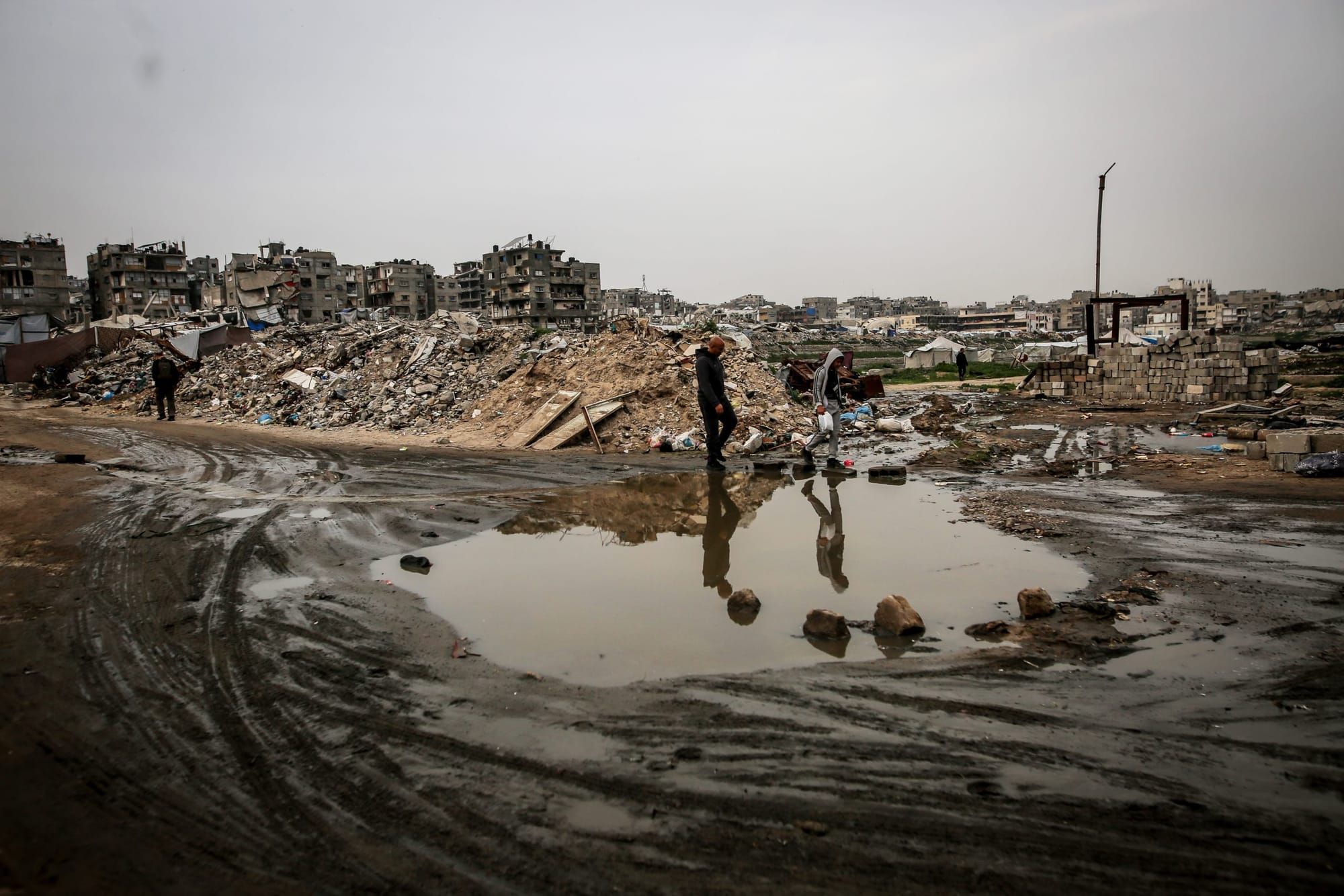
Atta’s death was not an isolated incident. Across Gaza, destroyed streets, deep, water-filled holes, and broken sewage lines have become part of daily life, as local municipalities struggle to respond with almost no fuel, machinery, or funding.
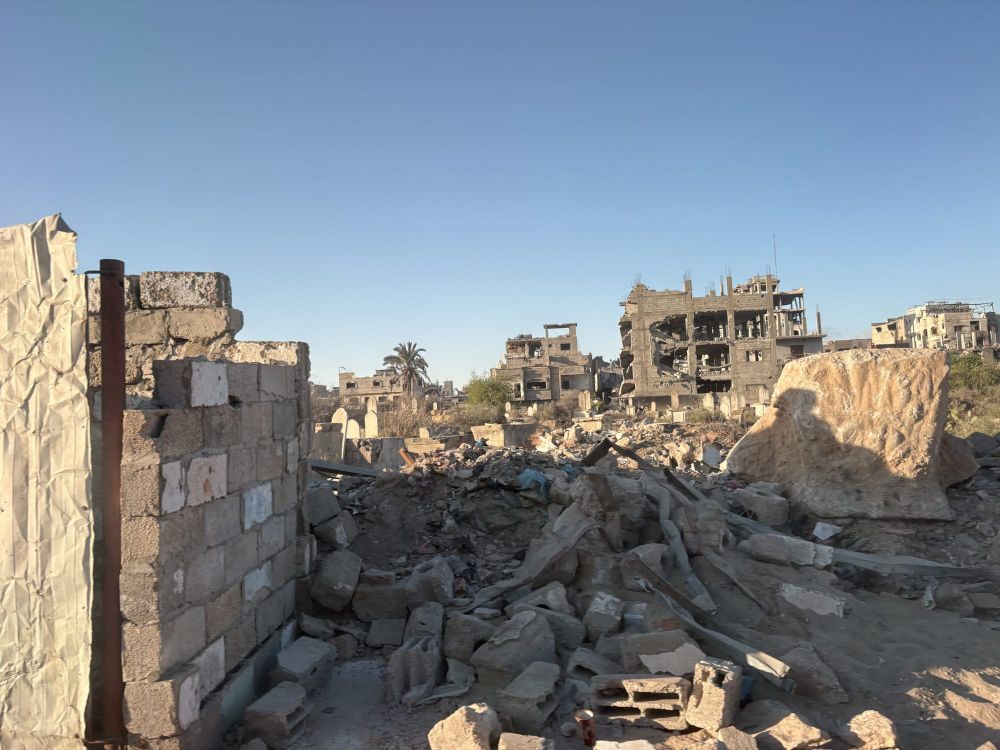
According to Husni Mahna, spokesperson for Gaza City Municipality, the city’s infrastructure is in a state of near-total collapse after months of sustained Israeli attacks.
“What remains of Gaza’s infrastructure is now described as fragile,” Mahna said in an interview, noting that water, electricity, sewage networks, roads, and public facilities have all been extensively damaged. “Based on preliminary assessments, around 85% of Gaza City’s infrastructure has been almost completely destroyed, which has had a direct and devastating impact on basic services and the lives of residents and displaced people.”
Mahna explained that water and sanitation services are among the hardest hit sectors. Dozens of pumping stations have stopped functioning, and 72 water wells have been destroyed and taken out of service, he said.
Solid waste management has also nearly collapsed. Many municipal vehicles were destroyed, garbage collection has slowed to a minimum, and municipal crews have been unable to access the main landfill east of Gaza City. At the same time, the transportation network has been severely damaged, with more than 500 miles of roads reduced from paved streets to dirt paths, further isolating neighborhoods and limiting movement.
Daily dangers
For Nour Abu Seif, damaged roads are not just an inconvenience; they shape every detail of her day. She goes daily from one area to another for work, relying on transportation that has become increasingly expensive.
With fuel shortages across Gaza and most roads either destroyed or buried under rubble, transportation costs have surged. Abu Seif said she is often forced to pay far more than usual just to secure a ride, as drivers struggle to navigate broken streets filled with debris, mud, and sewage water.
Even short distances that once required a simple walk have turned into daily ordeals. Streets flooded with sewage and thick mud are often impossible to cross on foot. In many neighborhoods, residents now rely on animal-drawn carts just to cross a single street—not because the distance is long, but because walking through contaminated water is no longer an option.
What should be an ordinary, simple act has become a physical, financial, and emotional burden. For Abu Seif and many others, destroyed roads do not only limit movement, they also dictate where people can go, how much they must pay, and how much energy they lose just trying to live a normal day.
Municipal work, Mahna said, is paralyzed by multiple overlapping shortages. “We are facing enormous quantities of rubble—more than 25 million tons across Gaza—which block streets and prevent any meaningful restoration of road networks,” he said.
He added that strict restrictions on the entry of heavy machinery and spare parts have slowed all repair efforts, “making it almost impossible to respond at the scale required.”
Fuel shortages, Mahna said, have had a crippling effect on municipal services. “We are forced to drastically reduce operating hours for water wells, sewage pumping stations, and waste collection vehicles,” he explained. Backup generators are rationed carefully, leaving many facilities unable to operate consistently.
During the war, at least 134 municipal vehicles and 85% of machinery were destroyed, leaving the municipality with only a fraction of the equipment needed to clear debris, reopen roads, and repair damaged networks.
Mahna warned that the collapse of municipal services has created serious health and environmental risks that increase disease outbreaks. Garbage accumulation has led to the widespread presence of insects and rodents, while toxic waste leakage threatens groundwater sources.
The slow pace of reconstruction directly impacts people’s daily lives. In Gaza, 92% of homes have been destroyed or damaged, and roughly 81% of the road network has been rendered unusable, according to United Nations assessments. The widespread destruction left many families living in tents, makeshift shelters, or on the streets exposing them to hazards.
Recently, 3-month-old Youssef Abd Rabbo was bitten by a weasel inside his family’s tent and developed severe poisoning. In a safer environment, this tragedy might never have happened. But flooded streets, open sewage pits, accumulated waste, and the absence of proper sanitation have turned entire neighborhoods into breeding grounds for insects, rodents, and dangerous animals.
Struggling without electricity
Before the war, Heba Fahajan, 35, lived with her husband and children in a small but warm home in the Tel Al-Sultan area of Rafah. In May 2024, following Israeli evacuation orders, she was forced to flee her house and move to a tent in the Al-Mawasi area.
Despite the end of the war, Fahajan and her four children are still living in the same tent. Their home was completely destroyed, leaving no trace behind.
We are deprived of the most basic necessities of life. What we are living is not a human life.
Heba Fahajan, displaced mother living in Al-Mawasi area
“We are deprived of the most basic necessities of life,” Fahajan said. “What we are living is not a human life. We are living in constant suffering.”
Fahajan said her hardship has only deepened due to the collapse of municipal services, especially the prolonged power outage. “We haven’t had electricity for two full years,” she explained. “Winter comes, and electricity becomes essential. I spend my entire day washing clothes by hand in the freezing cold until I lose feeling in my hands.”
Charging a mobile phone has become a daily struggle. “If I need to charge my phone, I have to send my young son to someone who has solar panels. He waits there for two hours just to get a small charge. If the weather is cloudy and there is no sun, I spend the whole day without using my phone,” Fahajan said. “This affects my children and their education, which now depends entirely on the internet and mobile phones.”
The same struggle applies to charging batteries for LED lights. “If they are not charged, we sit in complete darkness with no light at all,” she said.
“I endured two full years of war without electricity, telling myself to be patient because we were attacked,” Fahajan said. “But now? The war has been over for more than three months, and nothing has changed.”
Mahna said civil workers are doing their best as “Gaza is facing an unprecedented humanitarian catastrophe.”
“We are doing everything we can to serve our people, but without urgent international support, basic services cannot be restored,” he said.
“Gaza deserves to be rebuilt with dignity,” he added, “not to remain trapped in a permanent state of collapse.”
Editorial Team:
Sahar Fatima, Lead Editor
Lara Witt, Top Editor
Rashmee Kumar, Copy Editor
Author

Esraa Abo Qamar is a writer and English Literature student from Gaza.
Sign up for Prism newsletters.
Stay up to date with curated collection of our top stories.