Gaza Humanitarian Foundation food sites are ‘a laboratory of cruelty’ amid starvation
A Doctors Without Borders report details the terror of “aid sites,” as Palestinians and medical workers in Gaza describe how Israel has made it impossible to find food or medical treatment

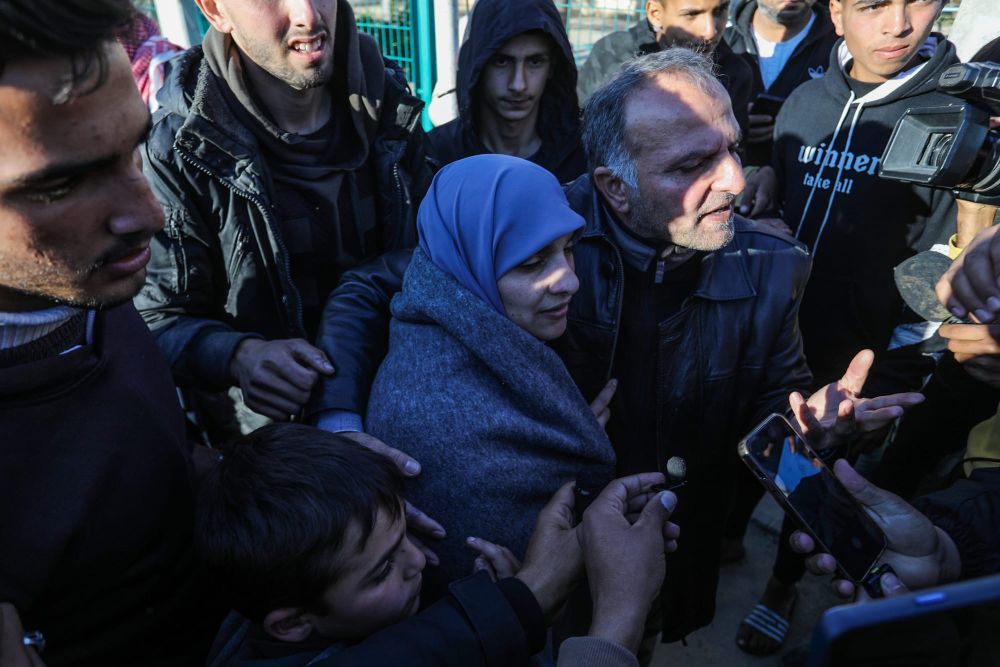
Fadel Moghrabi has tried three times, unsuccessfully, to obtain food from distribution points run by the Gaza Humanitarian Foundation (GHF) in central Gaza City. What he witnessed each time was pure terror, he told Prism.
“The crowds were massive. It was almost impossible to reach aid,” the former college student and children’s basketball coach said. “Then gunfire would start to disperse the people. Moments later, instead of carrying food, people were carrying the bodies of the dead.”
In an Aug. 7 report, Doctors Without Borders/Médecins Sans Frontières (MSF) described the American and Israeli-backed program as sites of “orchestrated killing” and “dehumanization.” GHF set up four “aid sites” on May 27, which replaced hundreds run by the United Nations and the U.N Relief and Works Agency for Palestine Refugees. More than 1,560 people have been killed by Israeli soldiers while trying to access aid; there are also reports of Palestinian teenagers being kidnapped at the sites and tortured in Israeli prisons.
“In MSF’s nearly 54 years of operation, rarely have we seen such levels of systematic violence against unarmed civilians,” Raquel Ayora, MSF’s general director, said in a press release. “The GHF distribution sites masquerading as ‘aid’ have morphed into a laboratory of cruelty—children shot in the chest while reaching for food, people crushed or suffocated in stampedes, and entire crowds gunned down at distribution points. This must stop now.”
In interviews with Prism, Palestinians on the ground as well as U.S. doctors who served in Gaza painted a similar picture of the horrors at GHF sites. And as Israel starved Palestinians via blockades, it also continued killing them in airstrikes.
Qamar al-Sarraj, 16, told Prism that she lost her parents and twin sister in Israeli attacks last year and watched her only remaining family, her 10-year-old niece, starve to death a few months ago. Al-Sarraj, who had been communicating with Prism for months, said she herself had become severely malnourished and exhausted.
“If I die from hunger, I will be with my mom and my family,” she said in a message to Prism on June 20.
In the end, it wasn’t starvation that stole al-Sarraj’s life, but an Israeli airstrike. Before a scheduled interview with the teenager for this piece, her friends told Prism in an Instagram direct message on July 4 that al-Sarraj was killed the previous night. Al-Sarraj, her friends said, was killed alongside at least 14 others, the majority of them women and children, while sheltering at the Mustafa Hafez school near Khan Younis.
Since before the genocide began, al-Sarraj was known to always be smiling, even in tough times, her friends said in a since-deleted Instagram post mourning her death.
In Al-Sarraj’s last post on Instagram, hours before her death, she said she felt “alone and abandoned by life.”
Hundreds of Palestinians have died from malnutrition and hunger as Israel continues to impose forced starvation through its siege and ongoing bombardment across the Gaza Strip. U.S. doctors who have treated patients injured at GHF sites described the desperation they witnessed and were told as starving people scrambled to feed their loved ones, only to be shot.
“ The majority of these patients who came in during these mass casualty events who were at the aid stations described a narrow space that you enter through and come out of,” said Dr. Owais Nadeem, a pulmonary critical care physician based in Michigan who volunteered in Gaza from May 29 to June 12, right after the sites opened. “They said there are hills that are set up. It’s almost like doors open the way they do on the top of tanks, and [soldiers] would come out from there and shoot, bullets flying. Some are able to get away, some don’t.”
Both the Israeli military and the GHF deny the reported death toll at or near sites, as well as any misconduct, apart from an ex-U.S. contractor who called the program “barbaric.” Nate Mook, who is reportedly on the GHF board, did not respond to a request for comment.
Nadeem said the majority of the patients he treated at Nasser Hospital were those injured while looking for aid. Despite the clear dangers, many felt they had no choice but to take the risk.
“ I’m hungry. What am I supposed to do?” Nadeem said patients told him. “That was a common theme.”
Israeli officials have denied the manmade blockade, emphasizing limited “air aid drops” and allowing a fraction of the hundreds of aid trucks waiting outside the military-controlled crossing points to enter. But the limited aid allowed in does not statistically meet the needs of the population, according to the U.N.
Most of the population now relies on aid to feed themselves and their families, as Israel has also destroyed 86 percent of farmland in Gaza, killed 90 percent of the cattle, and declared the sea a “no-go zone,” banning fishing. These inflictions of food insecurity can also be seen in the West Bank, where Israel demolished a seed bank, destroying tools needed to reproduce heirloom seeds.
Moghrabi, whose family has been displaced nine times since October 2023 and is now in Gaza City, described his daily schedule as his family struggles to access aid and proper medical treatment.
“My day starts by collecting water for daily use,” Moghrabi said. “If I’m late, I might go the whole day without any. Then we go search for flour or food. Most days, we come back with nothing. Usually, we eat one meal a day. After that, we go charge our phones and a flashlight to light up the tent at night.”
In addition to describing the fear and anxiety of going to the GHF distribution points, Moghrabi said sleeping in the streets near them—which people often have to do because of the limited number of sites—was also terrifying. After the total aid blockade that began in March, Moghrabi said the little food and medication that exists at markets is “insanely expensive.” According to recent reports, a kilogram of flour can cost anywhere from $16 to $27, and a kilogram of sugar can cost around $72.
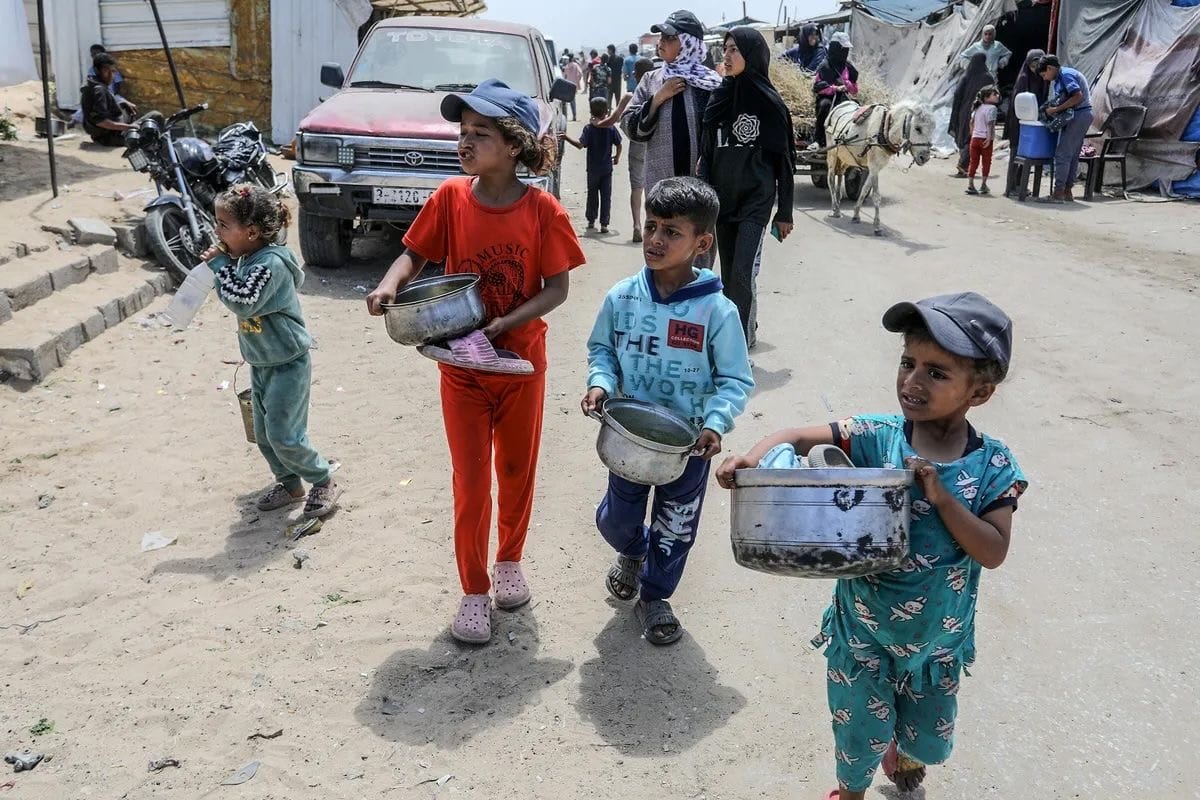
During Nadeem’s mission at Nasser Hospital, he also noted the overall malnourishment of everyone around him.
“ I can tell people haven’t eaten in days, and in the ICU, there were a few people with horrible infections,” Nadeem said. “These patients, their arm is the size of a child’s, and they are not going to heal.”
Nadeem said that when he tried to note down children’s ages, his guesses were always off by five or more years. “A 14-year-old would look like a 7- or 8-year-old,” he said.
Blood donation was also a challenge. People wanted to donate blood to help treat their injured family members. “But they’re all so horribly malnourished,” Nadeem said. “They’re crying and distraught, trying to tell somebody to just take some blood from them when it doesn’t look like they’d be able to handle it themselves.”
The nutritional deficiencies and impaired blood cell production among those who are starving cause blood to become unusable, and hospitals in Gaza are now facing a critical blood shortage. Although the West Bank Ministry of Health has attempted to transfer blood units, Israeli soldiers prevent their entry.
Dr. Khaled al-Hreish, an internal medicine doctor from Texas who went on a mission to Gaza from June 26 to July 10, told Prism that several medical workers, including himself, have attempted to bring in basic medication and baby formula in their suitcases. However, after the Rafah border closed in May 2024, restrictions increased, and Israeli soldiers now regularly throw these items away at checkpoints. Teams are even threatened with being sent home for bringing anything other than personal belongings.
“Before I was going to start the trip, my organization told me, ‘Make sure you cut back on what you’re bringing because they are going to stop you and they are going to confiscate baby formula as well as the other medicine,” al-Hreish said. “I took out 75% of the medical equipment or the relief aid that I brought in. All of it fit into a quarter of a single luggage bag, and they took all of it.”
Al-Hreish said the Israeli occupation soldiers told him that he would need permission from the Israeli Health Ministry, which is not outlined in any rules for health care workers on missions. From al-Hreish’s first official day at Nasser Hospital, he said he immediately noticed how most of the medical workers’ capabilities were limited by the various attacks on hospitals.
In the end, we just had to treat them the best that we could, and all of them had passed.
Dr. Khaled al-Hreish, volunteer doctor at Nasser Hospital
“ We don’t have blood cultures, we have oxygen up to 15 liters, but above that, we would either have to intubate or let them die,” al-Hreish said. “There were many patients that I was taking care of who were above the age of 60 who required escalating oxygen needs. We have a lot of trauma cases, young people coming in, all of the ventilators have been occupied, and there is no ICU space to keep these patients. In the end, we just had to treat them the best that we could, and all of them had passed.”
Israeli forces have deliberately destroyed electromechanical systems and oxygen generation stations in Gaza’s hospitals, while the restrictions on fuel have caused power shortages at hospitals and ventilators, as well as other medical equipment, to shut down.
Al-Hreish also witnessed how the lack of baby formula and food impacted the neonatal and NICU units. Some of his colleagues, who did not have their bags checked, brought in one or two cans of formula each.
“[The pediatric director] said, ‘This is for distribution and this formula that the hospital has is allocated specifically to NICU, neonatal ICU, and pediatric ICU patients,’” al-Hreish said. “Anybody outside of these two rooms, they don’t have formula available to give [parents] because quantity is so limited. In addition to that, the formula that they do have is supplemented with glucose to help meet the nutritional needs. It’s not adequate, of course, but they do what they can.”
Al-Hreish said he would see people lined up outside the pediatric department’s office, and they would beg for formula, but there was nothing the hospital could do.
Freelance journalist Ibrahim Abu Ghazaleh, who often reports in hospitals around Gaza City, said he has seen the lack of formula and food impact several children as well.
“I saw a 6-month-old whose body was very thin, while some of the [other children] died from dehydration and malnutrition,” Abu Ghazaleh said. “Their mothers are not able to produce milk naturally because of hunger. Even if the war stops today, children who are so hungry may suffer from diseases and permanent vulnerability. Famine is not only death, but the destruction of entire generations.”
Abu Ghazaleh also said he and other journalists have found it very tiring to continue their work as they are malnourished as well.
“I eat once a day, often, a loaf of bread, a few lentils or beans, without oil, no vegetables or meat. Sometimes we have nothing but water and tea,” Abu Ghazaleh said. “I lost more than 12 kilos [26 pounds] in six months. My energy has weakened, and walking for a short distance is tiring for me.”
Abu Ghazaleh said his journeys to the GHF sites are “extreme chaos” with “long queues under the sun.”
“Everyone is screaming. Sometimes we wait for hours, and they say the quantity is out. I have seen elderly people falling and children fainting from fatigue,” he said.
As conditions worsen for Palestinians through the Israeli-imposed aid blockade, evacuation orders continue to be issued every day since Israeli Prime Minister Benjamin Netanyahu announced Aug. 5 that he plans to “fully occupy the Gaza Strip.” More than 90 percent of the population in Gaza has already been displaced since 2023, leaving families with nowhere to go.
“The evacuation orders keep increasing every day until it feels like all of Gaza will be emptied,” Moghrabi said. “The occupation is trying to choke us until the very last breath. If they could cut the air from Gaza, they would.”
Editorial Team:
Sahar Fatima, Lead Editor
Carolyn Copeland, Top Editor
Rashmee Kumar, Copy Editor
Author
Neha Madhira is an award-winning gender, health and politics reporter with a focus in South Asia and the Middle East. Previously, she was a breaking news reporter in Austin, Texas, where she broke the
Sign up for Prism newsletters.
Stay up to date with curated collection of our top stories.