‘Preventable illnesses are devastating Gaza’
In a Q&A with Prism, American pediatric emergency medical physician Dr. Ammarah Iqbal details the devastating impact of Gaza’s decimated health care system on children

Real journalists wrote and edited this (not AI)—independent, community-driven journalism survives because you back it. Donate to sustain Prism’s mission and the humans behind it.
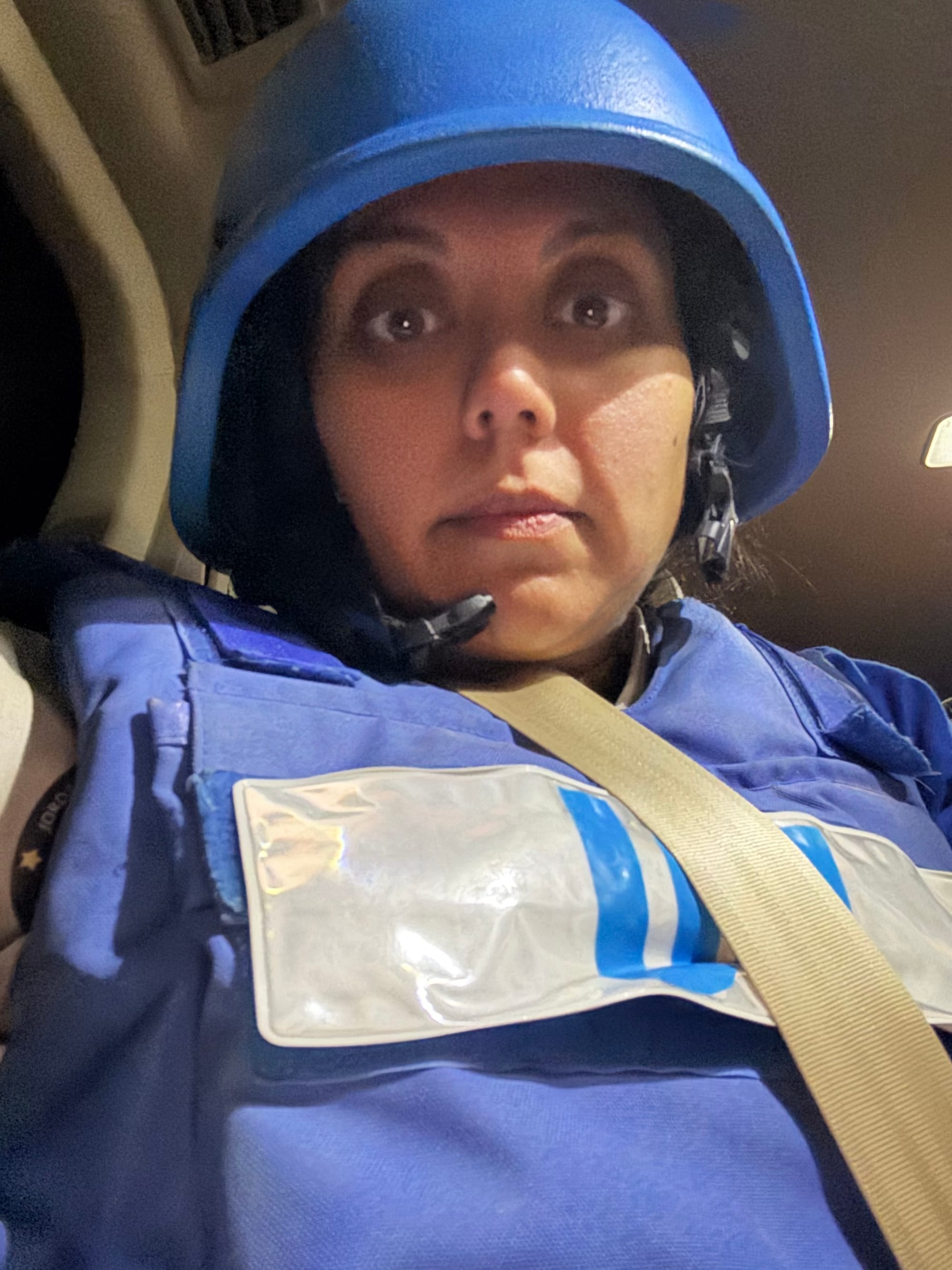
Dr. Ammarah Iqbal began her first medical mission in Gaza on Sept. 30 with the Palestinian American Medical Association. The Philadelphia-based pediatric specialist spent 16 days alternating between the main emergency room, pediatric medical emergency room, and pediatric ward of Al-Aqsa Hospital in Deir al-Balah. Iqbal, who was in Gaza for the announcement and installation of the latest ceasefire agreement negotiated by the U.S., left Gaza on Oct. 15.
In an interview with Prism, Iqbal, a board-certified pediatric emergency medicine physician and clinical assistant professor of pediatrics (divison of emergency medicine) at the University of Pennsylvania’s Perelman School of Medicine, testified to the Israeli military forces’ eradication of Gaza’s medical resources, the imminence of death for children suffering from preventable illnesses, and the long-term effects of genocide on children’s health.
This interview has been edited for clarity and brevity.
Marah Abdel Jaber: Can you detail the conditions of Al-Aqsa Hospital and Deir al-Balah upon your arrival?
Dr. Ammarah Iqbal: We arrived late at night, pre-ceasefire. The hallways were lined with tents; there was just enough space for maybe one or two people to walk through. There were tent hospitals on the grounds to house more patients. There were a lot of people crowding the hospital stairs as well. There were a lot of kids constantly running around, and it was hard to distinguish whether they had family in the hospital. It felt like there were hardly any medical resources at the hospital. I was lucky enough to have been able to cross the border with things like an otoscope, my stethoscope, certain medications, and my own pulse oximeters, but there wasn’t much else.
I have been doing this for quite some time, and I work at a major trauma center in Philadelphia. In the grand scheme of things, I had far more expertise when it came to pediatric emergency medicine compared to the people that I was working with, but I felt really under-qualified to be able to work in such a devastated setting.
Abdel Jaber: What did a day in the field look like?
Iqbal: Each day was different depending on the need. I split my time between the general emergency department, the pediatric medical emergency room, and the pediatric inpatient ward. The pediatric medical ER was a small room with a single bed and two desks. When patients would enter the waiting room, the nurses would try to check vitals depending on the equipment available. Sometimes they were able to check temperature, heart rate, blood pressure, weight, and rarely ever used a pulse oximeter, then they would send patients to see us. It was a mass of people pouring into the tiny room. Patients would bring a sheet of paper identifying their triage and with their vitals, if they had any done. Then, I would talk to the family, evaluate the patient, examine them with my own equipment, and make a decision about the next steps. I had to consider a lot before offering a plan.
Abdel Jaber: What was challenging about offering plans for patients?
Iqbal: The tricky part is that many of the workups that I would recommend were randomly available. The cost and accessibility of medication and visits fluctuated. There are certain medications that I would recommend, even basic things like antibiotics for pneumonia, but I didn’t know if they were available or affordable. Also, being mindful that a lot of the medications at that time were reportedly expired or hadn’t been stored appropriately, disrupting efficacy. I couldn’t do a urinalysis to check for a [urinary tract infection]. There were times when you could do a chest X-ray, but you didn’t know where the images went or how the computer system was coordinated. The Electronic Medical Record System was completely disrupted. Families had to continuously advocate for their kids because there was no cohesive way to keep track of things. We primarily dealt with medical complaints, like diarrhea, fever, infections, skin issues, and kidney problems—nothing trauma-related. There were definitely some patients who were very ill, requiring oxygen or rehydration, and we often didn’t have that. It’s very hard. For people with asthma flares, we didn’t have albuterol, and we weren’t sure if they could access it. You begin doing things that are no longer standard of care. It’s difficult, but we had no other option.
I had to watch many patients die, who, in any other situation that I’ve ever worked, we would have been able to save.
Abdel Jaber: Was it similar in the pediatric ward?
Iqbal: It was also a major challenge because, pre-ceasefire, the ward was flooded with young children. A lot of patients were displaced from the north at the time. We had maybe six rooms, each filled with families from door to door. Multiple children would share a single bed. Each room had about four beds along the wall, so we had eight to nine families sharing the beds, then another five or six on the floor. There were not enough IVs, saline bags, or oxygen. There was no equipment to intubate or ventilators for patients after intubation. The basic things that pediatric patients need anywhere in the world were not available. There weren’t pulse oximeters to keep track of whether a patient needed oxygen, so parents would wait until their baby turned blue to request oxygen, and we would find whatever baby looked pink enough and pass it on to them. There were times when there was no suction, so babies would choke on their own secretions. The pediatric ward was where we admitted patients from the pediatric medical ER who needed additional follow-up. We had patients dying every night because there was no monitoring. It was very challenging. There were no resources to do something about a patient who was progressing. There was a lot of moral distress for the providers and the families because this is basic medicine that any pediatrician is trained to manage, but we don’t have the resources. We felt helpless. We even tried to make a CPAP [continuous positive airway pressure machine]. I had to watch many patients die, who, in any other situation that I’ve ever worked, we would have been able to save.
Abdel Jaber: What was it like in the main ER?
Iqbal: I didn’t spend a lot of time in the main ER, but I would make my way down during mass casualties, pre-ceasefire. This was where the trauma cases, mainly adults, went. During these mass casualty incidents (MCIs), it was floods of patients and family members carrying in patients who are dead or bordering death, injured in all of the most horrific ways that you can imagine. To me, it felt like there were far more children than adults brought in. I saw a lot of head injuries in children and a lot of children bleeding to death on the floor. My colleagues shared that they had a 9-month-old patient who was shot in the head while being held by their parent. There were a lot of grieving parents and family members. It felt like chaos because there were so many patients and not enough resources. At one point, I was jumping from patient to patient doing FAST, an ultrasound to check for signs of trauma, bleeding, or free fluid in the abdomen. I would write in marker on their belly: “FAST positive” or “FAST negative” to triage. In pediatric patients, FAST is not the standard of care. I spent all of my time in the States teaching why we don’t use FAST in certain circumstances, but we just worked with what we had. There were tons of kids with shrapnel injuries that were embedded in their bodies. We had to think: How much do you dig for it? What’s the infection risk? Antibiotics or pain control—outside of ketamine—were not available. There are a multitude of risks when it comes to ketamine, but there wasn’t a way to monitor for that. You just have to gamble and hope it goes well for your patient because they’re in excruciating pain. I used the same suture kit and suture scissors on multiple children. There weren’t any ways to clean out wounds. It felt barbaric to practice medicine that way.
Abdel Jaber: Was there a noticeable shift from the pre-ceasefire week to the week that you worked at the ER during the ceasefire?
Iqbal: There were two shifts. One was the morale. There was suddenly hope. There was a little bit of celebration for the health care workers and the families in the hospital. The tents came down, and many families returned to the north. I don’t know the exact numbers, but there was an exponential difference. The tent hospital started to get dismantled, and the patients had moved and gone to other facilities. The second was that it felt much emptier and a little bit more like a functioning hospital. The mass casualties slowed down dramatically. There were still a lot of injuries, but more individual as opposed to MCI’s.
Abdel Jaber: What was significant about the illnesses you treated for non-trauma pediatric patients?
Iqbal: I saw a lot of cases similar to what I see in Philly: asthma, appendicitis, UTIs, the common cold, and fevers. There was an exponential amount of patients with complications of malnutrition or poor nutrition, showing in bad skin infections, lacking the immune system to fight it off, poor weight gain, acute or chronic dehydration, and other consequences. I saw a lot of skin infections that I extrapolated were caused by living in a tent. And, a lot of later-stage infections that we would typically catch early and prevent with antibiotics. I also saw a lot of complications of chronic diseases. Many kids who had known kidney or thyroid disease came with complications because they didn’t have any follow-up with their specialty doctors. They were either no longer able to see them, killed or displaced, the clinic no longer existed, or the families were displaced from the area where the clinic was.
Abdel Jaber: Did any particular case stick with you?
Iqbal: I had a younger patient, around 7 years old, who presented to the general ER in severe diabetic ketoacidosis (DKA) for new-onset diabetes. That’s actually something we see quite often in the pediatric population. Typically, you have vague symptoms for a brief period, then patients fall off a cliff and present quite sick when in DKA. It’s basically that your body cannot use sugar or glucose because you don’t make insulin. Patients are significantly dehydrated and malnourished, which can lead to really dangerous electrolyte derangements, including electrolyte and acid-based abnormalities that can cause cerebral edema, or swelling in the brain. When this patient came in, she was unresponsive and quite depressed in her mental state due to these physiologic changes. I was part of her follow-up team when she was transferred to the [intensive care unit]. What stuck out to me is not how sick she was, but the lack of monitoring available. We know how to manage DKA in terms of monitoring electrolytes and administering fluids and certain electrolytes to minimize the risk of death or irreversible brain damage. In this case, we didn’t have any of those techniques. In the States, the standard of care is every one hour you check blood sugars, every two to four hours you check gas, you regularly check electrolytes, and you titrate your fluids and insulin accordingly. In this patient, we couldn’t check electrolytes or gases. We could once in a while check blood sugar, but that’s about it. Our monitoring was unreliable.
Abdel Jaber: How did you manage to treat her?
Iqbal: It feels crazy to process, but we just had to look at this patient and assess if we thought she was breathing too fast, suggesting that she might be acidotic. Then we decided if we need to titrate fluids based on that, knowing that’s not even close to how you’re supposed to monitor. We didn’t have any of the necessary information to make these critical micro changes. After that, as this patient started to recover and regain her mental status, we had to reckon with the fact that this child is now on lifelong insulin. What does that mean in a place like this, where insulin is almost impossible to get? If you can access it, it needs to be refrigerated. Consider what a Type 1 diabetes diagnosis is like for anyone anywhere. For a patient in Gaza, it’s a death sentence. This patient can’t live without insulin but doesn’t have a way to get insulin. It leaves you thinking terrible things, like, what’s the point? You get kids over a hump, just to have them die of an infection or lack of follow-up a week later.
Abdel Jaber: What was especially striking about this case?
Iqbal: The kids in Gaza are just like kids anywhere else. The families are just like anywhere else, with the same worries, love, and advocacy. Part of what I love about pediatrics is how much you see families encircle their children and go above and beyond in ways that they don’t even do for themselves. People do superhuman things for their kids. The illnesses are the same too. I could see that preventable illnesses are devastating Gaza. So much of pediatrics is about preventative care, wanting kids to have long, healthy, stable lives. In Gaza, everything was reactionary. We were just trying to put out fires rather than being thoughtful about the future because there wasn’t any infrastructure for that. This was just an example of a single patient, but there were so many parallel cases. It also struck me about how alone children are in Gaza. I never saw her family. As much as families love and care for their children, so many of these children have had their families wiped out.
For this child, she woke up alone in a hospital, not knowing anybody, asking for her mom, asking for her dad, asking for her family members who we had to tell her are no longer alive, repeatedly.
Abdel Jaber: Was this common among your pediatric patients?
Iqbal: There were so many cases of the entire social network of children disappearing within an instant.I had another patient, around 10 years old, who had recovered from a shrapnel injury a month or so prior, but something was still lodged in her brain. She presented to the ER with an altered mental status, confused, not making sense, and she had a fever. It was thought that she had an infection or an abscess related to that initial shrapnel injury. We didn’t have images to confirm it. We couldn’t do cultures. We couldn’t do blood tests. When trying to understand her case, I found out that the shrapnel injury was from being in a home that was blown up by the Israeli forces. She was the sole survivor of her entire family. Typically, when someone has an altered mental status or is confused, the best thing you can do for them is bring people that they know. You bring them familiarity. For this child, she woke up alone in a hospital, not knowing anybody, asking for her mom, asking for her dad, asking for her family members who we had to tell her are no longer alive, repeatedly.
Editorial Team:
Tina Vasquez, Lead Editor
Lara Witt, Top Editor
Rashmee Kumar, Copy Editor
Author

Marah Abdel Jaber is a Palestinian writer, researcher, and creative. She was the team lead on Palestine Square’s “Firsthand Accounts from U.S. Medical Missions in Gaza” series, collecting testimonies
Sign up for Prism newsletters.
Stay up to date with curated collection of our top stories.