Gaza once held our stories. Now we carry its memories.
Israel has demolished every corner of Gaza, but we are rebuilding our homes in our minds
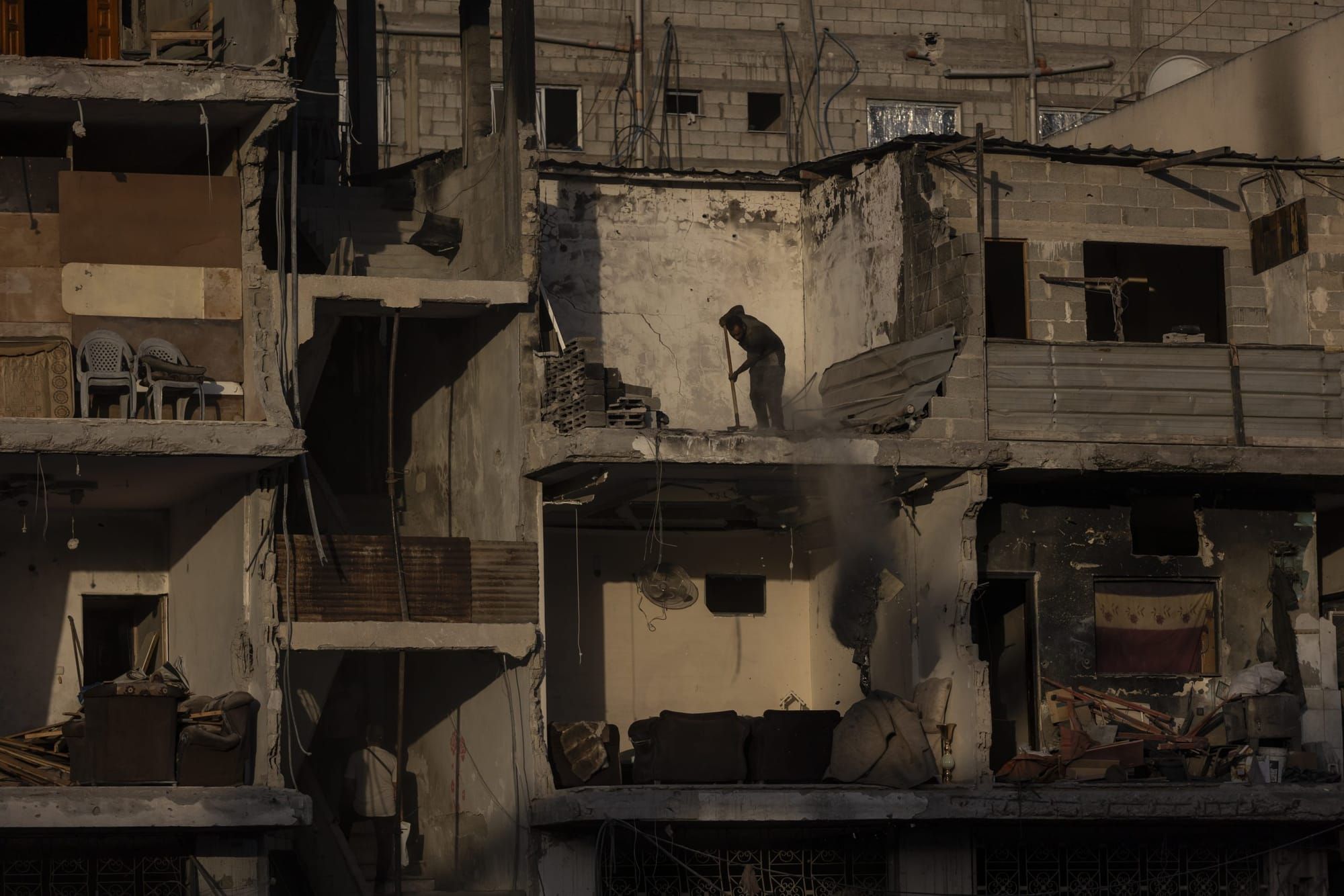
Gaza is a city that knows Palestinians—our names, our stories, our sorrows. We don’t need a map to navigate it; every corner holds a memory, every alley shelters a soul.
The seashore doesn’t just offer a view of the ocean; it is a breath of air for those who feel like they are suffocating under occupation. A cafe doesn’t just provide a meal, but a fleeting moment of joy—now an impossibility under Israel’s ongoing blockade. Yes, the library houses books, but it also holds the collective dreams and knowledge of generations, which have been threatened by destruction. And the mosque is about more than prayers; it brings the community together, offering solace and hope even in the darkest times.
Restaurants were more than places to eat in Gaza; they held the pulse of life. The cafes were spaces of comfort and hope amid the siege. In Gaza, even a shattered wall, a burned-out store, or a tree stripped of its branches held a story. Each place remembered us because we never passed through it as strangers. But now Gaza feels strange to us, even as the U.S. president says, “The war is over.” Perhaps this is because Gazans are still fighting for survival as Israel continues to massacre us during the so-called ceasefire. The future feels uncertain—even now, as we have a bit of breathing room to take stock of all that we lost.
Gaza has always been a place of steadfastness, where every stone, every building, and every institution told a story of faith, knowledge, and survival. Despite decades of blockade and occupation, Gazans clung to the pillars that sustained their spirit and identity. Our restaurants, cafes, mosques, universities, and libraries were more than physical spaces. These places were the center of our lives and the heart of our communities.
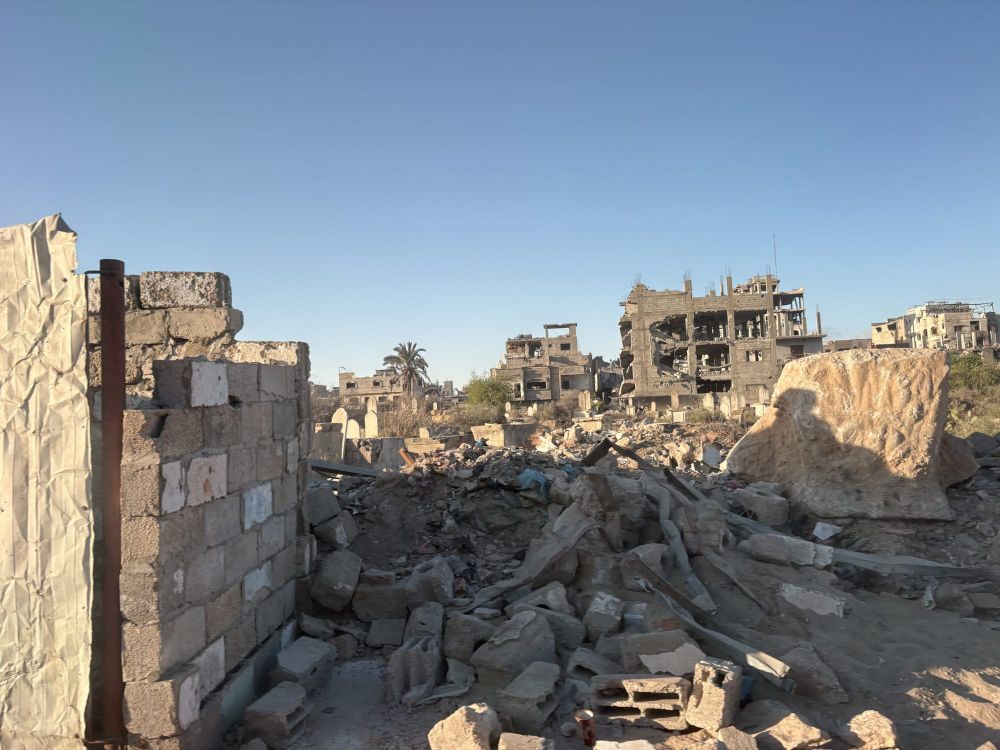
But Israel has bombed all of Gaza’s beloved institutions into dust. As our lives remain in limbo, we are rebuilding home in our minds—because memory is the only homeland that cannot be occupied.
Everything shattered
Before Oct. 7, 2023, Gaza’s culinary scene thrived, despite the siege.
From the bustling heart of Gaza City to Nuseirat and Khan Younis, restaurants and cafes such as Bellini, Bab Al-Bahr, Abu Hseira, and Fahd offered a sense of fleeting normalcy during occupation. The vibrant aromas from Italiano’s pizzas and the traditional tastes of Mehran and Sanabel filled the air. Sweetshops such as Zahab and Abu Al-Saud, and the cafes Marvel Ice, Scoop, and Bubbles were gathering places for families and friends.
The genocide devastated our once vibrant landscape, leaving behind memories of lives lost and others that refuse to be erased.
Al-Qalaa, or The Castle, once marked a milestone in Gaza’s upscale dining as the first floating building and restaurant on Palestinian waters. Located on a large platform in the sea that could accommodate around 700 diners, it was the largest seaside restaurant in Gaza, offering breathtaking, unimpeded views of the coastline and Western dishes, such as pizza, pasta, and steak made from high-quality local and imported ingredients. Beyond dining, the impressive restaurant was also designed to host conferences, formal meetings, and social events. Quickly, Al-Qalaa became a symbol of Gaza’s creative innovation. However, just two years after opening, Israel destroyed the restaurant, erasing one of our proudest landmarks.
While our once beautiful city has been under constant siege, Gaza’s cafes were social and cultural lifelines—spaces where people reconnected, escaped daily pressures, and shared ideas. They hosted events, supported small businesses, and provided rare environments that encouraged creativity and collaboration in an otherwise constrained reality. Equally important were Gaza’s shops that offered a glimpse of indulgence amid hardship. From large malls like Capital and Golden to bustling traditional markets and the historic port, these spaces were vital hubs for Gaza’s commerce. Sprinkled among more modern shopping malls were traditional souks that were the beating heart of Gaza’s economy. Souk Al-Zawiya, the oldest and largest, sold produce, clothes, crafts, and household goods, while Souk Al-Balad was a lively market for everyday essentials.
Gone. It’s all gone.
Nothing spared
Mosques are places of worship and centers of culture, education, and social life, especially in Gaza.
The Omari Mosque, the oldest and largest mosque in Gaza City, was a symbol of Islamic heritage. Its stone columns, arches, and ancient wooden pulpit predated the Ottoman era, and it served as a home for Quranic lessons, legal debates, weddings, and national commemorations. But not even this historic and religious cultural treasure was spared by Israel. A December 2023 airstrike reduced the mosque to rubble.
Other historic mosques, such as Al-Khalidi Mosque in northern Gaza, were also destroyed, erasing centuries of spiritual and educational legacy. The same is true of Jam’iyyah Islamic Mosque in Al-Nuseirat refugee camp, where Israel killed worshippers, and imams were forced to halt all educational activities. And what of the Al-Qassam and Al-Shuhada mosques? Or Al-Hasayneh Mosque and Sheikh Ajleen Mosque? They, too, are gone.
Collectively, these mosques once formed the spiritual and social fabric of Gaza. Their deliberate targeting by Israel was a transparent effort to dismantle all signs of life and faith under occupation. Genocide is not just an attack on the people; it also aims to destroy the bonds linking Palestinians to their faith, to their community, and to Gaza.
A testament
Similar to mosques, Gaza’s universities were essential hubs. Despite decades of siege, violence, and economic hardship inflicted by Israel, these institutions remained committed to education, shaping professionals, and fostering research.
The Gaza Strip once housed the Islamic University of Gaza (IUG), the largest Islamic university and the most prominent educational institution in Gaza, as well as Al-Azhar University, Al-Aqsa University, Palestine University, Al-Israa University, the University College of Applied Sciences, the Gaza branch of Al-Quds Open University, the Police College for Applied Sciences, the University College of Science and Technology in Khan Younis, and the University College of Science and Technology in Deir al-Balah.
Many of these universities have been destroyed, while others remain only partially standing.
Despite frequent power outages, unstable internet connections, and the constant threat of airstrikes during the genocide, students at IUG, Al-Azhar University, Al-Aqsa University, and other institutions continued their education through remote learning. They study relentlessly, even as their pens run dry, their books are damaged, and classrooms are now essentially nonexistent—they continue to make do with what little resources they have.
For Palestinian youth in Gaza, education is far more than a routine or a right—it is a profound act of resistance, a lifeline that sustains hope, and a way to preserve Gaza’s intellectual and cultural heritage for future generations. Every lesson learned and every page memorized is a quiet rebellion, asserting that knowledge cannot be destroyed even under genocide.
Unfortunately, Gaza’s libraries have suffered a worse fate. The repurposing of libraries as shelters scattered knowledge. Without roads, books cannot be accessed, and without electricity, digital archives remain locked.
The Islamic University Library, Gaza Municipal Library, Rimal Public Library, Al-Quds Open University Library, Al-Aqsa University Library, and Al-Azhar University Library not only played vital roles in Gaza’s academic life, but they were also sanctuaries and repositories of memory.
The Islamic University Library, located in Gaza City, housed an extensive academic archive with tens of thousands of books, periodicals, and research references. The university’s destruction left students and faculty without one of Gaza’s leading centers of higher learning.
Gaza Municipal Library, situated in Rimal, contained tens of thousands of books in Arabic and English across multiple disciplines, with dedicated sections for children, literature, and research. The space also hosted cultural events and training sessions. Due to an Israeli bombing, the library was in some places reduced to rubble, with a large portion of its collection burned or destroyed.
Similar stories can be told for each of Gaza’s libraries: Israel has bombed and damaged them all to varying degrees, and whatever remained was ransacked, resulting in near-total loss of collections across the city.
Gaza is home because our memories are etched into every street, and Gazans are the heartbeat of the city.
There is a reason Israel targeted our institutions of higher learning. Libraries and universities embody Gaza’s commitment to knowledge and progress. How frightening it must be for the occupation to see our college students become powerful symbols of Gaza’s determination to preserve education and cultural identity amid siege and genocide.
The sites where these institutions once stood remain a reflection of Gazans’ perseverance under unyielding occupation, and our memories of these places defy destruction.
The bond between Gaza and its people is unbreakable and eternal. The ongoing genocide and the deliberate destruction of our city have only strengthened our understanding that home is not our favorite restaurant, the universities we attend, or even the mosque where we worship. Gaza is home because our memories are etched into every street, and Gazans are the heartbeat of the city.
And we have made a promise to Gaza: We will remain steadfast on our land, we will honor our heritage, and we will defend our beloved city and breathe new life into her again.
Editorial Team:
Tina Vasquez, Lead Editor
Carolyn Copeland, Top Editor
Rashmee Kumar, Copy Editor
Author

Taqwa Ahmed Al-Wawi is a 19-year-old Palestinian writer, poet, and editor from Gaza, studying English literature at the Islamic University of Gaza. You can find more of her work at: https://tqwaportfo
Sign up for Prism newsletters.
Stay up to date with curated collection of our top stories.