Starvation by price: Palestinians face $40 rice, $100 sugar amid Israeli blockade
One teenager described hiding among body parts as soldiers shot into crowds of aid seekers in Gaza

Israel’s blockade and closure of border crossings have left Palestinians in Gaza suffering indescribable torment. From the first day of the genocide until now—apart from a few weeks of reprieve during the humanitarian ceasefire—hunger has been devouring Palestinians’ bodies.
“I ate an egg for the first time in the war during the ceasefire. I can’t describe the moment I put the egg in my mouth. I felt all the strength in the world spreading through my body,” 10-year-old Eline, who did not want her full name published, told Prism.
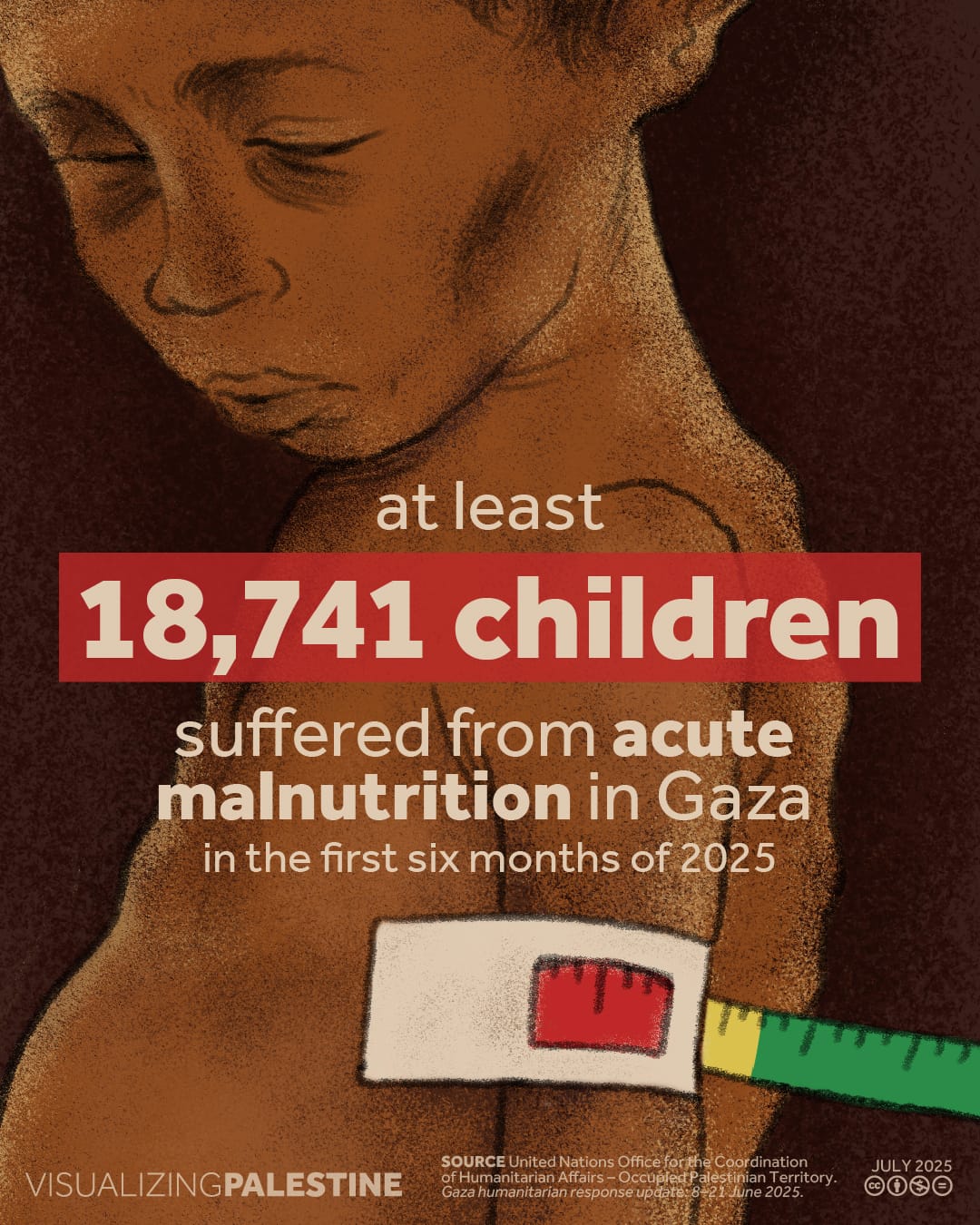
“Life without food is very hard,” she said. “Sometimes I can’t walk. All I want is to sleep and escape the harsh reality of hunger.” Children in Gaza used to run and play freely, fueled by milk, meat, and eggs, she said. Now, they stare blankly, too tired to move.
Yumna, a university student who did not want her full name published, told Prism, “I can’t study, work, or even walk. Every morning, my thoughts begin and end with finding something to eat. I drink water when I find nothing.”
Yumna said she hasn’t tasted sugar in three months or bread in two months. The only food available has been rice and macaroni, but it’s extremely expensive.
“A kilo of rice is $40, and a kilo of sugar is $100 and more. How can an extended family afford this? Even one kilo is impossible,” Yumna said. “We even tried making bread out of canned peas. It’s so bad and hard to eat.”
The United Nations Relief and Works Agency for Palestinian Refugees (UNRWA) posted on X on Monday that food prices in Gaza have increased fortyfold, with a bill for a kilogram each of lentils, flour, rice, and sugar potentially reaching $183.
“Meanwhile, just outside Gaza, stockpiled in warehouses UNRWA has enough food for the entire population for over three months,” UNRWA posted. “The suffering in Gaza is manmade and must be stopped.”
A few weeks ago, some aid trucks carrying flour entered the Gaza Strip. Thousands rushed to the crossings hoping to reach the flour.
Nineteen-year-old Abd Al Rahman Al Jarousha was one of them. After midday on June 11, Al Jarousha walked toward the Zikim crossing to the north, he told Prism.
“The world was dark—no light, no stars. Dogs circled me. My feet were unsteady, but I kept going, telling myself that my parents were waiting for me,” Al Jarousha said.
He paused, took a deep breath, and then spoke again, his voice trembling. “Huge crowds were packed near the crossing. Soldiers were shooting. I survived the gunfire again and again. Hundreds of us huddled in a deep hole. Something soft was beneath me, something strange, but I didn’t care,” he said. “Then someone’s phone light switched on.”
“I saw torn flesh. A child. Blood. Pieces of bodies nobody could name,” Al Jarousha continued. After a long pause, he added, “Someone must have buried those there.”
Al Jarousha said his hands wouldn’t stop shaking. “All I could think about was my parents. They must be starving. And they must be thinking of me,” he said.
When aid trucks finally appeared, he said hundreds of men surged toward them.
“Under the wheels, hands reached up and legs sprawled. I swallowed my scream. If I had screamed, the whole world would have heard me. I tried to grab a single bag of flour or even one kilo. I failed. The tanks were too close.”
Al Jarousha said he sat on the rubble of what used to be a house and watched his tears fall into his hands. Even surrounded by torn flesh and blood, he chose to stay and wait.
I turned toward the road, saw the trucks still coming, and ran, ran, and was given a sack of flour, so my arms were empty no more.
Abd Al Rahman Al Jarousha, 19, in Gaza
“By sunrise,” he said, “I felt the light touch my face. It was the first morning in heaven for the martyrs scattered around me. I turned toward the road, saw the trucks still coming, and ran, ran, and was given a sack of flour, so my arms were empty no more.”
When he finally reached home, Al Jarousha said his mother held him so tightly he could hardly breathe. Then she hurried to make bread to ease their aching stomachs.
The horrific scenes from that night have stayed with Al Jarousha.
“I saw a man holding an empty flour bag to take some food from the trucks. At first, he was excited. Later, I learned that people put his body in that bag after his body was turned to torn flesh.”
Editorial Team:
Sahar Fatima, Lead Editor
Carolyn Copeland, Top Editor
Rashmee Kumar, Copy Editor
Author
Nadera Mushtha is a writer and a poet from Gaza.
Sign up for Prism newsletters.
Stay up to date with curated collection of our top stories.