Fleeing home once again, carrying only memories of a past life in Gaza
From nights stalked by drones overhead to taking her elderly parents across a so-called safe route, Shaimaa Eid recounts being uprooted from home
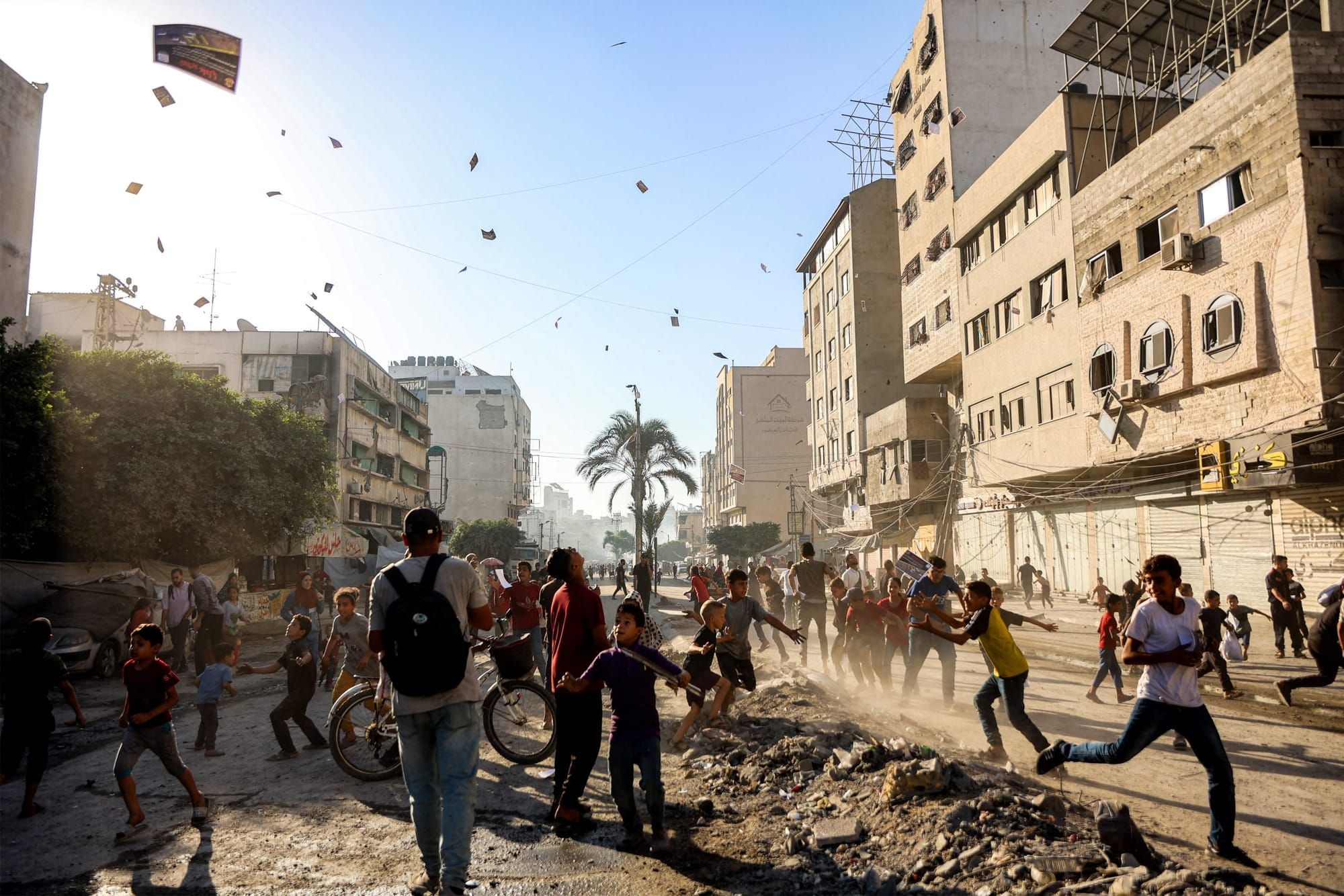
I no longer know where my body ends and my heart begins. My body is now stuck in Al-Mawasi, Khan Younis, while my heart remains in northern Gaza, where I left my home and memories under the horrors of war.
Once again, the Israeli occupation forced us to leave our homes, after surrounding us with fire, destruction, and shelling, driving us south through its massacres. That short distance on the map turned into a lifetime journey of pain—a journey only understood by those who have walked it under a burning sun and with tears that never dry.
A home we tried to save
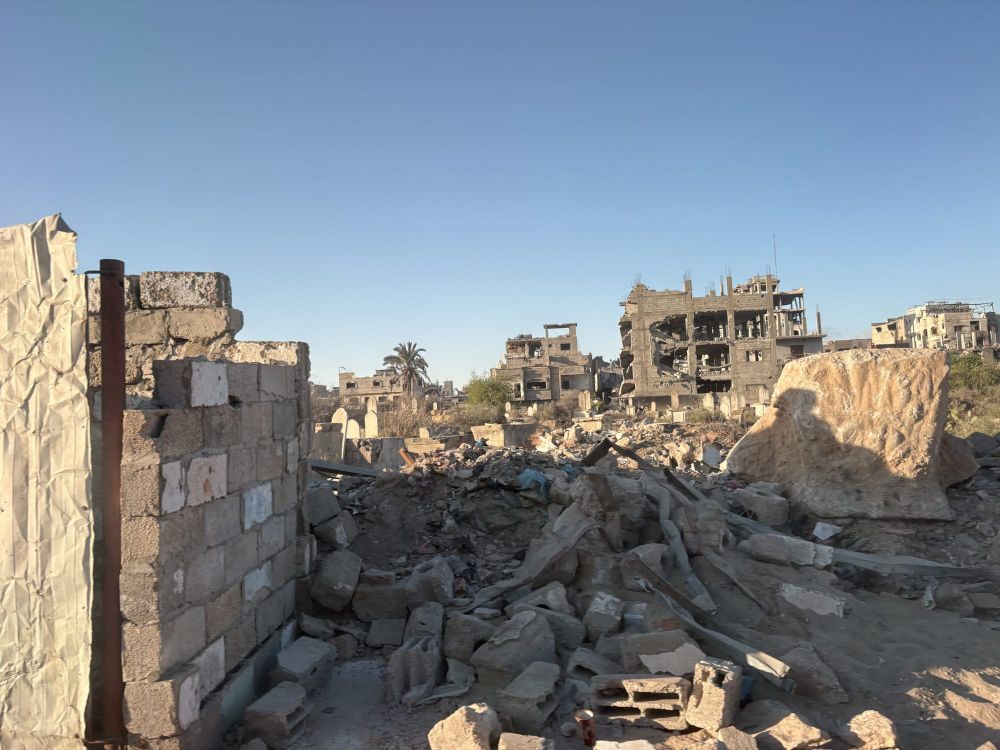
When we returned to our home after the last ceasefire took effect in January, we found nothing but wounded walls and scattered debris. The furniture was overturned, family photos were covered in dust, and the air was thick with the smell of dust and gunpowder.
Still, we gathered as a family, trying to salvage whatever we could. With small tools and bare hands, we began clearing broken glass and stones—as if resisting despair with determination.
We felt that the house, despite its wounds, deserved to remain as a witness to our existence.
We made a promise to endure until our last breath, to protect our home no matter how hard things became. We kept telling each other, “Here we were born, here we lived, here we will stay.”
But the occupation did not give us that chance.
Nights of terror
On our final nights in the Sheikh Radwan neighborhood, located in the northwest of Gaza City, we were surrounded by small drone aircrafts known as quadcopters. They fired at anyone who appeared at a window or stepped outside a door. We endured long nights of terror, turning off our phone lights early, sitting in silence, listening to the buzzing above us like a beast stalking our breath. We no longer dared to look at the sky. Then came the sniper rifle mounted on a crane, installed by the occupation east of the neighborhood, a merciless eye watching every move, turning daily life into a constant nightmare.
One day, my sister and I had to leave the house to get food. The rifle fired at us from a distance. We ran quickly and miraculously survived.
Unforgettable horrors
The last days before our displacement were like the horrors of Judgment Day. Continuous warnings blared through loudspeakers from quadcopter drones, urging us to leave the area and head toward the southern Gaza Strip. The sounds of explosions shook the heart before the walls. Thick smoke covered the sky, blurring the line between night and day. The smell of gunpowder still lingers in my nose, and difficulty breathing has accompanied me since then, as if my lungs are filled with sorrow before air.
There was no more water or food, not even a simple market to turn to. The planes bombed even the small stalls that used to provide us with flour and vegetables. It felt as if they were punishing our every attempt to hold on to life.
The arduous journey
The hardest part of the journey was caring for my parents. They are elderly, suffer from chronic illnesses, and require ongoing medical care. Their bodies could not endure the long distance or the scorching summer sun. Our trip from the north to the south took more than six hours—six hours that tested our patience and endurance, six hours that felt like a lifetime of exhaustion.
On Al-Rashid coastal road, which the occupation called a “safe passage” for our displacement to the south, we came face to face with death. A tent by the beach was bombed right before our eyes, the remains scattered along the road. The scene was too harsh to bear. Only meters separated us from the incident, but its impact was deeply etched into our souls. Since that moment, I have not known peaceful sleep; whenever I close my eyes, I see the torn bodies again.
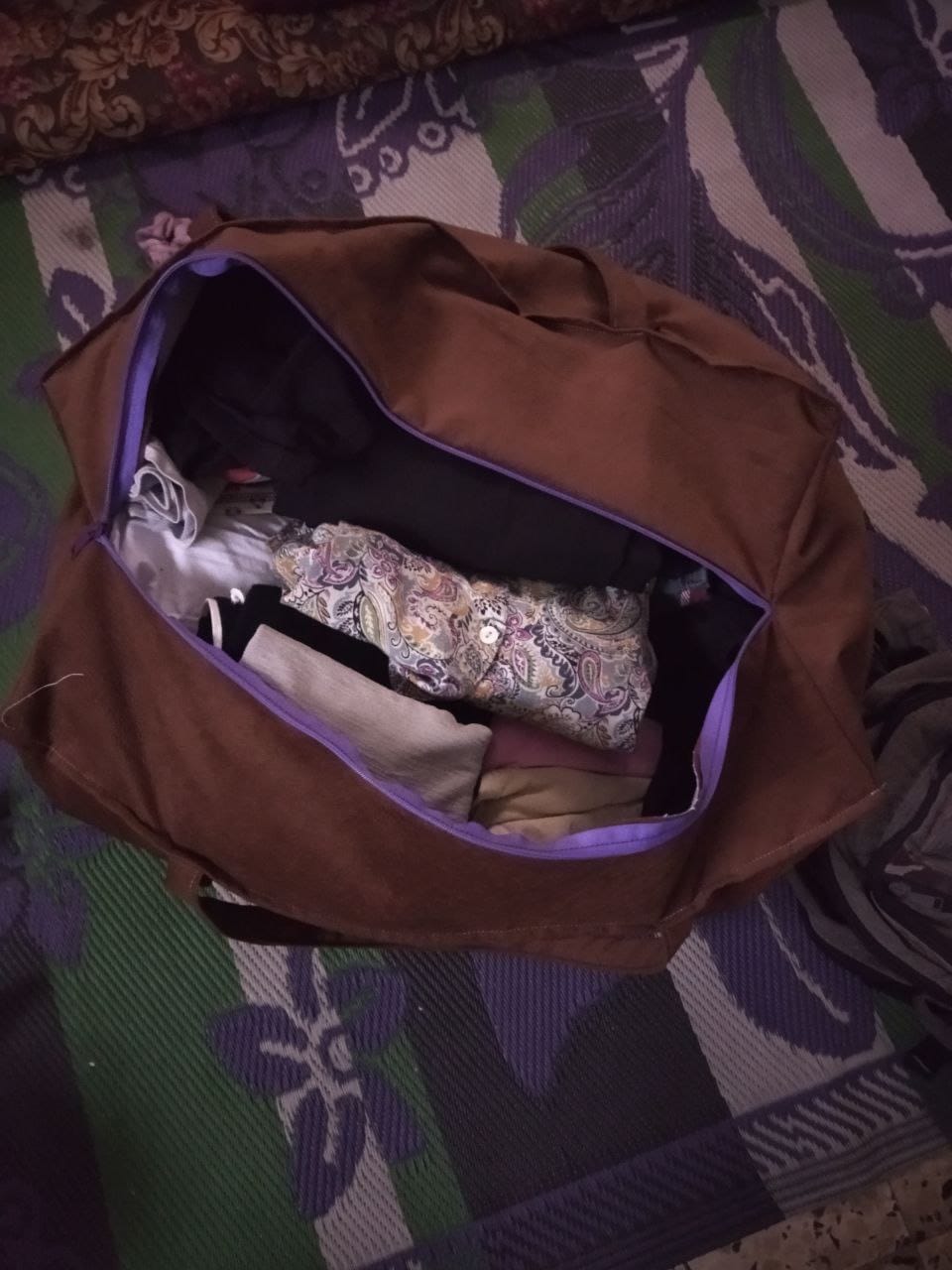
The hardest farewell
Before I left, I turned back for one last look at our home. It wasn’t just stone and walls; it was a memory of my childhood, a stage of my life. I cried, just as my family did, as if by leaving this time, we were burying it with our own hands.
How can a person say goodbye to their childhood, their memories, the place they were born, and all their dreams in a single moment? Displacement is not just a move from one place to another; it is an uprooting, a fracture in the soul.
Life without life in Al-Mawasi
We arrived at Al-Mawasi in Khan Younis to find the area crowded with displaced people. Thousands of families live in cramped tents, while others sleep on the sand. The available water is salty and contaminated, forcing people to go to the sea to collect what little water they can. Over time, skin diseases have appeared on their bodies, and suffering has spread among both children and adults.
Life here feels like waiting on the edge of a cliff. There is a lack of food, medicine, and proper health care worthy of a human being. My parents need ongoing medical care and medications, but the medical points in Al-Mawasi are unable to cope with the overwhelming number of patients and elderly people. I stand helpless, unable to provide them with the treatment they need.
Between oppression and hope
Gaza is being destroyed day after day before our eyes. Its towers turn to rubble; its life becomes a memory. We sleep with worry and wake up to even greater worry, as if night and day conspire against us. Yet, inside me, there is an unbreakable voice that says, “We will return. We will rebuild Gaza, and Gaza will remain free and proud no matter how long the night lasts.”
My body may be here, tired and weighed down in Al-Mawasi, but my heart is there, in northern Gaza, where I left my home and my dreams. There, where dreams begin and end, and where the occupation cannot steal our certainty that we will return.
“Stories From Gaza’s Hunger and Ruin” is a zine written under siege. This booklet gathers real reports from Gaza on hunger, massacres, and displacement.
Editorial Team:
Lara Witt, Lead Editor
Carolyn Copeland, Top Editor
Rashmee Kumar, Copy Editor
Author
Shaimaa Eid is a Palestinian journalist from the Gaza Strip. She specializes in covering news and field reports, with a particular focus on human-interest stories that reflect the suffering of people
Sign up for Prism newsletters.
Stay up to date with curated collection of our top stories.