Israel has manufactured ‘apocalyptic’ conditions in Gaza
In a Q&A with Prism, Dr. Arshad Kaleem, a Texas-based oral and maxillofacial surgeon, discussed the horrors he witnessed in Gaza leading up to the recent ceasefire
Real journalists wrote and edited this (not AI)—independent, community-driven journalism survives because you back it. Donate to sustain Prism’s mission and the humans behind it.
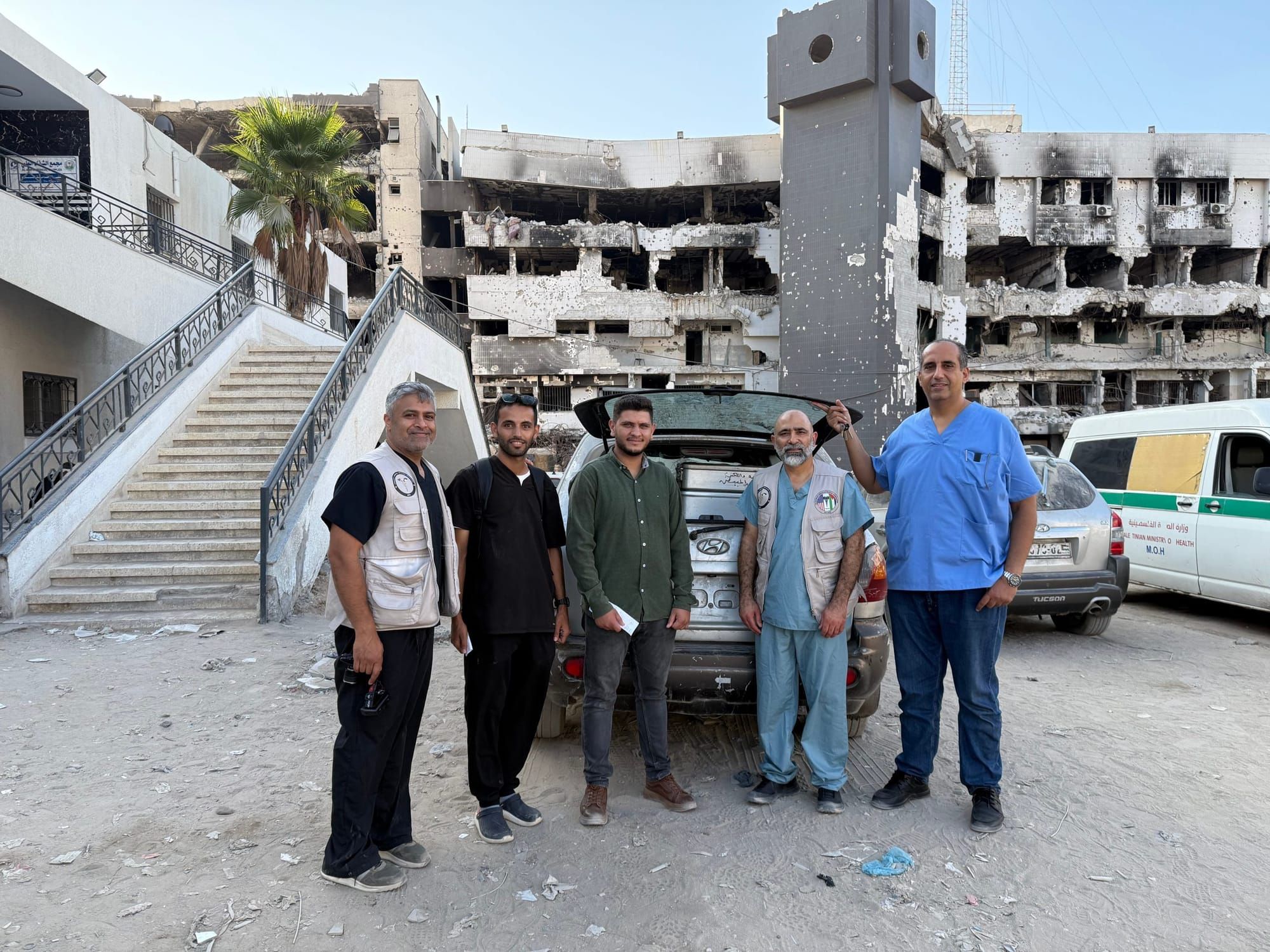
Dr. Arshad Kaleem embarked on his first medical mission in Gaza with the Palestinian American Medical Association on Sept. 4, 2025. The El Paso, Texas-based oral and maxillofacial surgeon spent 21 days in northern Gaza, traveling between the Al-Aqsa, Al-Shifa, Al-Quds, and Palestinian Red Crescent Society Field hospitals. Originally scheduled to leave Gaza on Sept. 18, Kaleem’s group was held for an additional week due to Israel’s closure of the King Hussein/Allenby Bridge with Jordan following a deadly attack by a Jordanian truck driver.
Kaleem is a board-certified surgeon specializing in head, neck, oncologic, and microvascular surgery. He is a diplomate of the American Board of Oral and Maxillofacial Surgery and a fellow of the American Association of Oral and Maxillofacial Surgeons and the American Head and Neck Society. Upon leaving Gaza on Sept. 25, he continued to treat patients evacuated from Gaza.
Kaleem spoke with Prism after returning from his medical mission, highlighting the atrocities in Gaza City leading up to the latest ceasefire agreement in September. The surgeon testified to Israel’s indiscriminate targeting of civilians across Gaza, obliteration of hospitals and medical resources, and devastation of Gaza City during the ground invasion that same month.
This interview has been edited for clarity and brevity.
Marah Abdel Jaber: What was the condition of the hospitals and their surroundings during your mission?
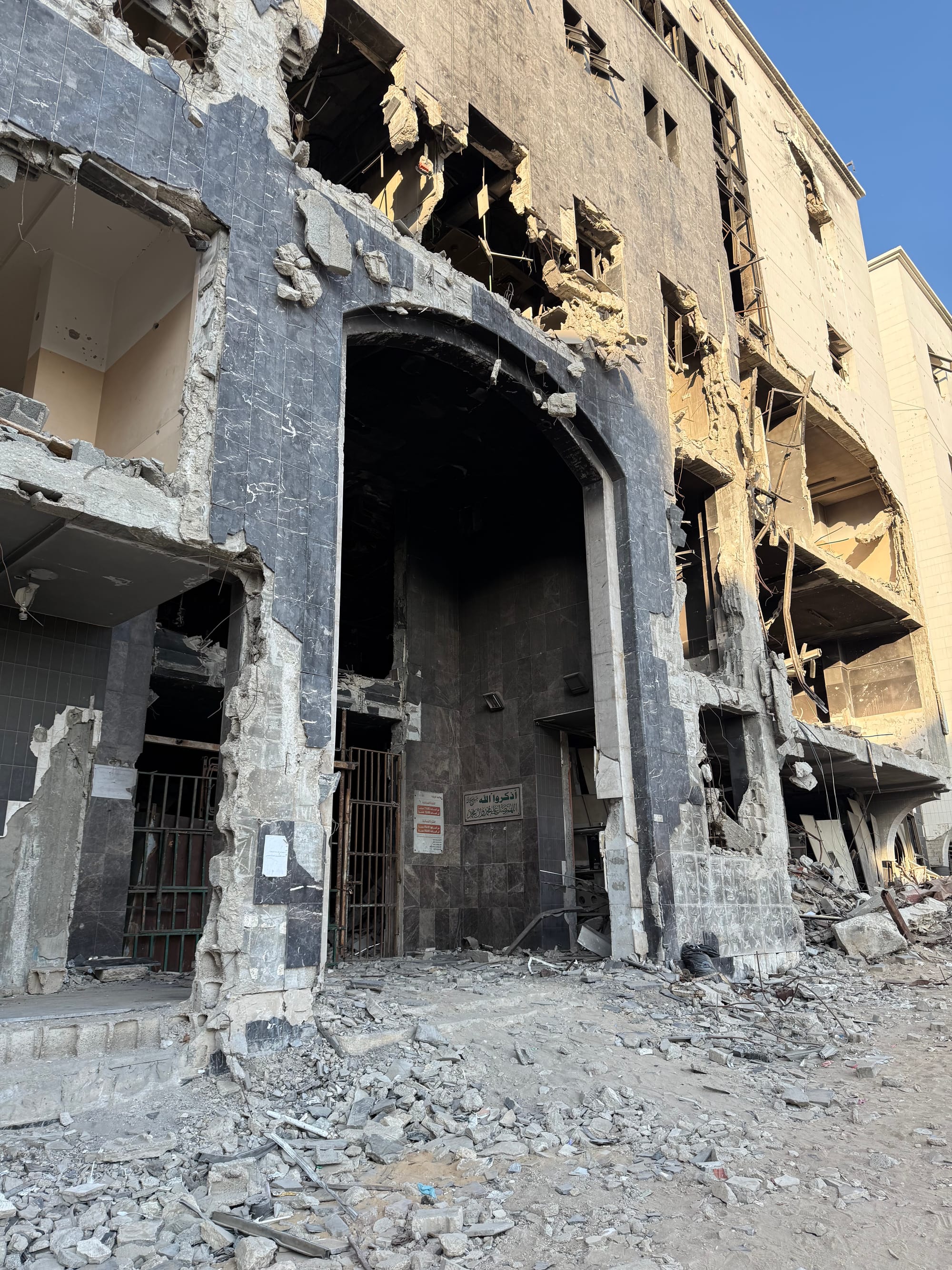
Dr. Arshad Kaleem: The hospitals were overwhelmed. The Aqsa Hospital was originally just for women and children, but it had to become a major trauma center. It wasn’t equipped to deal with the number of injuries and patients that were coming in. They didn’t have the facilities, infrastructure, supplies, or personnel. It became a big shelter for the people in central Gaza because they didn’t have any shelter, water, or electricity. If people had one family member in the hospital, they would live alongside them because they had nowhere else to go. They also thought that this was the safest place to be, which was not the case because hospitals were actively targeted.
We saw a lot of airstrikes close to the hospital, and we would hear them all the time. It was horrible. There was a constant flow of major trauma into the ER [emergency room] in ambulances, private vehicles, and donkey carts. There was no space for injured patients to be checked. Patients were on the floor, in the hall, and there were multiple patients in one bed. Wherever they could find a place. I saw a patient intubated, connected to the ventilator, on the floor because there were no beds. And this was in every single hospital. It was like a scene from an apocalyptic movie.
Abdel Jaber: What did you witness during Israel’s systematic destruction of Gaza City?
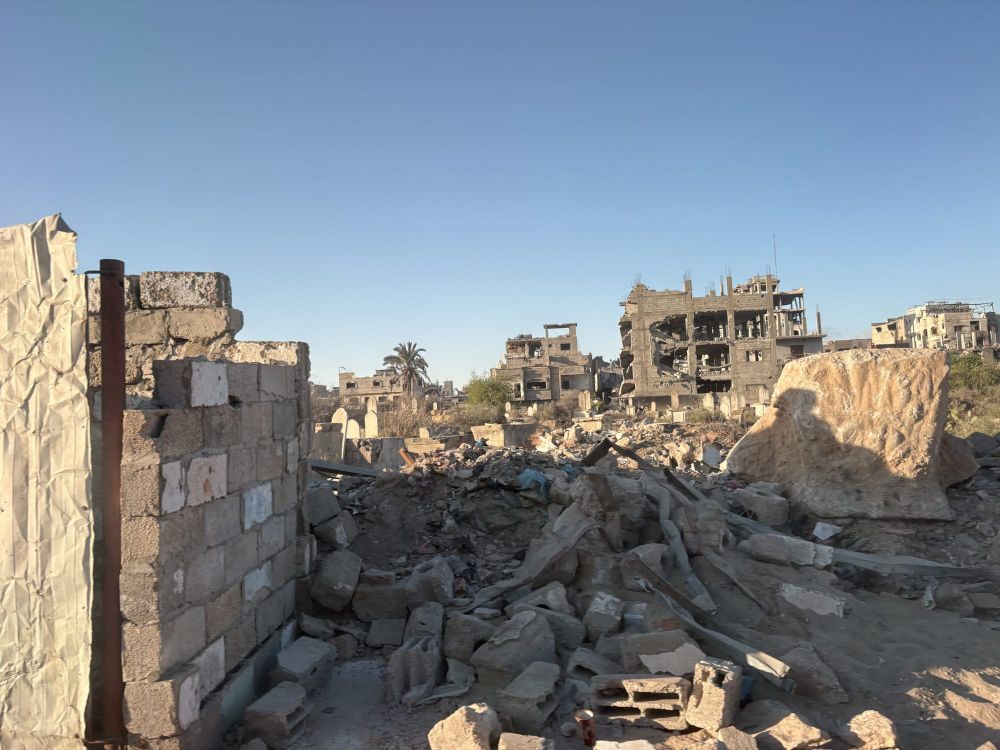
Kaleem: It was rubble. Every building was destroyed—leveled to the ground. Residential buildings, tall commercial buildings. As we were driving north to Gaza City, I saw crowds of people moving whatever they could collect to take south because the Israeli army was forcing people to evacuate. It was very tough. Families were sitting on top of their belongings. I didn’t see a single building intact. Nothing was functioning. There was no water, and definitely no drinking water. The food situation was extremely difficult and expensive. If you could find some food, nobody could buy it because the prices were inflated. It was very difficult.
Abdel Jaber: What did a day look like in the field for you?
Kaleem: I worked with the local team, mostly dealing with trauma cases. There were a few non-trauma cases I treated, like patients with cancer of the mouth and tongue, or cleft lip and palate. But most of the patients that we treated and saw were trauma patients. Whenever a trauma came into the emergency room, I worked with the local team on a triage basis to decide who needed the operating room (OR) the most; essentially, who could survive and who could not. Once we had identified a patient, we’d take them to the OR, perform the surgery, and then we would immediately find another patient to take into the OR, if it was available. If not, we would do whatever we could on the hospital floors, in the wards, or in the intensive care unit (ICU) with whatever local anesthesia we could use. We just operated wherever we could from early in the morning until around 2, 3 o’clock in the morning every day.
Abdel Jaber: What were some of the most common injuries that you treated, and what might they indicate about the weapons being used by Israel?
Kaleem: Based on my specialty, I mostly saw head, neck, and face trauma. The most common traumas that I saw were shrapnel injuries, explosive injuries from bombings, and bullet injuries from quadcopters. The quadcopters fire indiscriminately at people. Patients told me that there were also other kinds of weapons, like AI-controlled guns that you can program to hit a specific part of the body. The gun is a robot; it will just focus on whatever is being fed into the program, so one day it is the head and neck, the next day it would be the chest, the next it would be the abdomen or extremities, etc. There were also robotic, unmanned tanks, which fire first, then enter a building and explode.
I had to remove stones, metal pieces, door knobs, and glass from patients’ faces. Everything becomes a weapon at that time.
Dr. Arshad Kaleem
When I was in Gaza, they started bombing all the residential towers. The Israeli forces would just randomly call someone who lives in the target building and tell them that they have 30 minutes to evacuate. Then it was up to that person to let all the residents of that building know that they had 30 minutes to evacuate. After 30 minutes, it would be bombed. Imagine there was no electricity and no elevators. You have elderly people, kids, wheelchair-bound people who can’t move, so the families are picking up their loved ones, their parents, their kids, and then they have to decide if they can take any belongings or not. Then, while they’re in that process of evacuation, the building is being bombed. Because of that bombing—the shrapnel and projectiles—patients are being severely injured. I had to remove stones, metal pieces, door knobs, and glass from patients’ faces. Everything becomes a weapon at that time.
Abdel Jaber: Did any cases stick with you?
Kaleem: I had a 17-year-old patient who I found lying on the ER floor at Al-Shifa Hospital. She had a large, avulsive injury—meaning that the skin on the right side of her face was totally separated from her tissue. She was intubated and hooked up to a ventilator. She was on the floor next to a 16-year-old who was also injured with a chest tube. It was an explosive injury. She was standing beside a building that had been bombed. Her face was completely shattered. There was not a single intact piece of bone. I had to take her eye out because it was totally damaged. She had a fracture to her skull and cerebral spinal fluid from her brain coming through the defects. And there was so much dirt: metal pieces and stones in her wound that I had to remove. I operated on her, we cleaned everything, and repaired her.
She remained in the hospital, intubated the entire time that I was in Shifa Hospital. When I came back, around 10 days later, I inquired about her, and I was told that she’s making some recovery. It has been over a month now, and I got some of her latest pictures. Mashallah [as God wills], she is doing well. Of course, she has facial defects, she has scarring, she doesn’t have an eye, and she would require further reconstructive surgery.
Abdel Jaber: Did you see many young patients in this condition?
Kaleem: There was another case of a young patient in his mid-20s with the same explosive injury. He lost most of his chin, lip, and lower jaw. We had to restore the shape of his face. Ideally, that kind of injury requires a major reconstruction of the jawbone and soft tissue, but of course, we didn’t have the time or the resources. You only have an OR available for a few hours, and then you have to evacuate the room for another trauma, so we did whatever we could do. We put a reconstruction plate, a titanium plate that I was able to take with me, and we were able to raise and borrow tissue from the neighboring area to try and close his wound. That was the best that we could do, but not the best treatment.
I later heard that he had dehiscence, meaning that the soft tissue opened, and the plate was exposed. He had another procedure done, but he needs definitive treatment. These were only some of the cases I saw. I saw little kids with gunshot wounds and explosive, or projectile, injuries every day. It was constant. It was horrible. Children were regularly injured from being in the vicinity of a bombing or from a quadcopter. I saw many bullets in the head. It was indiscriminate. Any object becomes a weapon when you have an explosion. I regularly saw men, women, children, and the elderly with these injuries. Whoever was in the vicinity became a target.
Abdel Jaber: How did you adjust your typical practice to accommodate the resources and volume of cases in Gaza?
Kaleem: Ideally, if I were dealing with those kinds of injuries, we would do a soft and hard tissue repair, meaning that we reconstruct the bone and the soft tissue by taking tissue from another part of the body. That is a very long procedure. Here in the United States, it would take somewhere between six to eight hours, or more. You need very specific equipment, trained people, and ICU care, which was not available in Gaza. Finding an operating room for two to three hours was the maximum because other patients needed urgent surgery. You just had to focus on what you could do quickly. Save the lives, and that’s it.
Abdel Jaber: How do you view the long-term effects of Israel’s genocide in Gaza?
Kaleem: It’s very unfortunate. I saw an elderly patient with symptoms that looked like cancer, but I couldn’t do a biopsy. Even if I did a biopsy, I don’t know who would read it. If it turned out to be cancer and we did surgery, there would be no follow-up treatment, radiation, or chemotherapy. For patients who needed dialysis, there are no dialysis units. These are chronic issues requiring long-term treatment. On the other hand, patients with acute needs and traumatic wounds will get the initial treatment in the hospital if they’re lucky. They put a bandage on it, but then, definitive management, rehabilitation, physical therapy, or things like that are not available.
It was just: Do whatever you can. There’s also the mental stress. The impact on the mental health of all Gazans, not just the injured patients. Every person who isn’t physically injured is affected by the genocide. Their loved ones are injured or killed, they are displaced, there is no shelter, no food, no dignity, and no hope. I don’t know how they are dealing with it.
Abdel Jaber: What did Gaza teach you?
Kaleem: I was privileged. I lived in a hospital, which was relatively secure. I had electricity. The World Health Organization knew where I was. For Gazans, this has been going on for over two years, and there is no end. I was just amazed. Gazans lived in tents, shelters, or under the rubble of damaged buildings, and they never complained. Waking up in the morning, not knowing what lies ahead, whether they’re going to make it to the next day; what kind of food is available, if any; whether they have water; or if they are going to see their loved ones. It’s incredibly difficult. Getting to the hospital, traveling. Being displaced, moved.
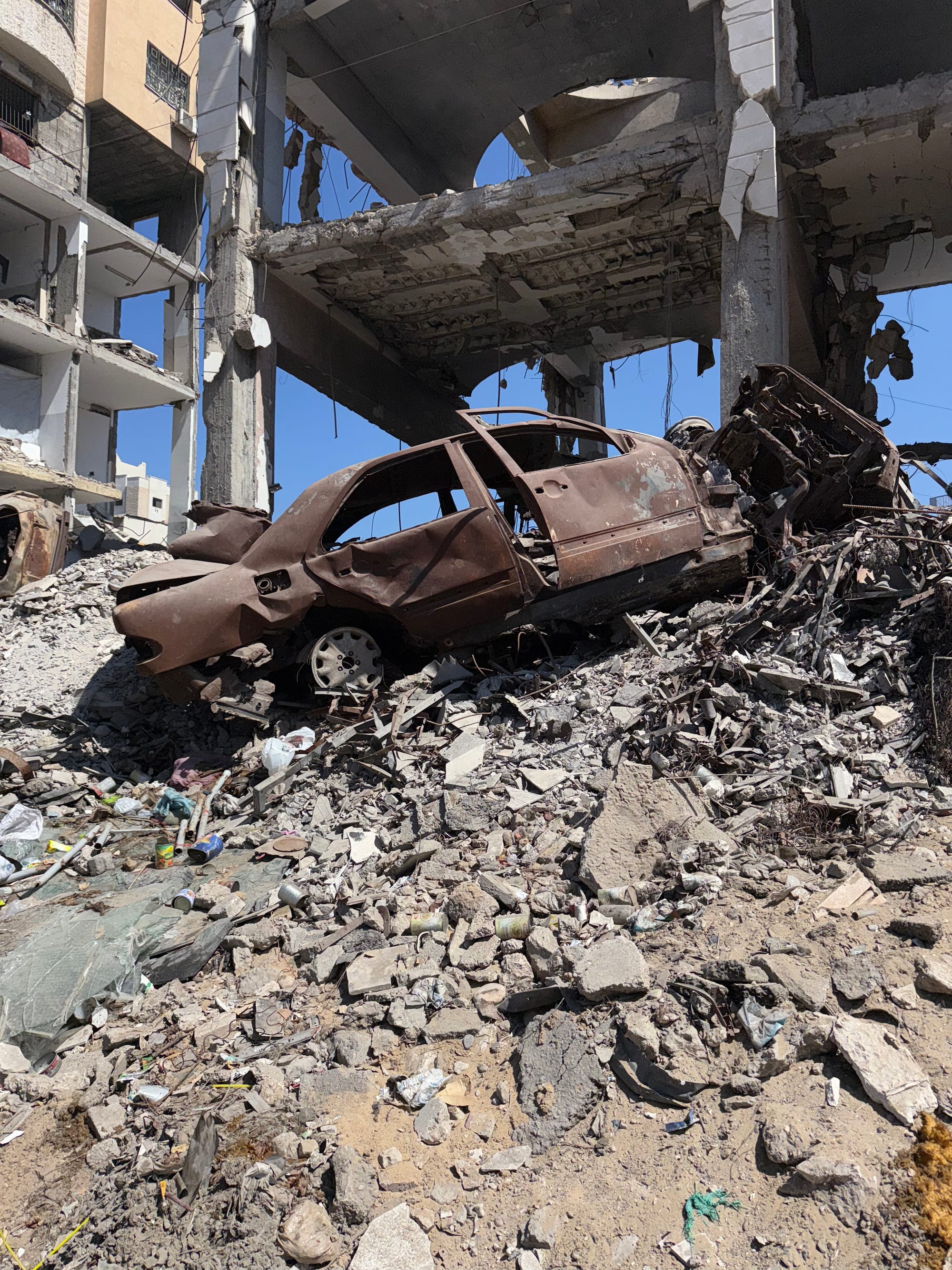
The health care professionals I interacted with every day have been displaced 12 to 15 times over the past two years. One of the doctors that I worked with had his house bombed. He was living in his clinic and had a broken car. The side windows had plastic on them. We were driving one day, and he suddenly stopped to show me a building and a car that were completely burned. He said, “This is the apartment where I lived, and this is my car.”
I worked with dental residents. They haven’t been to university in two years. There is no university. Their professional aspirations are totally destroyed. What are they going to do? In the medical field, they need to train and do residencies. There is no training available. There is no residency.
I saw many people coming to the hospital and volunteering, putting their lives at risk, and they’re not getting any salary. They come to the hospital to do whatever they can. And everyone would just say, “Alhamdulillah [All praise due to God.]” I met people who lost 40 to 50 members of their families. Women who have lost their husbands and kids, and they say, “Alhamdulillah.” Their faith and belief in God, as well as their gratitude in any situation. That was amazing. That’s what I took from Gaza.
Editorial Team:
Tina Vasquez, Lead Editor
Carolyn Copeland, Top Editor
Stephanie Harris, Copy Editor
Author

Marah Abdel Jaber is a Palestinian writer, researcher, and creative. She was the team lead on Palestine Square’s “Firsthand Accounts from U.S. Medical Missions in Gaza” series, collecting testimonies
Sign up for Prism newsletters.
Stay up to date with curated collection of our top stories.