Deliberate de-civilization has forced Gaza back to the Stone Age
Before the genocide, Gaza was a vibrant, happening place full of life. Now, we are back to an age without basic modern developments
Real journalists wrote and edited this (not AI)—independent, community-driven journalism survives because you back it. Donate to sustain Prism’s mission and the humans behind it.
The call to prayer echoed through the alleys of Gaza, quickly followed by a vendor’s familiar morning call: “Hot sesame bread! Hot ka’ak!” The irresistible smell of the fresh, oblong sesame bread promised a normal day, along with the smell of morning coffee and songs by the legendary Lebanese singer Fairuz floating out of homes.
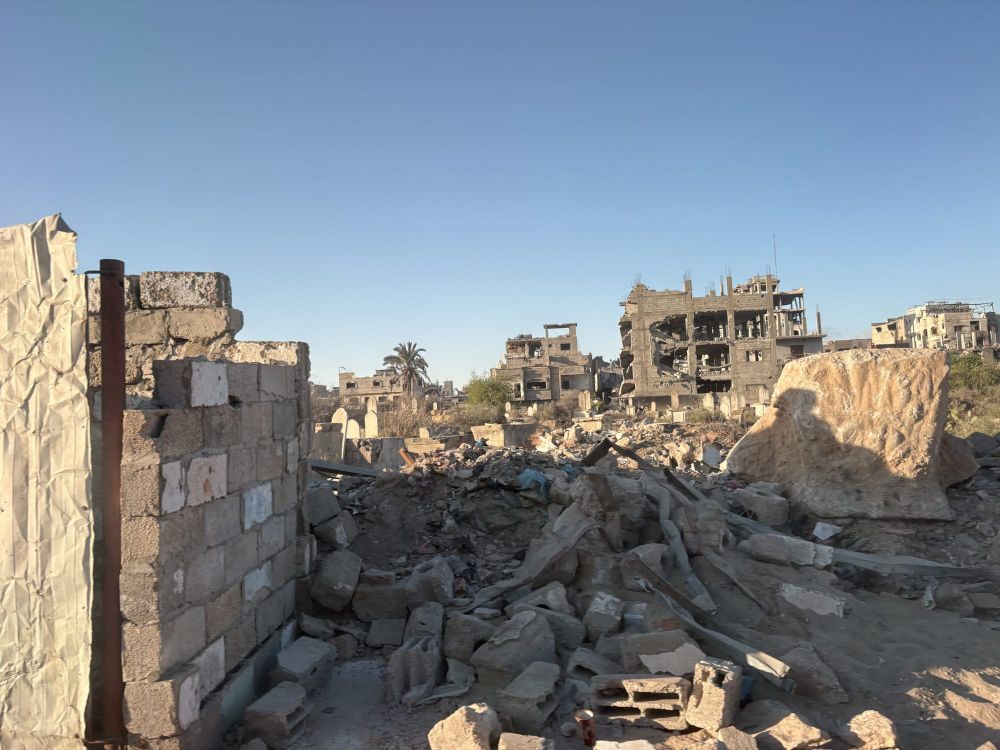
This was a typical, vibrant morning in Gaza before Israel turned it into a breeding ground for death and humanitarian disaster. Now, after a shaky ceasefire deal, Palestinians in Gaza are left with their beloved home in ruins and 70,000 tons of explosives still scattered across the Strip.
My house, neighborhood, school, university, and favorite restaurant were all targeted by Israeli explosives. Things that made life beautiful vanished, and I was left with only rubble. Now, we live in what feels like a primitive era—hauling water from wells, cooking over fire, living in tents—devoid of the modern comforts and development I still remember from just two years ago.
Memories of a good life
When you walked down Al-Nasr Street in Gaza City, you used to hear the sound of the morning assembly at school and the stand of reverence for Palestine and its martyrs: “Fida’i, fida’i, fida’i, my land, the land of our ancestors.” If you drove to work, you heard the sound of People’s Radio, the broadcaster who hears the Palestinian people’s complaints. Through the car window, you saw the seller open his shop with a smile to his neighbour. A university student rushed to his 8 a.m. lecture, while a doctor, dressed in hospital scrubs, stood at the Soussi falafel seller, bringing breakfast to friends sharing his shift at the hospital.
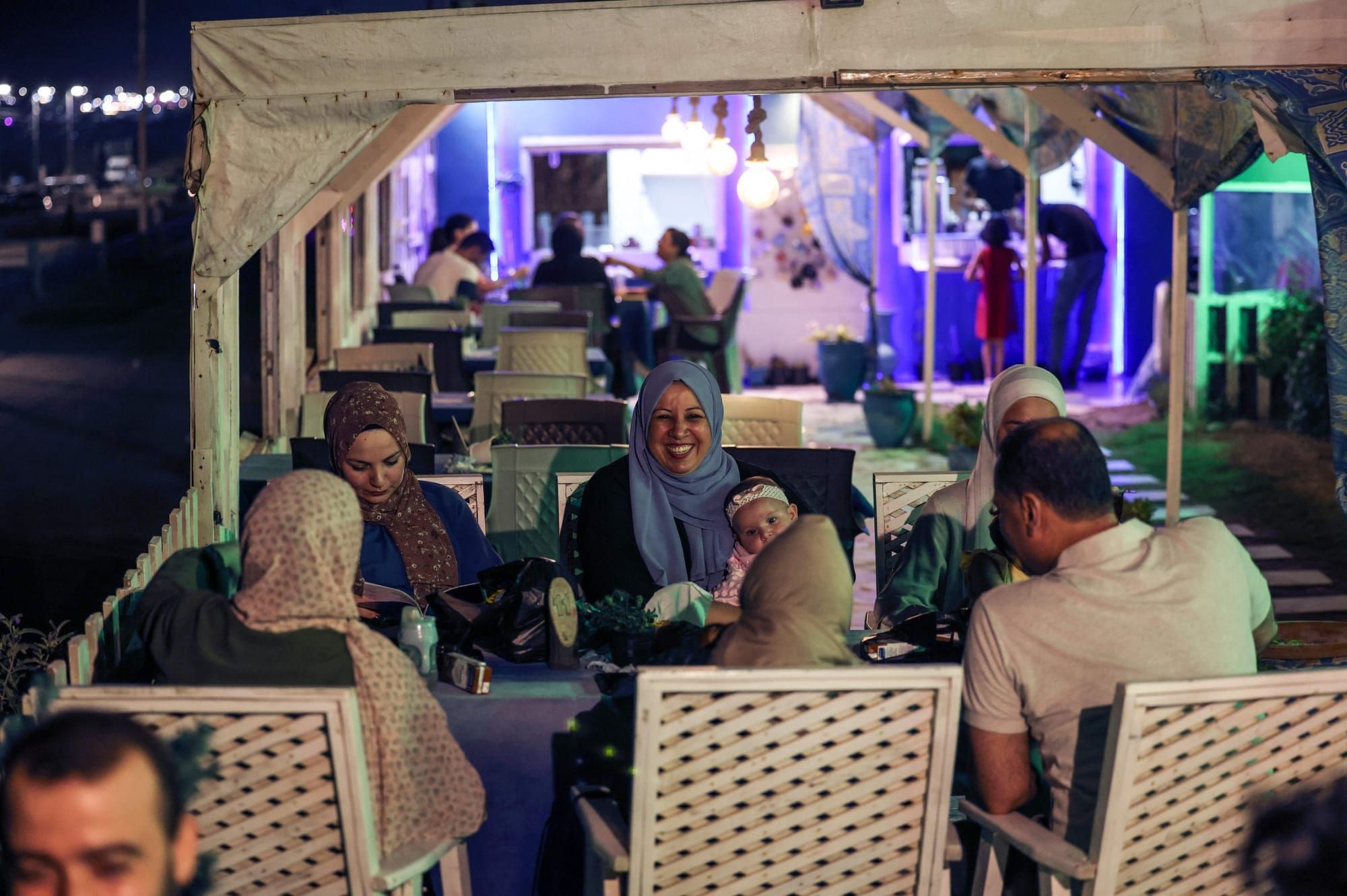
On Thursday evenings, Gazans began their weekend. Rashid Street by the sea would be packed with people, lights, and cafes. You would see tables full of young people playing chess, families laughing and talking about their future plans, and children running along the Gaza corniche, and smell fresh grilled corn.

Prior to the genocide, I used to spend a lot of time in Gaza walking around and admiring the modern architecture. During that time, Gaza residents competed to build the most luxurious hotels, tourist resorts, and restaurants. My brother and I once visited the Phoenix Hotel, located on the sea, about eight floors above the Gaza harbor. I sat there for a long time, thinking about the beauty of Gaza and the magic of sunset at the time. Motor One, an innovative exhibition, opened in August 2023, featuring the latest cars, as well as a glass building with Infinity Café, where you could sit as if you were in a world-class city. Despite being under siege, life in Gaza was truly beautiful. We had reached the pinnacle of our technological renaissance.
In northern Gaza, once famous for its strawberry exports, beautiful farms would host visitors in “chalets” or summer retreats, many featuring a water park, water skiing, artificial waterfalls, and covered areas for grilling among the trees.
But all of that has been reduced to rubble, devoid of color, as if there was no life before it. Now, Israel has returned us to what feels like the life of some of the earliest human beings.
Back to a bygone era
On the morning of Oct. 7, 2023, amid our confusion after hours of continuous rocket fire, my sister Abeer told me, “You know, Nour, after this moment, our lives will never be the same again.” She was right.
During the famine in Gaza, our lives began to embody the law of the jungle, with people killing each other over a bag of flour. Basic necessities had become a struggle. My brothers Wael and Khaled would walk half a kilometer to get well water that was somewhat suitable for drinking, though I refused to taste it. I would haul the water upstairs where we were sheltering just to wash dishes. During all of this, there was no internet to post to social media about how we in Gaza dreamed of drinking good water before we died. We were completely isolated from the world, struggling to live a life we did not choose.
Despite the struggle, a remarkable process of survival innovation is underway in Gaza. We have embarked on the challenging task of manufacturing essential kitchen and bathroom tools, constructing vital tents, and developing critical food alternatives. All of this is accomplished from almost nothing, using limited raw materials and demonstrating an extraordinary ability to create something out of thin air. It’s as if we’re in a forest and must adapt to the conditions there.
Our homes are made of cloth and nylon. I lived in a tent for a month after Israel bombed my house on Sept. 18, destroying what remained of my neighborhood. Picture a tent during the day when the sun is vertical and the fabric absorbs its rays, and this is your refuge where you must live every day. What will you do? Perhaps you will lose your mind.
This is exactly what happened to me in southern Gaza. Living in the tent was difficult for self-care. I spent the entire first day crying, devastated that I had lost even my fundamental right as a woman to care for my skin and maintain my self-esteem. I wondered what if a missile falls next to my tent? I would burn, and I felt I’d prefer fire rather than this body of mine.
My life in the tent reminded me of when I was young during the Syrian civil war and would watch people in Syria living in camps on the news. Innocently, I would think, “How the world watches them and remains silent.” When I was in their shoes, I was convinced by the words of Mahmoud Darwish, the Palestinian poet, “And alone, I was alone; when I resisted alone, the final solitude of the soul.”
We have reached the end of life in Gaza, with nothing but rubble, and Israel refuses to allow in equipment and building materials or even to dig wells for Gaza residents. We continue now to suffer from the bitterness of living in the most rudimentary settings, despite the fact that the war has officially ended.
Editorial Team:
Sahar Fatima, Lead Editor
Carolyn Copeland, Top Editor
Rashmee Kumar, Copy Editor
Author
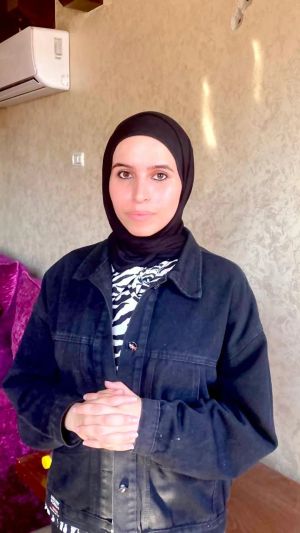
I am Nour Abo Aisha, a journalist and writer based in northern Gaza. My works have been published by The Guardian, al Jazeera net, Mondoweiss, We Are Not Numbers, Chronique de Palestine, and Baladi Ma
Sign up for Prism newsletters.
Stay up to date with curated collection of our top stories.