Gaza’s children have become vulnerable to life-threatening rare diseases
A doctor in a hospital pediatric ward described how catastrophic health and environmental conditions resulting from Israel’s genocide and blockade are increasing the incidence of rare illnesses like Guillain-Barré syndrome

In Deir al-Balah, in the heart of Gaza, stands Al-Aqsa Martyrs Hospital, the only functioning government hospital in the area, serving nearly 1 million people.
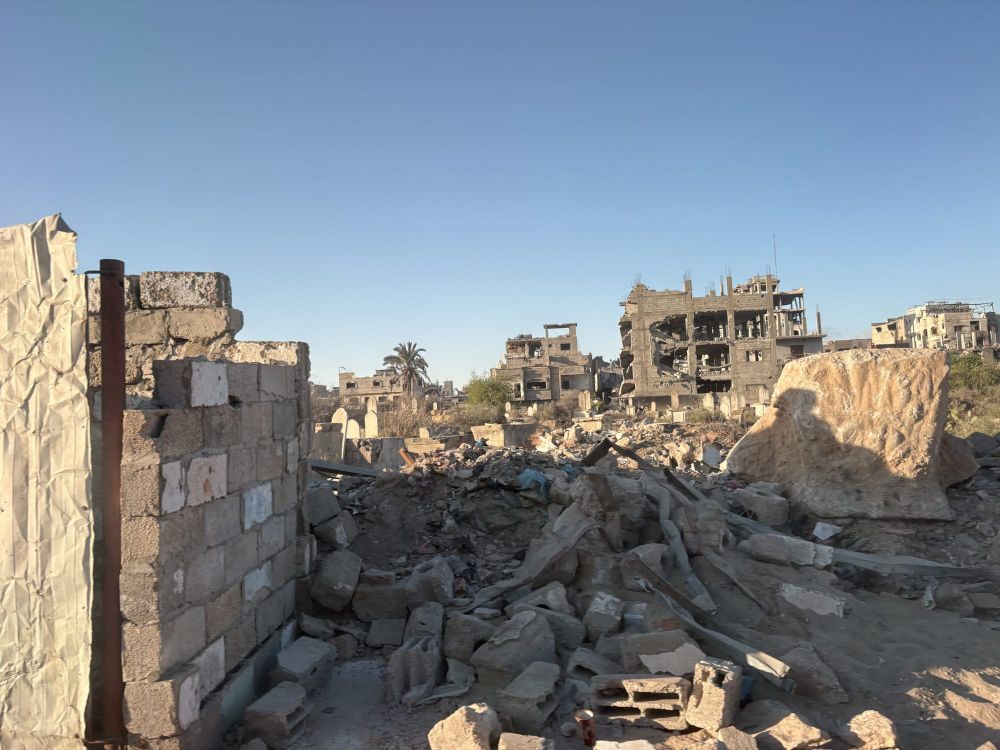
This hospital has transformed into a refuge for the displaced; its courtyard is filled with tents, and its hallways and facilities are overcrowded, with families sharing patient rooms. The medical staff are exhausted, working around the clock under relentless pressure, with slashed salaries, surrounded by the wounded and injured. The sounds of crying and pleas for help echo in every corner.
In the pediatric ward, where Dr. Eyad Saeed works tirelessly, the situation is especially dire. Exhausted after returning home from the hospital, he said that the ward admits over 100 new cases every day. There are not enough rooms capable of accommodating such numbers; three or four children share a single bed, making it nearly impossible to provide adequate medical care.
“The most common cases I encounter in the pediatric ward are severe gastroenteritis, high levels of dehydration, critical anemia with hemoglobin dropping to 3 or 4 [grams per deciliter], and atypical pneumonia,” he said.
The root causes of these illnesses in children, Saeed explained, are the catastrophic environmental and health conditions in Gaza: pollution, overpopulation, famine, the lack of nutritious food, and the radiation and toxic chemicals caused by Israeli bombardment and internationally banned weapons.
Recently, the pediatric ward has also witnessed a sudden surge in rare diseases. Within just two weeks, four to five cases of Guillain-Barré syndrome (GBS) were diagnosed in children ages 1 to 5, Saeed said. These cases add to the 94 suspected cases and 10 recorded deaths across Gaza between June and the end of August, according to the World Health Organization. “Before the war, GBS was extremely rare,” Saeed said. “We would see perhaps one case every six months or even a year.”
GBS is an autoimmune neurological disorder in which the immune system mistakenly attacks the peripheral nerves outside the brain and spinal cord. Globally, GBS affects approximately one to two out of 100,000 people per year. Its hallmark symptoms include progressive muscle weakness, usually starting in the legs and spreading to the arms and face; tingling or numbness in the limbs; difficulty walking or maintaining balance; and, in severe cases, rapid progression to partial or complete paralysis. In some patients, the muscles controlling breathing or swallowing may be affected, requiring urgent medical care.
The main cause of vulnerability to contracting GBS, Saeed noted, is weakened immunity, which reduces the body’s ability to fight the bacteria that cause the disease. He added that children in Gaza are facing a surge in illnesses linked to immune suppression due to Israel’s deliberate policy of starvation and restrictions on food entry.
“Children are not receiving even the minimum amounts of protein their immune cells need to function,” he said.
Before the war, treating children with GBS was far more manageable thanks to the availability of intravenous immunoglobulin (IVIG). If a child did not respond to IVIG, doctors could turn to plasma exchange, often provided abroad since Gaza lacks the necessary equipment. Supportive care, such as physiotherapy and ventilators, also used to be more accessible. Today, however, IVIG is almost nonexistent in Gaza’s hospitals. The blockade prevents children from being transferred abroad for treatment. Compounding the problem, children arrive at the hospital already severely malnourished, with electrolyte imbalances, anemia, and chronic diarrhea, all of which worsen their conditions.
Saeed stressed that while GBS is a medical condition, its humanitarian and social dimensions are equally devastating. One father, upon learning his son’s diagnosis, broke down in disbelief. “It is impossible for Ahmad to have a rare disease,” Saeed recounted the father saying. “My son was running and walking with no complaints. Suddenly, I woke him from sleep to find he couldn’t stand up, his legs numb and unable to move.”
The father initially assumed that his son was experiencing a minor spasm or complication that could be easily treated. Saeed described the scene as heartbreaking, especially as families are increasingly unable to provide even the simplest support, such as staying overnight with their children, who might be in the hospital for weeks at a time. For most families in Gaza, this is nearly impossible due to indiscriminate bombardments and the fear of leaving their other children alone in a plastic tent. The lack of space in the hospital, combined with costly and difficult transportation, only deepens their distress.
After Ahmad’s discharge, he was supposed to undergo physical therapy, a treatment scarcely available across Gaza. He also required high-quality nutrition and a stable living environment, both of which are nearly impossible under conditions of constant displacement and food scarcity. This deterioration puts Ahmad at risk of severe complications, including permanent stiffness in his limbs, leading to lifelong paralysis.
GBS is not the only rare condition Saeed has confronted. Recently, three children were diagnosed in a single week with hemolytic uremic syndrome (HUS), he said, a life-threatening disorder that primarily affects children. Globally, HUS’ prevalence is 4.9 per million people. It is characterized by the destruction of red blood cells, kidney failure, and low platelet counts. In Gaza, the risk is magnified by malnutrition and contaminated water, which increase the likelihood of bacterial infections such as E. coli.
Among these patients is 7-year-old Sila, who arrived at the ward with swelling in her face and legs, severe anemia with hemoglobin levels at 4, and a sharp drop in platelet counts. The medical team placed her on diuretics to stimulate kidney function, blood pressure medications, and close monitoring, Saeed said. The greatest fear, he said, is that her condition may worsen, requiring dialysis. Yet with Gaza’s renal care services near collapse, even one dialysis session is uncertain.
Another case that deeply shook Saeed was 6-month-old Sameh, diagnosed with staphylococcal scalded skin syndrome (SSSS), a rare, life-threatening skin disorder caused by toxin-producing Staphylococcus aureus. Children under 5, especially newborns, are the most vulnerable, as are adults with weakened immunity or kidney dysfunction. Studies show that the annual incidence rate of SSSS ranges from 0.09 to 0.56 cases per million people, with higher prevalence in developing countries or regions where S. aureus infections are widespread.
Sameh arrived in critical condition, his tiny body covered in what resembled third-degree burns caused by the deadly bacteria. He had stopped breastfeeding, forcing doctors to insert a feeding tube. Each time he urinated, he screamed in unbearable pain, his genital area appearing almost burned. With no appropriate pain relief available, he was given only intravenous paracetamol, a mild and largely ineffective option for his level of suffering. His condition soon escalated into full-body sepsis, nearly costing him his life, until doctors managed to stabilize him against all odds and with extremely limited resources.
If we cannot even provide medicine for common pediatric illnesses, what hope do we have for treating rare syndromes?
Eyad Saeed, doctor at Al-Aqsa Martyrs Hospital’s pediatric ward
The war and suffocating blockade have not only revived the presence of rare diseases, but they have also crushed families emotionally and financially. Even the most basic childhood illnesses are difficult to treat due to shortages, and if treatments are available, they are often sold at exorbitant prices. Some infants, for example, cannot tolerate breast milk and require specialized formulas, such as lactose-free or soy-based formulas or those designed for severe malnutrition. The scarcity of these essential formulas puts countless infants at risk of death. Basic supplies like IV fluids, painkillers, and essential antibiotics are also severely lacking.
“If we cannot even provide medicine for common pediatric illnesses,” Saeed lamented, “what hope do we have for treating rare syndromes?”
Saeed said the conditions in Gaza “are beyond desperate.”
“Gaza’s children—like all its patients—have been left for three consecutive years to face Israel’s war machine, disease, and displacement, without being given the slightest chance at survival. Their cries and pleas for survival reverberate only within the dilapidated walls of a hospital operating with the bare minimum of resources,” he said. “Every minute that passes without urgent international intervention to evacuate them for treatment abroad is another minute that destroys their future and changes the course of their lives forever. Save what can still be saved before it is too late.”
Editorial Team:
Sahar Fatima, Lead Editor
Carolyn Copeland, Top Editor
Rashmee Kumar, Copy Editor
Author
Ghada Abu Muaileq is a freelance writer and a graduate of English literature from the Islamic University in Gaza. She writes articles and stories about life under war in Gaza, documenting the experien
Sign up for Prism newsletters.
Stay up to date with curated collection of our top stories.