How Israel stole childhood in Gaza
Some children don’t even recognize simple luxuries like fruit, while others play pretend by reenacting funerals
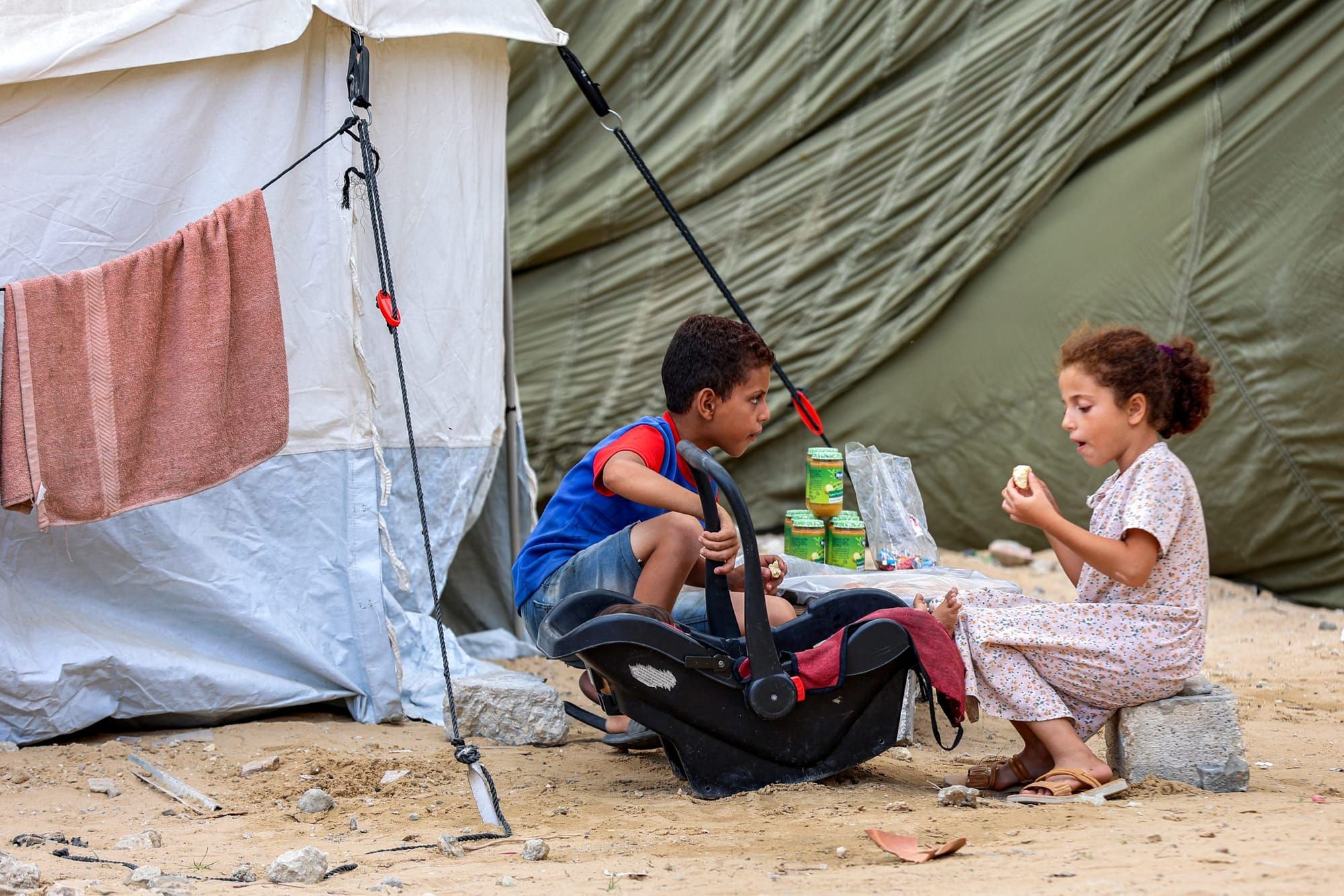
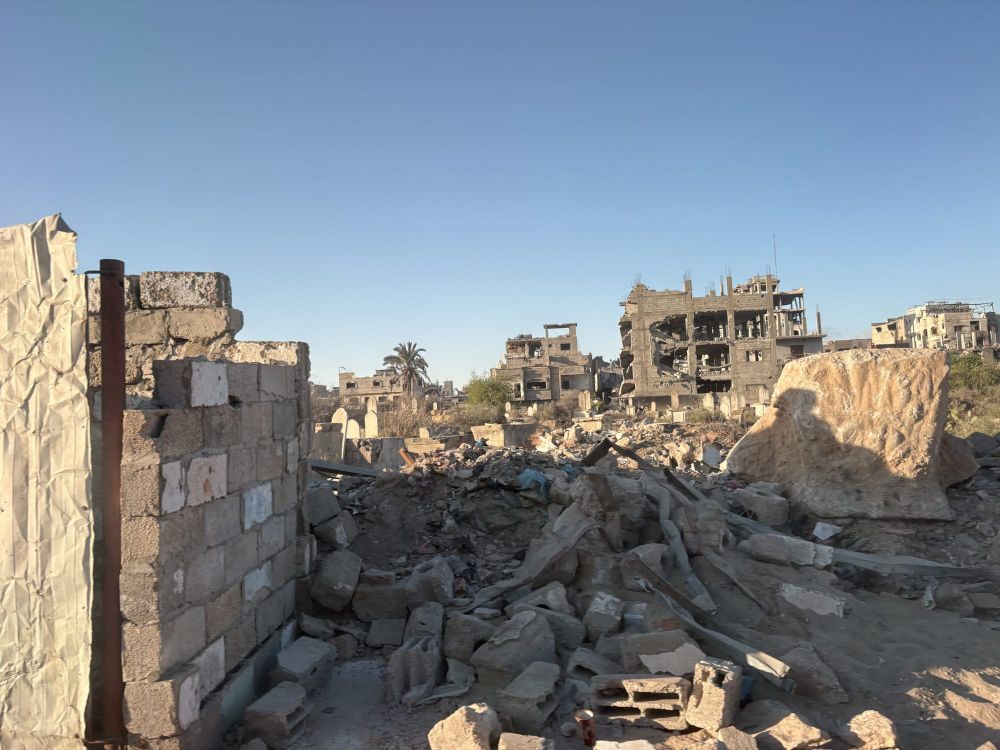
After two years of genocidal war against every form of life in Gaza, everything lies in ruins. And the broken pieces will never truly be restored. It is not only buildings, schools, or universities that have been destroyed, but also childhood itself.
Childhood in Gaza has been systematically targeted by the Israeli occupation. This is evident in countless scenes circulating on social media, children crying from hunger, collapsing from exhaustion after being forced to walk miles in search of a gallon of water, or fleeing their homes with fear etched on their faces. Beyond these images, the numbers tell a devastating truth: At least 19,424 children have been killed since the beginning of this aggression—an average of at least 28 every day—while tens of thousands of others have been left with lifelong disabilities.
There is another side to this devastating war against children: the unseen psychological scars that will accompany them for the rest of their lives. This became clear to me a couple of months ago when I saw a group of children in Gaza lifting their friend onto their shoulders as he pretended to be lifeless, while the others chanted, “The martyr belongs to Allah.” It was an unmistakable imitation of the funerals that have become a daily routine in Gaza.
What struck me in that moment was not only the innocence lost, but also the way genocide has invaded the very core of children’s imagination. Funerals, death, and martyrdom have replaced cartoons, playgrounds, and birthday parties as the themes of their play.
We felt this impact in our own home with my sister Aleen, born on March 3, 2023. Aleen grew up in a tender environment, surrounded by warmth and care. Her innocent smile became the lantern that lit our days. We watched her discover the world with wide-eyed wonder, as she is the youngest in our family. All of us doted on Aleen. I would buy her new toys constantly and count the days waiting for her to grow a little older so that I could buy her chocolates and cookies.
But childhood in Gaza does not remain untouched. When the genocide began, Aleen had not yet completed her first year of life; now she is forced to grow up under unthinkable circumstances.
I remember one night in October 2023 that felt like a nightmare. The Israeli occupation began to bomb Al Zahra Towers, a residential area close to Al Nusierat camp, where we live. With every rocket that rained down, it felt as if our hearts would stop. Each explosion shook the ground beneath us, and we instinctively covered our heads, convinced the next strike would fall on our home. That night, when Aleen was just 7 months old, we placed cotton in her tiny ears, trying to soften the terrifying noise. We were afraid she might be harmed, or even die, from the sheer horror of the sounds.
We tried to shield Aleen by pretending to be cheerful whenever we heard the echo of an explosion, as a psychological defense. But there were nights when the explosions were too sudden, and we couldn’t protect her so easily.
On one such night in January 2024, an Israeli airstrike struck a building near us. The glass from our windows splintered into sharp fragments, and the heavy smell of gunpowder filled the air. Instinctively, I rushed to my little angel. Aleen sat frozen, her face marked by shock, unable even to cry. I scooped her into my arms, held her tightly against my shoulder. Only then did she release a trembling, heart-wrenching cry that seemed to carry all her fear at once.
Her reaction was not from fear of a single night—it was the beginning of a childhood shaped by terror, an experience she shares with children across Gaza.
My kid grew to distinguish the sounds of war with a precision that even a military analyst might struggle to match. This is what he learned after two years of genocide.
Ahmad Zoarob, father of 5-year-old Omar
“My kid grew to distinguish the sounds of war with a precision that even a military analyst might struggle to match,” said Ahmad Zoarob, father of 5-year-old Omar. “This is what he learned after two years of genocide.”
Omar didn’t learn the alphabet or the names of the colors; instead, he mastered the difference between a drone and a jet fighter, between a tank shell and an airstrike, Zoarob shared.
He paused, his voice breaking. “I think he has lost the very sense of how to live,” Zoarob told me. “And I stand powerless because even I have begun to forget what normal life was like.”
These moments reveal how war has rewritten the very foundation of childhood in Gaza. For children elsewhere, life is divided into colors, games, and toys. For Aleen, Omar, and their peers, it is divided into the buzzing of drones, the roar of jets, the blasts of bombs, and the rattle of tank shells.
However, the impact goes far beyond education. Children here have not only tasted fear but also endured the constant deprivation of food. This has left them isolated from their basic right to proper nutrition, growing up without the security of knowing when or what they will eat next.
This deprivation also shapes children’s ability to recognize the most basic things, as is the case with Adam. Adam was born months before the genocide began and grew with scarcity as his constant companion.
“My child never lived a normal life even before the genocide,” said Adam’s mother, Eman Abu Zabida, 33. “He still doesn’t know the taste of many delicious foods.”
When his mother finally managed to bring home a banana after a long absence, Adam could not even recognize it. “He didn’t just refuse to eat it—he was afraid of it,” Abu Zabida told me. For a moment, she said, he stared at the fruit as though it were something foreign, something that did not belong in his world.
This has become the reality for nearly every child in Gaza—those born into this genocide and those forced to grow up within it. Their vocabulary is laced with words of destruction. Even their imaginations are shaped by survival and confined by fear. Instead of learning to count stars, they count explosions; instead of recognizing the taste of fruits, they identify the smell of gunpowder.
Editorial Team:
Sahar Fatima, Lead Editor
Carolyn Copeland, Top Editor
Rashmee Kumar, Copy Editor
Author
Ahmad Abushawish is a writer and an activist based in Gaza. His dream is to study and get a scholarship in a prestigious university abroad.
Sign up for Prism newsletters.
Stay up to date with curated collection of our top stories.