Gaza hangs between relief and uncertainty after the ceasefire
Gaza has become a site of temporary calm, haunted by memories of a warm past unlikely to return and the constant fear of a future filled with challenges
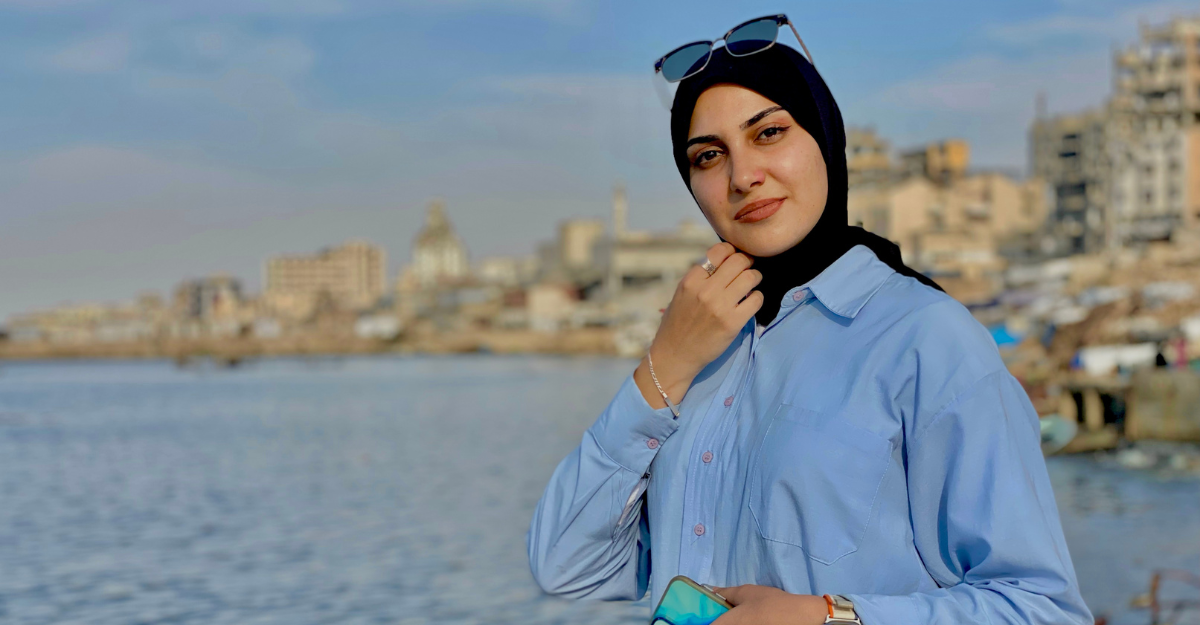
One month after the ceasefire between Israel and Hamas, the 365-square-kilometer Gaza Strip remains a city of contradictions. In Deir al-Balah, in central Gaza, children play among the rubble, and some aspects of life and local institutions have resumed functioning. It is one of the least damaged areas, with a lot of buildings still standing. Many displaced people continue to live there despite the official end of the war, as their homes in other parts of Gaza were destroyed.
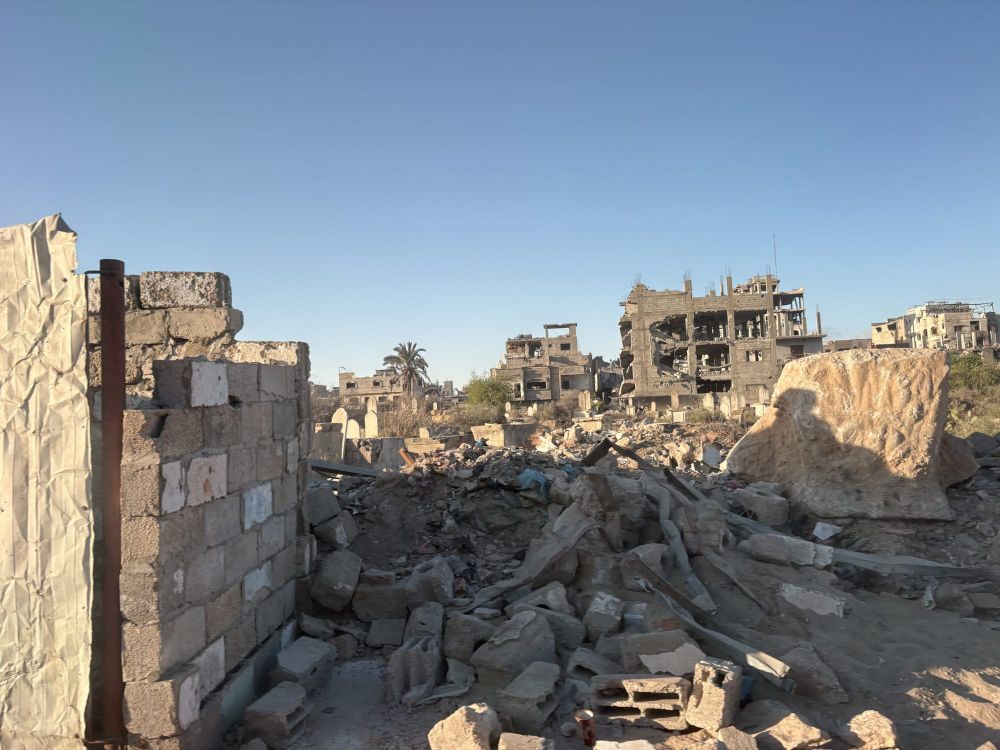
In Rafah, however, it is clear that the war has not actually ended: The Israeli occupation still controls the entire city, as well as 58% of the Strip. Gaza City, destroyed during the last wave of evacuations, stands silent in large part, while residents inspect what remains of their neighborhoods, many of which have been reduced to piles of concrete and ash.
The ceasefire brokered by President Donald Trump ended two years of relentless bombing, yet this calm has brought no true peace. Some nights are still pierced by airstrikes, such as those last week that killed at least 104 Palestinians. Across Gaza, relief is intertwined with fear: fear of what comes next, fear for imprisoned family members, and fear that the genocide could resume at any moment.
“In a single second, the sound of airstrikes rose. I thought the war had returned, but it turned out to be just another escalation,” said Abdel Khalek Abu Gaza, 19, a displaced resident of Al Nuseirat. “A few Palestinians die, and then the story ends as if nothing happened. We are alive, yes, but we do not know for how long.”
Gaza now exists in a fragile balance: a city of temporary calm, haunted by memories and the constant fear of a future filled with immense challenges, while it longs for a warm past that seems unlikely to return. Gaza now approaches the end of the first phase of the ceasefire and the beginning of a second phase, considered more delicate, carrying more difficult and sensitive issues than the first. This increases expectations that the city could become a stage for major disputes, where the mediator with the greatest leverage—the U.S.—leans in favor of the Israeli occupation.
Aid and humanitarian pressure
Despite the truce, humanitarian conditions remain critical. The physical destruction of the war continues to haunt daily life. Many families returning to their neighborhoods found their homes completely destroyed and returned to displacement areas in the south, despite the poor conditions and skyrocketing rents—which can reach $1,000 for a small apartment that cost just $90 to $100 before the war. The south, however, remains slightly less devastated than Gaza City or the areas fully controlled by the Israeli occupation army.
Since the ceasefire began on Oct. 10, an average of only 145 trucks carrying commercial goods and aid have entered Gaza daily—just 24% of the 600 trucks agreed upon under the ceasefire terms. Between Oct. 10 and Oct. 31, a total of 3,203 trucks entered Gaza: 639 commercial vehicles, 2,564 carrying aid, 84 carrying diesel, and 31 carrying cooking gas.
Prices of basic goods remain painfully high. Many dig through rubble searching for personal belongings, gas cylinders, or anything that might save them from buying essentials at inflated prices. Due to the Israeli occupation’s violation of the agreement and insufficient quantities of supplies entering Gaza—and because commercial trucks are controlled by certain traders and smugglers exploiting the absence of regulatory oversight—ordinary citizens continue to face extreme price inflation. Cash withdrawal restrictions, with fees up to 24%, further reduce the value of money.
If the border stays closed and prices don’t go back to normal, you cannot call this a ceasefire. It is just a different kind of war.
Iktemal Fahjan, rafah resident
For residents like Iktemal Fahjan, a 67-year-old widow who was forced to leave her home in Rafah in May, the ceasefire has brought no real relief.
“Winter is coming, and my house in Rafah is just rubble. I have no tent suitable for the rain, and mine has already worn out, nothing to protect me from the rain or the strong winds. We are still in autumn, and I already freeze every night,” Fahjan said, adding that basics such as tents, eggs, and medicine are difficult to find and extremely expensive when available. She said she still hasn’t found inhalers for her asthma or blood pressure medication.
“If the border stays closed and prices don’t go back to normal, you cannot call this a ceasefire. It is just a different kind of war,” Fahjan said.
Evacuation of critical cases
Despite the ceasefire, Gaza’s health sector has received almost no aid or donations. Hospitals are overcrowded, with ongoing shortages of medicines and essential supplies, Raafat al-Majdalawi, director-general of the Al-Awda Health and Community Association, told Al Jazeera. He noted urgent needs across Gaza, from medical supplies and generators to beds and essential hospital equipment.
Those in urgent need of evacuation have seen little relief. The World Health Organization (WHO) reported that approximately 15,600 patients, including 3,800 children, urgently require treatment unavailable inside Gaza. Since the ceasefire began, very few have been allowed to leave. The first medical evacuation in weeks, organized in late September, included just 41 patients and 145 companions. Thousands remain on waiting lists, with many dying while awaiting permits.
Ahmad, 12, fell from the third-floor stairs after a missile strike and massive explosion at a neighbor’s house last November, his mother, Iman Nasrallah, told Prism.
“He suffered a skull fracture and was between life and death. Miraculously, doctors implanted an artificial bone in his skull, but he left the hospital before the surgery could be confirmed successful because the hospital could no longer provide care,” Nasrallah said.
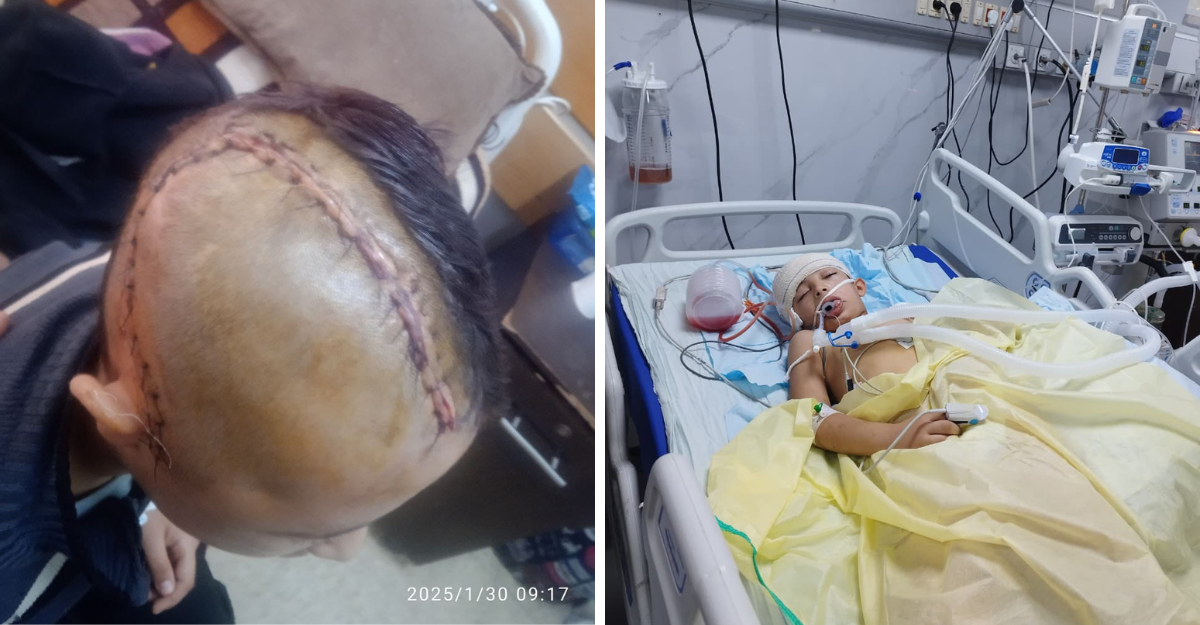
Malnutrition during the famine in Gaza worsened Ahmad’s condition and delayed recovery, his mother said. He now suffers partial paralysis, severe headaches, and memory loss. She demonstrated how she can press down about two centimeters on the shattered part of his artificial skull. Ahmad desperately needs skull reconstruction surgery, eye surgery, and intensive, ongoing physical therapy.
“My son Ahmad is just one of thousands of children who need a clear process and passage for evacuation and treatment,” Nasrallah said. “Even though he is on the WHO evacuation list, so far, and despite the ceasefire, no one has contacted us or told us what to do.”
Returnees
Palestinians stranded outside Gaza in Egypt also face multiple obstacles. The ceasefire deal stipulated their return and the opening of the border after a prisoner exchange, but the Israeli occupation has closed the Rafah crossing to these Gazans, despite the many days they have spent waiting to reunite with relatives and to check on their homes and neighborhoods. Long delays and uncertainty persist, as there is no real pressure on Israel from mediators. Israeli Prime Minister Benjamin Netanyahu’s office said that it would decide whether to reopen Rafah for aid and travel based on how Hamas returns Israeli prisoners’ bodies—despite Israel preventing search teams and heavy machinery from entering Gaza and blocking the capacity to locate missing persons.
Hussein Sultan, 56, said he has been waiting in Egypt for the border to reopen since the first day the ceasefire was announced.
“I cannot wait to see my home, my friends, my brothers, and the rest of my family. I know my house is now rubble, but I still need to see it with my own eyes,” Sultan said. “I spent my whole life building that home. I cannot just move on as if nothing happened. If there is ever a new government or a new reconstruction plan for Gaza, I have to be there—to protect my rights.”
Life after the fire
Despite the destruction and bombardment, Palestinians in Gaza are continuing to search for anything that reminds them of better days before the war. Families try to bring joy to their children by buying chocolate and fruit after two years of deprivation. Everyone attempts to find happiness and appreciate small victories achieved after two years of genocide, even if it is just a cup of coffee and a small sense of security.
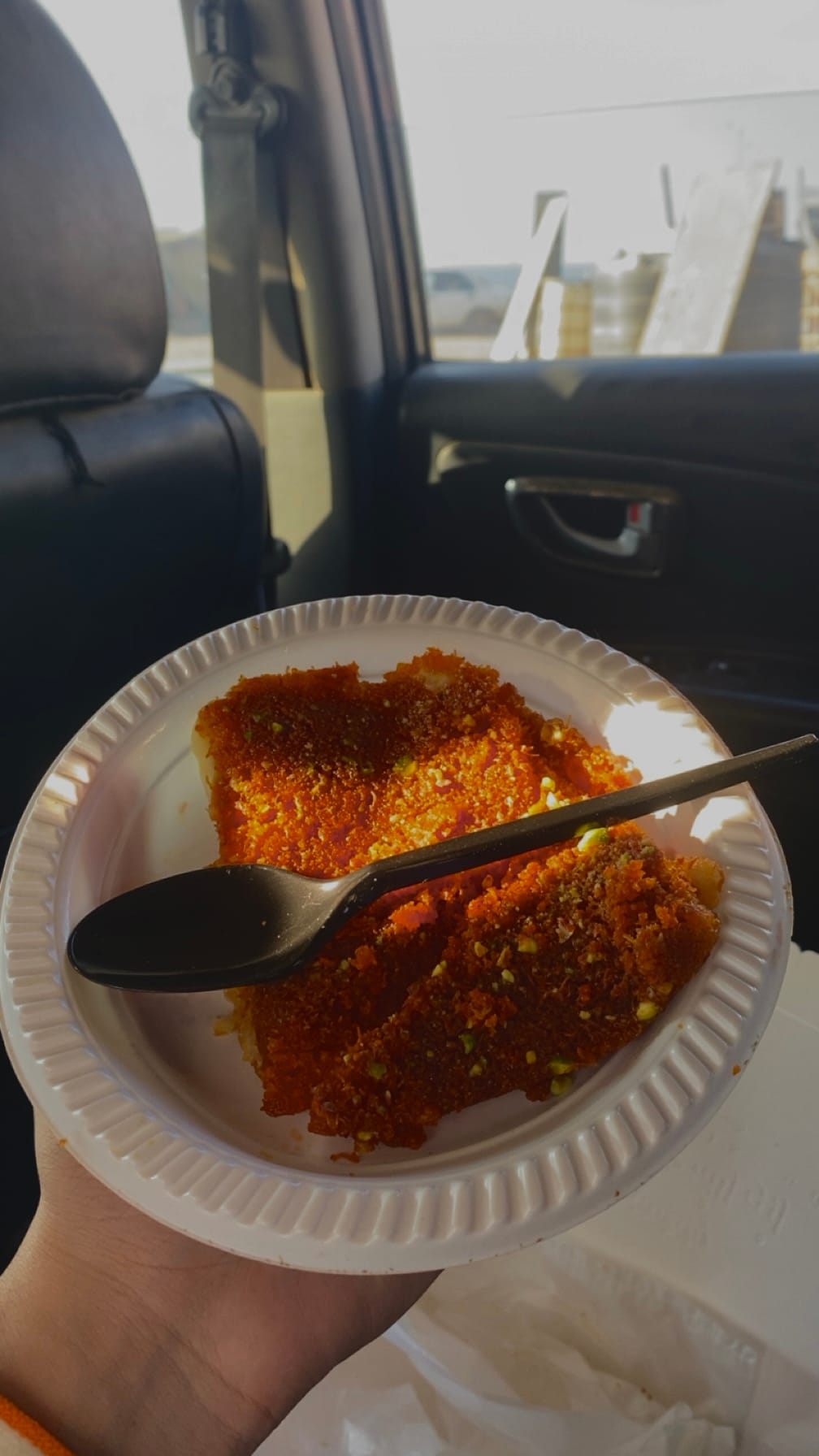
The ceasefire also allowed some businesses to reopen. One of the most beloved spots is Abu Saud Sweets, which resumed operations after two years of devastation, drawing most residents of Gaza City.
Haya El-Wadiya, a young activist and photographer from Gaza, said that when she heard of the dessert shop’s reopening, she went straight from Deir al-Balah, where she had been displaced, to Gaza City with a friend.
“I didn’t want to look at the massive destruction around me—I kept my eyes on the sea just to avoid seeing it,” El-Wadiya said. “Then I went to Gaza Port, one of the most beloved places in the city. For a moment, I wished I had a camera to capture how people sat silently, staring at the water, as if the sea was the only thing that still felt familiar.”
El-Wadiya then went to Abu Saud, where dozens of people had gathered. After pushing through the crowd, she finally managed to snag a piece of kunafa.
“For a brief second, I remembered Gaza before the genocide,” El-Wadiya said. “But when I walked back outside, I returned to the same gray reality that my eyes have become used to. The ruins, the absence of color.”
Editorial Team:
Sahar Fatima, Lead Editor
Carolyn Copeland, Top Editor
Stephanie Harris, Copy Editor
Author
Hassan Abo Qamar is a Palestinian writer, programmer, and entrepreneur from Gaza, focusing on documenting the humanitarian situation in Gaza, as distinct from traditional political narratives. He writ
Sign up for Prism newsletters.
Stay up to date with curated collection of our top stories.