After Gaza ceasefire, organizing continues for a free Palestine
Palestinian Americans and advocacy groups remain focused on the broader struggle for liberation and an end to occupation
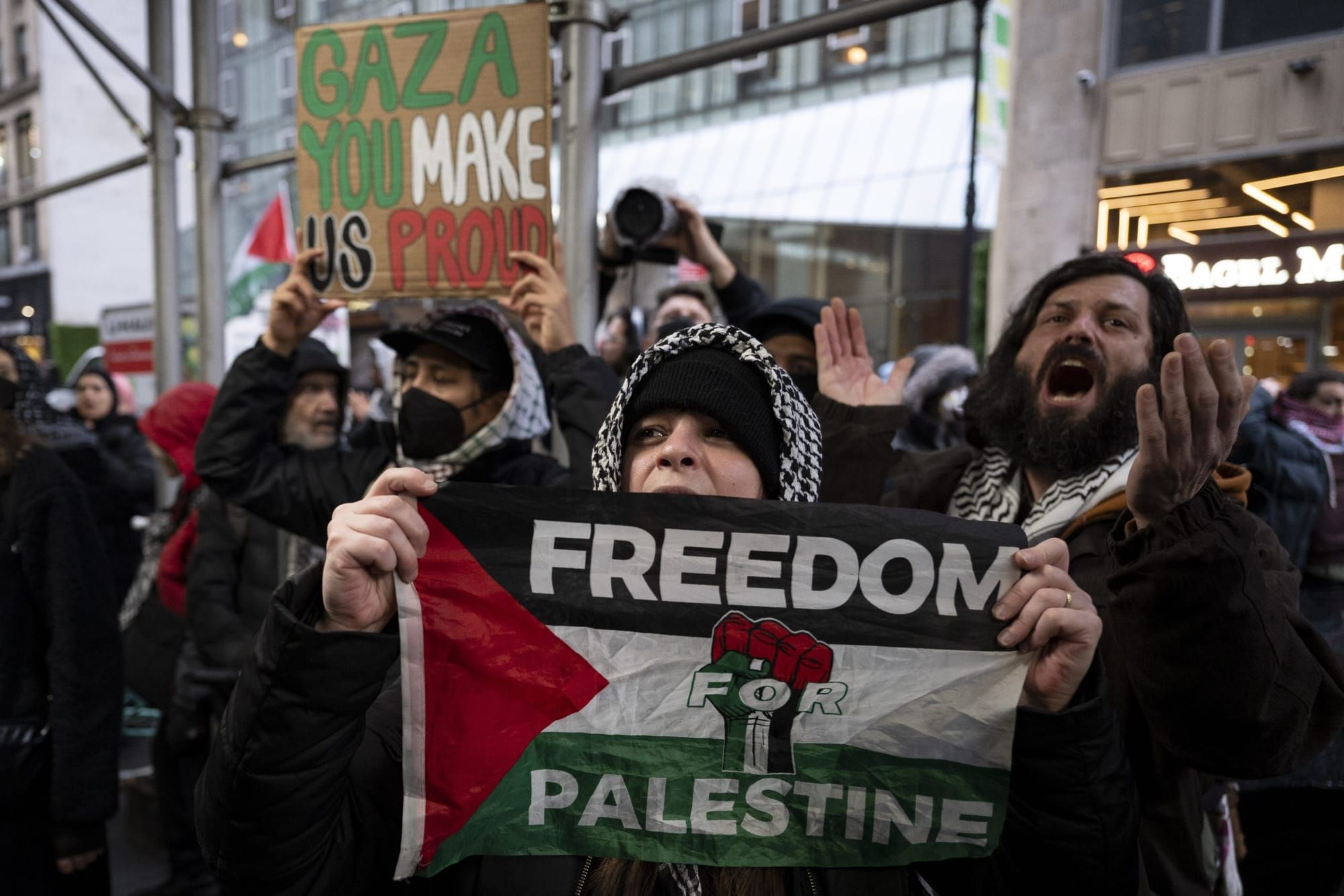
After more than a year of unrelenting bombardment on Gaza by Israeli forces, a ceasefire agreement between Hamas and Israel went into effect on Jan. 19. However, tensions remain high, especially among Palestinian Americans and advocacy groups, as the first part of the negotiation, which includes a halt in all fighting, was broken Jan. 20 when an Israeli sniper killed a 15-year-old returning home in Rafah.
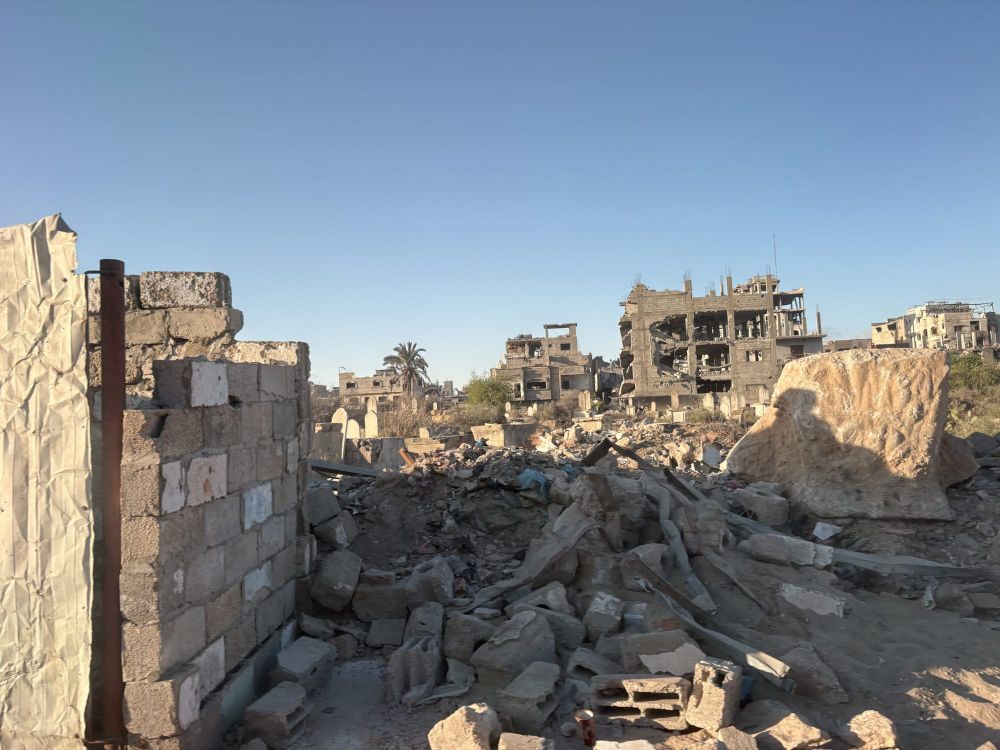
Israel began its most recent genocidal campaign in Gaza with heavy support from the U.S. after Hamas’ Operation Al-Aqsa Flood on Oct. 7, 2023, which led to the killing of approximately 1,200 people and taking 240 hostages.In response, Israeli forces have killed more than 46,000 Palestinians, including approximately 18,000 children. Rights groups and researchers predict the real death toll is much higher, with Gaza’s civil defense agency reporting thousands of murdered Palestinians who have not been accounted for, as they are still buried under rubble. After the ceasefire, organizers within the movement for Palestine say the struggle for liberation continues as the entire Gaza Strip has been turned to rubble, and apartheid and displacement continue in the Palestinian territories.
“ Even as our communities might be rejoicing alongside our people in Gaza about the ceasefire, there’s a very clear awareness that this is not the equivalent of Palestinian liberation,” said Loubna Qutami, a Palestinian Feminist Collective member and assistant professor of Asian American Studies at UCLA. “We know that it’s a very frail agreement in Gaza, that [Israeli Prime Minister Benjamin] Netanyahu, at any given moment, can kind of nullify this agreement and go back into full-fledged war in Gaza, with the purpose of land annexation and full Palestinian displacement.”
Iman Abid, organizing and advocacy director at the U.S. Campaign for Palestinian Rights (USCPR), encouraged supporters to boycott, divest from, and push to sanction Israel.
“We won’t stop until the occupation ends, the blockades are lifted, and the violence ceases,” Abid said in a speech during the People’s March in Washington, D.C., on Jan. 18, ahead of President Donald Trump’s inauguration, according to a press release.
Sandra Tamari, the executive director of Adalah Justice Project, also made a speech at the march, tying Palestine to the broader struggles Americans face.
“The same corporations profiting from death and destruction abroad benefit from exploiting workers here. We must rise against them together, as part of the global fight for freedom, climate justice, and human dignity,” Tamari said, according to the USCPR press release.
Protests across the U.S. and internationally ensued throughout 2023 and 2024, while discussions of a truce over the past 15 months continued. Netanyahu and Israeli National Security Minister Ben-Gvir reportedly blocked and rejected several previous deals.
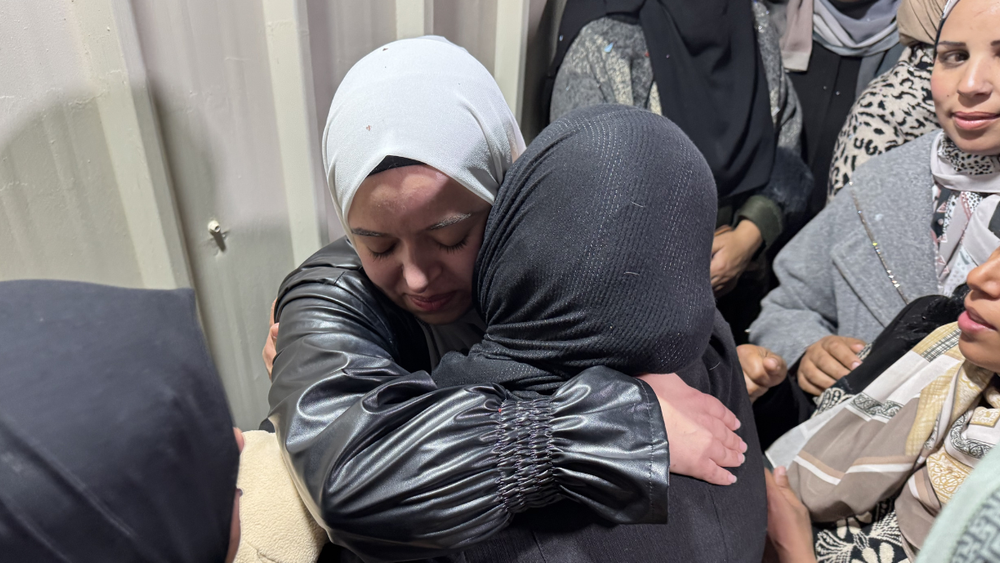
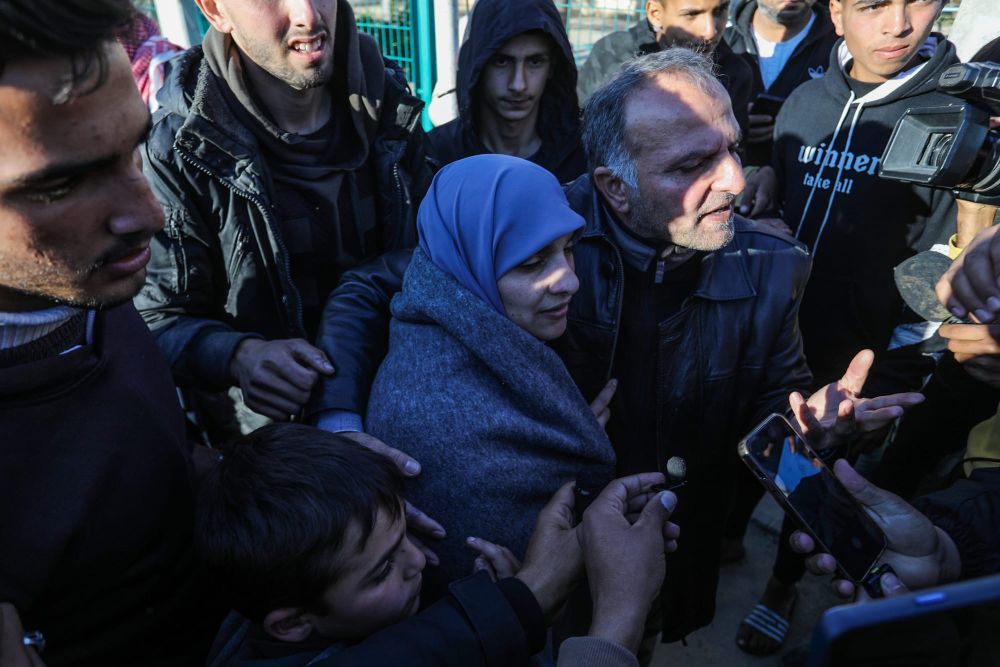
Under phase one of the ceasefire agreement, 90 Palestinian women and children have been freed so far from Ofer Prison in the occupied West Bank, including 15-year-old Mahmoud Aliowat, the youngest detainee to be released, and Khalida Jarrar, a leading member of the Popular Front for the Liberation of Palestine. Many of those released were held for months without ever being charged. Hamas released three Israeli women on Jan. 19, as well as the remains of 20-year-old Israeli soldier, Oron Shaul.
Since 2023, Israel has also launched a large-scale military operation in the West Bank, with over 5,000 Palestinians arrested since Oct. 7. A total of 64 Palestinians, including children as young as 7, were detained Jan. 20, the same day the Palestinian captives were released. The ceasefire in Gaza does not pertain to the West Bank, where attacks continue.
“ It became very clear over the course of the last year that the overwhelming majority of American citizens wanted a ceasefire,” Qutami said. “On the other hand, things became very challenging for us as organizers because we had really felt that we had given everything that we could to apply this pressure, and we knew that the loss of Kamala Harris in November was, in part, a result of the inability of the Democratic Party to respond to the needs of their voter base, specifically on the question of Gaza and Palestine.
“On the flip side, we also know that the Trump administration has laid out the conditions for this genocide to even be possible by rolling out the terms of the ‘deal of the century’ and the Abraham Accords,” Qutami continued, referring to some of Trump’s policies in the Middle East during his first presidency.
Trump, who was sworn in as the 47th U.S. president on Jan. 20, commented on Gaza in his inaugural speech and said during a press conference that he was “not confident” the ceasefire would last, while also referring to the Gaza Strip as a “massive demolition site.” The U.S. has spent more than $20 billion since October 2023 in aid and weaponry to Israel, including on “Hellfire” missiles, which were used to strike a school in central Gaza in July.
As a Palestinian American, this most recent military episode is only a continuation of all that has occurred to date and continues to occur.
Dana Al-Qadi, Chicago Palestine Film Festival engineer and film procurement lead
“ As a Palestinian American, this most recent military episode is only a continuation of all that has occurred to date and continues to occur,” said Dana Al-Qadi, an engineer and film procurement lead for the Chicago Palestine Film Festival. “There’s a lot of grief at the amount of dehumanization and erasure that continues to be inflicted upon us, and there’s a lot of unending disappointment in the global complicity in what we have allowed to occur throughout history.”
Al-Qadi said that even as a child, it always felt that Palestinian identities were much different because there is “an element of erasure that is not present for so many others.”
“ I still remember being an elementary school student, and we were all asked to go up to this big map and place a pin on countries our family was from,” Al-Qadi said. “I was really excited to go put my pin on Palestine, and when I got there, I could not find it anywhere on the map. I panicked because I was standing in front of all the other kids, and my teacher asked me if maybe I was mistaken. I was too young to understand the implications of that moment. Fast forward to years later, as an adult, we’re finalizing the lineup for the Chicago Palestine Film Festival, and we wound up screening an animated short that depicted that exact same scenario.”
Al-Qadi said it only made sense to her as she got older that the decision to not have Palestine on maps was very intentional.
“As a result, you find that Palestinian Americans, in particular, often amplify that Palestinian part of their identity so much because of the dispossession that they are experiencing so regularly,” Al-Qadi said. “You’ll find that they hold even firmer to the culture, the language, the family stories, the tradition, and we just hold onto it so much more dearly because it always feels like it’s trying to be taken away.”
A student at the University of Texas at Austin who is also an organizer with the local Palestine Solidarity Committee (PSC) chapter, said a big part of the organization’s work was finding visibility on campus.
“ [PSC] has been doing teach-ins, cultural events, and more direct-action events, like protests, obviously, pre-Oct. 7, but not that many people were aware of what was happening so the protests were a lot smaller,” said the organizer, who did not want their name published due to safety concerns. “ Right after Oct. 7, we would get emails where [administrators] would just mention how there’s a horrible war that’s happening overseas that’s affecting students, but they wouldn’t mention ‘Palestinians’ by name. A big point of our work became trying to get the university to even recognize us.”
The organizer said they now see an overwhelming number of students in support of Palestinian liberation, noting that their work is even more important with the ceasefire deal in effect.
“PSC’s main goal has always been fighting for the Palestinian right of return, so nothing has changed in regards to that,” the organizer said. “While our main goal for the past year-and-a-half has been trying to get a ceasefire, that’s just for temporary relief for the Palestinians living in Gaza because I know that we’re still going to be as oppressed—if not even more oppressed—after this. At the same time, we’re just trying to take our small wins when we can because we know we’re fighting an uphill battle.”
The second phase of the ceasefire deal remains partially unclear. It states that all remaining male Israeli hostages must be freed in exchange for a “yet-to-be-negotiated number” of Palestinian prisoners. However, Hamas officials have said this will only occur if there is a full withdrawal of Israeli troops from the Gaza Strip.
Qutami emphasized the most important thing for anyone to do right now is to educate themselves about what the broader struggle has always been for Palestinians.
“ Gaza was under siege for 17 years, colonized for 76 years, and under military occupation for 56 years,” Qutami said. “How much patience did people anticipate that people in Gaza could give? We all just kind of treated that like that was normal, right? So, I think maintaining an eye on what’s happening in Palestine is so important in this moment because our neglect of talking about it on a daily basis is, in part, what lets the normalization of that condition to begin with.”
Author
Neha Madhira is an award-winning gender, health and politics reporter with a focus in South Asia and the Middle East. Previously, she was a breaking news reporter in Austin, Texas, where she broke the
Sign up for Prism newsletters.
Stay up to date with curated collection of our top stories.