In a world shattered by bombs and fear, our love for Gaza’s cats was a light that refused to go out
During the genocide, my mother and I walked the city’s streets in search of stray cats to feed, these small souls giving us purpose, hope, and a reason to keep going

Seventeen is supposed to be the age of dreams. For me, it is the age of hunger.
While teenagers across the West think about school, friends, and the future, I only think about how to feed my little family of cats: Fatosha, Masouad, and Soker.
Since I was a little girl, I have loved animals, and I dreamed of becoming a veterinarian—a desire that only intensified during the genocide, as I’ve witnessed just as many animals as people die all around me.
In Gaza, there is a renewed sense of hope because of the ceasefire agreement, though Israel has continued to kill Palestinians as hostages are exchanged. This is another reminder of the brutality we have experienced over the last two years. Despite the constant bombing and displacement, the sense of responsibility, love, and tenderness we feel toward our animals has made the conditions of the genocide more bearable.
Even in the face of incredible horrors, Palestinians in Gaza never gave up on our cats. In fact, many people in Gaza made the conscious decision to continue caring for their animals—even if they could not always care for themselves—because of the belief that these animals have souls like us. The brutality of the genocide and the terrifying ground offensives only strengthened our bonds, as caring for our animals has been a source of comfort and resilience amid the chaos.
Evacuation squad
Every night, when I go to bed and my cat Fatosha sleeps in my arms, I worry that she is hungry just like me
“Fatosha, are you hungry, my baby girl?”
She says nothing but “meow,” giving me a sweet look that belies our fight for survival.
My mom is obsessed with cats, and she is the person who taught me to love them so dearly. While many around us have died during the genocide, my mom believes the care we have shown for cats is the reason Allah has kept us safe until the ceasefire. She says Allah blesses our lives, our food, and our days because of them.
But long before the genocide, my mom treated cats like part of our family. My dad didn’t always agree. He never really liked the idea of having pets, and he didn’t support raising animals indoors. It was a bit of a family fight, but my strong-willed mother ultimately won the battle.
However, as the world that we once knew quickly began to unravel in October 2023, we struggled with whether we should abandon our beloved home in the north of Gaza. What was never in question was whether we would leave our cats behind. Once the decision was made to flee, we had another problem on our hands: How does one flee with three terrified cats?
“No risk, no fun,” I whispered to my cat, Massoud, clutching her in my arms with my backpack strapped on, the small bag holding all of my belongings. Massoud let out a terrified, desperate meow, like she knew what was coming. My younger sister held Fatosha, and my older sister carried Soker. This was our evacuation squad. We made our way to a relative’s house in the city center, where we remain today.
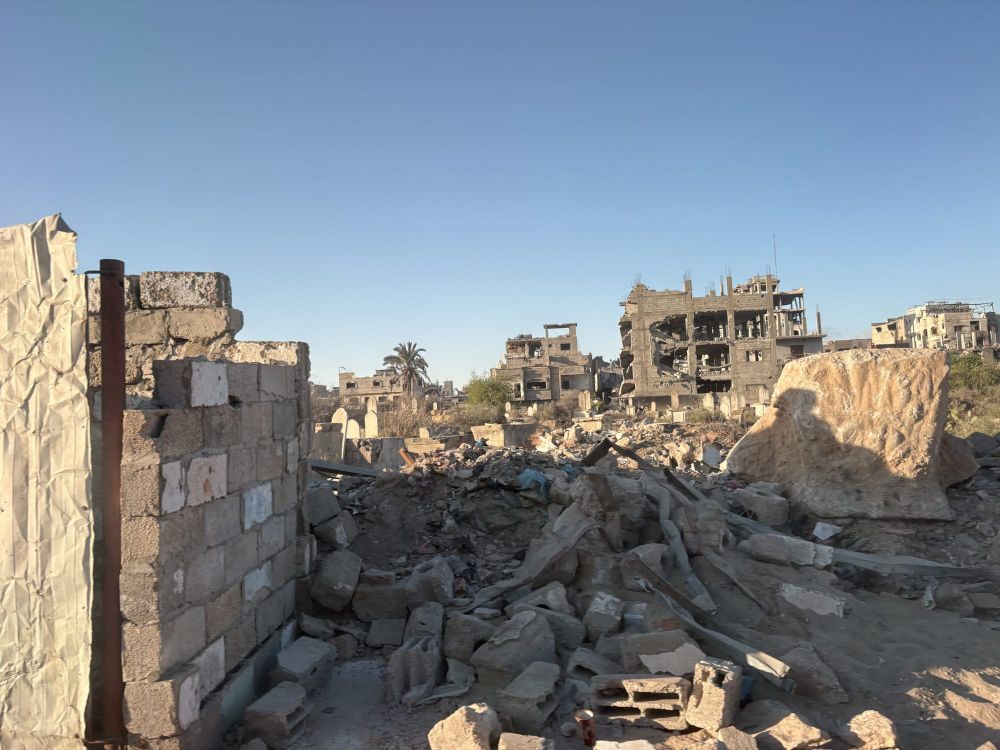
Two years into the genocide, and nothing is the same as when we left. Gaza has been leveled. Thousands upon thousands are dead and maimed. These days will be etched into my memory as the darkest of my life. During the famine, humans and our animal friends became frail and skeletal. I will always remember how Israel expertly calculates cruelty, constantly pressuring us to move, to become further displaced, promising crumbs at the end of the line.
If you want to eat, you have to leave your house and live in a tent. If you stay in your home, the Israeli military bombs and starves you. We chose to stay, as a matter of dignity. Alongside my family—including aunts, uncles, and additional relatives, about 11 families in the same building—we endured the siege. No food, no mercy.
A strange comfort
Living through the famine is like spending your days in a nightmare. My family, my cats, and I wasted away, our bodies shrinking to nothing but bone and skin. We were shadows of our former selves.
You have to understand how much comfort my cats brought me in order to understand the ultimate blow I couldn’t bear: Due to the lack of food during the famine, I had to take my beloved Soker to a friend’s house. But Soker escaped. I cried every night, and every morning I went searching for him.
The thought of Soker in the streets haunted me. Just as there was no food or safety for the people of Gaza, the same is true for animals. Stray animals are especially vulnerable and prone to starvation, especially cats. My baby boy wouldn’t survive the wild dogs that roamed the streets, the chaos of the genocide, the hunger of the famine.
Weeks passed, and I never stopped searching or crying. My hope faded, and Soker became another heartbreak, another memory burned into the ashes of my life, just like everything I knew before Oct. 7, 2023.
Our family friend Saeed, who runs Sulala Animal Rescue, deeply understands our family’s love for animals—a commonality for many Palestinians across Gaza. Sulala was founded in 2006 by Saeed’s father, Said Al-Aar, as a small personal initiative to care for and treat stray animals. In 2016, the organization began operating on the ground, and by 2020, it received institutional support and donations. However, the genocide severely impacted their work. They were forced to flee to the south of the city, abandoning their animal shelters in the north—now considered an extremely dangerous area. They managed to evacuate 20 disabled dogs but had to leave behind 40 others with what they hoped was enough food and water to last several months.
Saeed has stood by my family during the genocide, offering whatever help he can and doing everything in his power to rescue the stray animals wandering the streets of Gaza. When dry cat food was nowhere to be found in the markets, Saeed helped us secure food for our cats. He agreed to provide us with hard-to-find cat food under one condition: that we also feed the stray cats living in the neighboring areas.
For weeks beginning in June 2024, this became my daily routine. Every morning, I woke up, fed my own cats, and then headed out to the streets to feed around 25 stray cats that mostly hid in narrow alleys. While hundreds of cats once roamed the streets, it’s clear the toll the genocide has also had on our animals. Cats, like people, were trapped in dangerous zones, some perishing from bombings, others succumbing to starvation.
I kept up my exhausting routine until the food supplies ran out. My mother and I were committed to feeding the animals, even as Israeli reconnaissance drones flew low overhead and ground offensives were carried out in the Gaza Strip. Israel’s tanks were never far from us.
You do not know heartbreak until you’ve walked your own city streets and witnessed the lifeless bodies of the people and animals you loved, scattered among the ruins.
When the food ran out, it was unbearable to watch our beloved and beautiful cats weaken and slowly starve, just as the people around us were growing weaker and collapsing from hunger. Both humans and cats spent most of their days sleeping, too exhausted and hungry to do much else. We were powerless to save each other because the blockade made it impossible to access food, fuel, medicine, or pet food. You do not know heartbreak until you’ve walked your own city streets and witnessed the lifeless bodies of the people and animals you loved, scattered among the ruins.
As the famine in Gaza worsened, my mother developed a system for our bread that allotted six small pieces to each family member over the course of three days—of course, Fatosha and Massoud were included, each cat receiving one piece.
For the cats, Mama originally mixed soaked bread with canned meat—meat she secretly took from our home pantry. But once the pantry ingredients ran out, she had no choice but to start buying canned meat for the cats every other day, which cost around $16 due to inflation.
Once the products in the market ran out and nothing came into Gaza due to Israel’s blockade, my family couldn’t even secure flour to satisfy our own hunger. I could tell the situation pained my mother, who tried as hard as she could to continue caring for our cats as she cared for the needs of our human family.
My mother’s care for cats, even during a genocide, taught me compassion like I had never seen before. The famine that gnawed at our bodies also whispered hunger into the tiny paws of our cats. Their soft meows are a quiet reminder of the fragility of life. Yet, through our shared pain, we found a strange comfort: Caring for the cats of Gaza gave us purpose, hope, and a reason to keep going. In a world shattered by bombs and fear, our love for these small souls was a light that refused to go out.
The ceasefire continues to feel tenuous, and I dream of a day when no one—human or animal—falls asleep hungry. Once the bombs stop, I cannot wait for silence to be filled with peace instead of pain.
I will never forget the violent scenes of the genocide, but I also refuse to let Israel’s destruction overtake the powerful memories I have of my people. When I am an old woman thinking back on this time in my life, I will remember my mother and me walking the streets of Gaza to feed creatures more vulnerable than us.
Editorial Team:
Tina Vasquez, Lead Editor
Carolyn Copeland, Top Editor
Rashmee Kumar, Copy Editor
Author
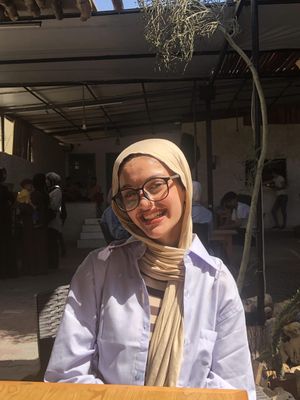
Lamar, 17, is a writer and photography enthusiast from Gaza. She aspires to study law so that the voices of Gaza’s women can be heard.
Sign up for Prism newsletters.
Stay up to date with curated collection of our top stories.