Gaza’s cash crisis is another painful reminder of how powerless we’ve become
Israel decimated the banking system, leading “cash brokers” to charge exorbitant fees to access banknotes, making it harder to live and buy food during the famine
On Eid al-Adha, my siblings and I used to get up early to welcome the special day. We would pray, dress nicely, and head to our parents to kiss their hands, wish them happiness, a long life, and peace of mind. Then we would line up in front of my father, eager to receive Eidiya, money given during Eid.
But on Eid this year, things were very different. The genocide meant there was no Eidiya, no joy, and no celebration—only silence and sorrow.
The older among us knew we would not receive Eidiya this year, but my 9-year-old brother, Yousef, was hopeful. As usual, he walked up to my father and stood in front of him, waiting for the money. My father lowered his eyes and placed a gentle hand on my brother’s head and said in a soft, strained voice, “Sorry, son, there is no Eidiya this year. I do not have enough cash.”
This isn’t just about my family; the inability to access cash is the reality facing everyone in Gaza, despite cash being the only way to pay for necessities such as food and medicine. Israel has refused to resupply Gaza with newly printed banknotes during the war, and with every bank and ATM leveled by the occupation, some in Gaza are turning to “cash brokers” to access cash at a double-digit markup.
The cash crisis is intertwined with Israel’s deadly blockade that is driving up the cost of food—items we can not purchase without cash. For Yousef and thousands of other children across Gaza, even the idea of receiving a few shekels is now just a dream.
The daily toll
Since the genocide began Oct. 7, the Israeli military has displaced Palestinians in Gaza, cut off access to food, clean water, and medical supplies. Now, the cash crisis presents new obstacles to survival by further weakening Gaza’s financial system and leaving people even more vulnerable.
During the early days of the genocide, Israel targeted the Rafah border crossing between Gaza and Egypt, cutting off the flow of humanitarian aid into the Gaza Strip. However, this blockade also impacted the financial system, with no new banknotes allowed in and the same battered cash circulating among residents.
Many banks closed due to Israel’s bombardment, and the few that remained open were overwhelmed by demand. Back when it was still possible to access at least some cash, my father waited with thousands of people in long lines at the only functioning ATM, withdrawing small amounts of money with high fees.
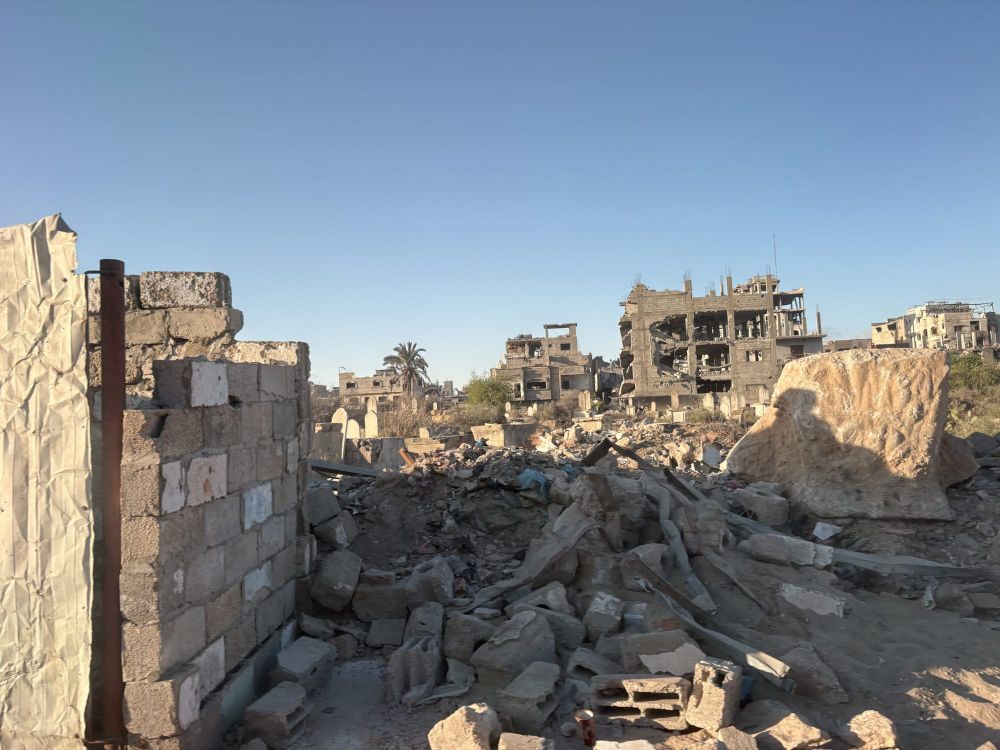
But as the genocide continued and the bombings became relentless, almost all banks shut down and most ATMs were out of service. In an effort to cut all remaining lifelines, Israel carried out raids on money exchange shops and ultimately decimated the banking system, draining the Strip of all monetary resources.
For my family and many others in Gaza, the travesties pile on top of each other.
Coping mechanisms
On Oct. 18, 2023, my family’s house was destroyed above our heads. Rescue crews managed to pull us out with only minor injuries, but we lost everything: money, gold, and all our banking documents. We had no access to banking apps, but thankfully, we had e-wallets, smartphone software that stores payment information and allows for electronic transactions. However, e-wallets were limited to local transactions and couldn’t receive international transfers. So whenever we received a remittance from abroad, we had to rely on someone with a mobile bank account to collect it for us.
With no real financial system left in Gaza, financial institutions and nongovernmental organizations continue to encourage the use of digital payments to transact business and receive and send remittances. But these digital methods do not solve our problems. Many market vendors and taxi drivers refuse to deal with digital transactions and insist on cash, leaving us unable to pay for necessities—even if we have the funds to do so.
Many of us have no choice but to turn to currency exchange shops that charge absurdly high fees, some as high as 40%. This means if you need $50, you must pay $20 to access your own money.
Without cash, we cannot access the limited food that exists in Gaza. But there are other, less obvious ways that the cash crisis affects our daily lives.
As a student living in an area with a poor and unreliable internet connection, I often have to travel to places with more stable connectivity to download my lectures, complete exams, and upload assignments. However, all these places are far from where I live, so I must take a taxi to reach them. Taxi drivers only accept cash, which creates a serious barrier to my education, as if it weren’t hard enough during a genocide. Before Oct. 7, the fare to reach these places was just one shekel. It has since increased fivefold.
As another example: Israel has destroyed Gaza’s health care system, which means health care can be impossible to access. My father currently has a severe toothache. Finding a dentist is already hard, but now he must try to find one who accepts digital payment. He has looked for four weeks, with no luck. Even if he does manage to find a dentist willing to accept a digital payment, the bill will likely be astronomical because digital transactions also now come with steep fees.
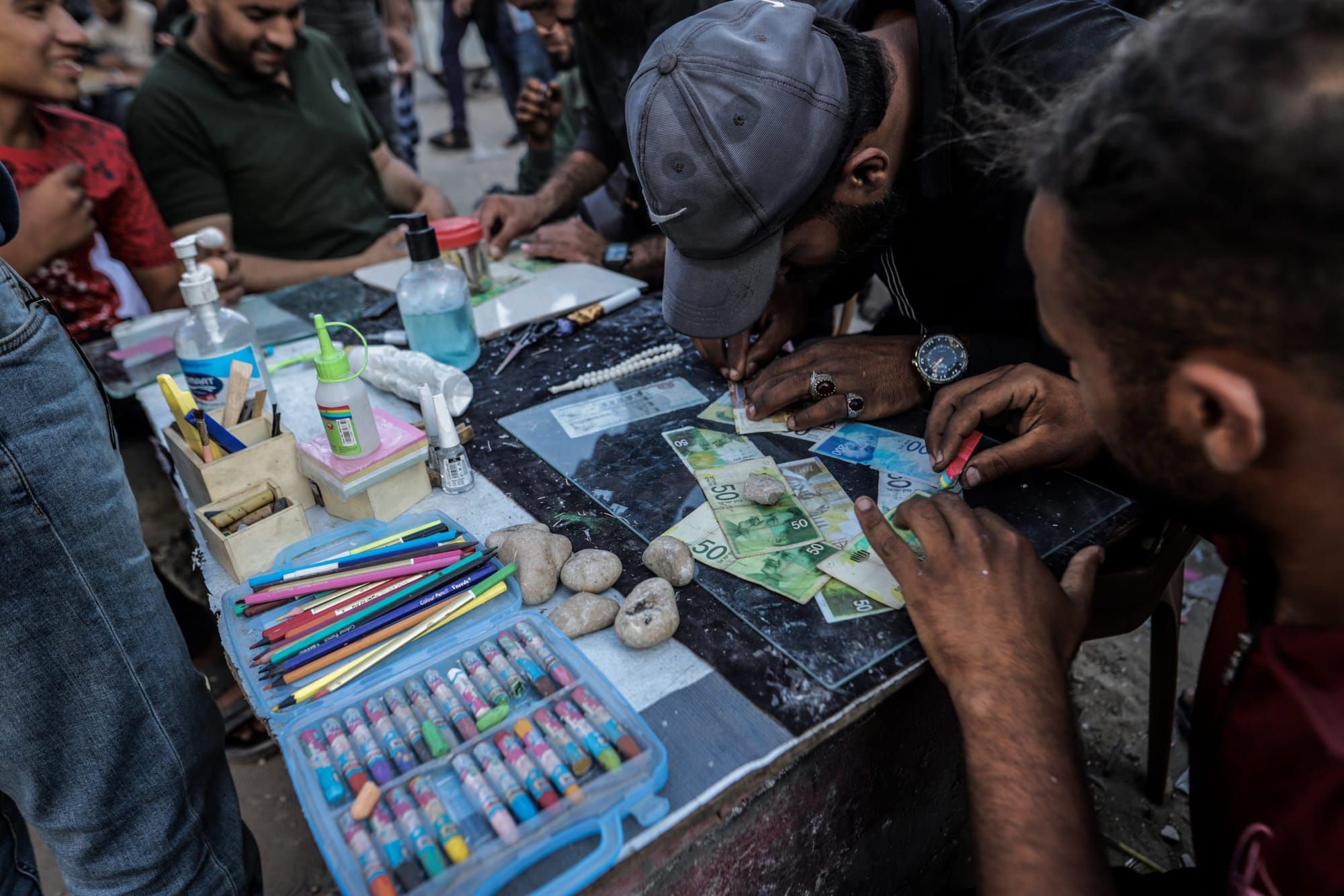
The limited cash we do have presents another problem: The banknotes are worn and torn, which leads them to be rejected by shop owners, traders, and taxi drivers.
Consequently, this has led to a new business venture for entrepreneurs who charge for their services patching worn banknotes using glue, a craft knife, cotton swabs, and paper. But merchants are vigilant about the banknotes they receive, and if they suspect the notes have been repaired, they refuse to take them.
These conditions in Gaza feel impossible, and yet things are becoming more difficult to navigate each day. I was reminded of this when, one day, my mother and I were shopping for groceries to prepare lunch. None of the vendors would accept my mother’s cash, saying it was old, worn-out, and glued. We returned home with nothing but empty bags and an unshakable fear that the crisis would only deepen further.
These days, it is not uncommon to hear about people in Gaza who are walking to the markets with small pieces of gold—wedding rings, bracelets, the little treasures they spent years saving for—and selling them just to buy what little food is available for unbelievably high prices.
What people once considered wealth is now meaningless, spent on flour.
My mother once told me that gold was for the future, a kind of security. But now, it disappears for almost nothing in exchange for banknotes—crumpled and torn papers that cannot even cover the cost of a single meal. What people once considered wealth is now meaningless, spent on flour.
Selling gold isn’t the only way people are coping with the cash crisis. My family and many others have turned to bartering.
Just a few days ago, we traded two kilos of lentils for a kilo of flour. No one questions whether the exchange is fair because we all just need to eat. None of this is ideal or sustainable, but what choice do we have?
The cash crisis has not just changed the way we live; it has changed the way we feel about ourselves. My father, once a proud man who never let us go without, now sits in silence when my younger brother asks for simple things. It pains him to say no because there’s nothing in his wallet.
Money doesn’t mean anything anymore; it has no real value. You might receive a remittance from abroad, only to lose half of it to outrageous commission fees. What good is money in this situation?
We used to buy a kilo of flour for around $1. Now it costs $15, and even that price can wildly fluctuate, depending on the number of aid trucks entering Gaza, which is now a drop in the ocean. This is not just inflation, but humiliation—a painful reminder of how powerless we’ve become during the genocide.
Like all of the worsening conditions in Gaza, the cash crisis will only end if Israel allows it to end by opening the border crossings and letting aid and currency enter the Strip.
Until then, we will starve, and Gaza’s children will continue to die of hunger. Our last torn and tattered banknotes will never be enough to save them.
Editorial Team:
Tina Vasquez, Lead Editor
Lara Witt, Top Editor
Rashmee Kumar, Copy Editor
Author
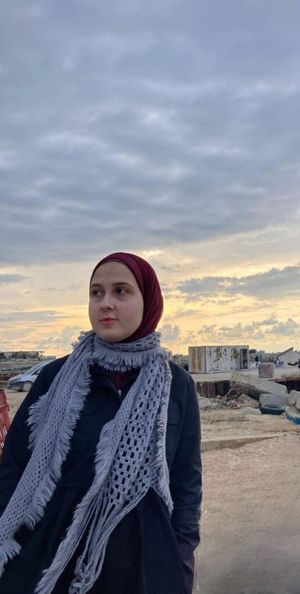
Mariam Mushtaha is a second-year student at the Islamic University of Gaza, majoring in English translation. Despite the hardships of war, she discovered a deep passion for writing, using it as a mean
Sign up for Prism newsletters.
Stay up to date with curated collection of our top stories.