Aid sites were Gaza’s compulsory ‘Squid Game’
The now-defunct sites, coordinated by the U.S. and Israel, required walking into a barrage of bullets for the mere hope of obtaining a bag of flour
Real journalists wrote and edited this (not AI)—independent, community-driven journalism survives because you back it. Donate to sustain Prism’s mission and the humans behind it.
During Gaza’s supposed ceasefire, many Palestinians are reflecting on the last two years. While the so-called aid sites have been shut down following international pressure and reports of mass killings, those nights still echo through Gaza’s memory.
What the world once called “distribution points” were, for us, fields of death—proof that even hunger could be exploited.
I can still recall how news of the sites would first begin with a whisper, carried from rubble to tents:
“Tonight, the crossing will open.”
No one said the word “safe.” No one promised survival. The whispers carried only one certainty: There would be flour. Oil. Maybe milk. And if you were lucky enough to return, you might have something to keep your family alive for another day.
In Gaza, we called it an “aid night.” But that name was a lie. It was a trap set in darkness.
Death nights
In the movies, survival games come with rules. In Gaza, there were no rules—only hunger. Hunger that was sharper than bullets, louder than explosions. Hunger that drove women to leave their children sleeping in the tent, promising to come back, not knowing if they actually would. Hunger that made teenagers run straight toward the barrel of a sniper’s rifle.
The aid nights began after Israel closed Gaza’s crossings in early March, cutting off all routes for food deliveries by the United Nations Relief and Works Agency for Palestine Refugees (UNRWA) and international aid agencies. For months—March, April, May, June—the usual international channels stayed silent. They stopped speaking and stopped sending, as if silence itself had become their policy. The few existing warehouses emptied just as Israel calculated they would. The World Food Programme’s stock was gone. The World Central Kitchen had no more to cook. The little that was available was mostly canned food, rice, and oil—barely enough to keep a body alive and long gone before the summer’s end.
Through collaboration with the U.S., Israel announced a new alternative: four “aid sites” run by the newly formed Gaza Humanitarian Foundation. Three sites were located in the far south in emptied parts of Rafah and one at Netzarim, the military corridor splitting the north and south.
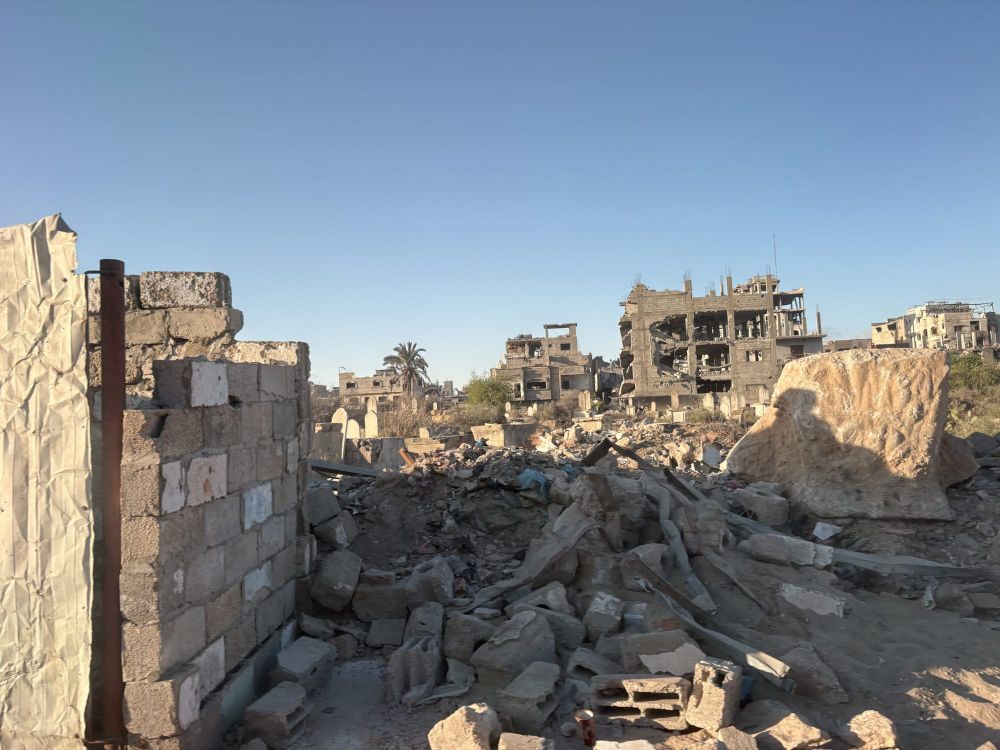
On paper, the aid sites sounded like relief. In reality, they were death zones: open, bulldozed wastelands where there was no cover from snipers, no escape from tanks, no one to protect the unarmed civilians. They were chosen deliberately, far from the displaced camps, forcing people to walk for hours under the occupation force’s watch. Because vehicles were banned by the Israeli military, people walked miles to reach the aid sites, sometimes barefoot. Women, children, and men all moved in the same direction, hoping for nourishment.
More than 2,000 Palestinians were killed by Israeli soldiers while trying to access aid. ِIn my eyes, the greatest crime was that Israel strategically opened one site at a time, allowing occupation forces to kill the largest possible number of Palestinians with as little ammunition as possible.
Israel’s trap indicated that a starving population would come, no matter the risk. Chances are that during a ceasefire—even the deadly one we have today—few would come to the aid sites if they still existed. But at the peak of starvation, people were willing to risk anything, including their lives.
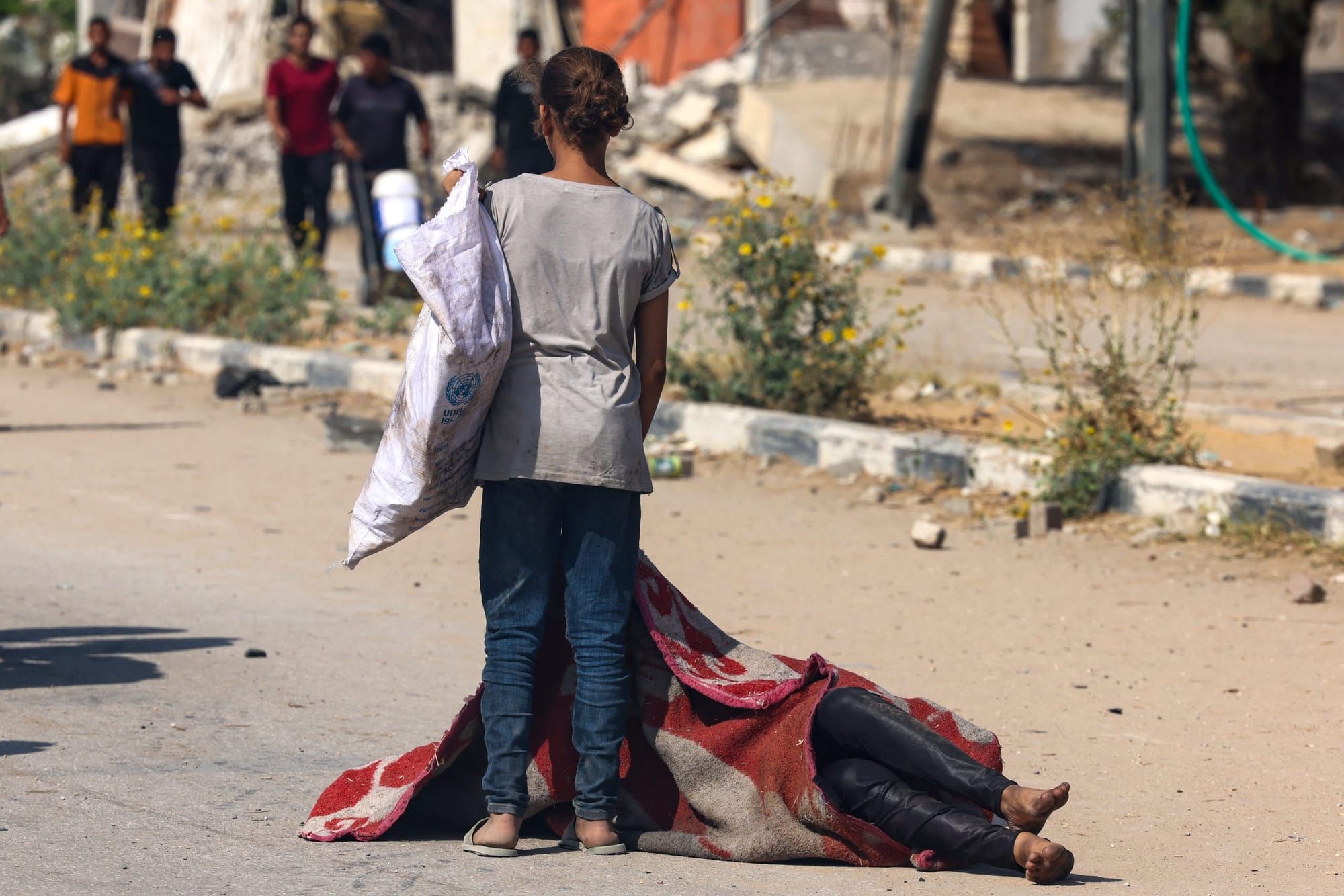
The closer Palestinians got to the aid site, the more dangerous it became. Snipers were watching from a distance. Young Palestinian men, acting as lookouts, crouched behind low concrete barriers along the roadside. They used this position to watch for threats and urgently wave civilians forward, hoping to alert others to the snipers’ line of sight as they ran for aid. The aid trucks arrived in stages. First, U.N.-marked vehicles. Then local trucks. The crowd, held back by force, edged forward. In bursts, people ran—one group at a time—sprinting to avoid the sniper’s scope. Everyone dropped flat to the ground when shots rang out.
Everyone carried a torn, faded bag—empty, waiting to be filled. Everyone understood they might die clutching those same empty bags.
Then a tank often appeared, sometimes without warning. The shooting would start in waves—automatic fire, heavy and relentless. Survivors described Israeli soldiers calling out in Hebrew, telling the crowd, “No shooting! Come closer,” before opening fire.
In a June 5, 2025, video of the Tel Al-Sultan aid site in southern Gaza, Israeli forces fired at a crowd of unarmed civilians with the rate of fire reaching at least 15 shots per second. They called it “crowd control.” Really, it was a mass execution.
One witness in a separate incident at another aid distribution shooting recalled, “They told us, ‘Come, there’s no shooting.’ Everyone ran forward. Then the tank opened fire. Bullets sprayed everywhere.” The people were not armed. They held their hands high, shouting, “Food! Food!”
But the response from Israel was the same: bullets. Tear gas canisters. Sometimes both.
The dead were loaded onto wooden planks or makeshift stretchers. Beside them were their neighbors, friends, and family members.
For many in Gaza, the only real comparison for conditions on the ground was the Korean TV series “Squid Game.” In the show, desperate people compete in deadly games for money. In Gaza, the prize was not cash; it was a sack of flour, a bottle of oil, or a bag of rice—and the contestants did not sign up willingly.
These compulsory nights have now ended, but they killed more people than the starvation itself. Four hundred fifty-nine Palestinians recently died of starvation.
The first aid night in Rafah on May 27, 2025 provided evidence of deliberate killing. People expected a safe trial run, maybe some crowding, maybe arrests. But not mass killing. Instead, they found themselves in a race for their lives. Many didn’t make it. And yet the aid sites were allowed to continue operating.
Some stories about the sites were detailed by the U.N. In one report, a 14-year-old boy whose father was killed in the genocide wandered among the crowd asking: “Can anyone give me a plate of flour, just enough for one meal?” As the eldest sibling, he felt the weight of responsibilities far too heavy for his small shoulders.
In another story, a widow described going to the aid site five times, and each time she left empty-handed. She asserted she was not begging; she was trying to earn her dignity by bringing food home herself. She dodged bullets, felt the crack of gunfire next to her ear, but still went back.
Every day I face death. I see the blood, the bodies. If I die too, who will feed my children?
Palestinian mother in Gaza
Another woman’s husband was paralyzed. “We are helpless. Can’t you hear us?” she cried.
A mother of six, including one child who was wounded, said: “Every day I face death. I see the blood, the bodies. If I die too, who will feed my children?” When she came home empty-handed, her children cried. And so she went out again, risking everything—if not for food, then for the dignity of trying.
All of us who were starving in Gaza agreed: Flour was no longer just food—it was a symbol of tragedy. None of us will view this kitchen staple the same way again. It will always be mixed with the blood of our people.
The war inside the hospital
The violence of the aid sites did not end in the bulldozed fields. It had a second front: the hospital.
My mother, Abeer Mahmoud, is a pharmacist who worked double shifts: days at Shuhada Al-Aqsa Hospital in Deir al-Balah, nights at a branch of the Doctors Without Borders/Médecins Sans Frontières (MSF) field hospital based in Al-Zawaideh in the middle of the Gaza Strip. She called these nights “another front of the genocide.”
The shooting may have happened at the aid sites, but the gunfire delivered the injured directly to the hospital steps, where patients arrived in waves. Children shot in the neck. Teenagers with shattered knees. Elderly people suffocated in stampedes. Others trampled under the wheels of aid trucks, their bodies broken in the rush.
One of my mother’s colleagues, a nurse, worked for the entirety of the genocide without pay. She took a night off from the hospital to go to one of the first nights at the aid sites, hoping to bring something home for her children. She never returned. Her life ended with a bullet to the head. Upon hearing the news, the staff who laughed with her just hours before stood in stunned silence.
Earlier this year, on July 16, the Israeli military extended a surreal invitation for aid via the very channels they used to announce bombings, alerting locals that food would be distributed at the Netzarim aid site at 2:00 a.m. My mother remembered wondering: Why at 2 a.m., why not in the light of day when people can see? But the answer was in the pattern: Darkness hides the dead faster.
By 2:30 a.m., the first injuries flooded the field hospital. Most were shot in the legs or stomach. Many lost limbs on the operating table because there were no surgical supplies to save them. My mother was shocked to see not just young men, but elderly women and young children—proof that Israel’s shooting was indiscriminate.
She treated an old man, shot in the abdomen, who clutched the doctor’s hand and whispered prayers. His dignity, his quiet desperation, stayed with her. He was powerless over his circumstances, on death’s door for seeking flour.
Long after the shooting stopped, the war continued inside the hospital. Doctors and nurses worked in frantic cycles—cut, stitch, amputate—while the floor grew slippery with blood.
During her morning shift, my mother’s colleagues listened to her stories and shook their heads in disbelief, though they had seen their own share of horror. They told her about operating on five patients at once; about deciding who got the last dose of anesthesia; about holding a child’s hand as the light left their eyes.
Even in the MSF field hospital, the small Belgium-run unit where my mother worked nights, the chaos was beyond imagination. What she witnessed there is but a tiny fraction of the horror that flooded into the main government hospitals, such as Shuhada Al-Aqsa, Nasser, and Al-Awda. These places were no longer hospitals in the traditional sense, but the ruins of healing. Israel systematically targeted the hospitals and cut their power, blockaded their supplies, and then surrounded the rubble. Inside, there was a gallery of suffering, where children’s limbs were amputated without anesthesia, and surgeons used phone flashlights to operate as the world collapsed upon them.
When there is starvation elsewhere in the world, the U.N. coordinates aid to ensure civilians are not exposed to danger. In Gaza, there was no U.N. protection. No international oversight. No neutral zone. Just Israel’s open killing.
The aid sites were never distribution sites; they were military ambushes. The Hebrew name for them should have been “death traps.” In Gaza, that is exactly what we called them.
In more ways than one, the aid sites were useful to the Israeli military. Not only did they provide the opportunity to kill hundreds of Palestinians, but occupation forces were also able to maintain their international image and make it appear as if they were providing “humanitarian aid.” No need for imported bombs. No airstrikes. Just bullets, rationed carefully, tens per second.
For Gaza’s people, the equation was different. Hunger pushed us to the line. Hope made us run. And pure, blind luck decided whether we returned with food, returned empty-handed, or did not return at all.
Editorial Team:
Tina Vasquez, Lead Editor
Carolyn Copeland, Top Editor
Rashmee Kumar, Copy Editor
Correction: The date of the video showing the Tel Al-Sultan aid site massacre has been corrected.
Author

Logain Hamdan is a Flutter mobile developer, computer engineering student, English author and community leader from Gaza. She has led mobile development projects, and participated in national competit
Sign up for Prism newsletters.
Stay up to date with curated collection of our top stories.