For Rama, my partner in dreams. I write because she cannot.
During the genocide, writing has become an ultimate form of resistance, allowing me to tell the stories of Gaza, our people, and our martyrs, ensuring their histories live on forever
As a writer, I have always wanted to leave my mark on the world of literature. I dreamed of writing my own book, a story that would carry my name and picture on the cover; a book that would tell my story, my thoughts, and my dreams, something tangible I could see on the library shelves.
I have had a small library in my home since I was a child. My father and I shared a love for books, and each week, I would choose a new book, dive into its pages, and disconnect from the outside world, living in different worlds, learning, dreaming, and imagining myself as part of those stories.
As a young adult, I enrolled at the Islamic University in Gaza, where I studied English literature and specialized in translation. At the university, I learned that words are not just letters, but bridges connecting people and cultures.
Studying became an opportunity to discover the power of writing. My education taught me that every story deserves to be heard and that storytelling is the most powerful way to help us understand ourselves and the broader world.
Books were my private world, my safe haven, and my source of inspiration. I had no idea that the writing I would do as an adult would not be fiction, but a witness to war, loss, resilience, and the stories of martyrs. I did not know that my education would one day serve as a tool to survive the genocide, allowing me to turn pain into words that carry the voices of the unheard.
Indescribable grief
Over the last two years of the genocide, all my dreams have dissipated, and the quiet life I once knew—full of studying, books, and writing—has turned into chaos and a daily struggle for survival. I still cannot grasp the scale of loss; I only feel everything around me collapsing. Each day, I face Gaza full of fear and pain.
I can still recall how, in December 2023, Israel instructed us to flee the Nuseirat area in central Gaza in preparation for shelling. We fled our home under fire. The streets resembled judgment day as people wept and screamed as explosions filled the air. The upper floors of our building were shelled while we were still inside, and I felt a fear I had never known before.
I held my brother Abdullah’s hand as we ran through the streets, my father pushing my grandmother in her wheelchair as he cried and trembled with fear. It took tremendous effort, but we finally found a temporary shelter with relatives—16 people in one house, with no privacy at all.
As days passed, our immediate family decided to move to a tent in a humanitarian shelter in Rafah. We had nothing, no sufficient food, warm clothing, or shelter. The feelings of cold and hunger became part of our daily lives. It was as if we returned to the Stone Age. We cooked over fire and lived each day amid fear and uncertainty. All the dreams I once carried, to graduate from university surrounded by my friends and to write my own novel one day, vanished.
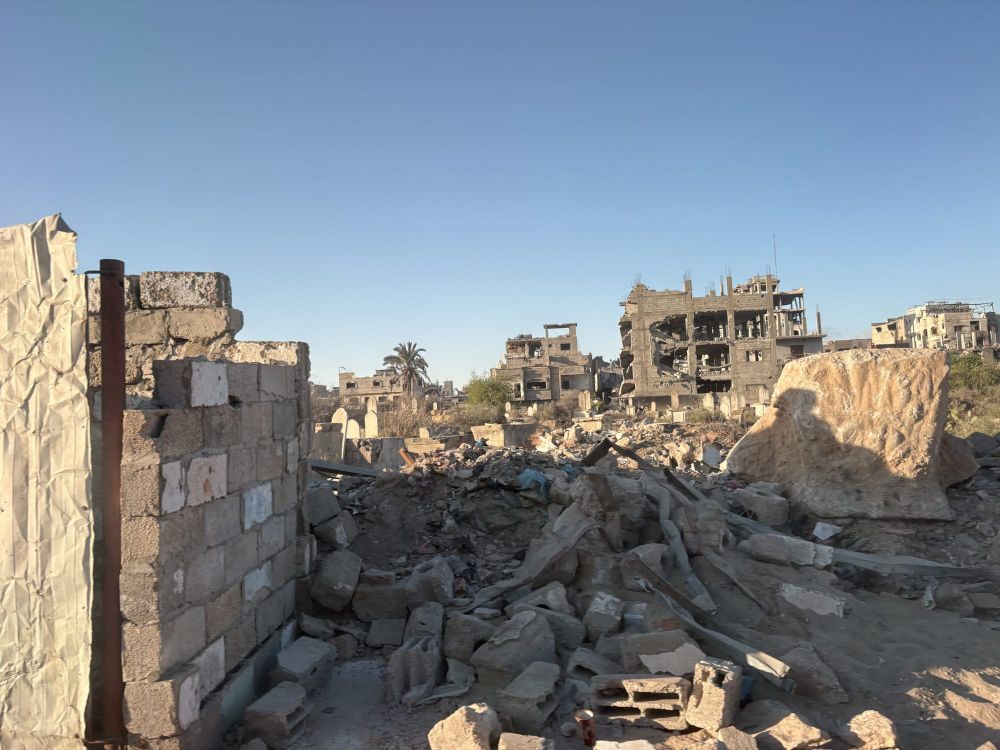
In March 2024, we heard that Israel shelled our home. With its absolute destruction, we lost any hope of returning to our previous life. Our house was demolished, along with my father’s goldsmith workshop, which had been our family’s only source of income. It was an indescribable shock. I saw my father collapse before me, his eyes carrying so much pain. It felt as though the ground shifted beneath me; I could not fully comprehend the loss.
But then there was no more time for mourning. Every waking moment was filled with more hardship and challenges, from displacement and constant shelling to the destruction of all of the places we once loved. On Jan. 15, 2024, I received the news that my friend Rama and her sister Ruba were killed. An emptiness engulfed my life; it felt as if a part of me vanished with her. I wanted so badly for her to still be alive instead of becoming another number on a list of victims.
I knew that Rama had remained in northern Gaza while I was in the south. In the preceding days, I could not reach her. Though I could not have known that she was going to be killed, the feeling of regret overwhelmed me. Maybe if I had tried harder to reach her, we could have had a final goodbye?
What really shattered me was the understanding that Israel managed to deprive us of connecting, even in death. By cutting off the north from the south, I could not go north to hug Rama one last time and tell her I love her. It can sometimes feel as if Israel and death are one and the same, taking away everything we love and leaving us with nothing.
Rama shared my passion and love for writing. Before the war, we spent hours discussing the stories of martyrs, translating them together, writing, documenting, and dreaming that our words would reach the world. Rama was more than a friend; she was my partner in dreams and my companion in ideas, a bridge between my love for writing and the reality we tried to understand and document.
Still in the thick of my grief, my family tried to settle down again. We returned to our old neighborhood and rented an apartment in June 2024. I can still remember standing in my new room and arranging the few books I managed to keep, trying to create a small corner library that would make me feel at home again. Suddenly, I heard shouting outside, the sound of hurried footsteps on the stairs, and neighbors banging on doors as they fled.
Abdullah rushed into my room breathless, his voice breaking with fear, “The tanks are at the end of the street!”
I slowly approached my new bedroom window, and there it was: a huge, grey tank moving with heaviness, as if dragging our futures behind it. Until then, I had never seen a tank up close in my life. It was so close that it seemed the barrel of its gun was staring straight into my eyes.
I took a single step back when the explosion came. The blast roared through the air; it seemed the ground would crack open beneath me. The pressure of the blast hurled me backwards, and a searing heat tore through my body.
And then everything went black.
Restoring balance
When I opened my eyes, blood streamed from my hand, and pain burned through me. I didn’t know if I was alive or dead. I tried to call for my father, but my voice was too weak. From somewhere far away, I could hear him shouting, “Don’t go out! The drones are firing!”
Someone came to me, wrapped me in a blanket, and carried me downstairs, where my wounded mother and younger sister were already lying. We remained there for two hours, bleeding, while the tank blocked the street, making it impossible for an ambulance to reach us. Every passing minute felt like a battle against death.
Finally, a few local young men decided to take the risk to get us out. We ran through narrow alleyways as bullets snapped overhead and smoke filled the air. I could hear my own ragged breathing and my heart pounding in my chest. I swear I heard someone whisper, “She’s between life and death.”
Once we reached a safer point, some nearby nurses tried to stop our bleeding as much as possible before flagging down an ambulance. My hand was badly injured from the shrapnel lodged inside. My face and back were also dotted with shrapnel, and my mother and sister were also bleeding from the same.
Once we arrived at Al-Aqsa Hospital, the scene was horrific and surreal. Hallways overflowed with the wounded, we heard cries of pain, and blood covered the floors. Panicked doctors rushed around bodies suspended between life and death.
I was told that my hand needed surgery urgently, or I would lose it. I never imagined a world in which my hand could be at risk of amputation. By God’s mercy, my initial surgery was successful, and I didn’t lose my hand. But while the physical pain eventually subsided, the emotional aftermath persisted for weeks.
I trembled at the sight of my own blood each time I went to have my bandages changed—and that seemed like the easiest part of the ordeal. After the explosion, I fell into a deep, suffocating depression. Sleep mostly abandoned me, and when I was able to drift off for a few hours, nightmares hunted me. The sound of shelling was lodged in my ears and refused to fade.
It seemed nothing would pull me out of the whirlpool I sank into, but over time, I began to read again. Escaping into words was the only thing that seemed to restore some balance in the midst of so much destruction.
I searched for books anywhere I could, sometimes even in the rubble. Once, I found a book called “Don’t Be Sad,” full of beautiful quotes that sometimes moved me to tears. I magically lost myself in the pages of books, successfully escaping the sounds of shelling that still echoed in my head. Even I was amazed that I could still let myself wander into a better, quieter world—even if only for a few hours.
With each book I finished, I felt a familiar feeling bubble up: my old dream of becoming a writer. So, I pushed myself to write again, but this time I veered away from fiction. Now, my stories were anchored by my own voice and shaped by wounds and lived experience. I wrote the stories of the martyrs I knew, translating them into English so that their voices could reach the larger world.
I have now published my work on well-known platforms, though at times it feels both miraculous and confusing to fulfill a childhood dream while surviving the genocide. When I write, I constantly think of Rama. I try to keep her voice alive through my words and carry her presence on every page. I write about our lives, our dreams, and the places we loved, so that Rama and her sister Ruba are not forgotten. Mostly, I hope that this writing in some small way helps fulfill Rama’s dream of making her voice heard.
Writing is now my ultimate form of resistance, a way to break through the silence of the Western world, challenge false narratives about my Palestinian people, and assert that we are still here in Gaza—despite Israel’s ongoing attempts to erase us. The pen is my weapon, and words are the land no one can occupy. Every word I write is a living witness to what happens during the genocide, and it is a way to fight back and ensure our memories are kept alive. Every story is an opportunity to revive Rama’s dream of writing and keep her alive between the lines.
I cannot stop the bombing or bring back the martyrs, but I can write their names and share their dreams so the world knows they were here. The genocide can take my home, my library, my plans, and my lifelong friends, but it cannot keep me from writing.
Rama was a writer who was robbed of the ability to tell her story. So here I am, telling it for her.
Editorial Team:
Tina Vasquez, Lead Editor
Carolyn Copeland, Top Editor
Stephanie Harris, Copy Editor
Author
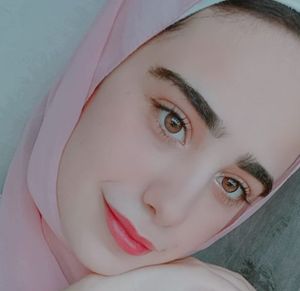
A writer and translator from Gaza, who has always believed in the power of words to inspire, resist, and heal.
Sign up for Prism newsletters.
Stay up to date with curated collection of our top stories.