Florida farmworkers and workers’ rights advocates refuse to back down in their fight for stronger labor protections despite the governor’s push to block local governments from passing safeguards.
Last month, Florida Gov. Ron DeSantis signed House Bill 433, which prevents local governments from requiring heat exposure protections for workers. Farmworker and labor advocates in Miami spent years advocating for heat protections for outdoor workers and came close to victory before the agricultural industry successfully lobbied against the law. Starting July 1, it will be illegal for local governments in Florida to pass health and safety measures for outdoor workers in extreme heat. The decision comes after Florida experienced its hottest summer on record.
The Farmworker Association of Florida (FWAF) targeted DeSantis with a veto campaign against the measure. Representatives from Hope CommUnity Center and the Hispanic Federation also lent their support, amplifying the urgent need for legislative intervention to safeguard the rights and well-being of farmworkers. Despite concerted efforts to advocate for heat protections, including mobilization and community outreach, advocates say HB 433 signifies a disheartening setback for the movement.
“We just want to make that plainly stated out loud and march through the town so that the people can know that we’re not OK with it,” said Ernesto Ruiz, a researcher and advocate from FWAF. “This is unacceptable, and our representatives are failing us.”
Additionally, advocates for farmworkers in Central Florida convened on May 1, with about 100 community members marching through the streets of Apopka to raise awareness about the dire conditions agricultural laborers face.
“We talked about the importance of voting for those that can, about the importance of organizing our community. We stressed how during COVID and the pandemic, our communities were called essential, and now we’re being treated as criminals,” Ruiz said. “Rather than enacting protections to protect their basic health, just basic labor and decent standards, the state government is doing the exact opposite.”
Miami-Dade County’s outdoor worker activists with WeCount! have organized for the nation’s first county-wide heat standard since 2017. The coalition of workers officially launched their ¡Que Calor! campaign in 2021 and came close to getting the Board of County Commissioners to approve the proposed heat standard in September, but by November, commissioners buckled under lobbyist pressure. The final vote was postponed until March in an effort to gain more support.
Between 2011 and 2021, 436 farmworkers tragically lost their lives to heat stress and heatstroke. Activists say this figure is likely an underestimate due to underreporting, with many deaths being attributed to preexisting health conditions exacerbated by extreme heat. Among the most harrowing consequences are the alarming rates of kidney failure among farmworkers, with individuals in their 30s and 40s requiring dialysis as a result of chronic dehydration and elevated core body temperatures.
“I was actually picking blueberries this morning, and it was already in the 80s when I went out,” Ruiz said. “Summer hasn’t really kicked in yet … [Workers] are exhausted by the end of the day. Heat depletes you, and it’s not like they get home and watch Netflix. They have to go wash their clothes, wash their kids’ clothes, cook, pick their kids up for school, take care of their parents. There is a lot at stake.”
Less than a week after the vote was delayed, state Rep. Tiffany Esposito filed HB 433. The bill was passed on March 8, just weeks before the county was set to determine the local decision. DeSantis signed the bill into law on April 11.
“We’re quite used to the type of legislation that our governor approves and favors, so we anticipated that it would get signed into law, which it did,” said Ruiz. “And in preparation for that, we organized with a number of coalitions … mobilizing, crafting the statements, and trying to get as many people to sign on.”
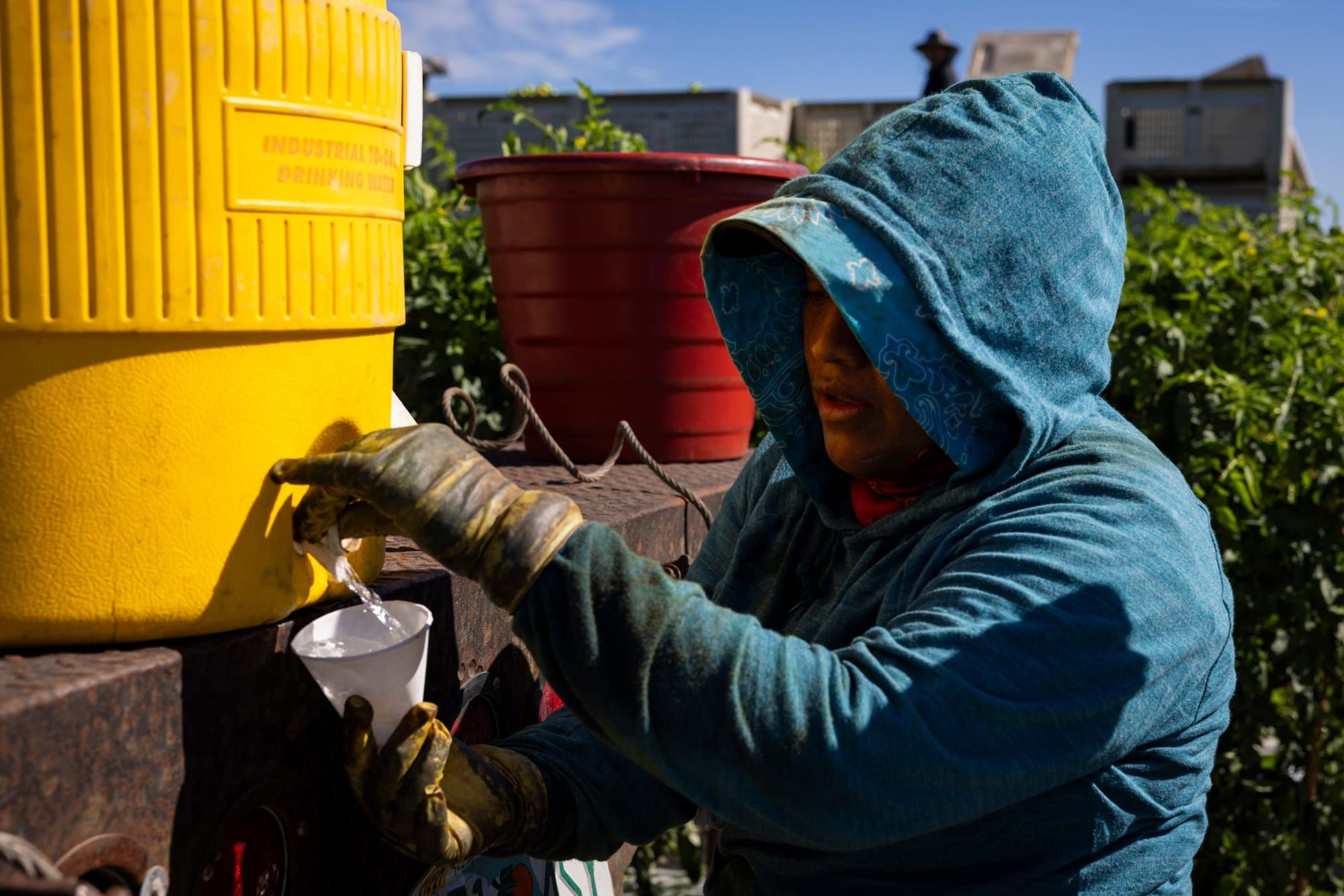
According to the Centers for Disease Control and Prevention, average annual heat-related deaths have risen 95% from 2010 to 2022. The ¡Que Calor! Heat Standard originally included a heat exposure safety program for workers and their supervisors about the risks of heat exposure and best practices for minimizing heat-related illness. The standard also stated that on days with a heat index of at least 90 degrees Fahrenheit, workers have a right to 10 minutes of paid rest and a water break every two hours to cool down under shade and avoid heatstroke. The standard was later raised to 95 degrees.
The proposed Miami-Dade Heat Standard would have guaranteed access to water and shaded rest breaks for more than 100,000 outdoor workers in Miami-Dade County. Currently, no federal laws regulate heat exposure in the workplace, though the Occupational Safety and Health Administration (OSHA) is soon expected to roll out a proposed standard to better protect workers from heat stress.
Advocates urge continued engagement and support from the community, emphasizing initiatives such as heat stress training to empower workers with knowledge and awareness of their rights, equipping them to identify symptoms and demand dignified working conditions.
“I think we also need to do a better job at communicating the urgency of the situation and the severity of risk and the severity of the morbidity and mortality that are taking place among our essential workers, the people who feed us,” Ruiz said. “I think most people buy their food and don’t give a second thought about where the food comes from or who produces it. And so as advocates for farmworkers, we need to make sure that the consumers know that it’s a very unjust system that is feeding us.”
Author

Alexandra is a Cuban-American writer based in Miami, with an interest in immigration, the economy, gender justice, and the environment. Her work has appeared in CNN, Vice, and Catapult Magazine, among
Sign up for Prism newsletters.
Stay up to date with curated collection of our top stories.