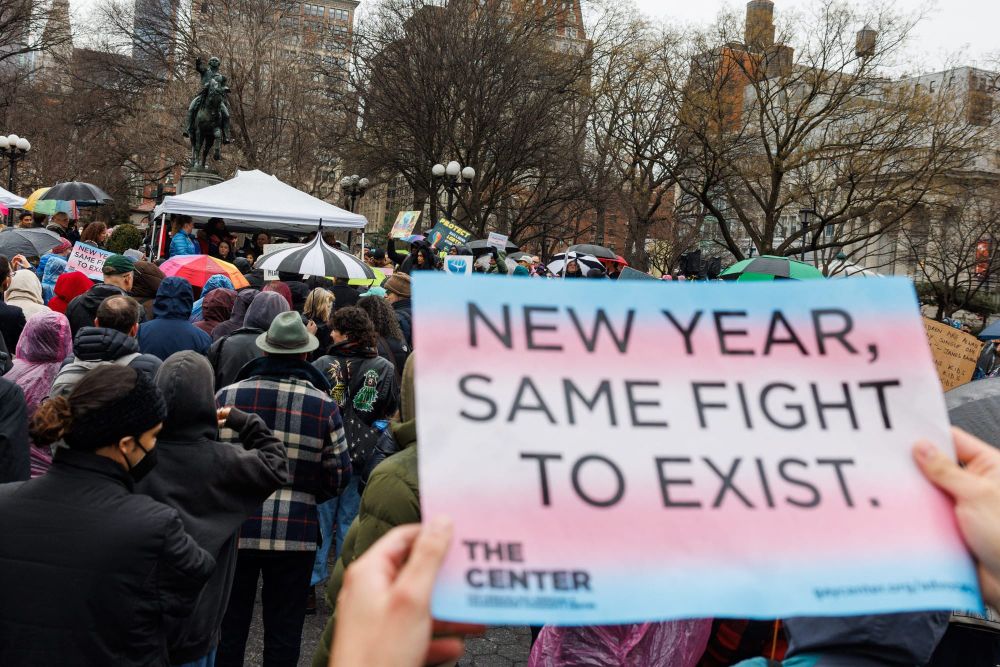
In a landmark decision celebrated by advocates and health care providers alike, a federal judge in Florida blocked Senate Bill 254, a controversial piece of legislation that severely restricted access to gender-affirming care across the state. The ruling marks a significant victory for Florida’s LGBTQIA+ community, particularly transgender and nonbinary people, who faced immediate and dire consequences upon the bill’s implementation. The judge said the bill was “unconstitutional” and that it unlawfully targeted transgender people.
The bill, which mandated that only licensed medical doctors (MDs) or doctors of osteopathic medicine (DOs) could prescribe gender-affirming hormones, effectively cut off access for many individuals who were receiving care from nurse practitioners and physician assistants. According to Kate Steinle, chief clinical officer of LGBTQIA+ health care provider FOLX, about 80% of patients relied on these non-MD/DO providers for their gender-affirming medications. The sudden enforcement of SB 254 forced many clinics to cease providing such essential care, leaving many patients without access to crucial medications and treatments.
“The impact was pretty massive,” Steinle said. “The impact of all of a sudden, a medication that you rely on for your health, both mental health and physical health, not being available to you because of a bill that was discriminatory at best, caused so much mental health anguish and anxiety in a lot of patients.”
The repercussions were not limited to adults; SB 254 also imposed severe restrictions on gender-affirming care for minors, prompting concerns and queries from distressed parents seeking solutions for their children’s medical needs.
“A lot of trans and nonbinary people in the state, even if they did have access to a provider who could continue to prescribe, they worried that at some point they wouldn’t,” Steinle said. “We also saw the impact of stress and anxiety about what is going to come next in this barrage of discriminatory laws for youth in Florida.”
The bill led to a significant exodus of individuals from Florida seeking care in less restrictive states. In an August 2023 Human Rights Campaign survey of more than 14,000 LGBTQIA+ adults across the country, one-third said they would move or have taken steps to move from a state like Florida that has passed a gender-affirming care ban. That number jumps to more than 80% for trans and nonbinary Floridians.
“We saw a lot of our patients leave the state,” Steinle said. “They had to go somewhere else. In order for them to continue care and feel confident in that continuation of care, they needed to go to a less restrictive state.”
However, with the recent judicial blockage of SB 254, access to gender-affirming care has been restored. The ruling allows nurse practitioners and physician assistants to resume prescribing medications, bringing Florida back in line with the health care practices of many other states.
“The way the ruling was written was really clear about calling out the discriminatory law and the hatred and discrimination for trans and nonbinary people,” Steinle said. “That was kind of an incredible ruling because it really gave clarity to the worry that we had that there would be copycats across the states.”
But, challenges remain. Steinle highlighted the continued requirement for in-person informed consent as a significant barrier for many patients, particularly those residing far from health care facilities. While the blockage of SB 254 is a step in the right direction, advocates stress the need for further legal and policy advancements to ensure equitable access to gender-affirming care through telehealth and other means.
“The language about telehealth is where we’re going to make sure we’re continuing to push,” Steine said. “There’s a blockage here about this requirement of this in-person visit. We are going to continue to work with our partners that work for equity to telehealth access because we know that any kind of barrier that is put into place is going to limit access, especially for people in care deserts.”
Health care providers and advocates intend to leverage the language and precedent set by this ruling to challenge similar discriminatory legislation in other states. They hope that the clarity and strength of the judge’s decision will serve as a deterrent to future attempts to limit health care access based on gender identity.
“This is a huge win for health care equity for the trans and nonbinary community, a huge win,” Steinle said, “because it really puts out a clear message … This was an unconstitutional bill.”
Author

Alexandra is a Cuban-American writer based in Miami, with an interest in immigration, the economy, gender justice, and the environment. Her work has appeared in CNN, Vice, and Catapult Magazine, among
Sign up for Prism newsletters.
Stay up to date with curated collection of our top stories.