Florida cities grapple with climate realities in the wake of Hurricane Milton
Unprecedented storms highlight the need for disaster planning and infrastructure upgrades
In the wake of Hurricane Milton’s rapid intensification from a Category 3 storm to a Category 5 storm in a matter of hours, city planners and emergency management officials across the state are grappling with the implications for disaster preparedness and urban resilience. Experts in emergency management say cities across Florida face exceptional challenges when confronted with hurricanes of unprecedented speed and intensity and typically exclude already marginalized communities from their preparedness plans.
“Cities must leverage a combination of resources—personnel, technical equipment, data, and finances—to effectively prepare for storms like Milton,” Njoki Mwarumba, a member of Disaster Researchers for Justice and an assistant professor in emergency management at SUNY Empire State University said. “The expansion of seasonal disasters means that cities cannot rely solely on past experiences; they must adapt to a future where storms could be more frequent and severe.”
Mwarumba says communities need to be reeducated on changing climate dynamics. This approach ensures that the public knows the dangers and understands the specific risks associated with rapid intensification and multiple hazards, such as tornadoes and storm surges.
Milton has claimed 24 lives in Florida, and, as of this writing, Helene’s death toll claimed at least 230 in the Southeastern region. The storms brought disastrous storm surges, flooding, and tornadoes that destroyed people’s livelihoods, closed down access to trauma centers, and toppled bridges. Vulnerable populations often bear the brunt of such disasters, particularly those lacking resources or access to critical information.
“Vulnerability arises from systemic issues—lack of mobility, financial resources, and health care,” Mwarumba said. “Disaster planning must involve community members as active participants rather than just victims.”
Meanwhile, lawmakers across the state are calling on Congress to go into session to vote for more funding for the Federal Emergency Management Agency.
As urban areas continue to grow and develop, the stakes become higher. Suzana Camargo, a climate scientist at Columbia University’s Lamont-Doherty Earth Observatory, warned that cities need to reassess their infrastructure in light of climate realities.
“The way engineers design for a 100-year event may no longer be sufficient,” Camargo said, suggesting that what was once deemed a rare occurrence may now happen with greater frequency due to climate change.
Camargo predicts extreme weather events—including hurricanes, heavy rainfall, and flooding—will likely intensify.
“Not just hurricanes, but all types of extreme events, including wildfires and extreme precipitation, are expected to increase,” Camargo said.
This shift necessitates a reevaluation of urban planning and disaster preparedness strategies.
According to Chauncia Willis, the co-founder and CEO of the Institute for Diversity and Inclusion in Emergency Management (I-DIEM) and former City of Tampa emergency management expert, the need for equitable disaster preparedness has never been more apparent.
“Communities that have been historically marginalized, like predominantly African-American neighborhoods and native tribal areas, are frequently excluded from local government planning processes,” Willis said.
This marginalization exacerbates vulnerability when disaster strikes. According to Willis, traditional emergency planning often overlooks underserved populations, including Black and brown communities, immigrant groups, and those living in poverty.
A Harvard Kennedy School study found that Black Americans receive less Federal Emergency Management Agency (FEMA) relief funding on average than their white counterparts. Their communities take longer to recover after natural disasters and are less likely to relocate to areas with fewer disasters. This is the result of the historical segregation of Black communities into undesirable housing, the systematic devaluation of Black property, and the persistent lack of development in Black communities.
“Equity must be prioritized, focusing on those who have the least access to resources,” Willis said, advocating for community profiles and vulnerability assessments to inform disaster preparedness strategies.
For many in under-resourced communities, the standard advice to stockpile three days’ worth of supplies is not just impractical—it’s impossible.
“The reality is that while everyone receives the same warnings, not everyone can act on them in the same way,” Willis said. “Assessments should be conducted long before a storm is on the radar.”
For Willis, this means city emergency management officials should be working within their communities. For now, Willis suggests that community members volunteer with I-DIEM, which has implemented equity response teams that assess and rectify inequities in disaster responses. These teams work with local organizations and businesses to provide immediate support, such as gift cards and temporary housing for displaced families. They are spread throughout Tampa Bay, South Carolina, and Georgia. On Oct. 21, the team is going back to North Carolina.
As Central Florida grapples with the aftermath of hurricanes Helene and Milton, local organizations are mobilizing resources to provide much-needed relief to the affected communities. Valencia Gunder, Executive Director of the Smile Trust, detailed the ongoing recovery efforts, highlighting the immediate needs of residents in Central Florida and the challenges grassroots organizations face during extreme weather conditions.
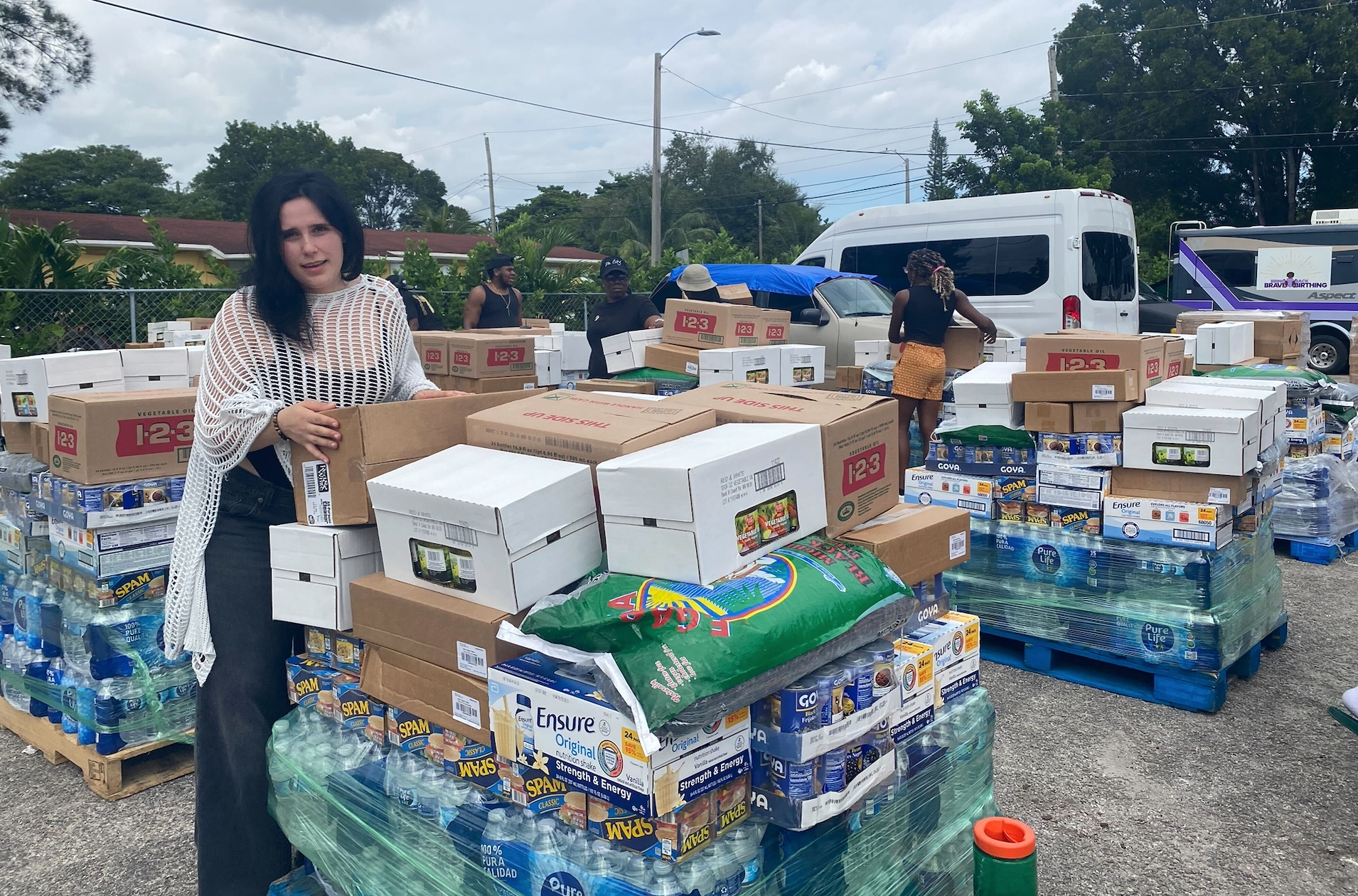
Volunteers at the Freedom Lab, a nonprofit organization that services the Miami community, worked around the clock to pack and distribute essential supplies across 31 hubs in the hardest-hit areas, including Tampa, Pinellas, Fort Myers, and Orlando.
“Right now, most folks are desperate for electricity,” said Gunder. “But, beyond that, we’re seeking food, cleaning supplies, diapers, tampons, and cooking oil. Generators and first aid supplies are also in high demand.”
The frequency and intensity of recent storms have compounded the challenges for recovery efforts across the state. The West Coast of Florida experienced a double impact, being struck by Hurricane Helene and then Hurricane Milton within 13 days.
“The recovery is deep, and it’s going to take a long time to support folks on the ground,” Gunder said.
The Smile Trust had already established 11 hubs in the region before Hurricane Milton, focusing on support for communities in North and Central Florida. However, Milton’s rapid intensification necessitated a strategy shift.
“When we realized South Florida wouldn’t be impacted, we redirected our efforts to Central Florida,” Gunder said.
The overwhelming response from community members wanting to help has been encouraging to Gunder, and a reminder that when systems fail, community and mutual aid efforts are a valuable tool.
“It was easy to organize people to come help,” Gunder said. “Community members just want to support one another.
Despite logistical hurdles (a recent rainstorm delayed shipments by two days) Gunder confirmed that the Smile Trust has successfully delivered two shipments of supplies to multiple hubs, and additional shipments in the coming days.
Beyond the immediate recovery needs in Central Florida, Gunder also emphasized the importance of preparation for future storms.
“If they tell you to evacuate, please leave,” Gunder said. “It’s critical to get your important documents ready and stay in contact with family during storms.”
Gunder urged communities to partner with organizations like the Smile Trust to facilitate relief efforts and to remain humble in the face of adversity, as many individuals have lost everything. As the region begins to heal, Gunder emphasized the ongoing need for support.
“Even if you can’t help right now, communities will still need assistance weeks from now,” Gunder said.
Samuel Ronen, a Tampa Bay-based seasoned volunteer with Mutual Aid Disaster Relief says the organization stepped in to provide support after Hurricane Helene hit in late September. Ronen has been at the forefront of these efforts since both Hurricane Helene and Hurricane Milton made landfall. According to Ronen, the damage from Milton has involved fallen trees, debris blocking roads, and downed power lines.
“This has significantly affected the quality of life for many people in the area,” Ronen said.
Working in conjunction with his own organization, Florida for Change, and the Rampa Muslim Disaster Relief Group, Ronen and his team have created a “Chainsaw gang” funded by community donations. This group has been actively removing debris from homes and streets, stepping in where city services have fallen short.
“We’ve cleared a lot of oak trees off of people’s houses, saving power lines and doing community work that should have been handled by the city,” Ronen said. “In every single house I’ve visited, the city and county either did a little and left or had not been there at all. The response has been frankly limp.”
Ronen says cities like Tampa Bay need to adapt to the new normal of intensified storms.
“This was a major wake-up call,” Ronen said. “Tampa has known for a long time that a direct hit from a strong hurricane would devastate us.”
As for the city’s preparedness, Ronen said there was a lack of support for low-income residents during the evacuation process—many shelters could not accommodate people with disabilities or pets. Meanwhile, Tampa’s mayor told residents to “evacuate or you are going to die.”
Mwarumba is looking ahead to the approaching election and stresses the importance of voting and how it influences disaster preparedness policies.
“Understanding candidates’ positions on science-based policies is critical,” said Mwarumba. “Anti-science sentiments can have detrimental effects on disaster response and recovery.”
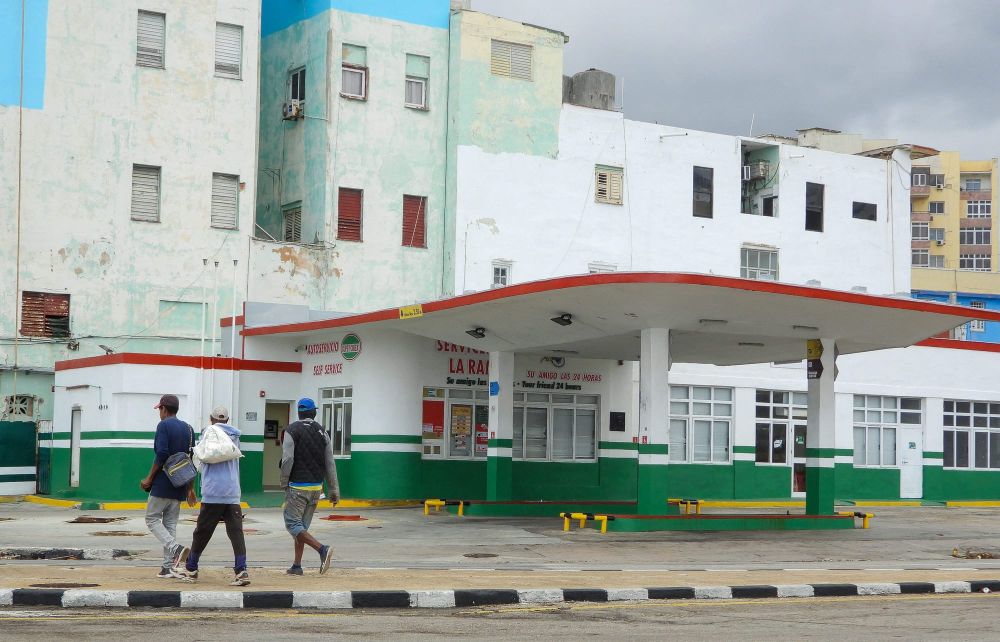
The hurricane season is expected to continue, with Tropical Storm Oscar currently impacting Eastern Cuba.
“Climate change equity is the social imperative of today, of our times,” Willis said. “We must act now to ensure that all communities are prepared for the storms of the future.”
Author
Alexandra is a Cuban-American writer based in Miami, with an interest in immigration, the economy, gender justice, and the environment. Her work has appeared in CNN, Vice, and Catapult Magazine, among
Sign up for Prism newsletters.
Stay up to date with curated collection of our top stories.