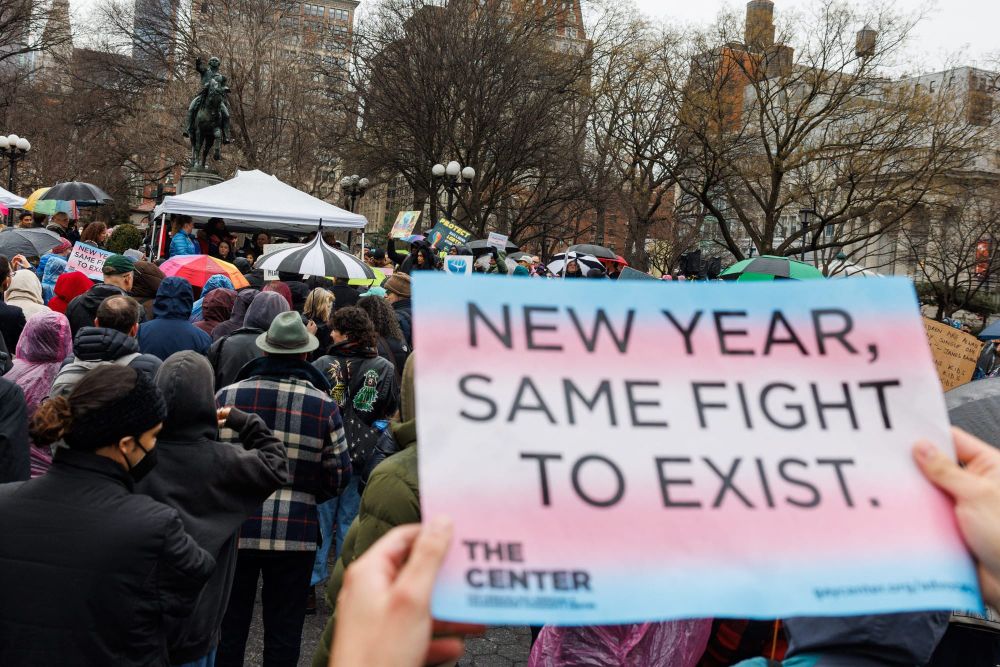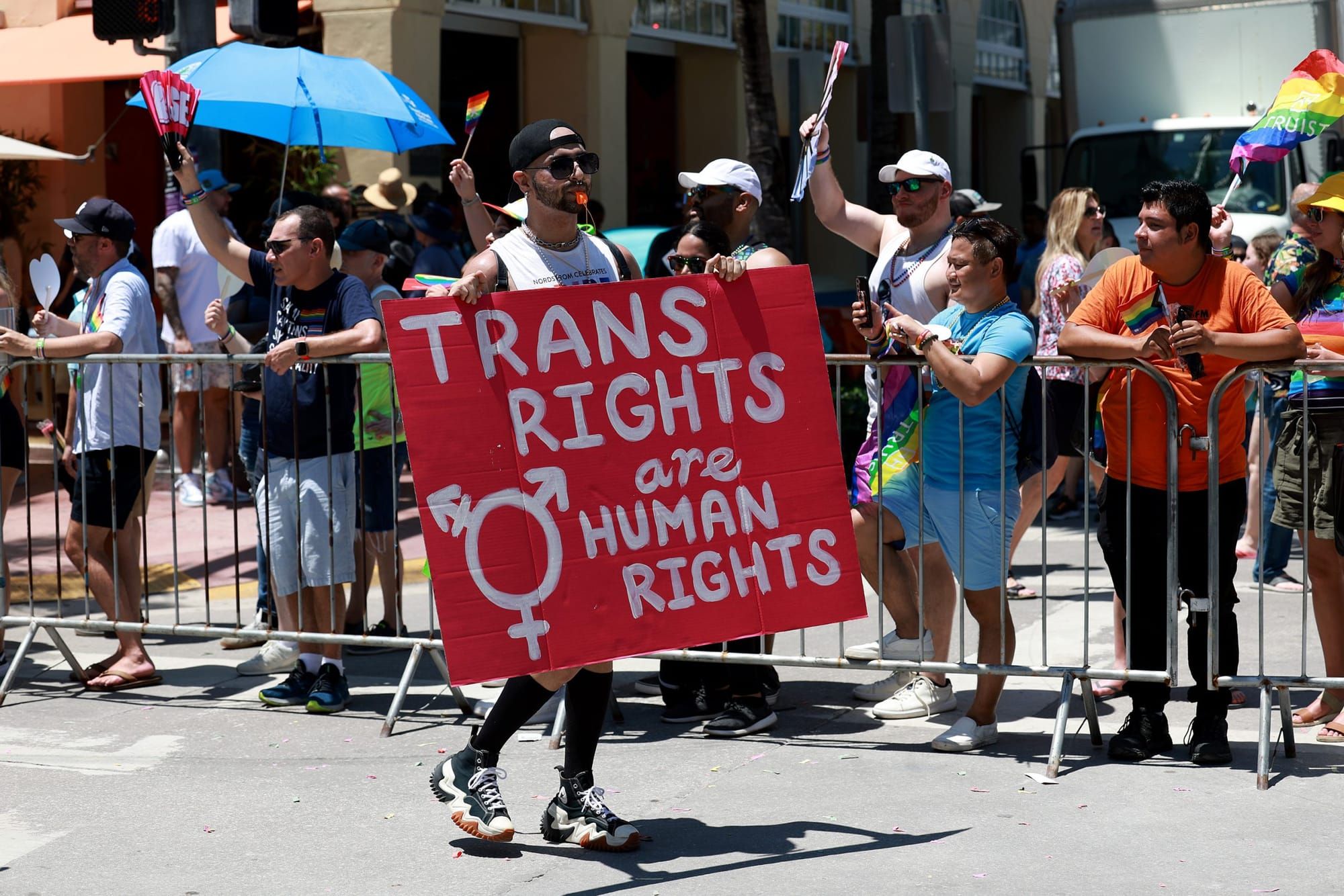
Transgender Floridians and their allies have been protesting across the state since the Department of Highway Safety and Motor Vehicles issued a memo to county tax collectors in January stating it would not allow transgender residents to change gender markers on their driver’s licenses. The memo states that any trans person attempting to change their gender marker moving forward could be criminally prosecuted for fraud; anyone who has had it changed is potentially subject to suspension. The policy coincides with House Bill 1639, which would require driver’s licenses and other state-issued IDs to reflect a person’s sex assigned at birth rather than their gender identity.
Clinicians from FOLX Health, a national health care provider for the LGBTQIA+ community, say the decision has created fear and confusion for people who have legally changed their name. Amid rising anti-trans legislation in Florida, FOLX Health clinician Melissa Miller said the state is attempting to silence the LGBTQIA+ community, resulting in real safety risks.
“Specifically from the clients that I’ve worked with, generally, there’s just such an increase of fear and anxiety,” Miller said. “It comes from not knowing what’s going to happen—when is it going to happen? How is it going to impact me individually? How is it going to impact me collectively? So a lot of the kind of chief mental health complaints that are coming to us today are really around the anxiety of not knowing, the stress of not knowing, fear-related concerns, safety-related concerns.”
Miller says FOLX Health is focused on helping people through the mental health struggles at the moment. She says queer and trans people are leaving the state, and they are helping them through that transition and how they “might keep themselves safe and continue to thrive in such harsh conditions legally.”
“The first thing they need to do is take care of themselves,” Miller said. “I think the greatest thing that any person can do when they’re faced with, in practice, trying to be legislated out of their own state is, if they’re safe and able to, make yourself seen and heard to the safest extent that you can.”
According to a 2023 Trevor Project national survey, 27% of transgender and nonbinary young people reported that they have been physically threatened or harmed in the past year due to their gender identity, and 64% said they have felt discriminated against in the past year due to their gender identity. More than 40% of LGBTQIA+ young people in the survey said they seriously considered attempting suicide in the past year, including half of transgender and nonbinary young people and nearly 3 in 10 cisgender young people.
“I think the young people and young trans and nonbinary people are obviously at the largest risk,” Miller said. “We have a very real problem … We need to draw on the larger community of queer people and allies and continue to uphold safe spaces and safe opportunities for trans youth because they are really up against it.”
In a 2023 Human Rights Campaign poll, 64% of people, including a majority of people across partisan lines, think that there is “too much legislation” aimed at “limiting the rights of transgender and gay people in America.” And according to a 2022 Public Religion Research Institute survey, 80% of people support nondiscrimination protections for the LGBTQIA+ community.
Activists at PRISM FL, a Florida-based nonprofit that supports LGBTQIA+ youth, staged a die-in on Feb. 9 at DMV locations across the state demanding the reversal of the memo. The demonstrations took place in Miami, Orlando, Tampa, Jacksonville, Tallahassee, and Gainesville. Participants said the goal of the die-ins was to underscore the devastating consequences of efforts to erase the transgender community’s legal recognition. The move also coincided with a virtual action urging allies across the state to send messages to federal law enforcement and the White House asking them to intervene. As of March 6, the virtual action had generated more than 1,600 emails to the Department of Justice.
“Every single time you’re going to a bar, if you get pulled over, if you’re picking up a prescription, you’re picking up your kids from school, or you’re buying spray paint at Home Depot, all of these day-to-day experiences where you need an ID now have become an opportunity for trans people to be unnecessarily outed in their everyday lives,” said Maxx Fenning, the executive director of PRISM FL. “That presents a real danger for trans people in the state of Florida.”
FOLX Health continues to fight for gender-affirming care in Florida and is providing end-to-end virtual and in-person primary care, gender-affirming hormone replacement therapy, mental health services, and more through a diverse network of queer and trans-specialized providers. Miller hopes the ruling will be overturned and the federal government will get involved.
Author

Alexandra is a Cuban-American writer based in Miami, with an interest in immigration, the economy, gender justice, and the environment. Her work has appeared in CNN, Vice, and Catapult Magazine, among
Sign up for Prism newsletters.
Stay up to date with curated collection of our top stories.