Q&A: The Farm Bill ignores ‘desperate cries’ for equitable land access and better climate programming
Food production systems that put quality over quantity are considered a revolutionary act by organizers. Decades of federal policy have pushed out young farmers and farmers of color in favor of propping up a few names in the agricultural industry. Corporate control of the food supply chain breeds fallout for the environment via industrial use of land that strips soil of its nutrients, produces astounding amounts of animal waste that causes air and water pollution, and supports industries that further entrench the climate crisis.
The solution starts with land access, said Michelle Hughes, the co-executive director of the National Young Farmers Coalition. Young farmers and ranchers are more likely to implement regenerative farming practices, but it’s extremely difficult to start a farm. There’s a high barrier to entry, primarily because of the challenge of buying land. Formed in 2010 by three farmers, the National Young Farmers Coalition advocates policies that center food justice, address climate change, and restore a reciprocal relationship with land. According to a coalition survey of more than 10,000 BIPOC farmers and ranchers, most young farmers rent land, making land tenure—or staying power in the agriculture world—extremely difficult. Changes in federal legislation can help ensure that young farmers can access and remain on the land.
This summer, Congress will agree on the newest version of the Farm Bill, legislation that runs on a five-year cycle funding farm subsidies, crop research, and loans for beginning farmers, among other priorities. The farm bill was set to expire Sept. 30, 2023, but Congress extended the deadline another year. Congress will likely approve the revised Farm Bill this summer.
Prism spoke with Hughes by phone in late May about where the Farm Bill may fall short, why soil health is fundamental to addressing the climate crisis, and the ways in which small farming can be revolutionary.
This conversation has been edited for length and clarity.
Ray Levy Uyeda: The House Committee on Agriculture approved their draft of the bill, which means that the Farm Bill can now head to the House floor for a vote. What does the draft do well?
Michelle Hughes: There are some land policy wins. One of them is preapproval, which allows some farm programs to approve applications for farm loans early on in the process. Farmers generally have to apply for some sort of farm loan to start their farm, and the process can drag on while they wait for a loan. Let’s say you haven’t actually made a down payment on a property or a tractor or something like that. Preapproval can get funding to farmers faster, which is good for young farmers who don’t have capital at their disposal. Many of the farmers in our coalition are first-generation farmers who don’t have generational wealth, so it can be helpful to them.
In this Farm Bill, there’s a new relending cooperative agreement option for heirs’ property, which will help farmers who don’t have the legal title to inherited land establish legal claims and benefits from U.S. Department of Agriculture (USDA) programs. Third, a commission on farm transitions that was authorized in the 2018 Farm Bill is set to be reauthorized in the House bill. There’s also an increase in the baseline for conservation programming, which means that in five years when Congress approves the next Farm Bill, you’ll be starting from a higher dollar amount for conservation programming than we have previously. Another good thing written into the bill authorizes the Natural Resource Conservation Service to hire directly, which means that there will be more people who can support beginning farmers who generally need more technical assistance.
Those are the wins, but those are just honestly crumbs in comparison to the losses that we see.
Levy Uyeda: Where do you think the draft falls short?
Hughes: Our priority in the Farm Bill is the Increasing Land Access, Security, and Opportunities Act, otherwise known as LASO. It’s not in the House’s draft. There’s no real investment in land access or equitable land access whatsoever. The Farm Bill ignores our—at this point—desperate cries for equitable land access and better climate programming.
There’s no funding provided to beginning farmers and ranchers of any kind. They also want to make a cut to nutrition assistance programming—SNAP—of $30 billion over the next 10 years. That is a loss for the entire agriculture system. There was also funding that the Inflation Reduction Act earmarked for conservation programs that was removed. The National Young Farmers Coalition had two marker bills that we were pushing for regarding climate: the Farmer to Farmer Education Act and the Small Farm Conservation Act, neither of which was included in the House bill.
Levy Uyeda: Last summer, the National Young Farmers Coalition lobbied for a policy that would transfer 1 million acres of land—that would come on the market from retiring farmers and ranchers—to be transferred to young farmers of color. The campaign sought to address the institutionalized racism within the USDA, which throughout the 20th century oversaw lending schemes and corporatization that decreased Black farm ownership by 90%. Now, 98% of private farmland is white-owned. Nearly 40% of all farmland is rented, and a majority of those renting land do so from people or entities who have never farmed. There’s a really high—and expensive—barrier to entry in agriculture that the 1 million acres campaign would have addressed. Are there other ways of promoting access to land, if not through the Farm Bill?
Hughes: This is the question that’s on my mind pretty much every day. I want to preface this by saying that the House bill coming out is only the first step in a much longer process to a final Farm Bill. In order for us to actually have a final Farm Bill, we need the House and the Senate to agree. The Senate hasn’t come up with a draft of the bill yet, but the framework itself actually does have some pretty significant improvements for equitable land access.
I’m also hopeful that even if LASO itself isn’t included, that we’ll see some changes in the Senate version that will ultimately get us to a middle ground that has some sort of investment in equitable land access. When I say equitable land access, I mean that very clearly in the sense of racial equity. I think we’ve gotten so far into a land crisis for young farmers and farmers of color that it’s going to take—and this is why LASO is such an expensive ask—a real, large investment from the federal government.
I’m hopeful that the 1 million acres campaign can survive this Farm Bill cycle. If it’s not, we will still advocate for the 1 million acres campaign in the next Farm Bill and the one after that until it’s in.
Levy Uyeda: According to a survey of National Young Farmers Coalition members, 86% of farmers identified their practices as regenerative, sustainable, and aimed at addressing the cycles of climate change they experience. A majority also rent land—and ironically, the very first Farm Bill excluded those who rented land from benefiting from federal subsidies, which helped corporate landowners get a leg up. Why do you think there’s such a strong movement of young farmers and ranchers of color utilizing land stewardship practices that work with the ecosystem rather than against it?
Hughes: There are a number of young farmers and farmers of color who come to the organization with backgrounds in environmental science, land stewardship, or environmental justice. A lot of folks in our coalition see agriculture as a tool to mitigate the climate crisis. Soil is one of the many resources that I think are really crucial to a successful farm career. Soil health is central to conservation work on a farm, and we can’t talk about land stewardship without talking about soil health. That is the relationship that I see between land and climate. Soil is the connection for me.
[Editor’s note: Since the start of industrial farming during the plantation era in the U.S., large-scale farm operations have removed native grasslands, filled in wetlands, depleted soil of its nutrients, and rerouted rivers and streams. This remaking of ecosystems occurred hand in hand with the era of removal policies of Indigenous peoples and tribes from their ancestral homelands. Depletion of the land’s health via monoculture cropping could not have happened without the genocide of Indigenous peoples and forced labor of enslaved Africans. Soil health speaks to the health of a people.]
Levy Uyeda: Is there any talk about how supporting land access might address the separations or fissures that most people have from food itself and from understanding that most food is a product of corporatization?
Hughes: The veil between the consumer and the farmer and the veil between the average person who eats every day and the Farm Bill—those are intentional veils. Educating people is hard because you have so many food companies, Big Ag, and the federal government making it really difficult for people to actually even be a part of the agriculture system at all. Mostly what we talk about is how we can provide more transparency and inform people about what we’re actually working on as a coalition.
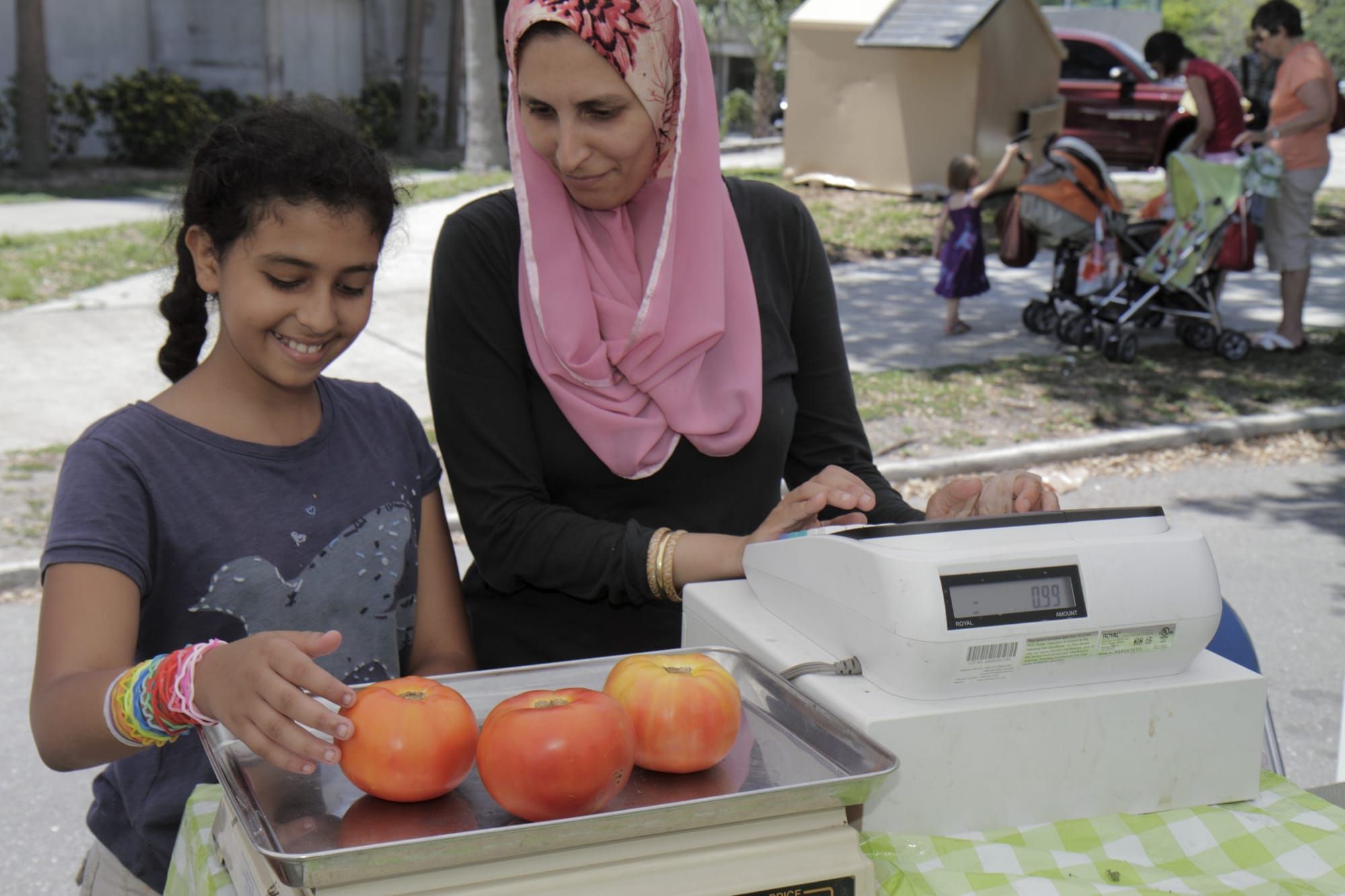
The risk—and this is my opinion—is people thinking that small farmers or young farmers are just embarking on this wholesome thing that you can then charge a premium for at the farmer’s market. It actually is a revolutionary decision to own a farm outside of the easiest way to farm based on the systems and the policies that are created, which is to farm bigger. The system is set up to make it easier in this country to farm bigger than smaller [and with regenerative practices]. Within the system, you can make a lot more money and charge people a lot less of a price point. All of these systems work really well together in our U.S. capitalist society, for you to farm big and not transparently. So, what we talk about is making sure that people understand that we’re not just being transparent because it’s quaint or trendy, but because these farmers are actually the last of a dying breed. These are the most visionary farmers that we will see for a very long time if we don’t get the investments.
Author

ray levy uyeda is a staff reporter at Prism, focusing on environmental and climate justice.
Sign up for Prism newsletters.
Stay up to date with curated collection of our top stories.