A Florida homeless encampment on a Superfund site is exposing people to harmful chemicals
Local health and outreach workers say they have seen aggressive forms of cancer and staph infections show up among those living near the site in Pensacola
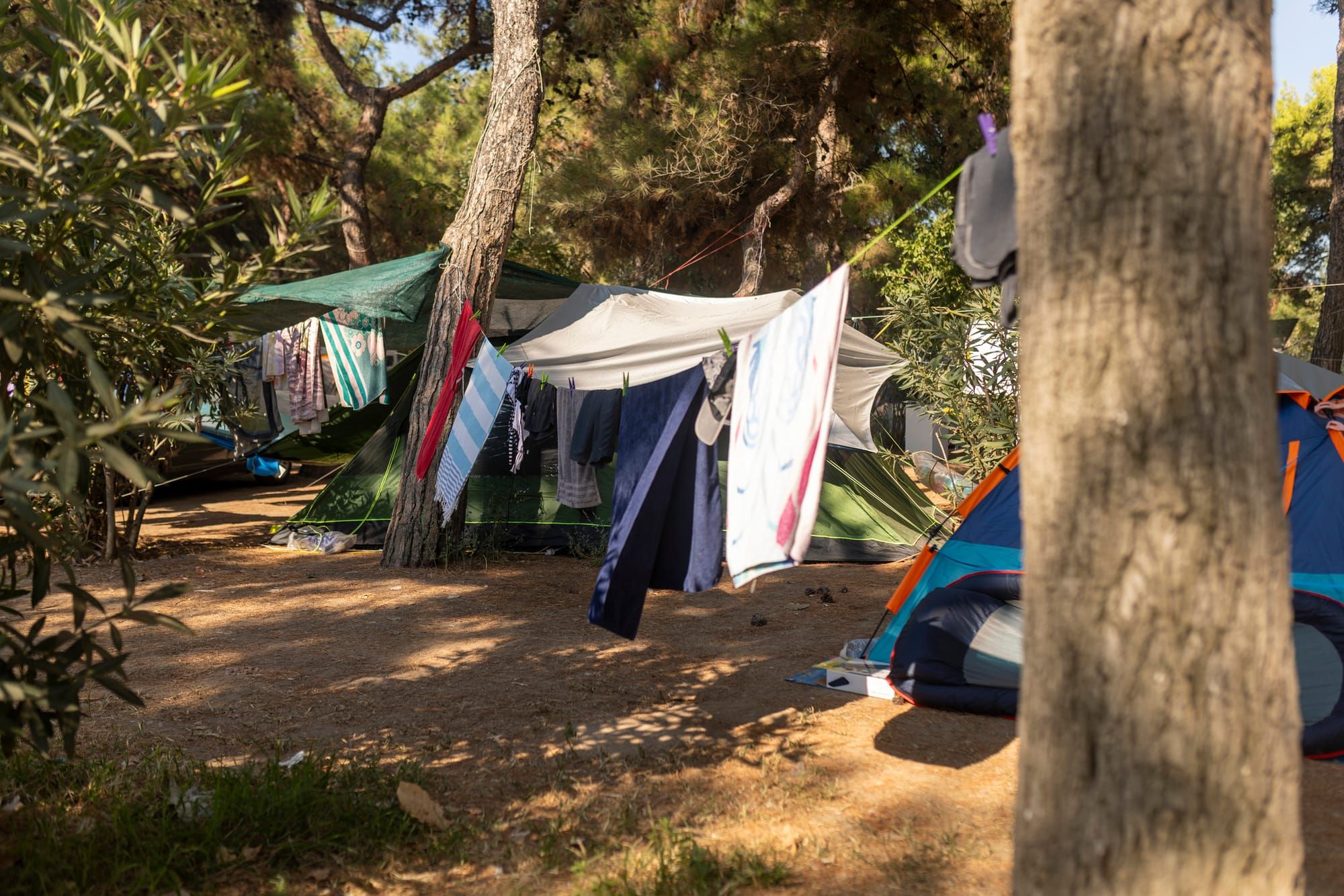
A growing health and housing crisis is taking shape near a Superfund site in Pensacola, Florida, where people experiencing homelessness are living in hazardous conditions. The site was once home to the Escambia Wood Treating Company, which was abandoned in 1991 and left about 120 acres of contaminated soil and a 1.5-mile-long plume of contaminated groundwater. For nearly 20 years, the Beggs Lane encampment has been inhabited by an estimated 150 campers.
Recent legislative changes have intensified the crisis, including House Bill 1365, a statewide encampment ban, and a Supreme Court ruling permitting prohibitions. While no immediate forced relocations have occurred, the encampment residents’ fear of displacement is palpable.
HB 1365 goes into effect Oct. 1. The campers are due for eviction by Dec. 2.
“When talking with folks out there, I don’t know if they’re putting those two together as often as I would think,” said Michael Kimberl, the director of the Alfred-Washburn Center, which supports homeless people in the area. “We’re seeing cancer clusters in the area, with the types of cancers being very aggressive. We’re also seeing a lot of open sores attributed to staph infections, though we’re not sure if these are related to the site.”
Kimberl, who has dedicated over 13 years to homeless advocacy, began his journey with Food Not Bombs before co-founding a nonprofit called Sean’s Outpost. The organization established Satoshi Forest, a campground providing temporary housing with essential amenities for those in need. His commitment continued with the Society of St. Vincent de Paul’s Alfred-Washburn Center, which offers critical services such as showers, laundry, and meals to individuals in extreme poverty.
Kimberl’s facility is located about half a mile from the Superfund site, a designation of the Environmental Protection Agency that denotes a location contaminated with toxic waste. Many of the center’s clients live near this contaminated area.
Community Health, a local organization, offers free health care through mobile units and various facilities around town, providing essential services to those with homeless identification cards. Despite these efforts, the scale of health issues linked to the Superfund site poses an ongoing challenge, workers said.
Walter Arrington, a social worker with Community Health, the local federally qualified health center (FQHC), has been on the front lines of this struggle. Arrington has dedicated his efforts to improving health care access for the homeless for the past three years, a mission deeply rooted in his personal experiences and professional expertise after spending four years experiencing homelessness himself.
“Our fundamental belief is that all individuals deserve equitable access to health care, regardless of their ability to pay or their insurance status,” Arrington said.
His role involves managing the unhoused health navigation program, which provides essential services such as medications and medical care without charge to those who are uninsured and experiencing homelessness.
Arrington’s work is crucial at the Superfund site, an area fraught with health risks due to contamination. Reports from Arrington’s patients indicate that they have faced severe gastrointestinal issues from accessing tainted water and sewage backups, alongside more serious health concerns like West Nile virus and aggressive cancers.
“We’ve seen a troubling number of individuals with rare, aggressive forms of cancer, likely exacerbated by prolonged exposure to contaminants,” Arrington said.
Kimberl expressed concern that current solutions from service providers, such as new shelters, are insufficient and lack long-term housing options. The fear is that these measures might merely push people away from the encampment without offering viable alternatives.
“The direct impact we’re seeing is fear—the fear of the unknown and what’s going to happen with this population,” Kimberl said. “There have been no actual arrests or forced relocations yet, but there’s significant anxiety.”
Kimberl called for the establishment of designated areas where individuals experiencing homelessness can safely reside. He said he believes that while long-term housing solutions are ideal, immediate needs can be met by creating safe and regulated campgrounds. Kimberl also highlighted the need for further investigation into the health impacts of living near the Superfund site. Though the homeless population has not formally challenged the site’s impact on their health, historical lawsuits related to the site’s contamination suggest significant risks.
A 2008 lawsuit filed by 50 homeowners and businesses contended that Monsanto Co. and its successor companies allowed cancer-causing chemicals to flow into Escambia Bay, affecting their ability to use the bay and contaminating seafood. The lawsuit produced new studies and expert analyses that detail how the companies and regulators may have failed to properly deal with polychlorinated biphenyl, or PCB, leaks and runoff over the past half-century.
“I think that people need to be relocated from this area,” Kimberl said. “It’s not suitable for habitation. But we need to provide a safe place for them to go.”
Despite efforts from various advocacy groups and local nonprofits to secure land for safe outdoor camps, the availability of shelter beds remains a significant barrier. With shelters running at nearly full capacity and over 600 individuals currently unsheltered in the region, the crisis is pressing.
According to Arrington, the root of the problem lies in housing scarcity.
“The ultimate solution to homelessness is housing,” Arrington said. “Everything else supports individuals while they’re housed. Without adequate housing, no amount of health care or social services can address the core issue.”
The increase in homelessness in the region is partly attributed to the rising cost of housing. As detailed in recent analyses, communities with higher housing costs, particularly along the Sunbelt, see elevated rates of homelessness due to economic pressures. Pensacola, with its growing housing prices, exemplifies this trend.
Arrington also noted demographic disparities within the unhoused population. Communities of color, LGBTQIA+ people, and those with disabilities are disproportionately affected. Looking forward, Arrington advocated for a multifaceted approach.
“We need to invest in low-barrier, safe outdoor camps as immediate relief, and build more affordable housing specifically for those at 30% of the area median income,” Arrington said. “It’s the underground network of care and mutual aid that truly gives me hope. They are the backbone that will hold things together when traditional systems fail.”
Author

Alexandra is a Cuban-American writer based in Miami, with an interest in immigration, the economy, gender justice, and the environment. Her work has appeared in CNN, Vice, and Catapult Magazine, among
Sign up for Prism newsletters.
Stay up to date with curated collection of our top stories.