Trump administration drops Idaho emergency abortions case, sparking fears among health care workers
The lawsuit was filed by the Biden administration to ensure that pregnant people in Idaho could access emergency abortion care, as required by federal law
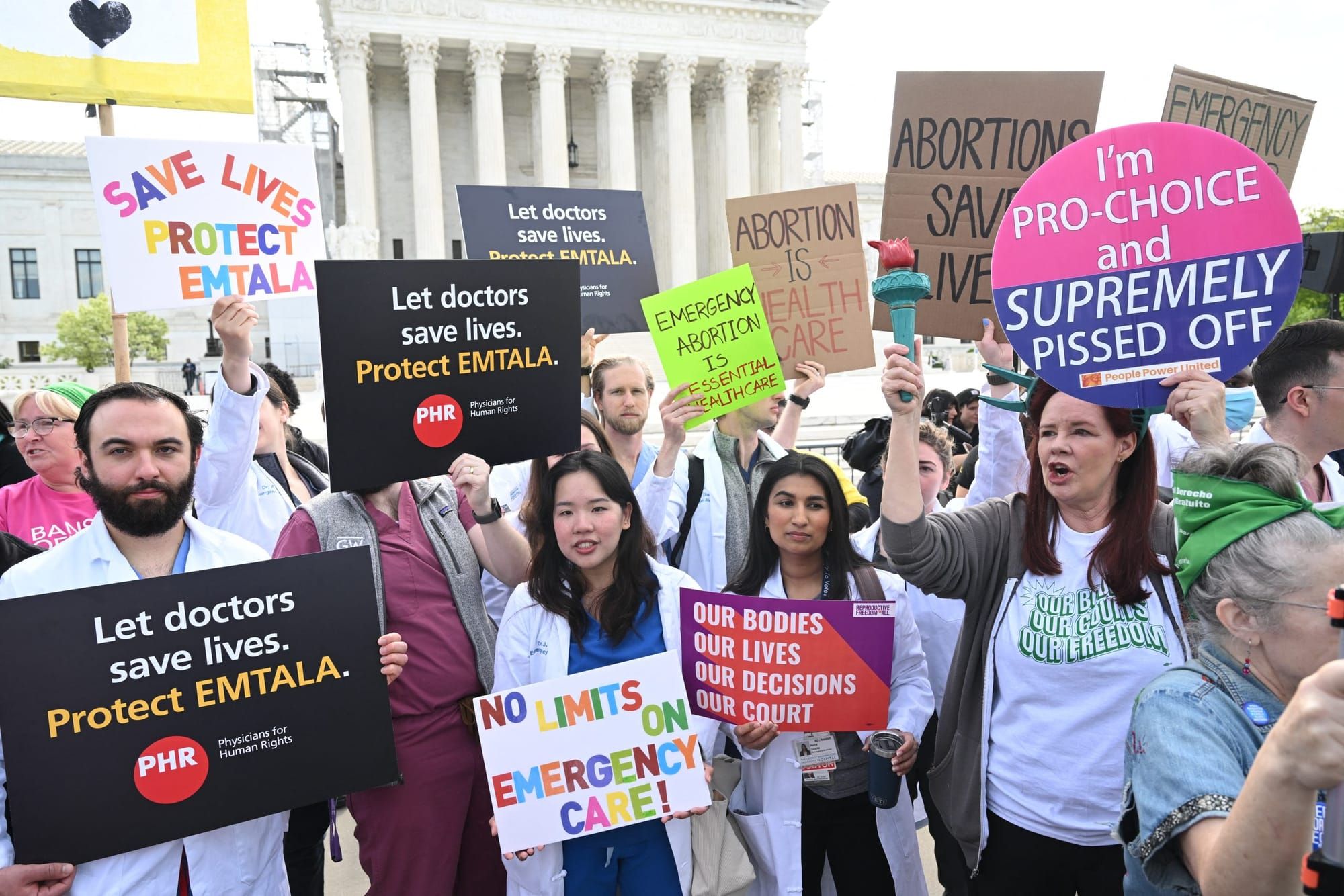
The Department of Justice (DOJ) and the state of Idaho agreed on March 5 to dismiss a lawsuit filed by the Biden administration, which sought to ensure that women in Idaho could access abortion care during medical emergencies, as required by federal law. Advocates say the lawsuit was necessary because Idaho’s abortion ban—one of the strictest in the country—did not permit abortions even to prevent serious harm to a woman’s health. The Trump administration’s decision to drop the Emergency Medical Treatment and Labor Act (EMTALA) case has sparked concerns among health care professionals, particularly those on the front lines of reproductive care.
“As a physician, my primary concern is always my patients,” said Dr. Jamila Perritt, an OB-GYN and abortion provider in Washington, D.C., and president and CEO of Physicians for Reproductive Health. “Allowing hospitals to deny emergency care will absolutely result in harm and, in many cases, death.”
In anticipation of the Trump administration’s move, St. Luke’s Health System, the largest hospital system in Idaho, asked for and was granted an emergency injunction to keep the ban partially blocked.
Nancy Northup, the president and CEO of the Center for Reproductive Rights (CCR), wrote in a statement that dismissing this case is “indefensible.” In response to the state’s bans and the looming threats of prosecution, Idaho doctors have fled the state in droves. More than 1 in 5 OB-GYNs have left Idaho since the bans took effect in 2022, according to a report by the Idaho Physician Well-Being Action Collaborative.
“The Trump Administration has made it clear they no longer plan to defend pregnant people in medical emergencies,” Northrup wrote in the statement. “President Trump talks about ‘protecting women’ in sports and in locker rooms, meanwhile he’d let them go septic in the ER.”
CCR is also suing the state of Idaho on behalf of multiple women who were denied abortions while suffering severe pregnancy complications. This case seeks to clarify and expand what circumstances qualify under the “medical emergency” exceptions in Idaho’s abortion bans. Because of Idaho’s strict bans, without an injunction under EMTALA, pregnant people will again be forced to either wait until they are near death to receive abortion care or flee the state if they are able to. The case went to trial in November 2024, and a ruling is expected at any time.
EMTALA safeguards
The Biden administration argued that Idaho’s restrictive law conflicted with federal requirements under EMTALA, which mandates that Medicare-funded hospitals provide stabilizing treatment for patients experiencing medical emergencies. In guidance issued in 2021 and 2022, the administration repeatedly affirmed that EMTALA supersedes state laws that restrict emergency abortion access.
Acting on this position, the DOJ sued Idaho in August 2022, asserting that EMTALA partially preempted the state’s abortion ban. A district court sided with the administration, issuing a preliminary injunction that allowed women in Idaho to receive emergency abortions when their health was at risk. However, after multiple legal challenges, the Supreme Court intervened in January 2024, allowing Idaho’s full abortion ban to take effect and temporarily stripping women of EMTALA protections while expediting the case for review.
In June 2024, the Supreme Court dismissed the case as “improvidently granted,” meaning that it had been taken up prematurely, and reinstated the district court’s injunction. This decision once again preempted Idaho’s abortion ban in certain cases, restoring EMTALA protections for women in Idaho—until now.
The EMTALA case was intended to safeguard the requirement for hospitals to provide emergency medical treatment to all patients, regardless of their circumstances. However, the decision to drop the case entirely has been perceived as an effort to carve out exceptions, particularly regarding abortion care.
“This case is carving out and exceptionalizing abortion care as if it were uniquely different from other forms of emergency, lifesaving treatment,” Perritt told Prism. “We’re facing the reality that abortion will continue, is continuing to be othered or separated from the rest of the comprehensive medical care that people need and the care that we provide, and so allowing for individuals to determine whether or not someone deserves to have lifesaving care, because that care is an abortion, to me is just wholly unethical.”
“It’s not just disheartening,” she said, “it’s dangerous.”
Far-reaching implications
The implications of this move extend beyond abortion itself, affecting individuals experiencing pregnancy loss, complications during labor, and other critical reproductive health emergencies. Perritt underscored how medical providers could be forced into legal and ethical dilemmas, with lawmakers interfering in medical decisions.
“You have a bunch of people with no medical training, no scientific background, no research background, that are attempting to legislate medicine,” she said. “The implications are far-reaching.”
Perritt said abortion care is the same whether someone is having an induced abortion or a “spontaneous abortion,” also known as a miscarriage.
“It touches all areas of reproductive health because the care that we provide is exactly the same,” Perritt said. “So if you tie the hands of health care providers, particularly in emergency situations, then you create a set of circumstances where we actually can’t take good care of people.”
Beyond patient care, the decision fosters an environment of fear and legal uncertainty for medical professionals. Physicians could find themselves at risk of prosecution for providing necessary emergency treatment.
Are health care providers afraid for our own livelihood and careers? Absolutely. But I’m even more terrified about what happens when people are denied care.
Dr. Jamila Perritt, president and CEO of Physicians for Reproductive Health
“Are health care providers afraid for our own livelihood and careers? Absolutely. But I’m even more terrified about what happens when people are denied care,” Perritt said. “We fight inside our hospitals, we fight inside our clinics, we fight with our legislators, we protest, we object, we refuse to collude and comply. That is the only option. Now we resist.”
Some legal challenges have emerged in response to the administration’s position, such as St. Luke’s temporary restraining order to continue providing emergency abortion care. However, these legal battles have created a chaotic environment in which hospitals and providers are left uncertain about what care they can offer.
“The whiplash of legislative interference and overreach means that when patients arrive, their doctors don’t know what to do,” Perritt warned. “They don’t know what’s legal, what they’ll be prosecuted for, or if their hospitals will protect them.”
For those who suggest that patients could simply travel to another state to receive emergency care, Perritt dismissed the notion as detached from reality.
“An actual emergency isn’t something that you can plan or prepare for. So the idea that you can simply travel to get this care is reflective of the fact that the people making these laws don’t have the capacity for pregnancy and have never cared for pregnant people,” she said. “If a patient is hemorrhaging or battling a severe infection, they can’t hop on a plane to New York, California, or D.C. to get care.”
Looking ahead, Perritt hopes for a future in which reproductive health care is normalized and free from political interference.
“I want people to be able to make the decisions about their bodies, about their lives, without the interference of people who have no clue about what they’re facing, what the decision entails, and truly do not care for them,” she said.
Editorial Team:
Sahar Fatima, Lead Editor
Carolyn Copeland, Top Editor
Rashmee Kumar, Copy Editor
Author

Alexandra is a Cuban-American writer based in Miami, with an interest in immigration, the economy, gender justice, and the environment. Her work has appeared in CNN, Vice, and Catapult Magazine, among
Sign up for Prism newsletters.
Stay up to date with curated collection of our top stories.