Empowering classrooms: Educators champion LGBTQIA+ inclusion, justice, and resilience in curriculum
Prism spoke to educators from Texas, Vermont, and New York who have found ways to address LGBTQIA+ justice in their classrooms in the face of censorship
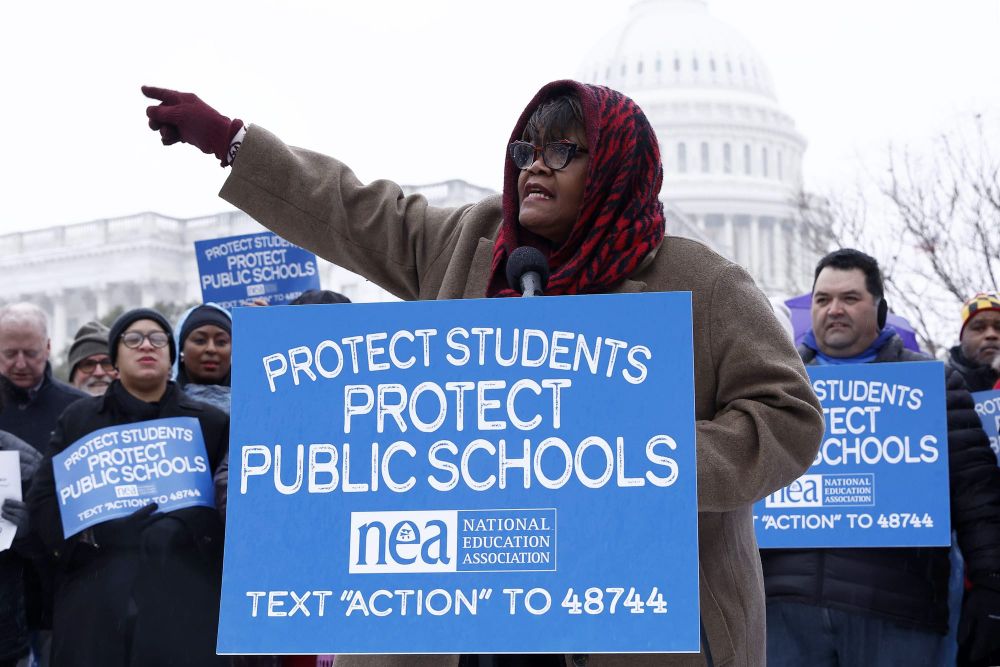
Legislation restricting classroom discussions on sexual orientation and gender identity continues to have silencing effects across the country. More than two years after Florida passed its “Don’t Say Gay” law, which prohibits classroom discussions about sexual and gender identity, a June Human Rights Watch report found that state lawmakers are reshaping school curricula through policies that censor, distort, and discriminate against LGBTQIA+ communities. The censorship is seeping into every aspect of the classroom: from educators avoiding certain history lessons to books about queer families being removed from school libraries and students losing critical safe spaces to feel accepted in their sexual and gender identities.
The impacts have been critical: A 2023 Williams Institute survey found that nearly 40% of Florida parents want to leave the state because of the Don’t Say Gay law. In Texas, a wave of legislation has emerged that critics argue restricts the inclusion of LGBTQIA+ topics in the classroom. Recent state laws have enabled school districts to impose strict limits on discussions surrounding sexual orientation and gender identity.
According to the American Library Association (ALA), between Jan. 1 and Aug. 31, ALA’s Office for Intellectual Freedom tracked 414 attempts to censor library materials and services. In those cases, 1,128 unique titles were challenged. In 2023, there were 4,240 unique book titles targeted for censorship, as well as 1,247 demands to censor library books, materials, and resources. In 2021 and 2022, more than 50 books with LGBTQIA+ content were challenged or removed from school libraries across various districts. In its 2022 report, PEN American found 41% of such bans were tied to state officials or lawmakers; its 2023 report found 74% of bans came from “advocacy groups; elected officials; or enacted legislation.” In Florida, a trio of laws bar instruction on sexual orientation or gender identity in kindergarten through third grade (HB 1557), prohibit educators from discussing advantages or disadvantages based on race (HB 7), and mandate that schools must catalog every book on their shelves, including those found in classroom libraries (HB 1467).
In a landscape increasingly marked by legislation aimed at censoring discussions around sexual orientation and gender identity, educators are finding innovative ways to incorporate LGBTQIA+ justice into their curricula. Even teachers in progressive states are facing some pushback. In New York, families at a Brooklyn elementary school say the school’s administration has been resisting their efforts to establish an LGBTQIA+ club, despite a city official acknowledging to one parent that students were entitled to the club. According to reporting from Chalkbeat, administrators introduced a growing list of obstacles but did not respond to the reporter’s request for comment.
Jessica Lovaas has been a high school teacher in New York City for nine years, teaching courses like American Stories, feminist controversies, and a seminar on the Civil Rights Movement.
“I know it’s cliche, but [I learn] from them,” Lovaas said about her students. “Getting to be at a juncture in young people’s lives in which they’re learning a lot and thinking a lot about who they are, who they want to be, and getting to have hard conversations feels really meaningful.”
Jane Regan, a former journalist with over three decades of reporting experience, now teaches global studies and U.S. history at a public high school near Burlington, Vermont. Regan’s journey into education was inspired by her dissatisfaction with traditional journalism teaching methods at Boston University’s School of Communication. She’s been teaching for eight years.
“I felt like I was teaching auto mechanics,” she said, referring to the lack of critical thinking in the curriculum.
As a high school teacher, Regan aims to foster a deeper understanding of global citizenship and civil rights among her students. In her U.S. history class, she broadens the scope of civil rights discussions beyond African American experiences, incorporating the experiences of other marginalized groups, including the LGBTQIA+ community. She encourages students to explore various civil rights movements through projects, allowing them to research topics they feel personally connected to. In a recent project, one of her students conducted a survey to assess the representation of LGBTQIA+ voices in the school’s literature curriculum, demonstrating the impact of Regan’s teaching on student engagement and advocacy.
“It’s crucial for our students to understand how lucky they are to learn about these topics in an environment where discussion is encouraged,” Regan said.
This approach is particularly relevant given the recent wave of legislation in states like Florida and Texas, where educators face repercussions for discussing such matters.
In Texas, Erin Flynn, who has been teaching for 13 years, faced an uphill battle after leaving a public charter school due to harmful policies against LGBTQIA+ students. She founded Head School Cooperative, a private school designed to provide a haven for students whose well-being is at risk. Flynn incorporates LGBTQIA+ themes into her curriculum by exploring trans writers and literature, creating an environment where students can reflect on their identities and experiences. However, the repercussions of anti-LGBTQIA+ legislation are evident in Flynn’s classroom.
“The policies are anti-trans and restrict comprehensive history teaching,” she said.
Many families are contemplating leaving Texas altogether as the atmosphere grows increasingly hostile for LGBTQIA+ individuals. Flynn noted that while some students thrive in her supportive environment, others feel pressured to leave due to the broader societal climate.
In contrast, Lovaas, who is queer, feels fortunate to work in a supportive environment in New York, although she has encountered pushback from some students when discussing queer topics. She navigates these conversations by normalizing discussions about consent and identity, striving to create a classroom where all experiences are validated.
“If we don’t uphold these teachings, we risk losing ground in the fight for acceptance and understanding,” she said
Despite the potential for pushback, Regan has not experienced significant resistance from students or parents. However, she remains vigilant, noting instances of inappropriate remarks from students.
“By halfway through ninth grade, we’ve usually gotten them to understand respect,” she said, acknowledging that challenges still exist.
Regan believes that education should not vary dramatically from state to state. Southeastern states generally have introduced more anti-LGBTQIA+ censorship laws compared with Northeastern states.
“It shouldn’t matter where you’re born; everyone should have access to a similar quality of education,” she said, advocating for a curriculum grounded in facts and critical inquiry.
The educators expressed a desire for broader integration of LGBTQIA+ histories and narratives into mainstream education. Flynn envisions a curriculum that reflects the intersectionality of society, while Lovaas advocates for an approach that recognizes ongoing struggles against homophobia and transphobia as part of a continuous fight for justice. Rethinking Schools has just published Transgender Justice in Schools, which is full of teaching stories and resources.
“The removal or whitewashing of our histories warps both our present and future,” Flynn said, reinforcing the idea that LGBTQIA+ existence and rights must be celebrated and acknowledged. “Our students need to know that they are valid, and their stories matter.”
As the national discourse around LGBTQIA+ rights continues to evolve, Regan remains committed to creating a safe and inclusive space for her students.
“It’s about preparing them for the real world,” she said, emphasizing the need for open dialogue and understanding.
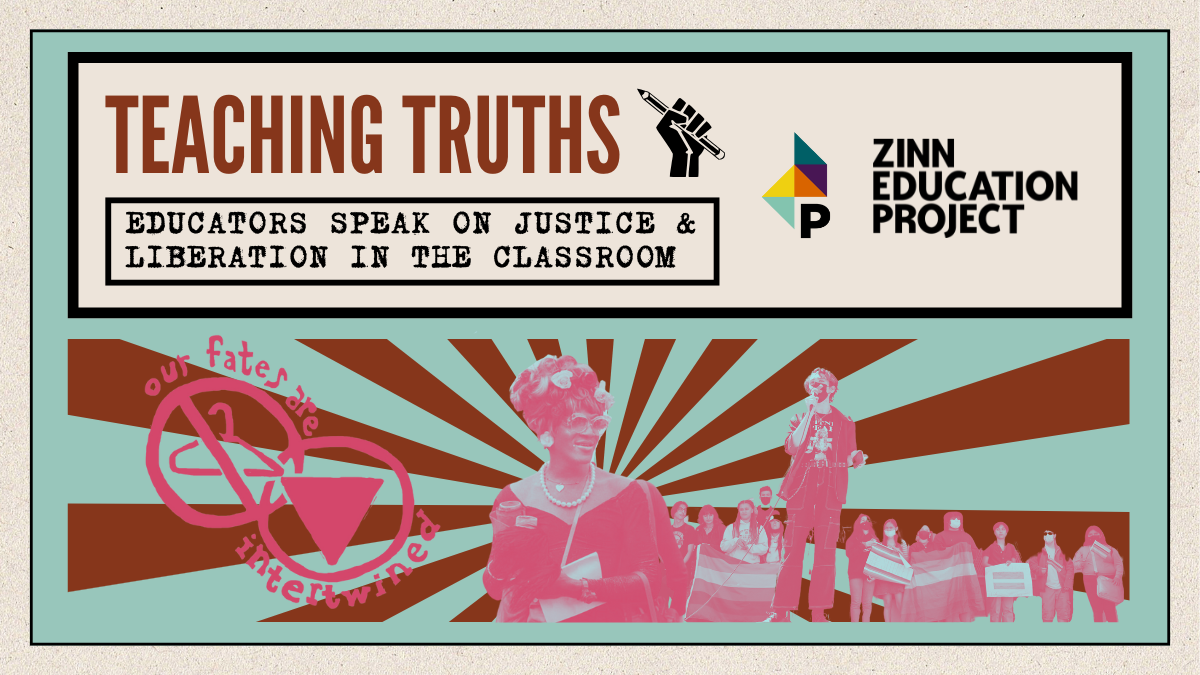
“Teaching truths: Educators speak on justice and liberation in the classroom” will be published through mid-October, and you can find each piece here. Learn more about the Zinn Education Project here.
Author
Alexandra is a Cuban-American writer based in Miami, with an interest in immigration, the economy, gender justice, and the environment. Her work has appeared in CNN, Vice, and Catapult Magazine, among
Sign up for Prism newsletters.
Stay up to date with curated collection of our top stories.