For displaced Palestinians in Cairo, returning to Gaza no longer feels possible
With the Rafah crossing reopened, Palestinians must decide whether to abandon what little stability they have built to return to a homeland buried in rubble

Real journalists wrote and edited this (not AI)—independent, community-driven journalism survives because you back it. Donate to sustain Prism’s mission and the humans behind it.
For Palestinians displaced in Cairo, the reopening of the Rafah crossing has brought neither clarity nor relief. Instead, it has forced a deeper and more painful question: whether returning home is possible at all.
“My entire family is in Gaza, while I am here in Egypt,” said one displaced Palestinian. “The crossing is open in both directions, but it doesn’t feel simple. I used to wait for Rafah to open hour by hour. Now, with all these restrictions, I don’t think I can return.”
Most of the Palestinians who Prism interviewed did not want their full names published amid a climate of fear among those with precarious status in Egypt.
Despite the uncertainty, many displaced Palestinians in Cairo still feel a powerful pull toward Gaza and toward their families, their neighborhoods, and whatever remains of their lives there. Their desire to return is not driven by safety or stability, but by belonging. Yet the restrictions surrounding the crossing have turned that longing into a painful dilemma.
“I would rather go back and sit in a tent with my grandchildren than stay here,” the displaced Palestinian said.
Between return and reunion
For others, return is only one part of the decision. Some are trying instead to bring their families out of Gaza and reunite in Egypt. But even this option feels increasingly out of reach. Registration processes are slow and opaque, movement remains tightly restricted, and many families remain separated across borders.
Caught between the impossibility of returning and the difficulty of pulling loved ones out, Palestinians in Cairo find themselves trapped in a prolonged state of uncertainty.
For many, the decision—whether to return to Gaza or attempt reunion elsewhere—is shaped not by hope, but by loss: homes that no longer exist, livelihoods that have disappeared, and the fear of returning to a place where survival has replaced daily life.
The crossing may be open, but for those waiting in Cairo, the choice has never felt heavier. Return is no longer just a journey—it is a decision shaped by love, sacrifice, and impossible trade-offs.
Return without guarantees
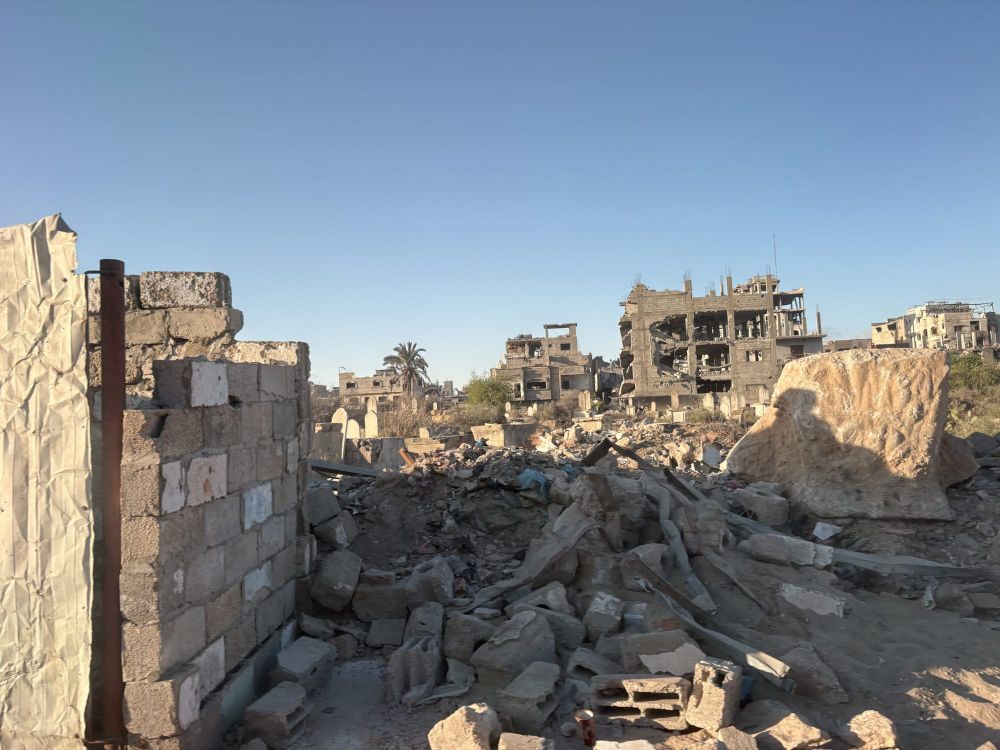
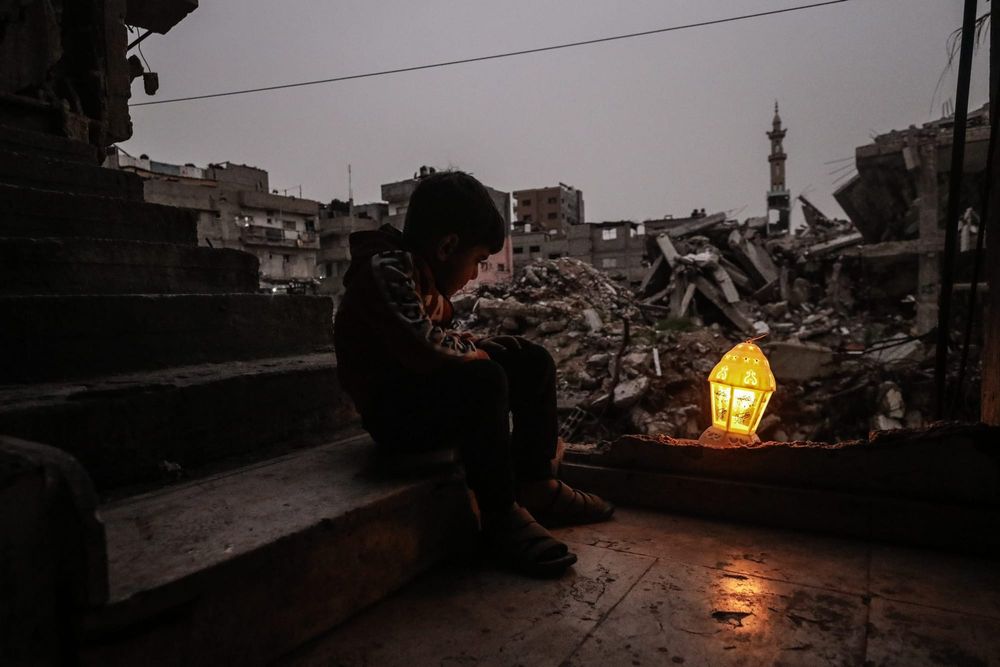
Compounding this uncertainty is the absence of any clear international position on the return of Palestinians to Gaza. While borders reopen and registration lists grow, there has been little public acknowledgment of the reality awaiting those who go back. Airstrikes continue in multiple areas, infrastructure remains devastated, and large parts of Gaza are still uninhabitable.
“Who is the one returning?” asked Omar, a Palestinian displaced in Egypt who did not want his full name used due to fear of retaliation. “Are we refugees, displaced people, or citizens returning to a place that no longer resembles us?”
For him, the question of return is inseparable from another, more painful one: “Return to where? There isn’t even a tent left for me to sit in.”
For many displaced Palestinians in Cairo, these painful decisions quickly turn into paperwork and waiting. Registration with the Palestinian Embassy has become the primary pathway for those hoping either to return to Gaza or to bring their families out.
Thousands have signed up through online forms, some updating their information multiple times, waiting weeks or months without clear timelines or responses. For many, registration offers a sense of action, but little certainty.
You submit your name and then you wait, several displaced Palestinians told Prism, describing a process marked by silence and shifting expectations. As lists grow longer and movement remains limited, the gap between registering and actually crossing has become a growing source of frustration.
Temporary residence, permanent uncertainty
Daily life for displaced Palestinians in Cairo is shaped not only by the question of return, but by the uncertainty of residence itself. Most live without formal or stable residency, relying on temporary permits or overstayed visas that offer no real protection.
Without secure legal status, access to work, health care, and education remains fragile. Many describe feeling suspended: unable to fully settle in Egypt, yet unsure if or when return to Gaza will be possible.
“We are not settled here, and we are not home,” one displaced Palestinian said. “Everything feels temporary, even our lives.”
This legal and administrative limbo deepens the sense of displacement, turning everyday tasks—renewing papers, enrolling children in school, seeking medical care—into ongoing sources of stress. For many, the question is no longer just whether to return to Gaza, but how long they can continue living in Egypt without any guarantee of stability or permanence.
When return disrupts what little stability exists
Some families are forced to delay their return home by commitments in Cairo that cannot be undone overnight. Ilham, a displaced Palestinian mother living in Cairo and using her first name only, has been considering returning to Gaza for months, yet remains unable to decide.
“I think about going back all the time,” she said. “But my children are in school. I can’t just pull them out in the middle of the year.”
For Ilham, return is not only about crossing Rafah—it would mean disrupting her children’s education and risking the fragile stability she has managed to build. Like many parents, she said she feels torn between longing for home and protecting her children’s future, even as that future remains uncertain.
For Palestinians who have spent years in Egypt, return is further complicated by the lives they were forced to rebuild in exile. Many invested what little money they had in basic stability—buying mattresses, blankets, kitchen utensils, clothes, and household items—in an effort to create something resembling a home.
Being asked to leave now raises an impossible question: How do you abandon everything again and return to Gaza, where there is little left to return to?
At the Rafah crossing, returnees are permitted to carry only clothing, packed into a single suitcase that is often too small to hold even their essential garments. Personal belongings, household items, and years of accumulated necessities must be left behind.
“At the very least, these are our personal things,” one displaced Palestinian said. “But even our clothes do not fit in one bag.”
For families who have already lost everything once, being forced to leave behind what they rebuilt in Egypt feels like another form of dispossession—quiet, bureaucratic, and deeply painful.
Amal, a young Palestinian woman, embodies this impossible choice. While her fiancé remains in Gaza, Amal, using only her first name, has spent the past two years in Egypt preparing for a future that now feels suspended.
She bought wedding clothes, hairstyling tools, beauty products, and household items—small, joyful things she hoped would mark the beginning of a shared life. Now, as return becomes a possibility, she faces an unbearable decision: leave everything behind or try to sell it all and go back.
“These are things every bride dreams of,” she said. “How do I leave them? And what am I returning to?”
In Gaza, there is no home waiting, no place to store these belongings, and no certainty that marriage can even take place. For Amal, return does not mean reunion alone—it means walking away from every fragile piece of hope she tried to build in exile.
“Almost everything is prohibited”
Behind this prolonged uncertainty are strict and often opaque procedures at the Rafah crossing itself. According to Rasha Al-Zurai, a civil employee working at the crossing, no fees are imposed on Palestinians returning to Gaza.
As many as 80,000 Palestinians have reportedly registered with the Palestinian Embassy in Egypt in hopes of returning, though Al-Zurai said that movement remains extremely limited and prioritizes medical patients and those already in Al-Arish, the nearest city to the border crossing. Name selection, she explained, is shaped by complex security arrangements, leaving many registered individuals waiting without clarity or timelines.
The most common complaints, Al-Zurai said in an interview over Messenger, concern the exhausting journey, heavy security checks, and the confiscation of personal belongings—often items people believed were essential or purely personal. Each traveler is permitted only one suitcase, while the list of prohibited items is broad and, in her words, “almost everything.”
Beyond the procedures, Al-Zurai described the overwhelming emotional weight surrounding the crossing. Most travelers, she said, are driven by determination rather than hope, returning despite fear, exhaustion, and uncertainty.
What affects her most is passing daily by the destroyed old Rafah crossing—now reduced to rubble—amid the devastation of the city of Rafah in Gaza itself.
“There is nothing more painful for a Palestinian from Gaza than this sight,” she said.
Among the stories that stayed with her are those of elderly women who returned to Gaza after enduring the journey, fully aware that everything they carried would be confiscated. Despite the harsh conditions, Al-Zurai said she and her colleagues continue their work out of a deep sense of responsibility toward their people.
Even as the Rafah crossing reopens, crossing it is no longer a simple act of return, but a life-altering decision shaped by loss, uncertainty, and impossible trade-offs.
Caught between a homeland stripped of safety and a temporary refuge that offers no permanence, many are left asking a question with no clear answer: What does return mean when home itself has been undone?
Editorial Team:
Sahar Fatima, Lead Editor
Lara Witt, Top Editor
Rashmee Kumar, Copy Editor
Author
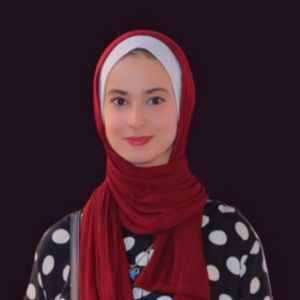
Athar Ihab Abu Samra is a Palestinian writer and translator from Gaza, based in Cairo. She highlights the human side of Palestinian life, telling stories of loss, resilience, and everyday struggles.
Sign up for Prism newsletters.
Stay up to date with curated collection of our top stories.