Next City and Prism’s series, “Disability Justice For All,” covers how people of color are leading a disability justice movement in American cities, making strides toward equity in housing, mobility, labor, health care, and beyond.
With the latest wave of COVID-19 infections washing over the U.S., and 28% of all American adults having experienced long COVID symptoms as of January 2023, disability justice advocates are sounding the alarm on the erosion of pandemic precautions and protections for workers.
The pandemic is “not completely over for specific populations,” said Mia Ives-Rublee, who leads the Disability Justice Initiative at the Center for American Progress. “This, of course, is going to continuously, proportionately impact already marginalized and vulnerable populations. Just because it’s over for folks who have resources … there’s a bunch of people who don’t have the tools.”
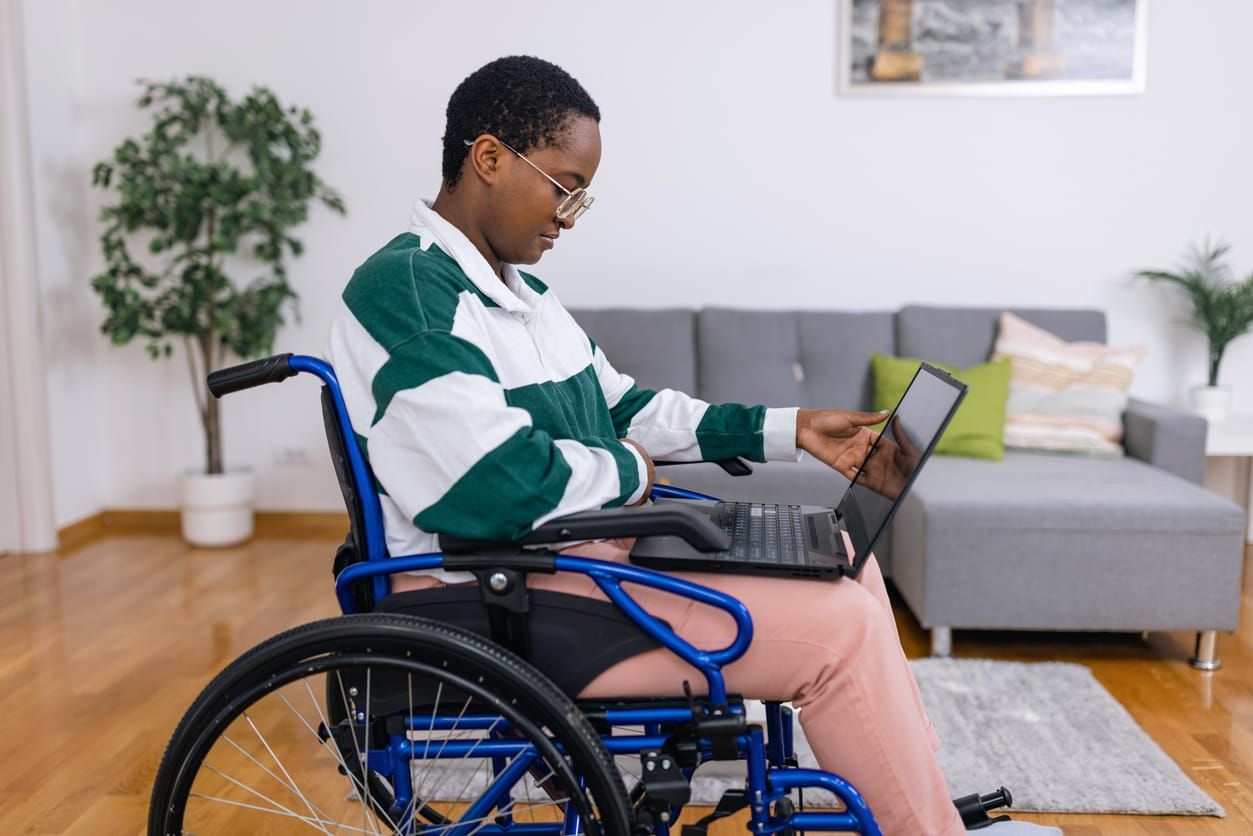
After the pandemic opened up new doors for remote and flexible work arrangements, the U.S. saw an increase in the employment of disabled workers.
Disability rights advocates are concerned that the improved employment numbers are due to employed people becoming disabled, in part due to COVID-19, thus increasing the rate of employment for disabled people—rather than previously disabled individuals finding jobs.
“So the question is what happens to those people?” Ives-Rublee asked. She fears that the employment rate among disabled workers will see a steep decline as pandemic accommodations are reversed and long COVID-19 becomes more prevalent. Already, remote rates have fallen to their lowest levels since the pre-pandemic era, per recent Census Bureau surveys, with many employers pushing strict return-to-work policies and worker surveillance technology.
“What happens to people who feel like they’re not getting the accommodations that they need, so [they] burn out because they just can’t keep up?” Ives-Rublee asked.
Meredith Hurst was a paralegal before suffering from long COVID. She now has to take breaks while completing everyday tasks such as getting dressed and has been out of work for years.
“I will get pain down my arm, elbows, hands, shortness of breath, tachycardia, extreme exhaustion,” she explained in an interview with PBS. She tried to return to the workforce twice. “When I tried to go back to work, I got physically sick … The sore throat, the lymph nodes, the exhaustion, the fever, achiness. And that’s what happens when I ever exert myself.”
As many as 500,000 people are estimated to have been taken out of the workforce due to long COVID, with few signs that their symptoms will improve enough to allow them to reenter. This doesn’t include the number of people who may have reduced their work hours to accommodate their circumstances.
Like many others who seek support for their disability, Hurst couldn’t complete the application for Social Security disability benefits on her own due to her limitations, leaving her unable to access the income she is legally entitled to due to her inability.
Chimére Smith Sweeney is a long COVID patient who struggles with progressively worsening memory problems and other issues that aren’t obvious to those who interact with her without knowing her experiences.
“Long COVID is a very sneaky, invisible condition that people don’t recognize unless there are visible symptoms,” she told PBS. “When this conversation ends, I will be on my couch for the next five-to-six hours because this conversation itself is exhausting.”
Before she fell ill, Smith Sweeney worked as a teacher in Baltimore. “That was my true calling,” she said. As a Black girl growing up in southeast D.C., she was often encouraged by people in her life to pursue a career in education. She was an “extraordinary teacher” who loved her job, she said.
Unable to return to her true passion, 80% of her income is now government-assistance based.
COVID-19 and the fight for worker protections during the pandemic have highlighted how disability rights advocates have long been at the forefront of the labor movement. Workers with disabilities face an uphill battle when it comes to getting and maintaining positions, getting fair compensation, and accessing fair accommodations and safe working conditions.
“Unions started out as groups of people who decided that they were sick and tired of seeing their coworkers dying on the job or getting injured on the job because of poor worker conditions,” said Ives-Rublee, who has been working with unions to develop a standard set of accommodations as organizers secure historic wins during the current wave of labor victories. “They were tired of people who got injured just being laid off with no benefits.”
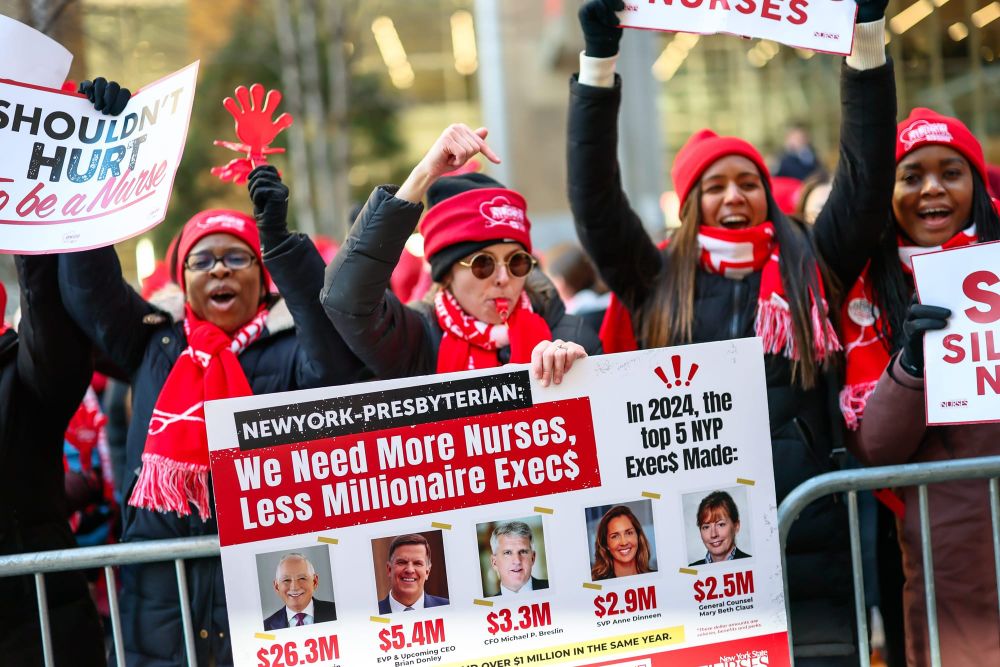
In 2023, unionized health care workers secured a deal for a 21% wage increase over the next four years after a three-day strike. The UAW carried out a coordinated strike over the course of six weeks that resulted in the three largest automakers reaching contract agreements, securing historic raises for hundreds of thousands of members. And after months of striking, writers and actors in Hollywood reached contract agreements that secure compensation raises and restrict the use of AI.
It’s a much needed win, especially for writers and actors with disabilities who face the compounding effects of the devaluation of workers in their industries.
Workers with disabilities constantly make sacrifices that manage to go unnoticed while creating a motivating image for able-bodied people. “As I’m walking the line, I know what that face is: ‘Well, if you can do it, I shouldn’t be complaining,’” Anita Hollander, an actress with a leg amputation who struggled with stress in her hands from gripping crutches, told The Hollywood Reporter as she walked the line during the strike. “The thing is, nobody can really know what it actually feels like.”
Individuals with disabilities are one of the few groups in the U.S. that is legally allowed to be compensated at subminimum wages for hourly work if a person’s disability impairs their “earning or productive capacity for the work being performed.”
When disabled workers need accommodations, they typically have to go out of their way to request for the adjustment, potentially singling themselves out to their employer as a burden.
“It’s a massive amount of energy for the individual,” says Ives-Rubles.
Moreover, workers can be penalized for asking for accommodations. Phillip Baczewski was an adoption social worker for 25 years until he contracted COVID in 2020. “My stamina, ability to go up and down the stairs, is a struggle,” he told PBS. He now uses a cane to walk and suffers from brain fog.
When he asked for accommodations to return to work part time, “they said I either come back full time, work at full capacity of what I was doing before, or tender my resignation.”
Several lawsuits regarding backlash against accommodation requests post-widespread remote work have come out. A former senior director for AstraZeneca sued the company after her employer refused to pay her bonuses totaling more than $125,000 after she worked from home in 2022.
A paralegal sued the firm he worked at for firing him after he requested to work from home after being diagnosed with a “cancerous condition” that left him immunocompromised. Electric Boat Corp. was sued for allegedly violating ADA after failing to provide reasonable accommodations to an employee, instead opting to fire him for failing to adhere to the company’s return-to-office policy.
But unions show promise in bringing certain protections to disabled workers that could open work opportunities and protect workers. Just as unions reduce the gender pay gap, they also show promise in closing the disability wage gap: Union workers without disabilities have 24% higher pay than their non-union able-bodied counterparts, while disabled union workers have a wage premium of 30% compared to their non-unionized disabled workers.
Union contracts provide certain opportunities and restrictions for worker accommodations. Union contracts tend to outline accommodation procedures, including grievances, for workers who develop disabilities. They may also restrict accommodations in some ways, such as granting light-duty roles on the basis of seniority and, in doing so, minimizing the light-duty work opportunities that injured workers can take.
Unions can also help improve the workplace for people with disabilities by increasing access to sick leave, which would help facilitate keeping sick workers at home and from spreading illness to those who are vulnerable. “Never in recent history has this dynamic been more clear,” researchers at the Economic Policy Institute noted in a 2020 report on how unions benefit all workers during public health crises. “Never has it been more important that all workers have a voice in the workplace and access to a union. Workers’ lives and the health and safety of working families depends on their ability to have a say in how they do their jobs.”
Author
Bianca Gonzalez is a writer and journalist who focuses on intersectional justice, urban solutions, homeless response, and digital transformation. She has written for Next City, Community Solutions, an
Sign up for Prism newsletters.
Stay up to date with curated collection of our top stories.