Many disabled and elderly residents were abandoned during California wildfires
When climate disaster strikes, those who are the most vulnerable are often the first to be left behind
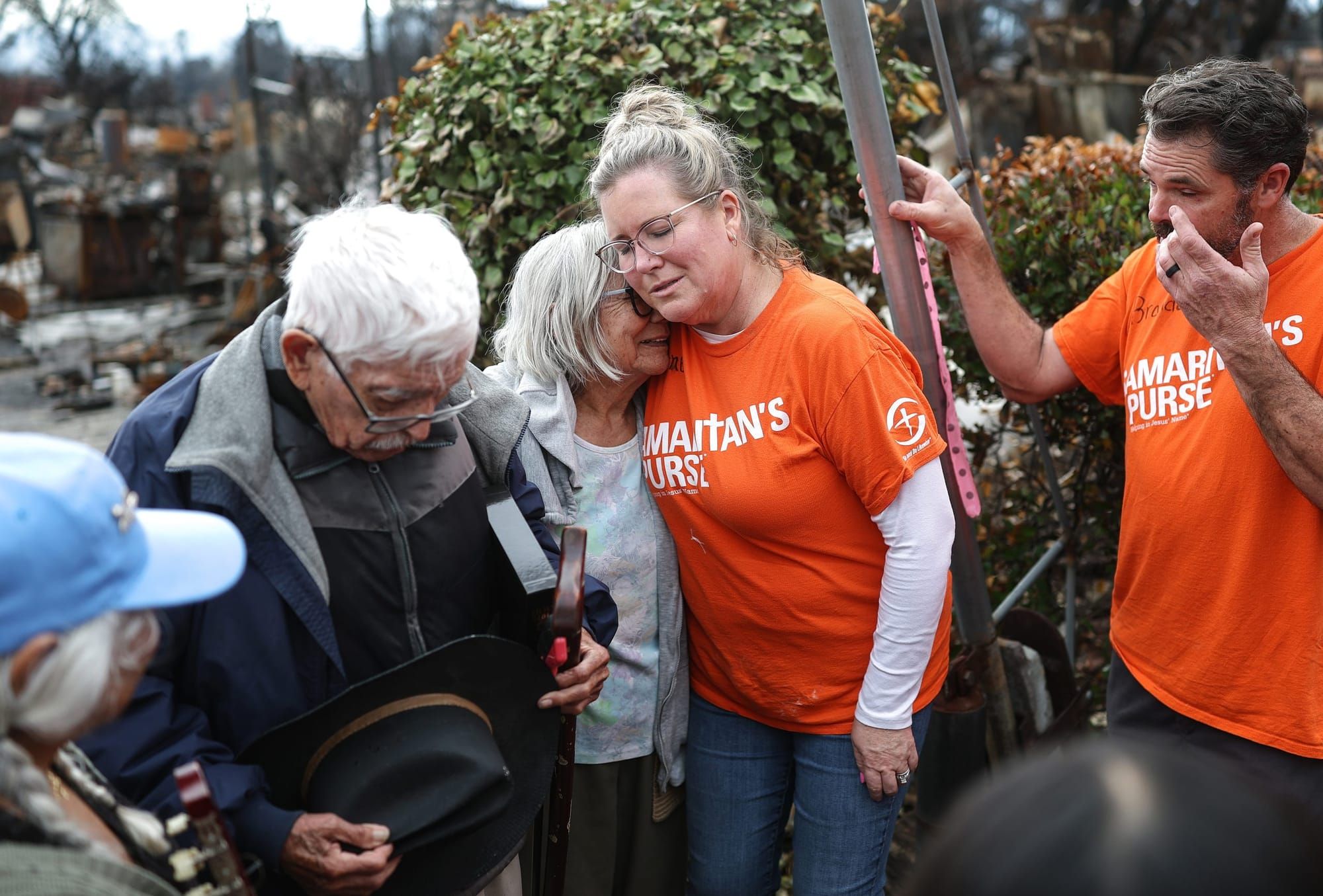
As wildfires ravaged southern California in January, reports of fire-related deaths revealed a stark pattern: the most vulnerable residents paid the highest price. The majority of those who died were disabled and elderly residents, laying bare the intersections of ableism and climate injustice, and society’s failure to prioritize the needs of the most at-risk individuals during evacuations.
The deaths of two people in particular have brought national attention to this issue: 67-year-old Anthony Mitchell Sr., an amputee who relied on a wheelchair, and his son Justin, 35, who had cerebral palsy.
In the hours before the Eaton fire consumed their Altadena home, Anthony called his son to reassure him that they were waiting on emergency services to help them evacuate. The Mitchell family believes their father might have been able to leave on his own, but he refused to abandon Justin, who was unable to evacuate.
Emergency responders never came. The next time the Mitchell family saw the pair was in the charred remains of their house.
“This hit home for me,” said Felicia Ford, a mother of five who also lost her Eaton home during the fires. Like Justin, Ford’s daughter Faith has cerebral palsy.
Ford recalled how she was left to her own devices to evacuate her family and forced to make split-second decisions. Less than 40 seconds after pulling out of her driveway, a nearby palm tree crashed in front of the gate blocking the exit to her house.
“Had I gone back in that house [to grab more things], we wouldn’t have been able to get out,” Ford said.
Critical gaps in disaster preparedness
For people like Anthony and Justin Mitchell, the toll of climate disasters is a direct consequence of decades of disinvestment in the communities most vulnerable to crises. Despite being a fire-prone area, the infrastructure around Altadena and the Palisades lacks accessible emergency services attuned to disability needs and coordinated responses to evacuate those who are not independently mobile. This neglect is neither new nor unique to California. A 2013 United Nations survey of over 5,400 people with disabilities across 126 countries revealed disproportionate gaps in disaster preparedness, with only 20% of respondents saying that they could evacuate immediately in the event of a disaster. The survey also emphasized the importance of accessible infrastructure and early warning systems, with people’s ability to evacuate increasing to 38% when given more time.
Common challenges to evacuation and disaster preparedness included mobility, hearing, and communication barriers. According to the U.N. Department of Economic and Social Affairs, the death rate among people with disabilities during disasters tends to be two to four times higher than among the general population. This disparity is worsened in areas where public transportation is inaccessible, and emergency shelters are not equipped with necessary accommodations.
Dr. Naeem A. Lughmani, a medical director at Humanity First USA who assisted with wildfire recovery efforts, reinforced that vulnerable groups, such as the elderly and disabled, face significant barriers to evacuation and are often forced into shelters due to financial hardships.
“Many elderly and disabled people often don’t have relatives [nearby], and they cannot afford to travel to other cities or go to hotels,” Lughmani said
According to data from End Poverty in California, 22% of Californians with disabilities were living in poverty in 2021, forcing many to rely on precarious or insufficient resources for survival. This makes it especially challenging for residents to cope during and after climate disasters when access to essential support systems is severely disrupted.
“They don’t have anything left,” Lughmani said. “They don’t have their prescription medications, they can’t access their doctors anymore, and some are now dealing with new chronic health issues due to the poor air quality.”
Like Lughmani, many medical professionals are now turning their attention to the health risks faced by displaced individuals, particularly those with disabilities and chronic illnesses. Experts warn that prolonged exposure to wildfire smoke, which contains toxic chemicals and fine particulate matter, can exacerbate existing respiratory conditions and contribute to new, long-term health issues.
Teresa, who requested to exclude her last name, is one example. While the fires did not directly impact her home, the medical center where she receives care has been temporarily closed since mid-January. Despite technically residing in a “clear” zone near Santa Monica, wildfire smoke still triggered her respiratory flare-ups, especially during the first week of evacuations.
“My body is already compromised, but you can tell the air quality is affecting a lot of perfectly healthy people too,” she said.
Unhoused disabled community gets overlooked
While media coverage of the wildfires often focused on the destruction of residential homes, dozens of unhoused disabled and elderly residents were also displaced. Houselessness has long disproportionately affected people with disabilities, and in California, where soaring housing costs and a chronic shortage of affordable homes exacerbate the crisis, this disparity is even more pronounced.
John Maceri, CEO of The People Concern, a Los Angeles-based nonprofit dedicated to serving unhoused people, explained that many of the people displaced by wildfires in the region are disabled or elderly, and struggling with health conditions exacerbated by their lack of access to regular medical care.
“If you’re living on the streets, that accelerates aging … just being exposed to the elements,” Maceri said. “People often don’t have access to primary care or dentists. So we see a high level of chronic health conditions: heart disease, pulmonary problems, asthma, diabetes, mobility issues.”
In the wake of the fires, many of the clients served by The People Concern have gone missing or remain unaccounted for. The organization is working to track down as many of their disabled and elderly clients as possible, knowing that these individuals often lack the financial, physical, or social resources to prepare for or recover from the wildfires.
“There are people whose homes didn’t burn but who are still displaced,” Maceri said. “For them, this is just one more traumatic event in a compilation of trauma that people experience day after day.”
“Without community, we have nothing”
In the aftermath of the fires, Ford reflected on her family’s deep connection to Altadena, a historically Black community, and expressed concern that the disaster would lead to further displacement, eroding the already declining Black population in the area.
“People will be selling because they can’t afford to rebuild,” she said.
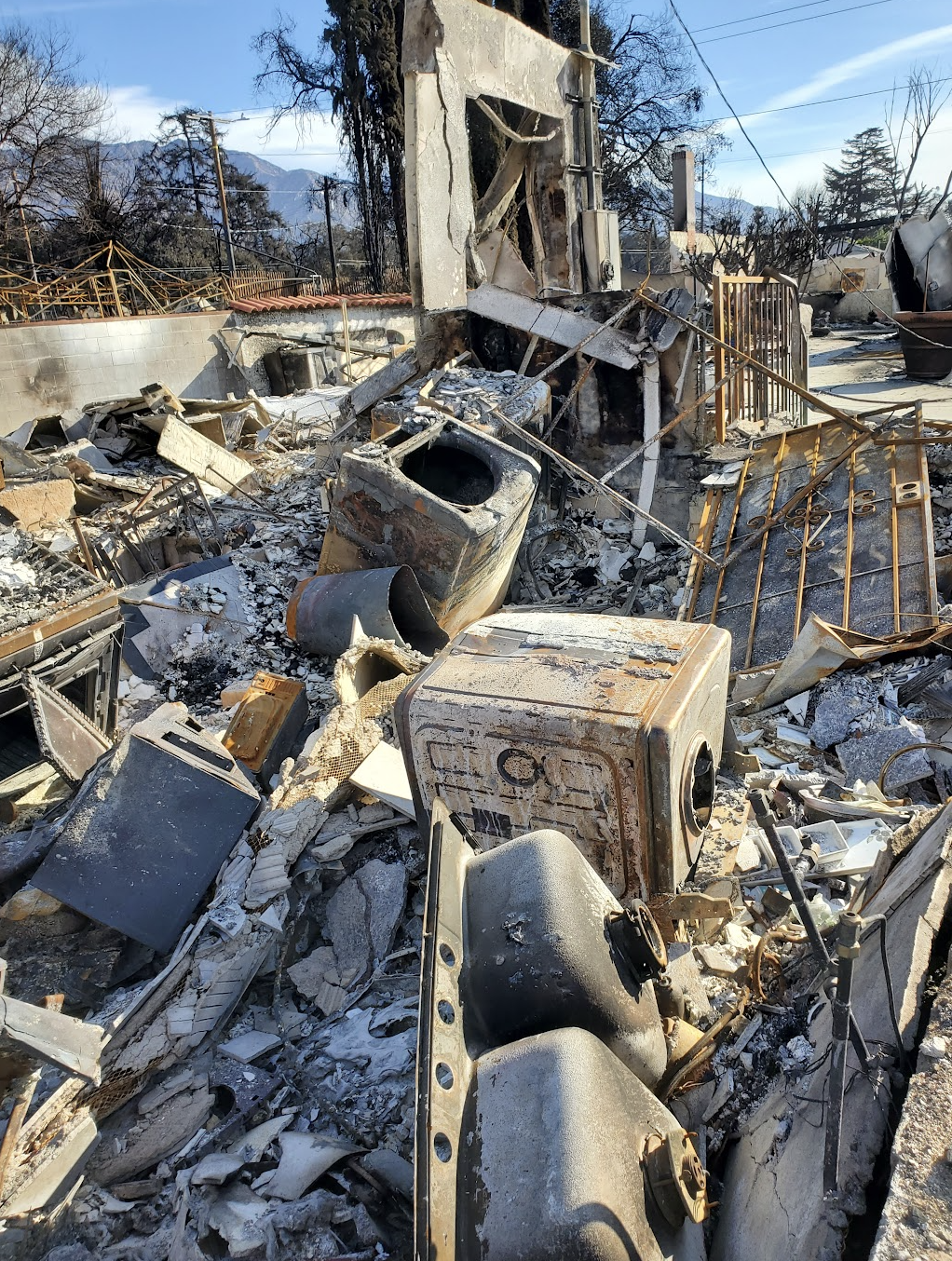
Like Ford, the loss and devastation felt by many displaced residents is a grim reminder that, in the face of climate change, vulnerable and marginalized communities are hit the hardest. In response, disability justice advocates are calling for a comprehensive approach to emergency preparedness that prioritizes the dignity and survival of vulnerable people. This includes measures such as accessible evacuation routes, shelters, emergency response teams trained to assist disabled individuals, and legislation mandating the inclusion of disabled people in all disaster planning.
Amid the chaos, Ford found her most vital lifeline within the disabled and special needs community. Through her disability advocacy work before the fires, she had built strong relationships with people and grassroots organizations within the disability justice space that have transformed her experience of loss into one of hope.
“The community that showed up the most was the special needs community, and other special needs parents made such a big difference,” Ford said. “I didn’t really have to ask for a lot. They were like, ‘We love you. Let us just help you.’”
This overwhelming support was deeply humbling for Ford and highlighted the unique strength of these communities, who often face their own struggles but understand the necessity of showing up for one another—especially when existing systems don’t.
“Community is the best infrastructure we could have,” she said. “Without community, we have nothing.”
Correction, Thursday May 15: An earlier version of this story stated that a burning palm tree had crashed in front of Felicia Ford’s house. The tree that fell was not burning, but rather had been knocked over by a nearby tree that had caught fire.
Editorial Team:
Rikki Li, Lead Editor
Carolyn Copeland, Top Editor
Rashmee Kumar, Copy Editor
Author
Michelle Zacarias (she/her) is a queer Latina award-winning journalist and two-time cancer survivor. As a CALÓ News reporter and UC Berkeley Local News Fellow, she covers politics, equity, and topics
Sign up for Prism newsletters.
Stay up to date with curated collection of our top stories.