DeSantis’ veto of millions in Florida arts funding will disproportionately impact queer, BlPOC organizations
Florida Gov. Ron DeSantis has vetoed $32 million in arts funding from the legislature-approved 2024-25 budget, effectively wiping out the entire state arts budget. The decision, which was spurred by DeSantis’ desire to defund LGBTQIA+ activities, has drawn sharp criticism from advocacy groups and cultural organizations, which warn of dire consequences for the arts community and free expression in the state.
“I wasn’t surprised,” said Rosie Gordon-Wallace, the founder and executive director of Diaspora Vibe Cultural Arts Incubator (DVCAI). “[An action like that] wasn’t taken in a vacuum.”
DeSantis, who is serving his second term as Florida governor, is notorious for supporting homophobic and racist laws such as the “Don’t Say Gay” and “Stop WOKE” laws, which encourage censoring queer and BIPOC histories and experiences from public schools and, in some cases, workplaces. In the last two years, the governor has also targeted all-ages drag events, claiming the drag performers are grooming children. Now, DeSantis has set his sights on the Tampa and Orlando Fringe Festivals, an alternative open-access arts festival the governor has deemed a “sexual festival” and the deciding reason to slash funding from almost 700 groups across the state.
“This is a gross mischaracterization of what the Tampa International Fringe Festival is and what Fringe Festivals all over the world do,” wrote Tampa International Fringe Festival organizers in a statement. “Yesterday’s actions have added insult to the injury of the loss of state arts and culture funding. This unwarranted reaction guided by a misinformed opinion has strangled access to all arts and cultural programs in the state. Hundreds of organizations lost funding when the governor used his veto … and Fringe has been named scapegoat.”
Among those impacted is Pioneer Winter Collective, the state’s sole overtly queer dance company, renowned for its intergenerational and inclusive approach to dance, with dancers ranging in accessibility and ages from their early 20s to 70s. Founded on principles of diversity and accessibility, Pioneer Winter Collective has been a vital cultural contributor since receiving its first grant in 2016. The organization focuses on performances and nurturing local talent through professional development programs like Grass Stains and Creative Connections. These initiatives support nearly 50 artists annually, providing financial assistance and mentorship crucial to their careers.
The collective has now lost $21,051 in funds, forcing them to rethink the amount of programming they are doing. However, Winter assures that the collective “is not going anywhere.”
“If anything, this has pushed our resolve,” Winter said. “I’m very proud that as queer as we are, as loud, as out of the box, as unexpected as the work that we make is, we are in Florida … and we’ll continue to do that even in Florida.”
Winter hopes for a future where “queer” does not mean risk and organizations like theirs can become sustainable.
“We use the arts to understand the chaos of the world, and we use the arts for healing and having that sense of belonging,” said Winter. “Arts and culture are the pillars of what make us a society … It’s essential; without it, you may not physically die, but I mean, without art, what’s the point?”
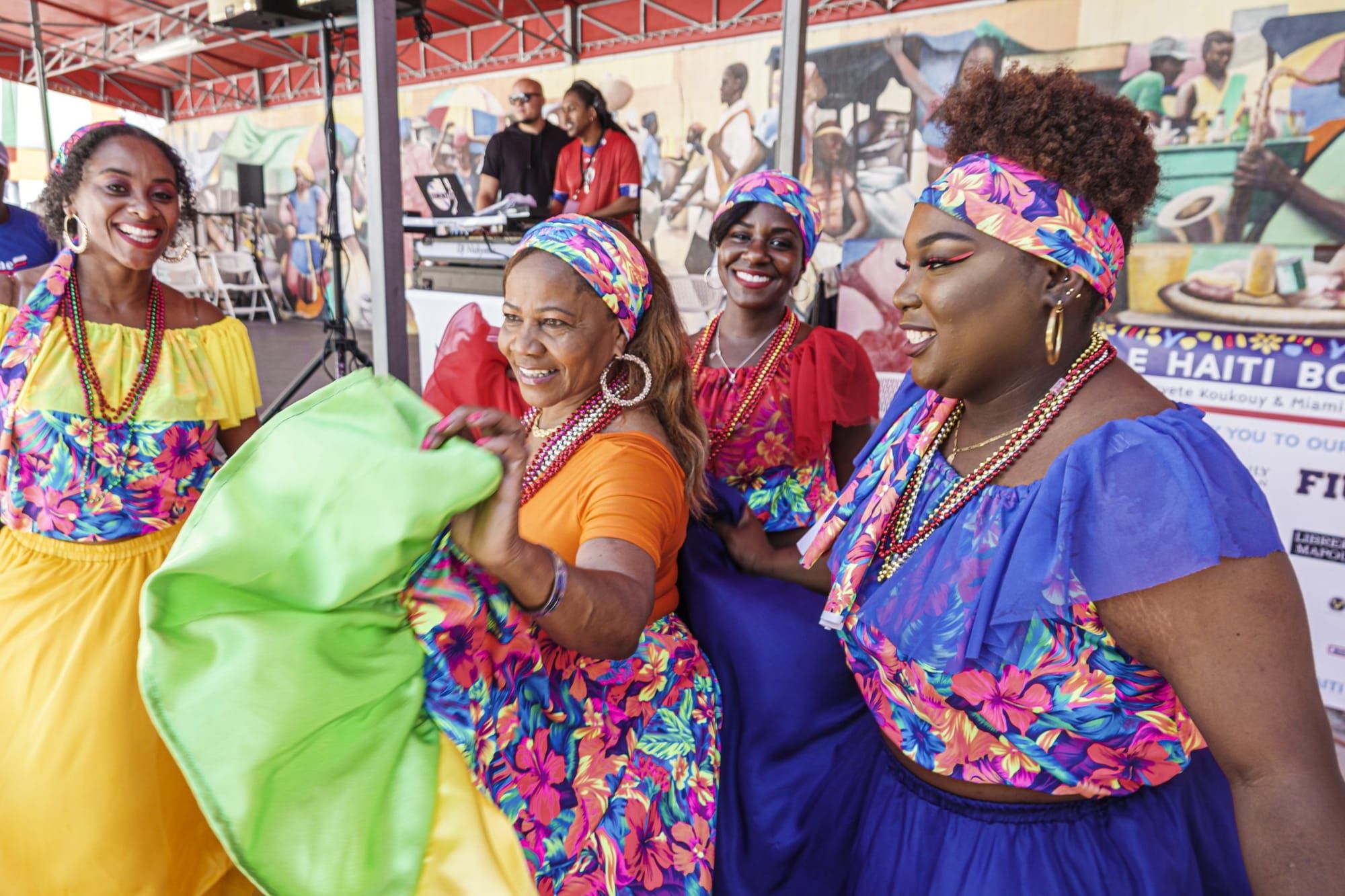
Founded in 1996 by Gordon-Wallace, DVCAI has been a vital hub for nurturing emerging artists from the Latin and Caribbean diasporas. Gordon-Wallace founded the organization because of how difficult it was for Caribbean artists to engage with commercial galleries and “darn near impossible” to engage with museums. Over the years, it has provided crucial support through programs like Caribbean Crossroads, which includes artist residencies, international exchanges, and exhibitions. These initiatives showcase diverse artistic voices and foster cultural dialogue and community enrichment.
“When you look at the stark numbers, it’s not a significant amount of money taken in the overall budget of the state,” Gordon-Wallace said. “But the impact of not having the funding in small communities is going to be detrimental to people’s quality of life.”
DVCAI has been receiving state funding since 2010. Most recently, it requested special project funding in the form of a $25,000 grant, which it injects directly into the artist community by offering individual grants and residencies to artists. Now, the organization has completely lost this funding.
“If you’re already into a project in this ecosystem, this is a significant amount of money for you to be able to continue and complete your project,” Gordon-Wallace said. “That money is gone, and so we’re left scrambling.”
Gordon-Wallace says she has contacted artists on their roster for the next fiscal year to see how their work is progressing.
“It’s going to be a hardship for them,” Gordon-Wallace said. “[The impact] is going to be on the direct services that we give to individual artists who are changing the lives of people that they interface with.”
Beyond DVCAI, the broader implications of these funding cuts extend to various cultural institutions and arts organizations throughout Florida. Gordon-Wallace emphasized the disproportionate impact on smaller organizations, especially those serving marginalized communities.
“The organizations of color, Black and brown organizations, are even more impacted because … our communities depend on our viability in a very profound way,” Gordon-Wallace said. “We traditionally don’t have an infrastructure of family, generational support … Where do you go when $75,000 of your budget is gone? In our case, who do we turn to for $25,000?”
Looking ahead, Gordon-Wallace underscored the importance of public support and advocacy for the arts, calling on community members to vote. DeSantis’ second term in office will end in 2027, after which he will be ineligible for the succeeding term.
“That’s the only power we have as citizens, the power of the vote,” Gordon-Wallace said. “I’m hoping that folks would look beyond their personal politics to see that, in order for all of us to rise, we have to take care of the persons on the street. The weakest link in the chain has to be served. And we serve it through the arts. There’s just no other way.”
Women Photographers International Archive (WOPHA), an arts organization dedicated to promoting women and nonbinary photographers, lost $11,750 in general operating support as it celebrates its fifth anniversary. The organization, known for its pivotal role in advocating diversity in photographic arts, expressed dismay over the decision, which threatens its future programming and operational stability.
According to Aldeide Delgado, the founder and director of WOPHA, the organization first applied for state funding in 2021 and received $15,000 in general operating support. Now, it will have to significantly reduce the services it provides to the community.
“We may need to cut payments to working artists or rethink publications and workshops,” Delgado said. “This decision is a big blow for our plans and stability. It creates a cash flow crisis where those engaged in continuous work may not be offered roles or payment.”
Delgado says the decision has forced them to get creative about alternative funding sources and fundraising. The organization, which does not have a specific employee dedicated to fundraising, is considering charging for previously free programs or establishing a membership plan where the community can support them.
Perez Art Museum Miami, the city’s premiere art museum, lost $70,500 in funding. In a statement, the museum said, “We will take appropriate measures to compensate for any potential shortfall by generating continued revenue from other sources, including individuals, foundations, and various other channels. Additionally, we will strive to increase our income through admissions, our museum shop, and our new digital sign.”
The museum’s new 1,800-foot digital billboard, which is contentious among downtown residents and environmental advocates who decry its potential light pollution, is expected to generate $2 million dollars of unrestricted income each year from its partnership with Orange Barrel Media, the company behind the billboard.
“This would be like adding an additional $45 million to the endowment,” an OBM spokesperson said in a written statement to Prism. “They can put this revenue toward creating new projects that advance its mission, whether it’s new exhibitions and public programs, collection or staff development, or diversity and inclusion efforts. It will allow them to dream bigger and more freely about how best to engage the public with their collection and the ideas inherent in contemporary art.”
Another organization, City Theatre Miami, lost $42,300 in general operating support. City Theater, nearing its 30th year and renowned for its commitment to short play formats and community engagement, has been a recipient of state funding since at least 2017, when Margaret Ledford became the organization’s artistic director. According to Ledford, the loss also means salary cuts and likely programming cuts. Her group, with two full-time and three part-time employees, lost about 6% of its annual budget.
“He’s cutting his nose off to spite his face in that for every $1 spent on a cultural program, there are $9 spent in the community,” Ledford said. “These cultural dollars mean tourist dollars.”
A 2009 report from Americans for the Arts funded by the state of Florida estimated that the arts and culture industry generated $3.1 billion in Florida’s local economy, which “supports jobs, generates government revenue, and is a cornerstone of tourism.”
“We are the gasoline that makes the vehicle run, fuel that makes people get up with a song in their heart and want to make our lives better,” Gordon-Wallace said. “We are the fourth leg of the chair that brings laughter, joy, [and] happiness. We infuse communities with that.”
The decision was announced days before the beginning of the state’s fiscal year, meaning organizations are scrambling to find alternative sources of funding in a short period of time.
“The impact is going to be seen in a year’s time when people have to close their doors and when you [have to decide]: How do I bolster my spirit when there’s no theater to go to?” Gordon-Wallace said. “I don’t think our leadership collectively recognizes what is going to happen when this country becomes melancholic in a real way.”
Author
Alexandra is a Cuban-American writer based in Miami, with an interest in immigration, the economy, gender justice, and the environment. Her work has appeared in CNN, Vice, and Catapult Magazine, among
Sign up for Prism newsletters.
Stay up to date with curated collection of our top stories.