Democrats already throwing immigrant rights movement under the bus, advocates write in open letter
The party’s rightward shift is solidified, as Democratic lawmakers support the Laken Riley Act, which makes it easier to deport people accused of a crime, even without a conviction
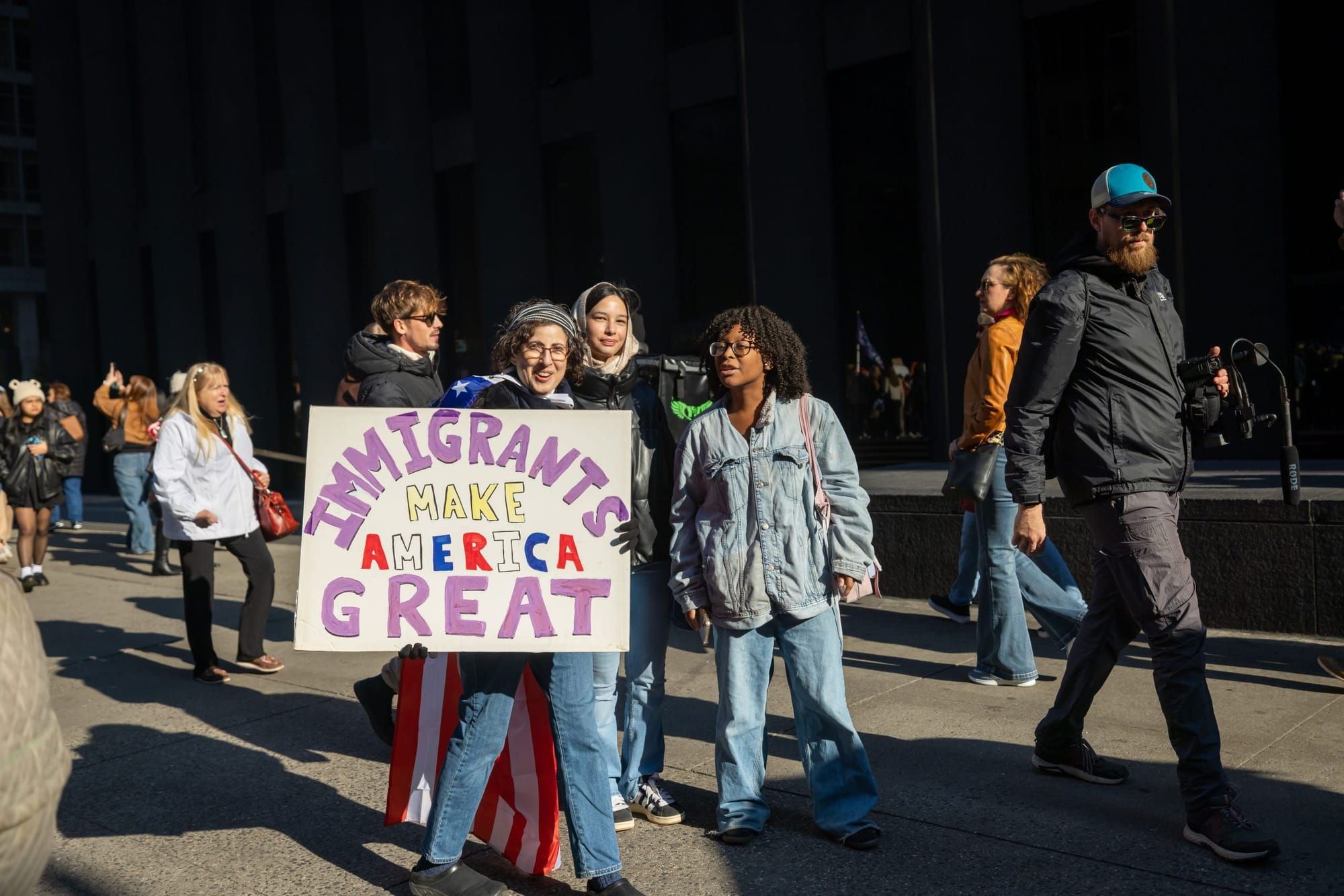
In the wake of President Donald Trump’s electoral victory, Democrats have wasted no time in criticizing immigrant-led organizations while approving “tough-on-immigration” bills that further criminalize noncitizens, effectively throwing the immigrant rights movement under the bus, according to an open letter signed by 80 immigrant rights advocates from across the U.S.
By moving further to the right, Democrats are doubling down on the same failed strategies that led them to lose the 2024 presidential election, advocates from groups like La Resistencia, Just Futures Law, and Freedom for Immigrants stated in a letter posted on Medium on Jan. 16. The Democrats’ shift on immigration, the letter states, mirrors “similar retreats on critical issues affecting their base, including attacks on trans rights, healthcare reform, and unyielding support for Israel amidst its brutal actions against Palestinians.”
Alarmingly, the Democratic establishment seems “to push for compromises that align with Trump’s nativist, anti-immigrant agenda,” the letter states, legitimating the draconian and punitive approach of the new administration.
Titled “We Say No to Failed Strategies that Will Lead to Mass Deportation,” the missive—co-authored by grassroots organizers Emilio Vicente, Oliver Merino, and Ramón Garibaldo—was prompted by an op-ed published in The Atlantic by Cecilia Muñoz, who led the domestic policy council for former President Barack Obama after heading the National Council of La Raza (now UnidosUS), and Frank Sharry, who served as immigration adviser to former Vice President Kamala Harris’ campaign after leading the National Immigration Forum.
In the piece, Muñoz and Sharry suggest that immigrant rights activists share responsibility for Trump’s electoral victories over Hillary Clinton in 2016 and Harris last year. “The pro-immigrant movement convened no postmortem to reflect on the role it might have played in Trump’s rise,” the operatives argue. If “immigration has become a losing issue for Democrats over the past decade,” they add, it is “because elected leaders have followed progressive advocates to the left.”
Unless immigrant rights groups embrace more enforcement and border control, Muñoz and Sharry imply, “Democrats will continue to lose the trust of voters—damaging their chances of unseating the authoritarians now returning to power.”
For the activists who signed on to the letter, Muñoz and Sharry “represent a broader nonprofit immigrant rights establishment that claims to advocate for immigrants while silencing those most affected by deportation policies.”
Activists’ successes
Emilio Vicente took part in the 2010 campaign for the DREAM Act, a bill that would provide a pathway to citizenship to undocumented immigrants brought to the U.S. as minors, in which hundreds of Deferred Action for Childhood Arrivals (DACA) applicants came forward to share their stories, risking deportation. Now an immigrant rights organizer in North Carolina, Vicente told Prism that the Democrats’ rightward turn “is a very dangerous approach.”
“The Democratic establishment has been selling the idea again and again to the public that there is an issue on immigration,” he said, “and that the only way to address it is by further militarizing the border and further enforcement.”
The U.S. is already seeing the consequences of some Democrats’ capitulation to nativism, Vicente said, as 12 party senators and 46 House representatives voted to approve the Laken Riley Act, considered by the National Immigration Law Center to be “an attack on established constitutional protections.” Under the bill, a child could end up deported for being accused of swiping a candy bar—even if they didn’t do it—while state attorneys general could sue to block all visas to people from countries that don’t fully cooperate with the U.S. deportation machine. Some Democratic legislators also supported another bill this month doubling down on deportation of undocumented immigrants found guilty of sex crimes or domestic violence.
In an attempt to improve their electoral chances, Democrats have embraced more immigration enforcement despite the strategy’s failures. Harris’ presidential campaign promised “tough, smart solutions to secure the border, keep communities safe, and reform our broken immigration system.” Conversely, former President Joe Biden offered as “immediate priorities” in 2021 a system that “welcomes immigrants, keeps families together, and allows people across the country—both newly arrived immigrants and people who have lived here for generations—to more fully contribute to our country.” Biden received 6.8 million more votes in 2020 than Harris in 2024.
Democrats’ rightward shift suggests that many in the party have abandoned the effort to advocate for immigrants, said Oliver Merino, activist and co-founder of the Dream Organizing Network, a grassroots immigrant organization in North Carolina.
“Democrats are not even willing to make a case, as if there’s no argument to be made for protecting immigrants, for protecting their rights,” Merino said. “That leads to a situation where Republicans are guiding the conversation.”
The tough-on-immigration posture of many Democrats has also been presented as pragmatic compromises to get immigration reform approved in Congress. However, since 1996, when the last immigration reform was passed, no reform bill has received enough support from Republicans.
This century, the tangible victories for immigrant rights in the U.S. have been achieved by those activists derided by Muñoz and Sharry, often through tactics of disruption and civil disobedience, such as sit-ins and hunger strikes.
The campaign for the DREAM Act, whose participants defiantly adopted the slogan “undocumented and unafraid,” pushed the Obama administration in 2012 to create DACA, the most significant protection for immigrants in almost 30 years. The grassroots immigrant rights movement has also achieved in-state college tuition and access to driver’s licenses for undocumented immigrants in several states and has put pressure to limit the cooperation between local law enforcement and immigration agents.
“We need someone to make the case for a progressive vision of immigration, both from the advocate side and in Congress,” Merino said.
Author

Maurizio Guerrero is a journalist based in New York City who covers immigration, social justice issues, Latin America, and the United Nations. Follow him on Bluesky at @mauriziogro.bsky.social and on
Sign up for Prism newsletters.
Stay up to date with curated collection of our top stories.