Filed Under:
Delaney Hall detainees decry inhumane conditions and no access to medications
A Brazilian mother was detained during a routine ICE check-in in Newark, New Jersey, despite an ongoing visa request and health conditions

Alexandra Martinez
Real journalists wrote and edited this (not AI). Independent, community-driven journalism survives because you back it. Donate to sustain Prism’s mission and the humans behind it.
Real journalists wrote and edited this (not AI)—independent, community-driven journalism survives because you back it. Donate to sustain Prism’s mission and the humans behind it.
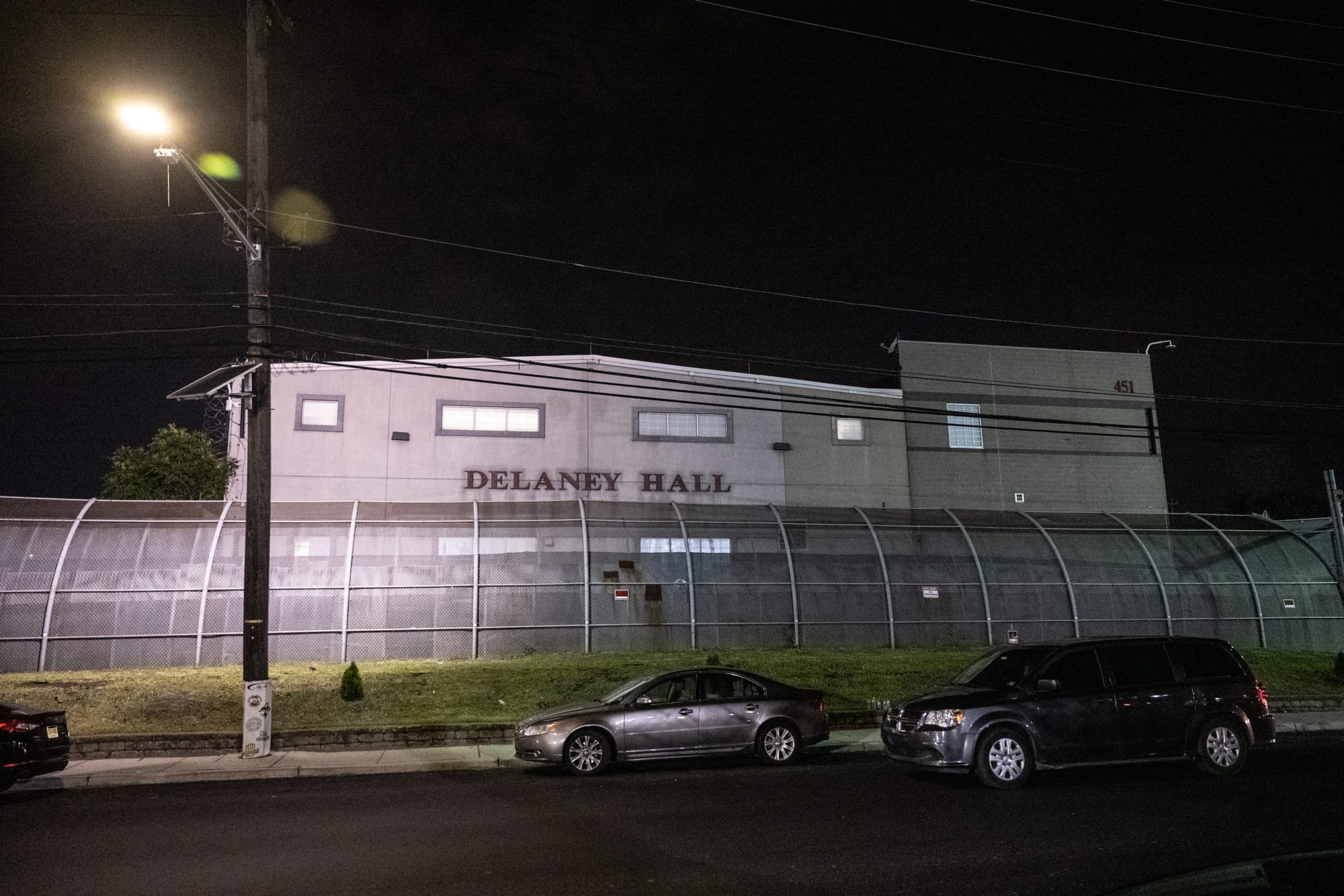
The family and attorney of Rita Linhares, a Brazilian woman detained by Immigration and Customs Enforcement (ICE) during a routine check-in earlier this year, say her health has worsened inside Delaney Hall. The privately run immigration detention center in Newark, New Jersey, is already under scrutiny over detainee conditions and an in-custody death.
Linhares, 46, who has glaucoma, anemia, high blood pressure, and circulation issues, claims that Delaney officials delayed providing her certain medications.
“I have already had vein surgery due to poor circulation, and I used to take medication when it caused pain in my legs and swelling,” Linhares wrote in a letter to her lawyer, Evan Hughes, that was shared with Prism. “However, they said they would no longer medicate me because it was considered cosmetic.”
Linhares’ 18-year-old daughter, Clara Linhares, said her mother has received medication for some conditions, including blood pressure and glaucoma, but not for anemia or circulation issues that the family considers urgent. She also told Prism that her mother’s accounts of poor food, cold temperatures, insufficient blankets, and inconsistent access to medication.
“I believe that due to poor nutrition and lack of sunlight—since we are rarely allowed outside—we are becoming increasingly weak,” Rita Linhares wrote in the letter.
She added that she has undergone blood transfusions and intravenous iron infusions throughout her life, and requested to have bloodwork done to check her iron levels and to take iron pills, but neither were provided to her.
“I had an appointment with a mental health doctor and asked for medication that could help me sleep, as I have significant difficulty sleeping at night,” Linhares wrote. “I believe that being separated from my daughter makes me anxious at night, and even when I feel very sleepy, I am unable to sleep. They told me they could not prescribe me any medication.”
“I just want her to get back home”
Rita Linhares left the U.S. with her family in 2010 after receiving a deportation notice, returning to Brazil when her daughter was still a toddler. But years later, Clara Linhares’ health drove the family back to the U.S., where her parents sought treatment for her in 2022. Clara Linhares is a U.S. citizen and has alopecia totalis and vitiligo; she said treatment in Brazil had become too expensive for her parents to afford.
Clara Linhares recalled that the journey to the U.S. turned terrifying after the people the family had paid to guide them north from Mexico demanded more money, threatened them, and, at one point, held her father against his will.
Rita Linhares and her husband later applied for T visas, a form of immigration relief available to certain trafficking survivors. Clara Linhares said the family believed the threats and coercion they experienced during the journey formed the basis of that application.
By January of this year, the family had been living at the same New Jersey address for 12 years, Clara Linhares said. Her mother had become central to her care, accompanying her to doctor’s appointments, helping manage medications, and staying home to support her through depression, anxiety, and suicide attempts.

Then, on Jan. 29, Rita Linhares went to a routine ICE check-in in Newark where agents detained her and transferred her to Delaney Hall.
About a week later, Clara Linhares said, the family received notice of a biometrics appointment tied to Rita’s pending T visa application. Because she was already in detention, Rita missed it. Hughes, her attorney, said the application remains pending, but the missed fingerprinting appointment could complicate the case if it is not rescheduled.
For Clara Linhares, her mother’s detention has meant the sudden loss of the person she relied on most. She said her own health has worsened: Her anxiety has returned, her autoimmune condition has flared, and hair that had been growing back has begun falling out again due to her alopecia.
“I just want her to get back home,” Clara Linhares said.
She said she visits her mother weekly and speaks to her everyday while waiting for updates in the case. Meanwhile, her father, who is also undocumented, was given an ankle monitor to wear three months ago and is expected to appear at an ICE check-in on June 25, the same day as his daughter’s graduation.
Clara Linhares fears that her father will be detained as well.
“My father has been providing everything since my mom was detained, if I were to lose them both, I would be completely completely alone,” she said in a text message.
Being separated from her mother has been deeply emotional.
“I hope they release her before my graduation, because I know she’s not going to be here for my prom, but I really want her to be here for my graduation,” Clara Linhares said. “I can’t imagine [graduating] without my mom seeing me.”
According to a statement from the Department of Homeland Security, Rita Linhares was arrested by ICE and remains detained pending removal proceedings. According to the spokesperson, Linhares has received “proper medical care including multiple prescriptions, medical visits, and dental care.” The agency said ICE conducts medical, dental and mental health screenings within 12 hours of arrival, completes a full health assessment within 14 days, and provides access to medical appointments and 24-hour emergency care.
But, Linhares’ attorney said her condition is deeply concerning.
“Rita’s health is deteriorating. Conditions are deplorable,” Hughes said. “It’s concerning, to say the least, that a corporation is making healthcare decisions practically, and they’re keeping these people in squalor. It’s only a matter of time before something catastrophic happens.”
Hughes also said that his client is challenging her detention and removal-related proceedings in federal court. According to Hughes, a prior removal order from 2009 was reinstated on Jan. 29, 2026, the day Linhares was arrested. He said a challenge to her detention was denied by the court, and an appeal is now before the 3rd Circuit Court of Appeals. Her lawyer is raising concerns about her pending T visa claim, the lack of a bond hearing, and the impact of detention on her U.S. citizen daughter.
According to Hughes, Rita is in the process of being moved to another facility, which Hughes alleged was a pattern for the government to try to secure more favorable rulings.
“Right now, she is in a district where there have been a lot of favorable decisions,” Hughes said. “And it’s to get her into a place that is more right-leaning, and that will give the government these decisions that they want.”
Growing complaints
Rita Linhares’ concerns reflect a growing pattern from Delaney Hall, where Jean Wilson Brutus, an asylum-seeker from Haiti, died in December from “suspected natural causes.” The private facility, operated by the GEO Group, opened in May 2025 under a 15-year, $1 billion contract. Wilson’s death sparked outrage and a call to close the facility.
Since then, detainees have been raising concerns surrounding inhumane conditions and a lack of access to medications, according to a recent public letter signed by 288 detainees. Another letter from the group was previously circulated by advocates in February.
According to Kathy O’Leary, an organizer with Eyes on ICE New Jersey, even visitors are treated poorly at the facility and forced to sit in the driveway with no shelter, while facing verbal abuse from security and arbitrarily getting denied access to the facility.
“If that’s what they were willing to do to loved ones who are just coming to visit in full view of the public, it just gave you a window into how people are treated inside of Delaney Hall, but also inside of detention centers across the country as a whole,” O’Leary said. “My biggest concern is that somebody else is going to die.”
The facility also had an uprising within a month of its opening. In June 2025, riots broke out over food shortages and poor living conditions, escalating into clashes between detainees and guards.
“People are telling us that they’re being tortured,” O’Leary said. “I don’t know what more we need to hear before people act to start working together to get people released.”
According to the recent public letter from detainees, there are individuals from the LGBTQIA+ community with diagnoses such as HIV, cancer, and diabetes, who are not receiving proper medical attention. O’Leary said this amounts to torture by international standards.
O’Leary pointed to the 2021 New Jersey ICE bill, which prohibited state, county, and local government entities from entering into, renewing, or expanding contracts to house federal immigration detainees.
“We want people to be released and not transferred,” O’Leary said. “They’ve been living with their families, contributing to our communities, and there’s no reason for us not to allow them to do that.”
Editorial Team:
Sahar Fatima, Lead Editor
Lara Witt, Top Editor
Rashmee Kumar, Copy Editor