From haven to target: Israel destroys parts of Deir al-Balah
One witness describes chaos and panic after Israel issued evacuation orders for one of the only remaining areas it does not control in Gaza
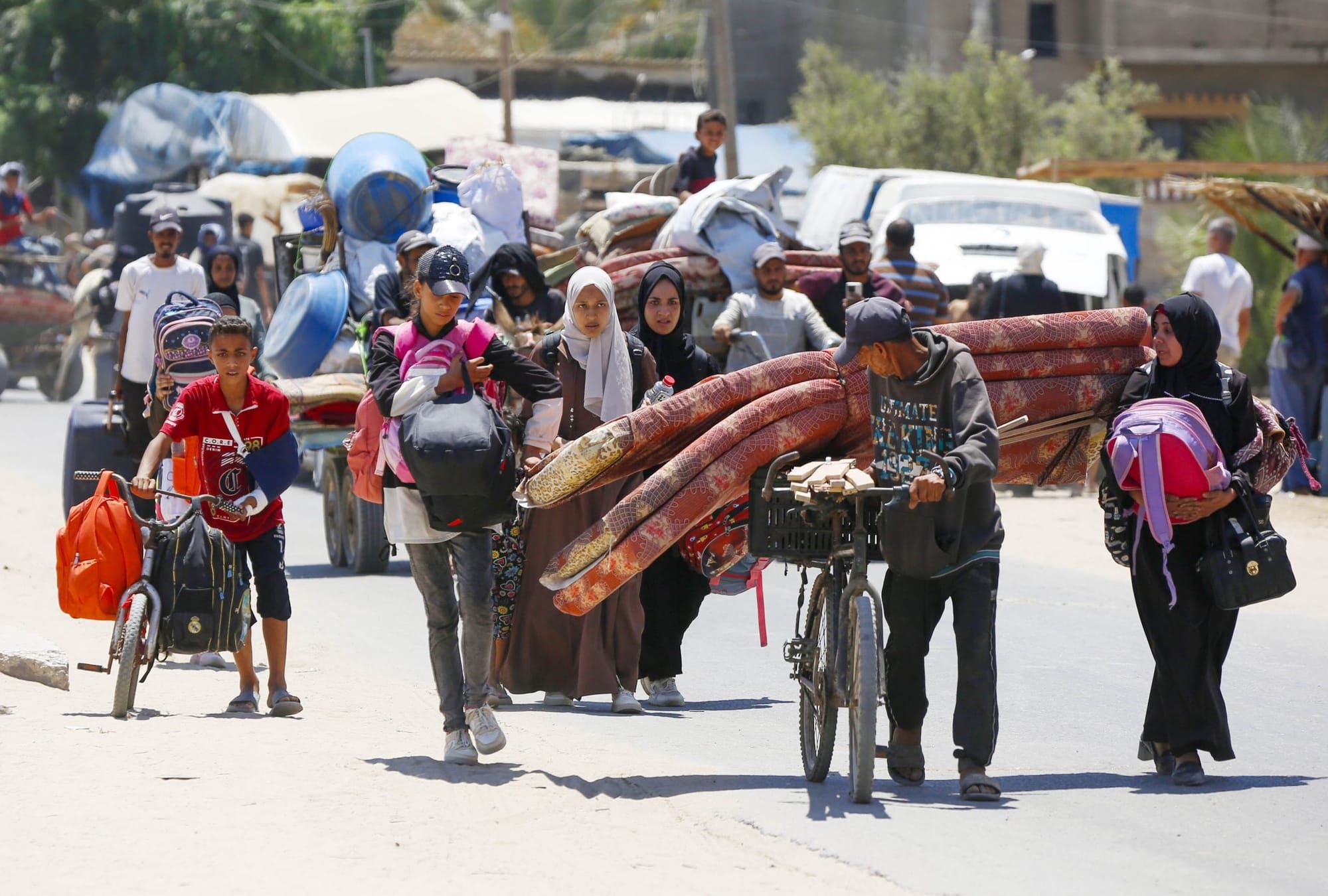
Deir al-Balah, a city in central Gaza, was transformed on July 20 from a final refuge for displaced Palestinians into a place of fear and looming threat.
That morning, the Israeli army announced a military operation in Deir al-Balah and air-dropped evacuation leaflets to those living in one of the only areas in Gaza left outside of Israel’s full ground control. Maps on the leaflets instructed civilians to leave specific southern and western parts of the city, including areas packed with already displaced people living in tents. These areas also house Gaza’s largest desalination plant, the only facility supplying clean water to much of central and southern Gaza.
The displacement orders came as Israel’s “Operation Gideon’s Chariots” entered its final phase of air and ground escalation, with the Israeli military illegally taking control of 75% of Gaza’s territory. According to Israel’s Channel 14, the army’s goal was to fully occupy the Gaza Strip, including a planned incursion into Deir al-Balah. The operation killed Palestinians, according to media reports, though official death tolls are not yet available.
My cousin Areej Fouad and her family were among those ordered to evacuate.
“We were shocked,” said Fouad, who had been living in a tent since the beginning of the genocide, after fleeing relentless shelling in her neighborhood in Al-Mughraqa, south of Gaza City. “There was chaos.”
Deir al-Balah had become home to a vast number of Palestinians displaced from both the north and the south. Following Israel’s repeated mass evacuation orders, nearly 1 million Palestinians—half of Gaza’s population—had been pushed into this small city, according to a statement by the Deir al-Balah Municipality, making it one of the most densely populated areas in the world. The city is also a hub for several human rights organizations; the World Health Organization said the Israeli military attacked its staff residence and main warehouse in Deir al-Balah on July 21.
The main goal of Israel’s operation, according to a Haaretz report, was to carve a new corridor to separate Deir al-Balah from the southern Al-Mawasi area, effectively cutting the city off from Khan Younis and restricting movement between the central refugee camps.
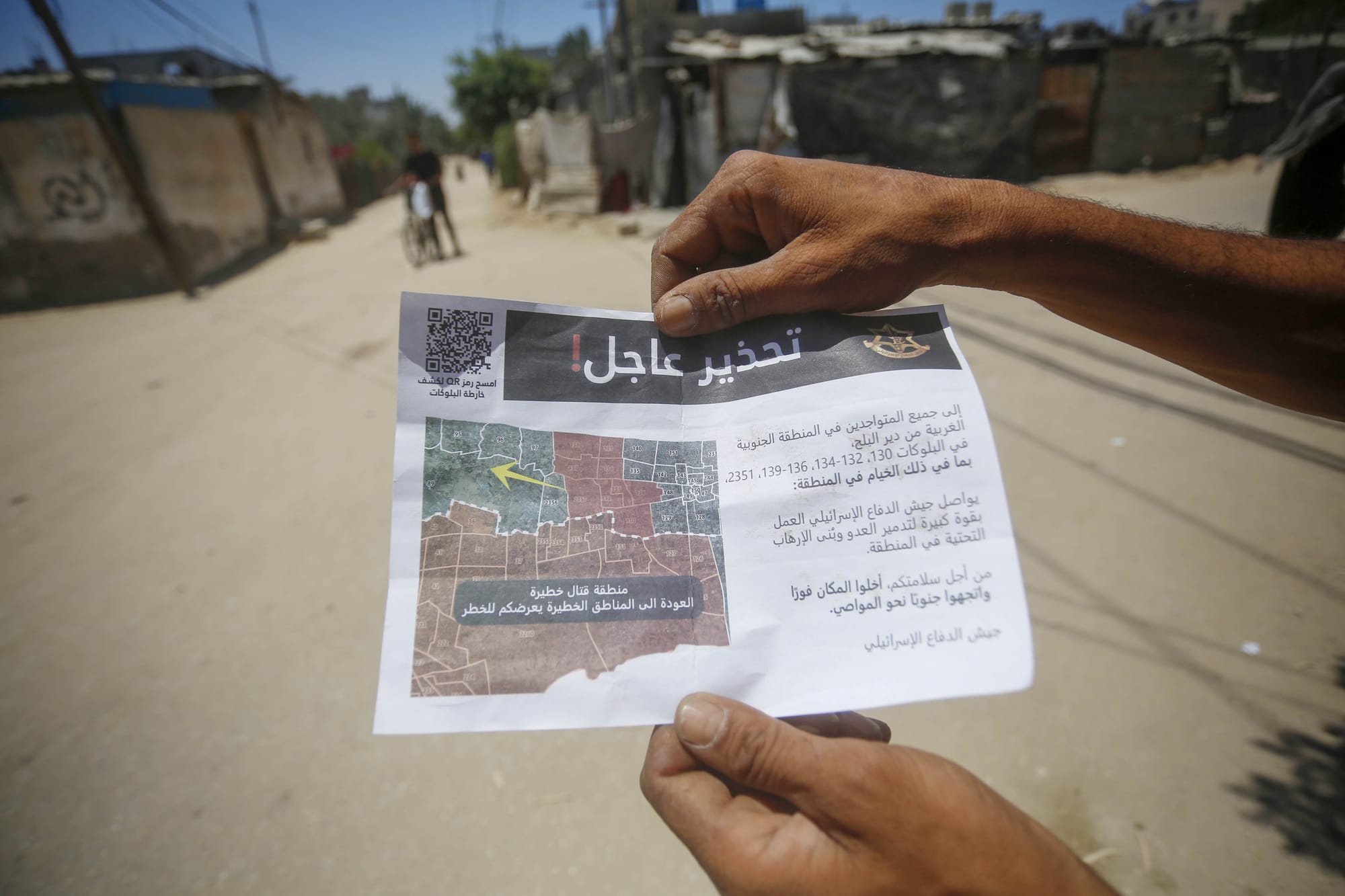
The night before the official announcement, helicopters hovered overhead, their thunderous rotors echoing like terrifying storms, according to Fouad. Escalating attacks had already brought carnage to Deir al-Balah, including a massacre near a medical point distributing nutritional supplements for children. That attack killed at least 15 civilians, mostly women and children, yet the world remained silent.
For two years, Fouad has had no home—only a tent that protects neither from winter cold nor summer heat. Her family home in Al-Mughraqa was destroyed and turned into part of the Israeli military barrier known as the “Netzarim Corridor,” which splits northern Gaza from the south. Now, Israel was forcing her to flee Deir al-Balah.
“Some people decided to leave, fearing a repeat of what happened in the north. Others refused, because there were no transportation options, no safe destination, and prices were insanely high,” Fouad said.
According to the United Nations Office for the Coordination of Humanitarian Affairs, 87.8% of Gaza is under evacuation orders or declared a military zone, leaving only 12% of the land to shelter 2.1 million people, who the Israeli military is bombing daily.
“By afternoon, Israeli artillery started randomly shelling southern, eastern, and western areas of Deir al-Balah,” Fouad said. “At night, things got worse. Quadcopters flew low and shot at anyone moving, while tanks advanced under heavy helicopter cover. After that horrific night, many who had refused to leave were forced to flee. Those who didn’t were besieged by tanks as close as 20 meters.”
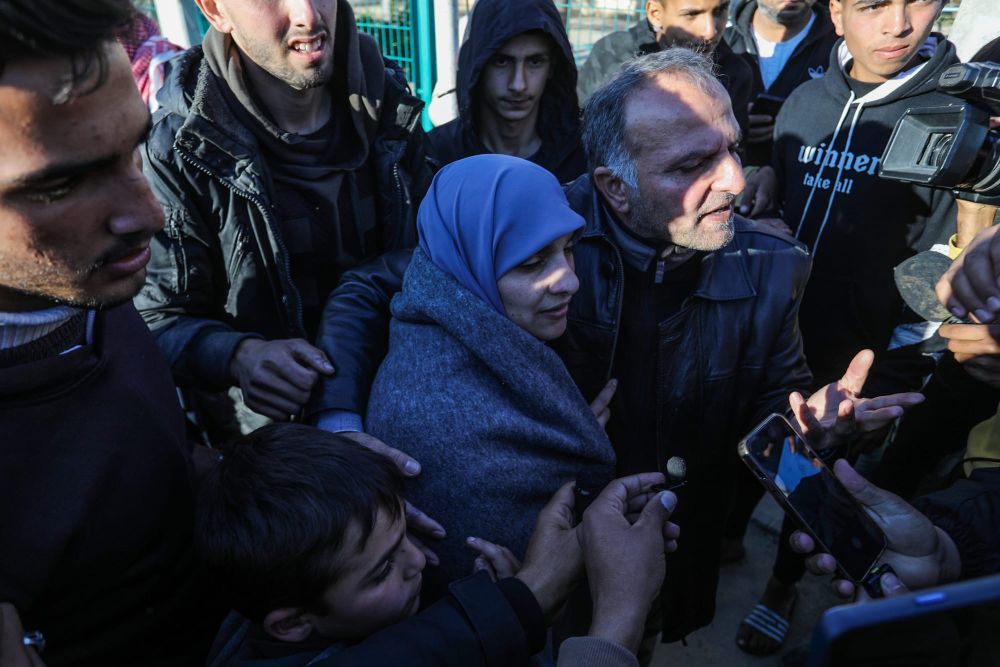
Fouad and her family finally decided to evacuate that afternoon, when the quadcopters started flying overhead. Hundreds fled alongside them. The despair was visible in everyone’s faces—many were too weak to walk, some fainted from hunger due to Israel’s blockade of food and medicine.
Fouad wasn’t the only one I knew who had been displaced again. Many of my relatives, who had been hosting other displaced families since the war began, found themselves homeless too. Their homes are now threatened with bombing. After opening their doors to the displaced, they are now without shelter themselves.
Entire families have been displaced over and over again. They’re left to wonder: Where are they supposed to go now, when Deir al-Balah was supposed to be the last safe place?
Schools serving as shelters are already overcrowded, and many have been bombed. The few remaining homes cannot accommodate more people. Even food is too scarce to offer to the newly displaced.
Less than two days after this brutal ordeal—after people endured the trauma, the physical toll, and the destruction of infrastructure and housing—Israeli media reported on July 22 that the military operation in Deir al-Balah had ended.
But even after that announcement, Israeli tanks remained stationed in the southwest. Anyone who tried to return was shot at, according to what neighbors told my relative Hadeel when she attempted to go back to her house in the area.
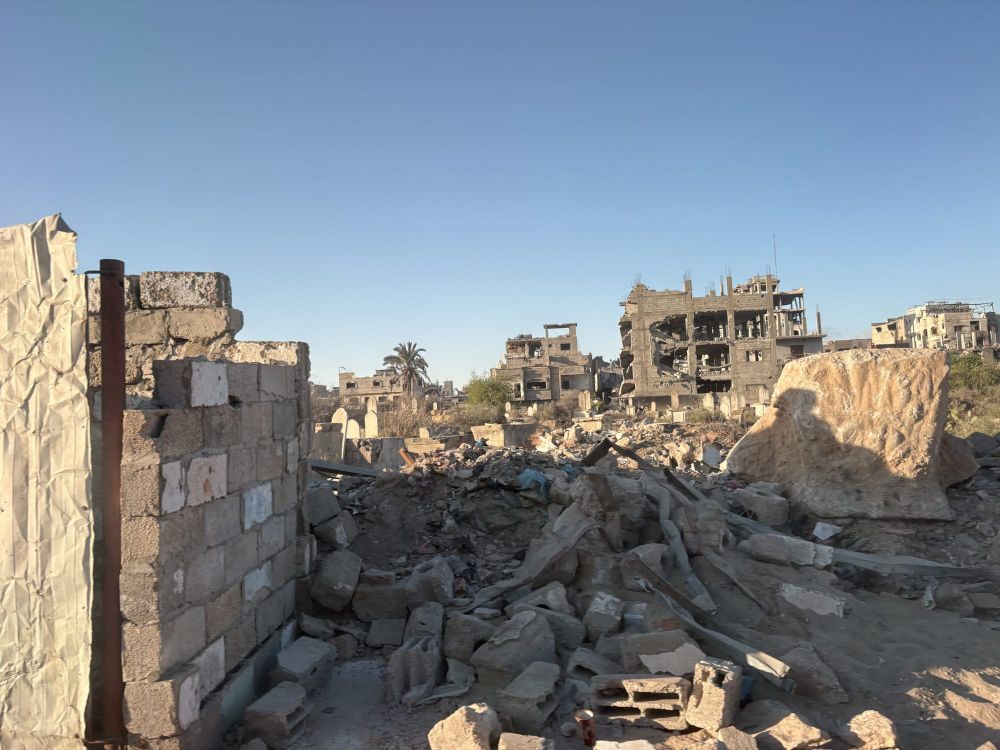
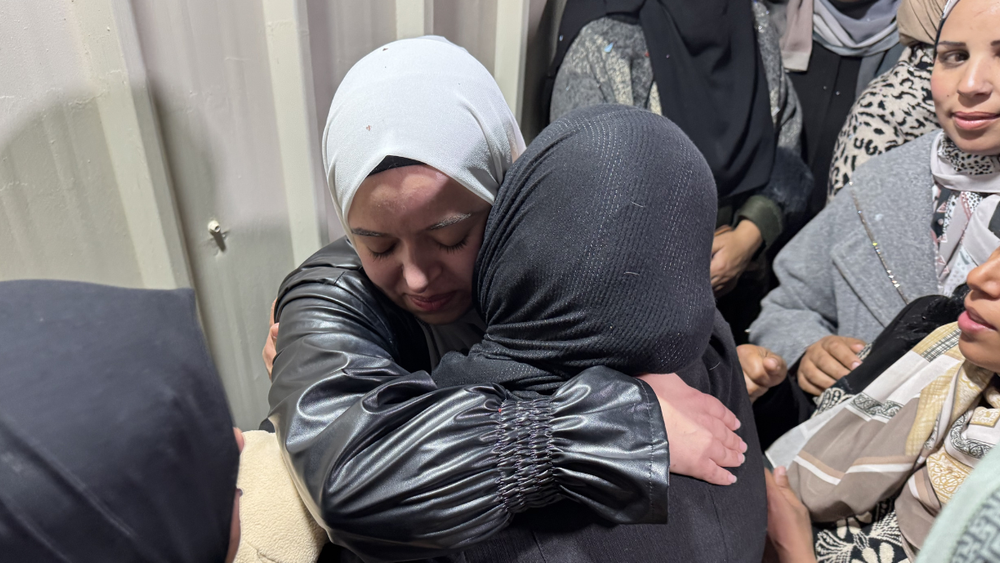
On July 23, the tanks finally withdrew, leaving behind devastation unlike anything Deir al-Balah has ever witnessed, according to numerous social media photos and videos: homes destroyed, lands and streets uprooted, trees torn down, and lives lost. The residents returned to see all this with broken hearts full of betrayal, retrieving the bodies of martyrs whom Israeli forces had besieged there and shot. Fouad and her family were among those who came back on July 23 after being displaced to the Al-Maghazi refugee camp.
Now, the question remains: What awaits us after this military operation? Is it truly a real withdrawal, or merely a temporary tactical move to exert pressure within the folds of ceasefire negotiations with Hamas? And will Deir al-Balah transform from the last refuge for its residents into just a threatening card in Israel’s hands? Will the city be used from time to time amid the silence of the international community regarding crimes against defenseless people who only want to live like other humans in the world?
Editorial Team:
Sahar Fatima, Lead Editor
Lara Witt, Top Editor
Rashmee Kumar, Copy Editor
Author
Ghada Abu Muaileq is a freelance writer and a graduate of English literature from the Islamic University in Gaza. She writes articles and stories about life under war in Gaza, documenting the experien
Sign up for Prism newsletters.
Stay up to date with curated collection of our top stories.