‘Dear Everything’ fights for the Earth’s future in a climate-themed musical
The Tony Award-winning creator of “The Vagina Monologues” channels decades of activism into “Dear Everything: A Musical Uprising for the Earth,” blending youth voices, grassroots organizing, and climate justice stories
V, formerly Eve Ensler, is a Tony Award-winning playwright, activist, and the founder of V-Day. She first gained international acclaim as the creator of “The Vagina Monologues,” the groundbreaking play that helped ignite a global movement against gender-based violence. Through V-Day, the nonprofit she launched in 1998, the play’s proceeds and performances have raised millions to fund grassroots anti-violence organizations in more than 200 countries.
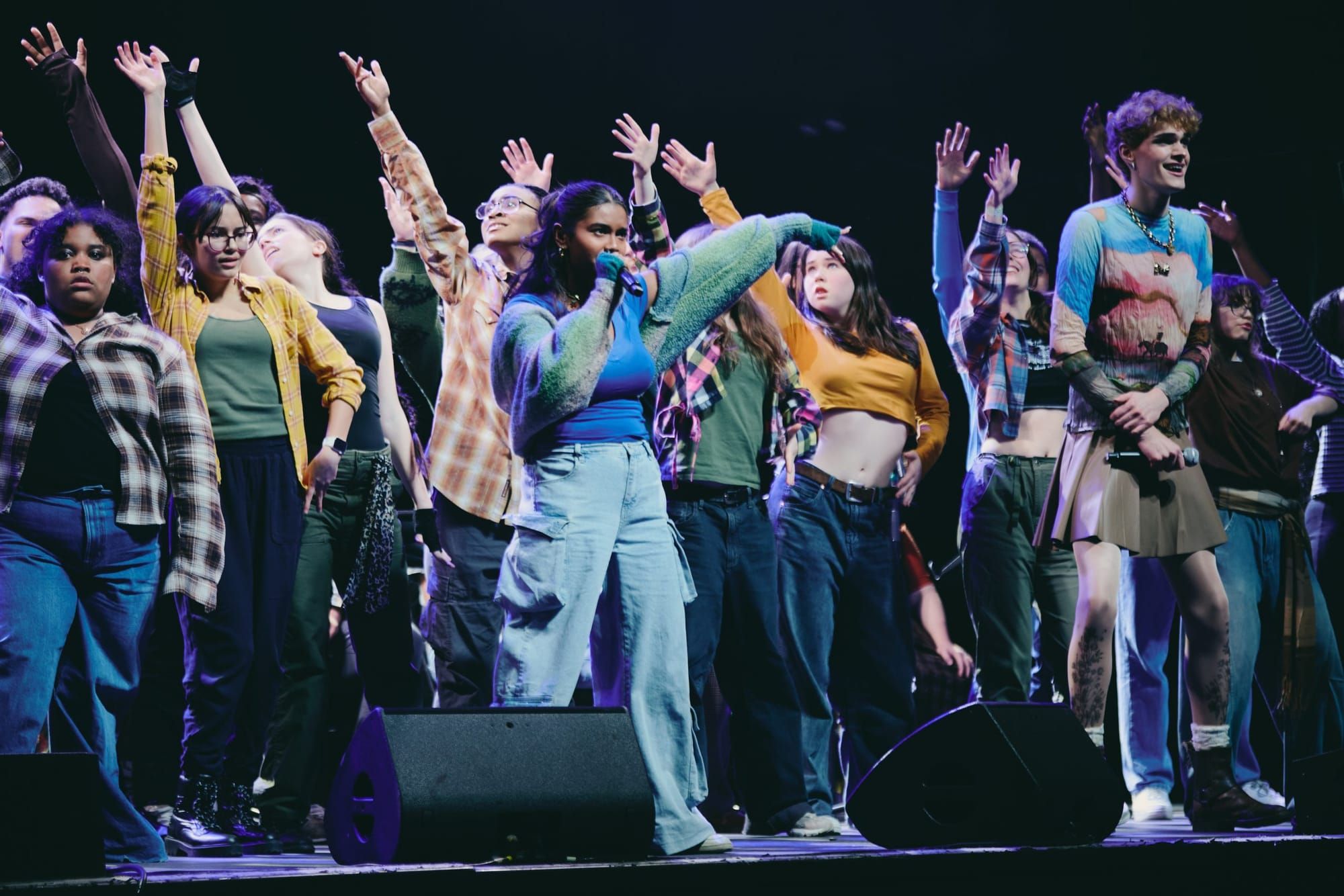
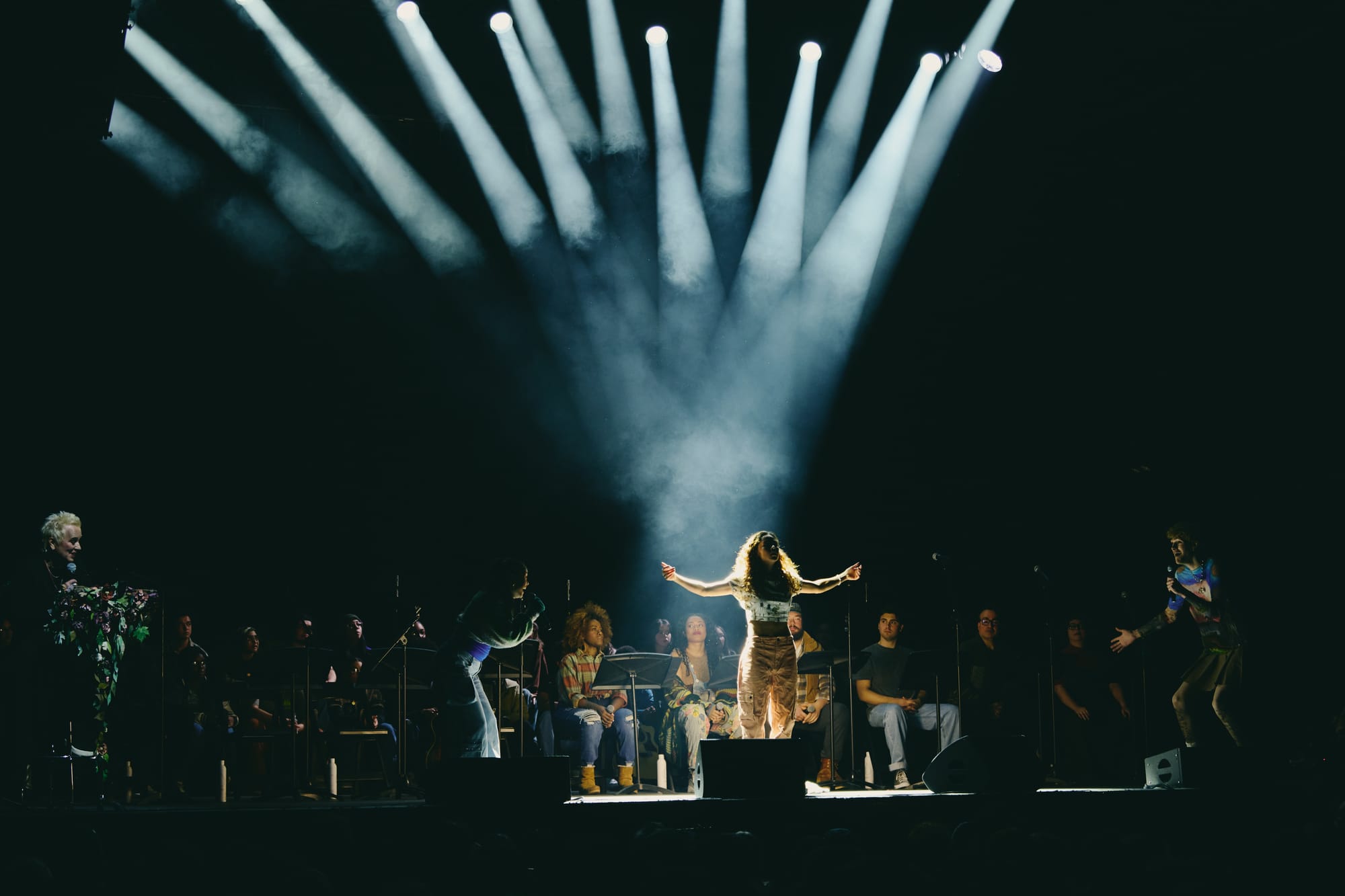
Now, V has turned her attention to the climate crisis. Her newest work, “Dear Everything: A Musical Uprising for the Earth,” is touring Atlanta, Miami, Los Angeles, and Salt Lake City starting this month. The production combines Brechtian theater, pop and folk music, and grassroots organizing, while centering youth choirs and climate justice movements in every city it touches.
Prism spoke with V about how climate grief becomes art, why youth are the prophets of our time, and how theater can break through despair to mobilize communities.
This interview has been edited and condensed for length and clarity.
Alexandra Martinez: You’ve long used theater as a way to spark conversations about violence and justice. With “Dear Everything,” you’ve turned to the climate crisis. What led you to bring your activism into this space?
V: I’ve actually been working on climate for a long time. About 10 years ago, we expanded the mission of V-Day to include violence against women, LGBTQ people, and the Earth, because we couldn’t separate them anymore. There were so many women across the planet who were suffering violence that was so related to the environment and to the climate crisis.
I’ve been doing stuff in my own quiet way, in terms of our larger movement, One Billion Rising, and standing up with a lot of people in various forms, whether it’s women from the Amazon in Brazil or women in the Philippines who are fighting the floods.
I moved to the woods 10 years ago, and I think it’s really been in my deep, deep relationship with a mother that everything’s changed for me, that I just really have come to understand that it is the most pressing issue of our times. And in fact, we’re not going to fight for all our other issues if we don’t have an inhabitable Earth. We’ve destroyed our capacity to live here anymore.
When Justin Tranter and Idina Menzel wanted to do something with music and they wanted me to write it, I said yes on one condition: It had to be about climate change. That’s all I want to write about right now. I wanted to create something that could open hearts and minds [beyond binaries] that keep people from really thinking about what is going on on the planet.
Martinez: Young people are at the heart of this piece. Why was it important for you to center their voices, and how was working with youth choirs across the country?
V: It’s very clear to me that there are so many youth in this country who are in a variety of categories. They’re either paralyzed by the thought that there is no future, and they’re having enormous dread and anxiety and inability to function, or [they are] people who are aware of that, and they’re activated and they’re doing something.
I think the youth climate movement is growing all the time. But I don’t think I ever really grew up, you know? I think there’s part of me that’s still a teenager, and I know that my heart was so connected and so alive and so emotional, and I believe that young people have just a direct connection to a future. They’re like prophets. They understand what’s happening. They know where we’re going.
And so I wanted to create a character, [Sophia], who was porous, open, and had an ability to protect herself from what she knows, who lives in this forest. This forest is her playground and her laboratory and her sanctuary, and … the show is really what happens when that forest gets threatened. I think this character is representative of many young people who feel deeply and passionately about the earth and about the future, and I wanted to give voice to that.
Martinez: The story pits adults who are willing to sell out a forest against young people determined to save it. What truths about power, capitalism, and survival were you hoping to highlight through this conflict?
V: I think we’re all in this place of, how do we survive every day with our eye on the future, unless we have radical upheaval and transformation? The people of this community—they’re working people, they’re middle-class people who are trying to survive. Sophia’s mother is a farmer, and she thinks it’s just bad weather. What Sophia understands is that it’s climate change. I think both sides have a legitimate argument, like, how do we survive in the present tense if we need money to pay our bills? And I’m not sure that the musical completely resolves that question, but I think the work of art is not to be prescriptive. The work of art is to ask the questions and watch people wrestle with them.
I think beautiful things happen in this show—mystical things and powerful things that change people’s minds and make them aware that they’re going to have to proceed differently in their relationship with the Earth. I think there is change at the end of the show. But I think it’s on the micro level that things really do change. If many micro things were happening, there’d be a macro change. There are not bad guys and good guys—it’s just people who are trying to survive now and kids who understand that that isn’t all we should be thinking about.
Martinez: What role do unchecked power and capitalism play in this crisis?
V: I would say capitalism has everything to do with it. We’re in a system that is devouring everything about the Earth, everything about our lives, everything about our consciousness, and all of our resources. And now, with the onset of AI and the consumption of water and the consumption of all the resources needed to [run it], we’re just talking about an escalation that we can’t even imagine. Because our focus is always on making more money and building more things—for billionaires, by the way, not for the people [but] for this billionaire elitist class that is consuming most of the resources of the world and has most of the money in the world.
I was listening the other day to [environmental activist] Vandana Shiva, and she was saying at this point, the billionaires own as much money as 95% of the population of the world. We’re seeing this ultrarich billionaire class taking everything and the Earth and leaving people completely impoverished, living in toxins, eating toxic food, living in conditions where [power] plants pump out toxic energy, by rivers that are polluted by, and [billionaires] are living in the most perfect, protected conditions. And that’s what capitalism has led us to, in the same way that predatory and demented patriarchy has brought us to this crisis, where there’s just these very few, mainly white men who are escalating power, like a cancer cell, and the vision of the future that will eliminate us all.
Martinez: You’ve said theater can break through fear and isolation. How do you see “Dear Everything” moving audiences from despair into action?
V: Many people are in a lot of fear, and rightly so, when we’re seeing immigrants being abducted on the streets and thrown into prisons and disappearing like at “Alligator Alcatraz” right now. No one knows where they are. We were seeing passports being usurped. It doesn’t matter what direction you look in, like the national parks being destroyed.
There’s no safety anywhere around us right now. And I think the tendency on people’s parts is to isolate. It’s to be in fear. What theater does is bring people out. It brings people into community. It brings people into a room where they can feel what they’re feeling and identify with characters or not identify with characters, or wrestle with ideas, or wrestle with struggle. In this show, [the goal is] to be moved by music and to have your heart touched. Because I think when you’re in fear, you shut down your heart. You shut down your capacity to feel because it’s too painful. And I’ve learned in my life over and over that when we can create art that brings people into all of those emotions—their fear, their rage, their joy, their insanity—people begin to function again and believe they are capable of taking actions that can impact the world and change the world, and that’s why we’re doing it. I can’t think of a better moment to be doing it.
Martinez: How do you see “Dear Everything” connecting to climate movements that are already being led by Indigenous people, youth, and front-line communities?
V: What’s so exciting about this production is not only that we’re picking up youth choirs in every city, but we have a wonderful youth council. Maya Penn is a climate activist, and she’s on the board of V-Day. I asked her if she would organize youth councils in every city that we’re going to, to invite them to the table, to invite them to speak at the end, and to invite them to build a coalition around the show. And I’m very happy to say that we were able to raise money so that everybody’s invited. We have Alianza farmworkers coming, we have formerly incarcerated people coming, we have students coming in, and most of the tickets are going to be free. We’re able to leave thousands of dollars in each community for climate change groups.
This is a new way of doing theater. Theater for the people. Theater where everybody gets to come. Theater is where we generate income that we can leave in communities so that they can build after the show is gone.
V (formerly eve ensler)
This is a new way of doing theater. Theater for the people. Theater where everybody gets to come. Theater is where we generate income that we can leave in communities so that they can build after the show is gone. That’s regenerative. We’re trying to keep in line with all of our practices, honoring the Earth.
Martinez: Your work often frames the body as a site of both trauma and transformation. In this show, you call the Earth a body under assault. How do you see those ideas intersecting?
V: I’ve always seen how we treat the Earth and women as the same story. It’s the decimation of the feminine. It’s the decimation of that which is life-giving. It’s the arrogance and hubris of the patriarchy to believe that somehow what they can create with technology is superior to what the Mother has given us. And therefore, the lack of valuing who women are and who the Earth is, and then, of course, your need to control it and diminish it to prove that you are more powerful than it.
And the violence that flows out of that, and the violence that is being committed to the Earth every minute: the destruction of our water, the destruction of our air, the tearing down of forests, the cutting off of mountaintops. It is parallel to the insane violence that is occurring to women’s bodies and trans bodies, including boys—the destruction of bodies on the planet.
I wrote a book called “In the Body of the World.” When I came to have cancer, the way I recovered is that I really had a profound traumatic experience where I came to understand that there is no separation between me and the Earth, and that what was happening to my body was no different than the oil spills that were going on at that moment in the Gulf of Mexico—it’s all the same story. We separate things out, and we silo things out, but everything is the same story. There’s a big moment in the show where people come to realize that connection. And it’s my favorite moment in the show.
Martinez: Why tour this piece now, and why these cities?
V: Every city we’re going to has pretty severe climate issues, whether it’s wildfires, whether it’s the sea, whether it’s “Cop City” in Atlanta, whether it’s Salt Lake City and the drying of the lake. Every city we’re going to is in a climate crisis of one kind or another. But also, V-Day is a 30-year-old movement, and we have grassroots organizers in all those places. And part of the way we’ve done this tour is that we don’t have stars. We don’t have a big ad budget. We’re doing this through grassroots channels of activists, and this person telling this person and spreading the news. So we wanted to go at least where we had a base.
Martinez: How has creating “Dear Everything” changed you? What are some of the lessons you’ve learned from this experience of channeling grief and urgency into collective song and story?
V: What I’ve really learned is that if you invite people to create art that is about where we are, about stepping into having a voice, artists are so excited. The actors are so into it and so grateful that they are able to say something now about the world at a time when they feel so powerless. It’s that beautiful Toni Morrison quote: “This is precisely the time when artists go to work.” We have to start creating forms that may not be the dream capitalist forms, but what is the form you’re going to create to transform human consciousness at this moment? And how do you match it with the funding? How do you match it with grassroots organizing? How do we bring all this together? I’ve been doing V-Day for 30 years.
“The Vagina Monologues” gave birth to a worldwide movement that is still very, very, very active and very powerful. And it taught me that art can instigate that, and artists are sustainable. It can keep firing it up and keep empowering it. I think it’s taught me that you have to be bold as an artist. We have to be strategic, we have to be inventive. We don’t have any idea what’s coming in terms of the climate. When I started this piece, we were talking about climate change, then we went to climate crisis, and now we’re in climate Armageddon. That’s happened over six years, and I think we have to be practical, and we have to be smart, and we have to be loving, and we have to build community and figure out, how are we going to find our way through this, whatever happens, whatever the outcome is? And those are all tenets to me, like art and music and dance and emotion and feelings and community and connection, are the ways we’re going to survive.
Martinez: Is there anything else you’d like to highlight or uplift?
V: Just to let people know that we have seats for you if you want them, and if you can’t afford to pay for a ticket. If you feel bereft and you feel like, ‘Oh my god, it’s all so much,’ come because you’ll get ignited, and you’ll feel joy, and you’ll feel empowered, because these kids are so rocking it. When you see the Earth choir, the kids on the stage singing these songs, you’re like, OK, there is a future. There is a future. And I want to be in their future.
Editorial Team:
Carolyn Copeland, Lead Editor
Lara Witt, Top Editor
Rashmee Kumar, Copy Editor
Author
Alexandra is a Cuban-American writer based in Miami, with an interest in immigration, the economy, gender justice, and the environment. Her work has appeared in CNN, Vice, and Catapult Magazine, among
Sign up for Prism newsletters.
Stay up to date with curated collection of our top stories.