Dairies in California’s Central Valley not only pollute with impunity, but with state support
Framed by state officials as a source for renewable energy, methane digesters actually create a market for pollution
This reporting was produced with support from Renaissance Journalism’s 2025 LaunchPad Fellowship for NextGen Journalists.
Maria Arevalo has lived in Pixley since 1968. Halfway between Bakersfield and Fresno in Tulare County, California, Pixley is a town of 4,260 people with nearly 40 times as many dairy cows. The farming community is the heart of the Tulare Basin, a part of the greater Central Valley where 25% of the country’s food is produced.
Arevalo and her husband came to Pixley as farmworkers. The two managed to turn meager wages into a family home, an inviting one-story house that proudly displays photos of three generations of Arevalos. After she and her husband renewed their vows to celebrate five decades of marriage, the two continued to fix coffee and tea in the kitchen that over the years had seen countless meals of scrambled eggs and tortillas. It makes sense that in a home built by sheer determination and will, in a town so small where residents have no choice but to look after one another, Arevalo’s kitchen table inadvertently turned into fertile ground for an organizing fight against one of the state’s most influential corporate industries.
In the time that Arevalo has lived in Pixley, a town where 19.2% of residents live below the poverty line, industrial dairy operations have expanded significantly. Twenty-six dairies and 140,000 cows now call Pixley home. Dairy cows—and more importantly, the waste they produce—generate a foul odor, contribute to chemical leaching in groundwater, and pollute the air with fine particulate matter, a toxin so small that it can lodge into your lungs and cause severe respiratory problems. Both Arevalo and her 14-year-old grandson use continuous positive airway pressure (CPAP) machines to sleep at night. The American Lung Association gives the region a failing grade for its air quality. Most people in the area purchase bottled water for drinking and cooking because their well water is undrinkable due to farm operations, residents said.
Arevalo and other residents who banded together in an effort to compel the state to take their public health concerns seriously told Prism that they blame dairies, which they claim have been allowed to expand in ways that dramatically increase pollution, for the conditions they experience. They fear that the issue will only worsen with the implementation of new state policy that encourages dairies to profit from their pollution rather than make efforts to curb it through the use of digesters, which turn biogas generated from cow waste into market-ready methane.
“They don’t talk about how we’re forced to live with all of these impacts, and we don’t have ways to protect ourselves,” Arevalo said. “We can’t always afford screens for our windows, we can’t afford air filters. We can’t even afford AC.”
Arevalo told Prism that she brought her concerns about air quality to the California Air Resources Board (CARB), one of six boards, departments, and offices that fall under the umbrella of the California Environmental Protection Agency. She has also raised issues about water quality to local water districts, and she even went to Sacramento to speak with state legislators. Without fail, Arevalo said she’s simply told to move out of Pixley. “I worked so hard for this house, and now they want me to leave it,” she said.
Arevalo and other residents have long advocated for clean air and water, specifically targeting CARB. The agency is tasked with “protecting the public from the harmful effects of air pollution and developing programs and actions to fight climate change,” according to its website. But Arevalo said CARB supports what it heralds as a climate change-mitigation policy that, in actuality, makes the harmful effects of air pollution worse in Pixley.
On June 30, CARB finalized rulemaking amendments for the state’s Low Carbon Fuel Standard (LCFS), which rewards owners of industrial dairies for turning methane from cow waste into gas that can be mixed with fossil fuels and sold at market. The amendments will go into effect July 1.
“The LCFS reduces air pollution and greenhouse gas emissions by setting a declining target for the carbon in transportation fuels used in California; producers that don’t meet established benchmarks buy credits from those that do,” CARB said in a press release. “This system has generated $4 billion in annual private sector investment toward a cleaner transportation sector. These investments provide multiple economic and other benefits to California consumers.”
Championed as a pollution-control mechanism, environmental advocates, community groups, and policy experts say that what the state has actually done is create a market for pollution, whereby dairies are incentivized to maintain exceedingly large herds of cows in order to further the production of methane gas.
Prism provided a number of questions to CARB staff, to which public information officer David Clegern replied, seemingly intending to send the email to staff member Joseph DeAnda, “Looks like the standard ‘When did you quit beating your wife’ story.” CARB did not elaborate what that meant, but later emailed Prism saying the agency “Remains available to listen to residents’ concerns. CARB staff have never suggested residents should move to avoid pollution. Our mission is to take action so that all residents have healthy air.”
As for the question about digester use and the size of dairies, CARB maintains that these are two separate issues and that digester implementation is the concern of the California Department of Agriculture, which “Does not have authority on dairy consolidation. The reasons for consolidation are complex and not related to digesters.” The agency claims that “Available data does not show that implementation of CARB policies is increasing herd size.”
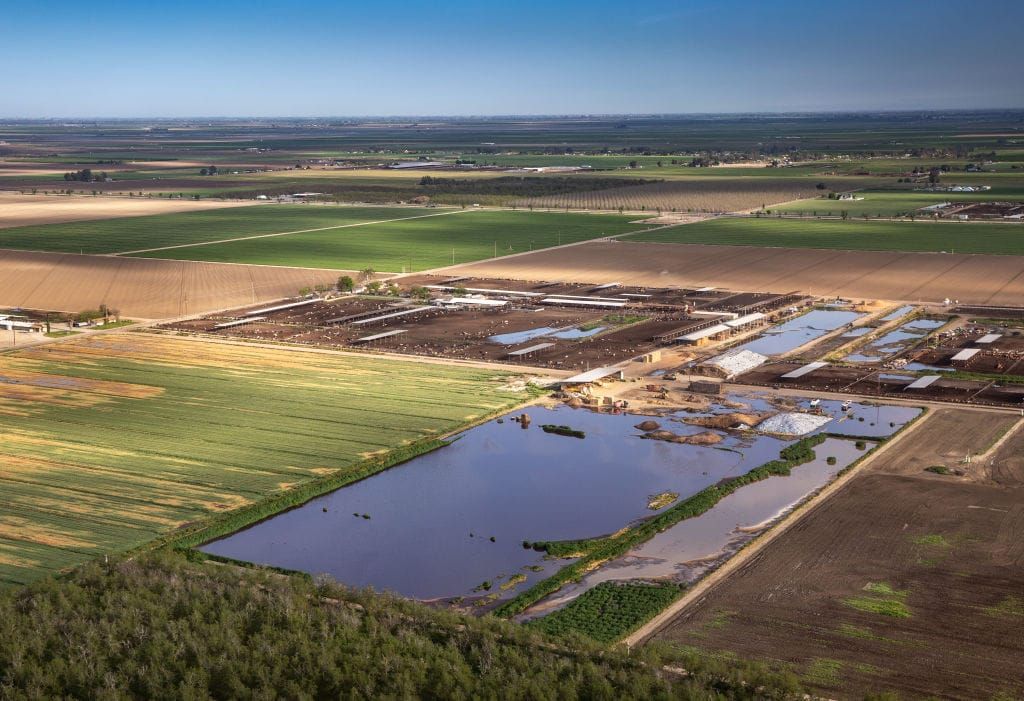
“Dairies” is a misnomer, advocates say. Not small, family-owned farms, the dairies that encircle Pixley are more like factories, confining upward of 1,000 cows in a small space. Feed is trucked in from other states, where it’s cheaper to grow water-intensive crops like alfalfa and oats. Cows are milked two to three times a day, sometimes by hand but mostly by machine. Thousands of gallons of water flush waste into deep pits in the ground called lagoons, where manure sits and awaits its next use.
For decades, as California became the biggest producer of milk in the country, with farms concentrated in the San Joaquin Valley and Tulare Basin, storing liquified manure became standard practice. Often unlined and most always uncovered, manure pits leach chemicals into the ground and methane gas into the air. CARB offered a solution: Cover the manure lagoons and siphon off the methane that results from stagnant liquid waste. Filter that methane for impurities and pump the resultant gas to a processing facility where the methane gas can be sold by commercial distributors.
By the state’s measure, capturing methane from dairy lagoons helps avoid air pollution and aids the state in achieving its climate goals, such as reducing oil consumption by over 90% through 2040 and reducing methane emissions by 2030. About half of the state’s methane emissions result from the dairy and livestock industries.
The LCFS is what incentivizes digester adoption and makes their use profitable: Methane from industrial dairies is categorized federally and by the state as a renewable energy source. By mixing in so-called “renewable natural gas” with conventional fossil fuels, producers are able to claim their operations are environmentally friendly and the state gets to say that it’s weaning off petroleum dependency.
The LCFS is problematic and shortsighted, according to the communities saddled with the burden of living near industrial dairies and all of the concomitant pollution that result from their operation. During interviews with Prism, local residents said their public commons of water and air are being sacrificed for private profit, and the potential of emissions reductions, and it’s unclear if the digester technology offers the results that state agencies are basing the entire regulatory framework on. On the other side of the fight, lobbying groups, the state’s dairy industry, and the companies that build digesters have proven that they have the ear of CARB staff and state leadership.
Arevalo attributes this to the elite capture by industry of public institutions. “The people who control the policy want to protect the dairies,” she said. According to Arevalo, this begs the question: “Who represents me? Who represents my stake in this conversation?”
For years, residents like Arevalo have knocked on CARB’s door asking for answers. And while officials may listen, community members’ concerns are not integrated into the Low Carbon Fuel Standard.
“CARB has never listened to us,” Arevalo said.
As California races to decarbonize its transportation and other commercial industries, Arevalo and other advocates are left wondering: Does their vision for a just and pollution-free California matter?
Pollution, no more than a nuisance
About 115 miles north of Pixley sits Planada, an unincorporated community of just over three thousand people in the heart of Merced County. Residents in Planada are co-conspirators in the fight against the dairy industry’s unabated growth and seemingly unaccountable pollution. Like Pixley, Planada is a “severely disadvantaged community,” a designation from the State of California that denotes extreme underinvestment.
As an unincorporated community, Planada lacks a city council and is under the governing jurisdiction of Merced County. With no local leadership or officials who can advocate for public funding, chronic structural inequalities persist: The median household income for a severely disadvantaged community is 60% of the state’s average. Residents are often reliant on domestic wells for drinking water, which makes water susceptible to contamination. Across California, nearly 6 million people live in unincorporated communities, many of which are considered disadvantaged by state agencies. These residents often lack local representation and may be undercounted in official Census tallies, meaning that state and federal funding isn’t allocated to address structural, social, or residential needs. In some of these areas, a majority or residents are people of color, with about 65% of Californians identifying as people of color in the 2020 Census.
In 2002, the Hillcrest Dairy moved within eight miles of Planada and operated with 3,000 cows. A decade later, the dairy had 8,000 cows. As the number of cows climbed, the stench went from bad to worse, said David Rodriguez, a resident-organizer.
According to the Environmental Protection Agency (EPA), 2,000 cows produce 240,000 pounds of manure every day. The liquified manure is stored in lagoons and then sprayed on fields as a fertilizer. Yet that manure can actually strangle the land it’s intended to benefit. Waste from 200 milking cows contains as much nitrogen as does sewage from a community of 5,000 people. At that volume, nitrogen can upset the balance of aquatic ecosystems by reducing their oxygen levels or even increase the acidity level of soil, killing helpful bacteria that are essential to cycling nutrients that allow for the soil to be fertile ground for growing plants and sequestering carbon.
But lacking an official voice to bring their concerns to Sacramento doesn’t mean that Planada residents aren’t advocating for themselves. Rodriguez is a grandfather in his early 70s with a round face and glasses. He and his parents moved to Planada in 1960. Rodriguez raised his family not far from where he grew up. Like many younger people, Rodriguez’s children have moved away, it seems with no intention of returning. There are few opportunities for employment in Planada outside of the dairies that surround the community’s borders, and dairy-related pollution has made living conditions less than ideal.
Years ago, when the Hillcrest dairy expanded its herd size for the first time, Rodriguez called the San Joaquin Valley Air Pollution Control District any time the bad odor wafted into town. A sour, manure-like smell would permeate the air on hot days—summer months were the worst. Rodriguez told Prism that the District wasn’t obligated to investigate the complaint because the potential source of the odor—the dairy down the street—was a farm, protecting the business from “nuisance” claims. Rodriguez said he still calls sometimes just to make sure that there’s a record of the poor air quality, even though he knows the District won’t investigate.
But the state views digesters as potential solutions to air quality issues, rather than precipitative technologies.
The region’s pollution district told Prism in an email, “Thousands of complaints received annually prompt timely responses and investigations by District inspectors … inspectors are trained to work with the violating party to try and mitigate or eliminate the matter immediately or as quickly as possible based on the circumstances of the situation.”
With respect to complaints of odor pollution, the district said, “The District may not take any public nuisance enforcement action based solely on odors coming from the facility. However, this does not mean that we will not be continuing to investigate the facility in response to public concerns. We will continue to inspect the dairy on a regular basis and if there are any situations where we find non-compliance with our requirements, we will take appropriate enforcement action.”
Hillcrest Dairy requested $1 million from the state to build a digester. The dairy’s application claims that the digester will capture methane and generate energy for electric vehicle charging stations and help reduce pollution, including manure odor.
But Rodriguez isn’t so sure about it. He and other residents are worried that installing a digester, with its attendant heating system, pumps, pipelines, and filters, will only further entrench industrial dairy operations. Digesters require a constant and significant flow of manure input, which can normalize excessive herd sizes or incentivize dairies to increase their number of milking cows.
Patrick Serfass, the executive director of the American Biogas Council, said that these issues of herd size are separate from the digesters themselves. “Biogas systems are a big part of that solution to dealing with all this organic material—millions and millions of tons that the U.S. produces every year,” Serfass said. “The biogas system is not adding anything to the site unless you’re taking waste in from somewhere else. Whatever was already there in the organic material, that’s what comes out.”
Planada residents are worried about their future. The Leadership Council for Justice & Accountability, an environmental justice organization based in Inland California, has worked alongside residents in both Pixley and Planada for nearly a decade as they’ve fought to protect their water, air, and soil from pollution. Through connections made by the organization, Planada residents have witnessed what’s happened to Pixley. They’ve seen how officials gave the green light for more and more dairies to move in, and how, despite years of upset, none of these officials have sought to meaningfully address the impacts dairies have on the people who were there first.
Digesters, while considered essential to achieving the state’s climate goals, don’t address local pollution, and according to local accounts, digesters may even make pollution worse. Research analyzing the efficacy of the state’s cap and trade program, funds from which are used to cover the initial capital costs of digester construction, found that as pollution from industry decreased statewide, it increased in the towns where polluting industries are located. Socially disadvantaged and unincorporated communities are already burdened with toxic air; about 1,200 residents of the San Joaquin Valley die each year from exposure to particulate matter, a fact CARB readily acknowledges. Yet for residents, it doesn’t feel like anyone with the power to regulate the industry cares about their concerns, the pollution they deal with, or their lives.
Editorial team:
Tina Vasquez, Lead Editor
Carolyn Copeland, Top Editor
Stephanie Harris, Copy Editor
Author

ray levy uyeda is a staff reporter at Prism, focusing on environmental and climate justice.
Sign up for Prism newsletters.
Stay up to date with curated collection of our top stories.