Fuel squeeze deepens blackouts and closures across Cuba
Tighter U.S. oil restrictions have led to longer blackouts, transportation shutdowns, and halted education as Cuba already faces an energy crisis
Real journalists wrote and edited this (not AI)—independent, community-driven journalism survives because you back it. Donate to sustain Prism’s mission and the humans behind it.
The Trump administration’s tightening of oil restrictions on Cuba is worsening an already fragile energy crisis on the island, contributing to longer blackouts, transportation shutdowns, and the scaling back of schools and workplaces, according to residents and policy experts.
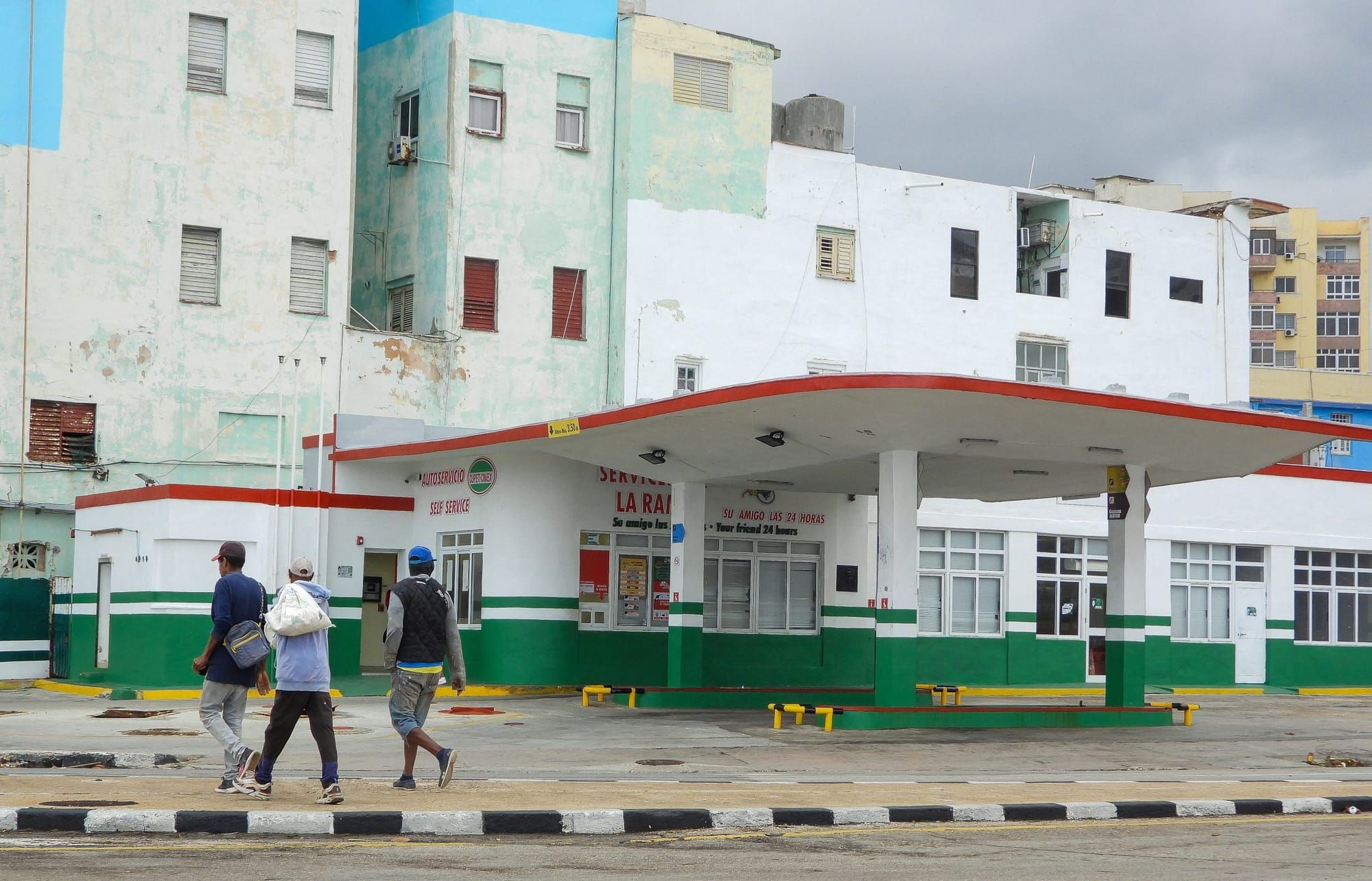
In Havana, Vilma, a university employee who asked to be identified only by her first name for safety, said she and her colleagues have been suspended from work since Jan. 16 because buses are no longer running regularly, and transportation has become unreliable. Workers were paid for the first month, Vilma said, but as of mid-February, she is now on unpaid, indefinite leave.
Vilma said the outages have become a daily reality, often beginning early in the morning and lasting much of the day. Meanwhile, food and other resources are becoming increasingly scarce.
“There are people who don’t even have a plate of food,” Vilma said. “And they don’t have fuel to cook with.”
Her account reflects a broader national strain as Cuba grapples with reduced access to imported oil, a key component of its already fragile power supply. The U.S. restrictions compound the decadeslong U.S. trade embargo and hinder the country’s recovery from years of economic decline, infrastructure failures, and a steady exodus of working-age residents.
The Trump administration has framed the new escalation as pressure on Cuba’s government, rolling out a tariff-and-sanctions architecture designed to deter third countries from supplying oil to the island. But the immediate impact is increasingly visible in the rhythms of civilian life.
A pressure campaign aimed at the grid
Michael Bustamante, a University of Miami historian and the Emilio Bacardí Moreau Chair in Cuban and Cuban-American Studies, said the latest push fits a long pattern in U.S.-Cuba policy: restricting resources in the hopes of forcing political concessions or creating the conditions for unrest.
But, Bustamante said, this moment is different because it collides with Cuba’s deeper energy vulnerability after the loss of steady Venezuelan oil flows. For years, Venezuela supplied Cuba with subsidized crude under a political and economic partnership, helping the island generate electricity and cushion shortages. As Venezuela’s own crisis deepened, those shipments became far less reliable. After the January U.S. invasion of Venezuela and abduction of its president, the U.S. also seized Venezuelan oil tankers, cutting off supplies to Cuba.
“This is about cutting off what makes the island’s electricity grid work or barely work as is,” Bustamente told Prism. “This is an attempt to paralyze the rhythms of everyday life.”
The effects are already visible in the scaling back of essential services. Bustamante said the government has begun limiting activity across public institutions in response to fuel shortages.
“Schools, universities are kind of shutting down or telling people to take classes by distance learning,” he said. But in a country facing prolonged outages, remote learning is often impractical. “If you don’t have electricity to power an internet connection, what are we talking about?”
Hospitals are also prioritizing only the most urgent procedures, he said, as the state attempts to ration what fuel remains. International reporting in recent days has described the fuel squeeze as a citywide and nationwide disruption. In Havana, Reuters reported that garbage collection has broken down as fuel shortages sideline trucks, leaving trash piling up in neighborhoods. Bloomberg similarly described the country’s grid as fragile even before new U.S. actions restricted fuel shipments that had supplied a major share of the crude Cuba needs to keep its aging system running.
“This has been a train wreck for a long time”
Bustamante emphasized that the country’s crisis predates the most recent escalation, pointing to years of grid failures and long daily outages. Cuba has experienced repeated large-scale and nationwide blackouts since 2024, including major outages tied to failures at key power plants and systemwide fragility.
Vilma described the resulting exhaustion as both physical and psychological. She told Prism that she has been dealing with illness and pain that makes it hard to sleep.
“Everything is getting worse every day,” she said. “Sometimes we have power outages for eight or 10 hours.”
That kind of disruption ripples outward: If the buses don’t run, workers can’t get to their jobs. If electricity is cut for long stretches, families scramble to cook and store food. If fuel is rationed, public services can slow or stop. Even the diaspora’s strategies to send supplies for survival are becoming harder to sustain, Bustamante said, as shipping routes and informal supply lines become less reliable.
“This has been a train wreck for a long time,” he said. “This is just ratcheting up that intensity.”
For many Cubans, the present crisis invites comparisons to the Special Period of the 1990s, when the collapse of the Soviet Union triggered severe shortages and economic contraction. Bustamante said the comparison is complicated.
In raw economic terms, he noted, the earlier collapse was steeper. Cuba’s GDP fell by roughly a third between 1991 and 1994. The decline in recent years has been smaller by comparison. But he said the current moment may feel more severe because the country never fully recovered from that earlier shock.
“This new nosedive starts off further down,” he said.
He also pointed to deeper inequality and eroded public trust as key differences. Unlike in the early 1990s, when the state still had strong ideological legitimacy among parts of the population, today many Cubans have grown up in what he described as a “perpetual crisis.”
“There are two generations of people who’ve been raised in this perpetual crisis,” he said. “The state doesn’t really have much of a claim anymore on a large part of the population’s soul.”
Will desperation spark unrest or more repression?
A central question hovering over Cuba is whether heightened deprivation could trigger another wave of mass protest like the historic July 11, 2021, demonstrations and whether the government would respond with the same level of repression that saw about 1,500 protesters arrested.
Bustamante cautioned against predictions. He noted that many people who might have taken to the streets have left the island in recent years, while those who remain may fear the consequences after the 2021 crackdown. But he also said desperation can change risk calculations.
He raised another possibility: that Havana could hesitate to respond with maximum force if leaders believe images of violent repression might be used as a pretext for sharper U.S. intervention.
“It’s a risk for them either way,” Bustamente said. “If they’re pushed to a level of desperation where they’ve never been before, caution might be thrown [aside].”
The worsening situation has also prompted an international response. A new coalition of movements, unions, humanitarian groups, and political figures recently announced plans for the “Nuestra América Flotilla,” a seaborne mission intended to deliver food, medicine, and basic supplies to Cuba.
Organizers say the flotilla, which is expected to set sail next month, is meant to respond to what they describe as acute shortages exacerbated by the tightened U.S. restrictions.
“When governments enforce collective punishment, ordinary people have a responsibility to act,” said organizer David Adler in a statement announcing the initiative.
Supporters of the effort include international political figures, labor organizers, and activists who say the mission is an act of civilian solidarity aimed at delivering humanitarian aid. U.S. Rep. Rashida Tlaib also voiced support, criticizing what she described as policies that “cutting off fuel, flights, and critical supplies necessary for survival.”
A divided diaspora, and a dangerous kind of certainty
In South Florida, Bustamante said, the mood among Cuban Americans ranges widely, often shaped by whether families still have loved ones on the island and how directly they feel the suffering.
He described a strain of “anticipation” and even overconfidence in some corners, where rhetoric suggests that Cuba’s government is finally nearing collapse. Bustamante also pointed to what he sees as a lack of public debate about what comes after: who would invest in rebuilding, what conditions might be attached, and whether the Trump administration’s interests would align with democracy and social justice or with control and profit.
Bustamante said that without a negotiated off-ramp or a shift in policy, the most likely short-term outcome is more suffering with no clear path forward. If neither government backs down, Cuba’s crisis could deepen into a prolonged standoff in which ordinary people pay the cost.
And even if this pressure campaign forces change, he warned against triumphalism.
“The better case scenario is that this could be the start of a new beginning, one that hopefully might be based on reconciliation, on putting Cuban interests first, and not just those of corporate America,” Bustamante said. But, he added, he sees more “ugly” scenarios ahead from renewed authoritarian entrenchment to a future defined by U.S. tutelage, rather than sovereignty.
Editorial Team:
Sahar Fatima, Lead Editor
Lara Witt, Top Editor
Rashmee Kumar, Copy Editor
Author

Alexandra is a Cuban-American writer based in Miami, with an interest in immigration, the economy, gender justice, and the environment. Her work has appeared in CNN, Vice, and Catapult Magazine, among
Sign up for Prism newsletters.
Stay up to date with curated collection of our top stories.