Never eat the candy on your pillow: The forgotten toys
Prisons tend to lump us all into the same “criminal” box, but our individual stories and journeys are unique
Dear Reader,
When some folks think of “criminals,” they lump us into a one-size-fits-all box. But prison is populated by many different people, and just because they throw us all into the same box, doesn’t mean our stories and experiences are the same.
As a child, my parents used to take me on what I call “curbside trips.” You might be asking: What is a curbside trip? Where I grew up in Louisville, Kentucky, there were days when residents could leave junk by the curb to be picked up by city workers free of charge. Not to be confused with trash collection day, junk days were for big-ticket items like sofas, mattresses, televisions, and refrigerators. It was like a giant yard sale for my family, only everything was free.
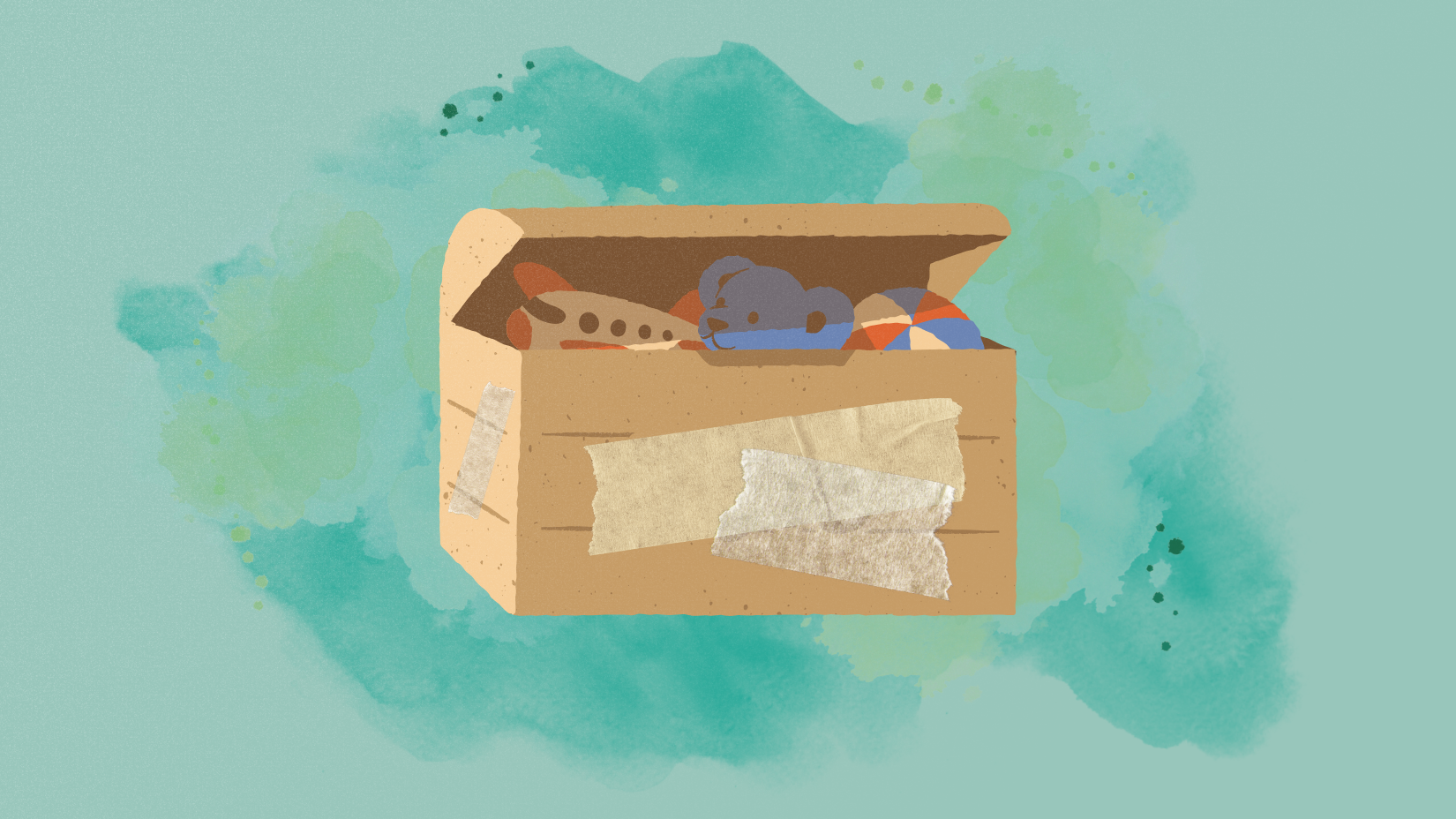
I can still remember when I spotted an old “Star Wars” toy box in the shape of R2-D2, minus the robot’s head. What was left of the toy looked exactly like the movie character, and because I was resourceful, I didn’t need the head to make the most of it. So while I got myself a new toy box, my mother got an old floral-print sofa with ornately carved wooden arms.
Many years later, when I was in prison, I found myself thinking about my family’s curbside trips and why so many people fail to value what’s in front of them.
A few of us were sitting around watching a show about toys. The complete version of the decapitated R2-D2 toy box I had appeared on the screen.
“I had that toy box!” I yelled out.
“Me too!” someone said.
I removed my headphones and glanced around to see who it was. It was Misty. I put my headphones back on and returned to the escape of the show. Misty and I hadn’t spoken since she transitioned.
The next day, while getting dressed for chow, Misty got into an argument with a man who called her an “abomination.” When everyone eventually left the wing to eat, I watched Misty place her head in her hands and cry. I approached her, gently touching her shoulder to ask if she needed anything.
“Are we still even friends?” she asked through sobs.
“If you want us to be,” I said.
A few stragglers shot raised eyebrows my way but kept on walking. With few distractions to break up the monotony of incarceration, some people made everyone else’s business the highlight of their day.
It wasn’t that long ago that Misty went by the name she was given at birth and worked out nonstop. She could perform 100 handstand push-ups in one go.
“If this is about your transition or what that asshole called you, it’s not worth getting emotional over,” I said, my voice low so no one could eavesdrop. “I never stopped being your friend; you just stopped coming around.”
“Did you really have a R2-D2 toy?” Misty asked.
“I did. Curbside special.”
Back before Misty transitioned, we were closer. I was really honest with her about the poverty of my childhood. Misty, on the other hand, was raised by middle-class parents who worked for Ford and could afford family vacation to places like Hawaii and Canada.
“I picked mine out at Toys ‘R’ Us,” Misty said. “I had the entire ‘Star Wars’ action figure set too.”
“I found a ThunderCat once. Mumm-Ra. He was my favorite,” I said.
“Was this a curb find too?”
“No. I found him in the sand at Deam Lake in Indiana.”
Misty nodded.
Deam Lake was one of the first things Misty and I discovered we had in common. At the beginning of my sentence, we were bunkies, and she saw photos of my family at the lake. She knew exactly where the photos were taken. It was the closest thing to a beach I’d ever been to.
“My family took us there almost every weekend in the summer,” Misty said.
“Let’s get back to you explaining why you ghosted me,” I said, trying my best not to smile.
“I didn’t.”
“Yeah. I definitely ghosted you. Bad dog.”
This time, I couldn’t help but laugh harder than I had in a long time. Before Misty transitioned, she was a handler for the prison’s dog training program. Back then, one of her favorite things to say was “bad dog.” Anytime her dog or another handler made a mistake, she’d say, “Bad dog”—that, or “Whoops!” Sometimes, it felt like there were entire days when those were the only words Misty said. If a dog peed on the floor: “Whoops!” If a handler didn’t clean up after: “Bad dog,” Misty would chastise.
“Do you miss it?”
“Being a man? Hell no. I’m living my best life now. No more lies.”
“I was actually talking about the dog program,” I clarified.
“I miss the dogs. I didn’t much care for the people.”
“Did you know back then?”
“Yeah, I knew.”
Misty always carried herself like she was uncomfortable in her own skin.
“What changed?” I asked.
This time, Misty put her hand on my shoulder.
“The way I looked at the people around me,” she said. “That’s what changed. I used to worry about what everyone else thought and how my parents would take it. Then, after all these years in prison, the outside world seemed to be changing. I finally felt comfortable enough to become myself.”
Misty and I spent chow time together, sitting at a table in the game room, chatting about her transition, the way her family abandoned her after she came out, and how she looked forward to reentering society on her own terms. We even discussed our childhoods at Deam Lake, and she described the awe she felt seeing the water for the first time.
“It was like being able to see beyond the horizon,” she said, “and seeing the entire world. I felt the same way the first time riding in an airplane. Once it took to the sky …”
We sat in silence. I understood what she meant. Unfortunately, it was during my ride into the prison that I realized there was a world beyond the neighborhood and poverty I grew up in.
As a child, whether broken, discarded by someone else, or incomplete, all of my toys went into the same box. Even if they were left lying beside the curb or forgotten and buried in the sand, I valued each and every one I picked up along the way.
The Right to Write (R2W) project is an editorial initiative where Prism works with incarcerated writers to share their reporting and perspectives across our verticals and coverage areas. Learn more about R2W and how to pitch here.
Author
Derek R. Trumbo, Sr., a multiple-time PEN Prison Writing Award winner, is an essayist, playwright, and author whose writing has been featured in "The Sentences That Create Us: Crafting A Writer's Life
Sign up for Prism newsletters.
Stay up to date with curated collection of our top stories.