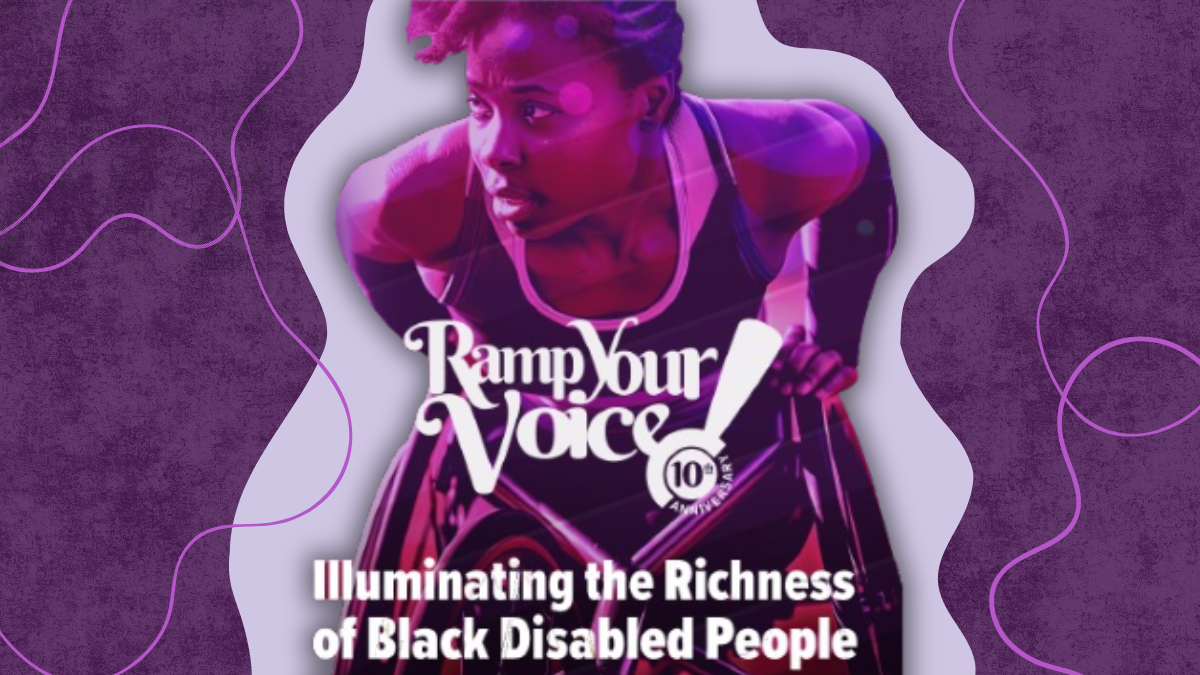
For as long as I’ve been an activist, it’s been my dream to establish a place for Black disabled voices. This summer marks 11 years since I began my activism work—and my wish is coming true.
I am launching the inaugural Ramp Your Voice! Conference on June 7 to fill a much-needed gap: providing an affirming space for Black disabled people to talk about the issues that matter to them and that impact their lives.
When I began my activism work, finding and connecting with other Black disabled people as a newcomer in the disability space filled my cup tremendously. So many of us live and work in silos. I see my conference as an opportunity to bring us together, allowing us to form friendships and comradeships for our personal and professional growth.
I am creating something that I wish I had earlier in life. In a tech-savvy world—and particularly within a community where technology is instrumental for finding like-minded and spirited people—cultivating online spaces and events is crucial for disabled people across all ages and stages of life. For many members of the disability community, traveling is a challenge. There are often financial or health constraints, and many cannot risk medical aids and other equipment getting lost or damaged during transport. Though in-person events are preferred across many industries, the beginning of the pandemic in 2020 showed the world the power of creating virtual events for people to gather safely and learn together. The world has largely returned almost exclusively to in-person convenings, but disabled activists like myself are still happily embracing virtual spaces and reminding others of the role they can play in helping us safely engage one another.
When I began planning the conference, I knew I wanted to create an online space where we could commune comfortably without leaving our homes. Accessibility is at the forefront of every decision I’ve made for the conference. This includes having live American Sign Language interpreters and captioning, generous breaks, and free attendance.
This conference would not have been possible without the incredible and passionate team working with me to bring this event to life. This includes an advisory board of six community members who helped identify prospective speakers and talent for the event. It is thanks to the advisory board that marginalized Black disabled people and their perspectives will be centered.
It is no secret that the disabled community has struggled to account for racial differences and intersectional realities. Eight years ago, I created the #DisabilityTooWhite hashtag to give voice to my experience—and the experiences of many other disabled people of color sidelined by the disability community and broader society. In the years since, conditions have somewhat improved, and honest conversations about race in the disability community can now take place, but there are still significant barriers to overcome. My hope is that this conference will speak to those familiar with the phrase, “We’re all we got,” a sentiment that defines the realities of the Black disabled community in this country and abroad.
Part of the conference will spotlight the question, “Who got us?” It’s a way to explore what it means to be in a community with one another. The broader programming also speaks directly to our communities by exploring topics and featuring performances that illustrate the depth and breadth of the disabled Black community. For example, we will have chair yoga, a discussion about autistic Black pride, a burlesque performance, and a panel about disability and art. Honestly, I’ve grown tired of the setup of most conferences that rely heavily on extensive conversation. I wanted to give our audience a robust snapshot of our talents and multitudes and introduce attendees to people they may not know but whose contributions they should familiarize themselves with. Everyone involved in the conference understood the assignment, and our lineup has me buzzing with excitement.
I think of this conference as a new frontier for my activism, one where I can develop a legacy that ensures Blackness and disability are visible, intentionally centered, and placed at the forefront of each conversation. The next iteration of my work is developing and leading public-facing initiatives. Moving forward, I plan to host a biennial conference, a strategy that will make it more manageable and sustainable—and give the team space to read the room and engage the community to better understand what we want to see from one another. I want each iteration of the conference to be better than the last, and it takes time and intention to assess and develop what’s most needed.
I hope many of you can join the Ramp Your Voice! Conference and celebrate the dynamic voices and talent that are shifting what it means to be Black and disabled in the 21st century. This conference is a testament to my love for Black disabled people. It is my hope that through this work, others can share my pride in being boldly Black and disabled—and that they, too, can fiercely love who they are.
Author
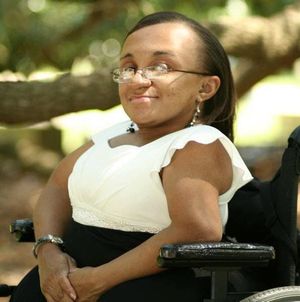
Vilissa Thompson, LMSW, is a contributing writer covering gender justice at Prism. A macro social worker from South Carolina, she is an expert in discussing the issues that matter to her as a Black di
Sign up for Prism newsletters.
Stay up to date with curated collection of our top stories.