While COVID-19 surges, California guts mitigation efforts in schools
The new guidance came days before a Senate hearing on the dangers of long COVID
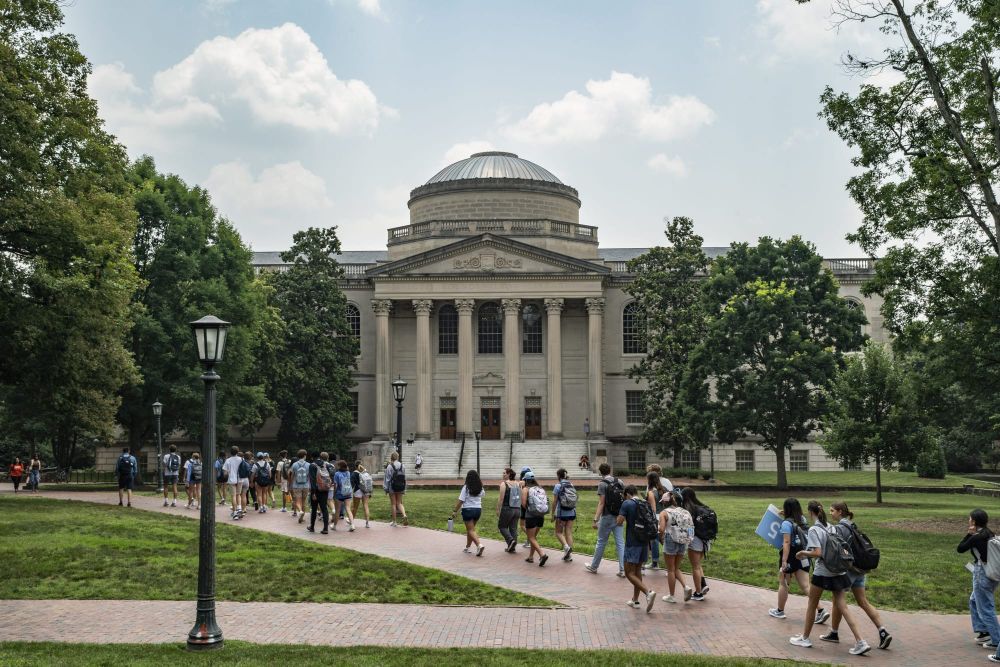
It’s a highly contradictory time for the pandemic. The U.S. is amid one of its highest surges of COVID-19 transmission since the start of the pandemic due to the highly transmissible JN.1 variant. At the same time, the state of California issued new guidance this month that eliminates the isolation requirement for asymptomatic COVID-positive students and most workers and slashes isolation periods to 24 hours for those with mild symptoms.
While these new guidelines suggest that COVID-19 is no longer a serious public health concern, on Jan. 18 the Senate Health, Education, Labor, and Pensions (HELP) Committee affirmed the severity of the crisis at hand by holding its first full hearing on long COVID, which afflict millions of Americans.
The hearing, led by Sen. Bernie Sanders, was a notable step in its acknowledgment of long COVID and in its underscoring of the importance to scale up, speed up, and continue to fund research, medication trials, and especially randomized control trials (RCTs) through the National Institute of Health’s (NIH) RECOVER research initiative that in 2020 allocated more than $1 billion toward researching long COVID.
“We developed vaccines at warp speed. We are doing trials for long COVID at snail speed,” said clinical epidemiologist Dr. Ziyad Al-Aly as part of his testimony.
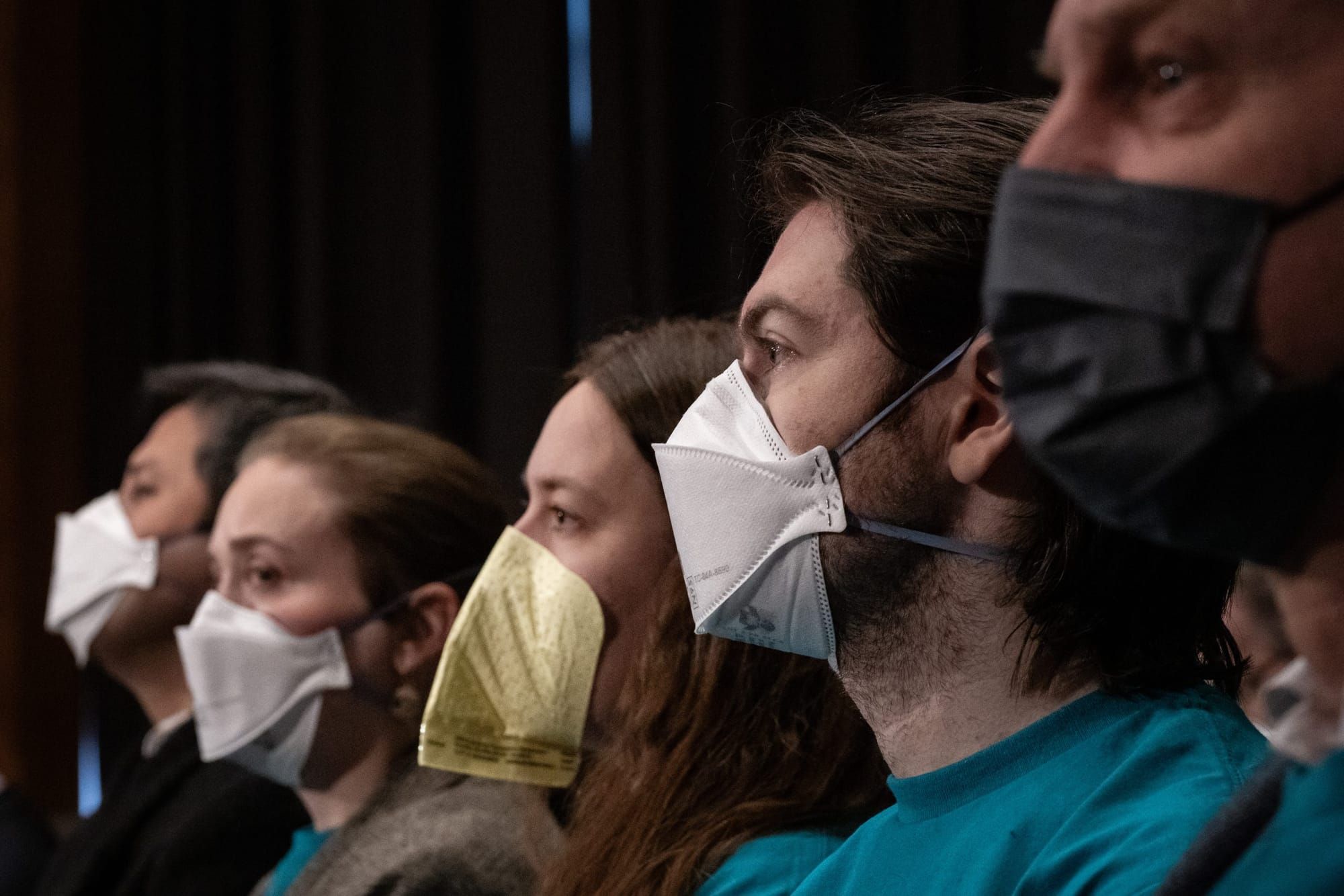
Due in part to efforts by patient advocacy groups, almost all of the HELP committee members attended the hearing. The chamber was also so packed with masked long COVID patients, there was even an overflow room.
“We hear what you are experiencing, we take it seriously, we think we have not as a Congress done anywhere near enough and we hope to turn that around,” Sanders said in his opening remarks.
The hearing featured testimonies from long COVID patients, as well as the mother of a teenager with long COVID. Each detailed their struggles with long COVID, the array of debilitating symptoms it’s caused, and its devastating impacts on their lives and abilities to work, socialize, and exercise. They also discussed the challenges they faced in accessing diagnoses, treatments, and government benefits.
These challenges are compounded for people of color, low-income people, immigrants, and the LGBTQIA+ community, all of whom suffer disproportionate rates of COVID.
“The medical neglect and discrimination I faced contributed to my current level of disability and continues to harm patients like me,” said Angela Meriquez Vázquez, a patient-expert and former athlete and president of Body Politic, a grassroots patient-led virtual community health organization that was at the forefront of long COVID advocacy.
The expert testimonies included four doctors who are working to identify, research, and develop clinical research trials on the causes of and treatment for long COVID. Each spoke to the potential–and shortcomings–of NIH and RECOVER and stressed the importance of continued funding for long COVID and associated long-term chronic conditions, like myalgic encephalomyelitis/chronic fatigue syndrome (ME/CFS) and the nervous system disorder dysautonomia. The experts advocated for a long COVID “moonshot”—$1 billion in funding per year for long COVID initiatives, to meet the scale of the problem.
A number of the senators at the hearing shared the experts’ frustration with RECOVER’s focus on observational research rather than clinical trials, especially Sen. Roger Marshall, who said a close family member suffers from long COVID. It was one of the first times a Republican “admitted they were personally affected by long COVID,” said hearing attendee Cynthia Adinig, a long COVID patient-expert and founder of the BIPOC Equity Agency.
Despite many of the committee members and experts acknowledging that reinfections put people at a higher risk of getting long COVID, there was little emphasis at the hearing on COVID-19 prevention–and the lack of masking among senators in the room made this disparity all too visible. As Dr. Al-Aly summed it up to applause: “There is no long COVID without COVID.”
Al-Aly was also the only expert to highlight the importance of air filtration to prevent COVID-19 and long COVID transmission.
“We did an amazing job proofing our buildings against earthquakes that happen once every few decades or few centuries,” he said. “Why don’t we proof our buildings against the hazards of airborne pathogens?”
Without investing in air filtration, and with the reduction and undoing of masking and isolation requirements in crowded settings like schools and hospitals, the California Public Health Department (CPHD) is creating the dangerous illusion that COVID-19 is “endemic” and does not require mitigation measures beyond that of “other respiratory viruses,” as it notes in its guidance.
The new recommendations, released Jan. 9, state that additional mitigations are no longer necessary due to “broad immunity from vaccination and/or natural infection, and readily available treatments for infected people.” Symptomatic people who test positive for COVID-19 can now return to daily life after 24 hours if they don’t have a fever and their symptoms are improving, though they are encouraged to mask around other people indoors for 10 days, particularly if they are around immunocompromised people. There is no longer an isolation requirement for individuals who test positive but are asymptomatic.
Many public school districts across the state have already adopted the new recommendations. When Lisa Wilson heard about the new policy, she said her first reaction was “fury.”
“The department’s recommendations have no basis in public health or epidemiology … infected but asymptomatic students are still contagious,” said Wilson, whose daughter is a disabled student at Berkeley Unified High School. “Their politically driven policies will only lead to more disability and death.”
Asymptomatic people can still transmit COVID-19, and there are several other scientific inconsistencies within this guidance that could have wide-ranging consequences. First, the assertion that the U.S. has reached community immunity is a “fantasy,” according to Dr. Mike Hoerger, an assistant professor at Tulane University who directs the top public U.S. COVID-19 forecasting dashboard. Immunity to a COVID-19 infection only lasts months, and low booster uptake increases the odds of transmission. Second, by lumping COVID-19 with other respiratory infections, the guidance ignores the risk of long COVID. It also assumes that immunocompromised people are easily identifiable and not present at schools, workplaces, or the broader public.
“It’s kind of weird that a state would formalize those rules and do so in a way that’s contrary to public health. If they’re going to be contrary to public health, they might as well not have a rule,” Hoerger said.
Most states do not base school funding on attendance but overall enrollment, but not California. The new guidance is likely related to the fact that California public school’s funding is reliant on attendance. Absenteeism has risen in the wake of the pandemic, while enrollment has dropped. During the first two years of the pandemic, the state allowed districts to base funding on 2019-2020 enrollment, but as of this school year they are being penalized for lower attendance.
California and Oregon are the only states to officially contradict the Centers for Disease Control and Prevention’s (CDC) COVID-19 isolation recommendations. This decision clashes with the strength of some of California’s early protections and its reputation as a progressive state. The state’s approach could also set a dangerous precedent for the agency and other states.
“People really look for top-down leadership, and when that’s lacking, it creates all sorts of issues for individuals and families,” Hoerger said.
According to Hoerger, the California guidance is “very short-sighted” because it’s focused on short-range economic and political opportunities “that are going to have very devastating long-term economic and health consequences, the doctor said.”
Instead of passing guidance that puts children at risk, experts are pushing for policies that instead focus on things like mandating paid sick pay for parents or making child care more affordable and accessible.
The Senate testimony of Virginia resident Nicole Heim highlighted the dissonance between weakening COVID-19 regulations in schools and the danger of long Covid. Heim’s 16-year-old daughter has long COVID due to an exposure in her band class back in 2021 when she was just 14.
“Long COVID took my straight-A honors student, talented flautist, and member of the school’s marching band with an active friend group and stripped her of life as we knew it,” she said.
This issue is especially salient for children who are already immunocompromised, Adinig told Prism.
“There’s a dire need for comprehensive strategies to make [schools] safe for immunocompromised children, ensuring they can participate safely and fully,” said the BIPOC Equity Agency founder, whose son also has long COVID.
There are also the dire consequences when children are infected at school and pass COVID-19 onto their family members, Hoerger said. As of last year, children accounted for some 70% of household transmissions. Exposure at school could lead to many cases of long COVID—which can involve serious organ damage—among parents, grandparents, and other family members.
While most parents have followed the example of the government by downplaying COVID-19, others are concerned but have no choice but to send their children to school despite the dangers. As Wilson said of her daughter: “Every day, we play Russian roulette with her health.”
Wilson told Prism that with the assistance of the Disability Rights Education & Defense Fund (DREDF), she was able to use the Americans with Disabilities Act (ADA) to require masking among staff who work with her daughter one-on-one, on the grounds that not masking is discriminatory towards disabled and immunocompromised students and staff. However, the masking requirement does not extend to her daughter’s general education classes or fellow students.
“It’s my hope that the ADA can play a role in pushing back on these new guidelines,” Wilson said.
This all begs the question of how to adequately protect kids who want to safely attend school and engage in extracurriculars. For Hoerger, whose own son is currently homeschooled, this would require a multi-layered approach that includes masking, air filtration, and extensive testing programs. Wilston said rapid molecular testing and the installation of ultraviolet systems would also make her feel more comfortable sending her daughter to school.
“It would be very easy to implement a pooled testing program for the riskiest three months out of the year,” Hoerger said. “But there’s just a lack of guidance on it.”
As Dr. Al-Aly noted in his testimony at the long COVID hearing, air filtration is especially important in classrooms. He cited studies that have shown kids actually do better in school when the air is cleaner. He also said testing and a variant-proof vaccine must be emphasized as part of a multi-layered mitigation strategy.
“I wish all of this were being handled better,” Hoerger said. “But in terms of my own kids, would I want them learning to socialize based on these sorts of norms that it’s okay to transmit severe viruses to other families, and potentially kill people? That’s not a norm that I would want them to learn.”
Author
Laura Weiss (she/her) is a freelance writer and editor from Berkeley, California, focusing on social justice issues. She previously worked on the digital team at The New Republic and as managing edito
Sign up for Prism newsletters.
Stay up to date with curated collection of our top stories.